
KI-Erkenntnisse in konkrete Maßnahmen überführen

Trends
Categories
The Urgent Need to Evolve the Airspace Ecosystem

The Urgent Need to Evolve the Airspace Ecosystem
Imagine a near future where urban skies are shared seamlessly by a variety of aerial vehicles: drones transporting life-saving organs for urgent transplants, delivery drones ferrying parcels across cities, and air taxis carrying passengers to airports. These diverse aircraft operate in close proximity, yet their safe coexistence depends not on a single technology but on the comprehensive evolution of the airspace ecosystem. This system must enable both manned and unmanned aircraft to navigate the increasingly crowded skies without conflict.
The Rise of the Low-Altitude Economy
The emergence of the low-altitude economy is accelerating rapidly. Delivery drones are already operational in multiple countries, and large-scale drone operations are expanding globally. Meanwhile, electric vertical take-off and landing (eVTOL) aircraft, commonly referred to as air taxis, are approaching commercial deployment. The vehicles themselves are no longer a distant prospect; demand is tangible, and much of the enabling technology has been proven. However, the primary challenge lies not in the aircraft but in adapting the existing airspace infrastructure to safely integrate these new operations alongside traditional aviation.
The potential benefits of a well-developed low-altitude ecosystem are substantial. These aircraft can alleviate congestion on city roads, expedite the delivery of critical medical supplies, and provide access to remote communities. Yet, these advantages depend fundamentally on achieving safety at scale—a complex challenge that extends beyond individual vehicles to encompass the entire airspace system.
Modernizing Airspace Management
Current airspace frameworks were designed for a different era, relying heavily on decades-old flight rules and direct communication between air traffic controllers and pilots. This system has maintained safety for a relatively limited number of crewed aircraft following predictable routes. In contrast, low-altitude operations introduce thousands of daily flights involving drones and air taxis that vary widely in speed, size, and levels of automation. Managing this unprecedented scale and complexity demands a transformation of the traditional framework through advanced digital tools and automated oversight.
Three critical shifts are essential to this transformation. First, the transition from voice and radar-based communication to shared, real-time digital information will provide all operators with a trusted, comprehensive picture of the sky. This will facilitate coordination and enable greater automation, allowing controllers to oversee the system holistically and intervene only when necessary. Second, airspace management must become more flexible. Whereas fixed rules and boundaries have governed airspace for decades, digital systems can now adapt dynamically to each aircraft’s capabilities, traffic density, and changing conditions. Third, rigorous testing and certification of new eVTOL aircraft are imperative to ensure safety. This includes addressing logistical challenges such as identifying appropriate landing and takeoff zones beyond traditional airports.
External Challenges and Technological Advances
The evolution of the airspace ecosystem is further complicated by external factors. Geopolitical tensions and increased military activity can result in sudden airspace restrictions or closures, disrupting both commercial and emergency operations. At the same time, competitors are advancing technologies such as quantum navigation systems and next-generation avionics, which promise to enhance safety and efficiency in this rapidly evolving environment.
The low-altitude economy holds transformative potential, but its realization depends on a holistic approach that integrates technological innovation, regulatory adaptation, and stringent safety oversight. Only through the comprehensive evolution of the airspace ecosystem can the skies of tomorrow remain safe, efficient, and open to new possibilities.

Etihad and Swissport Extend Global Partnership
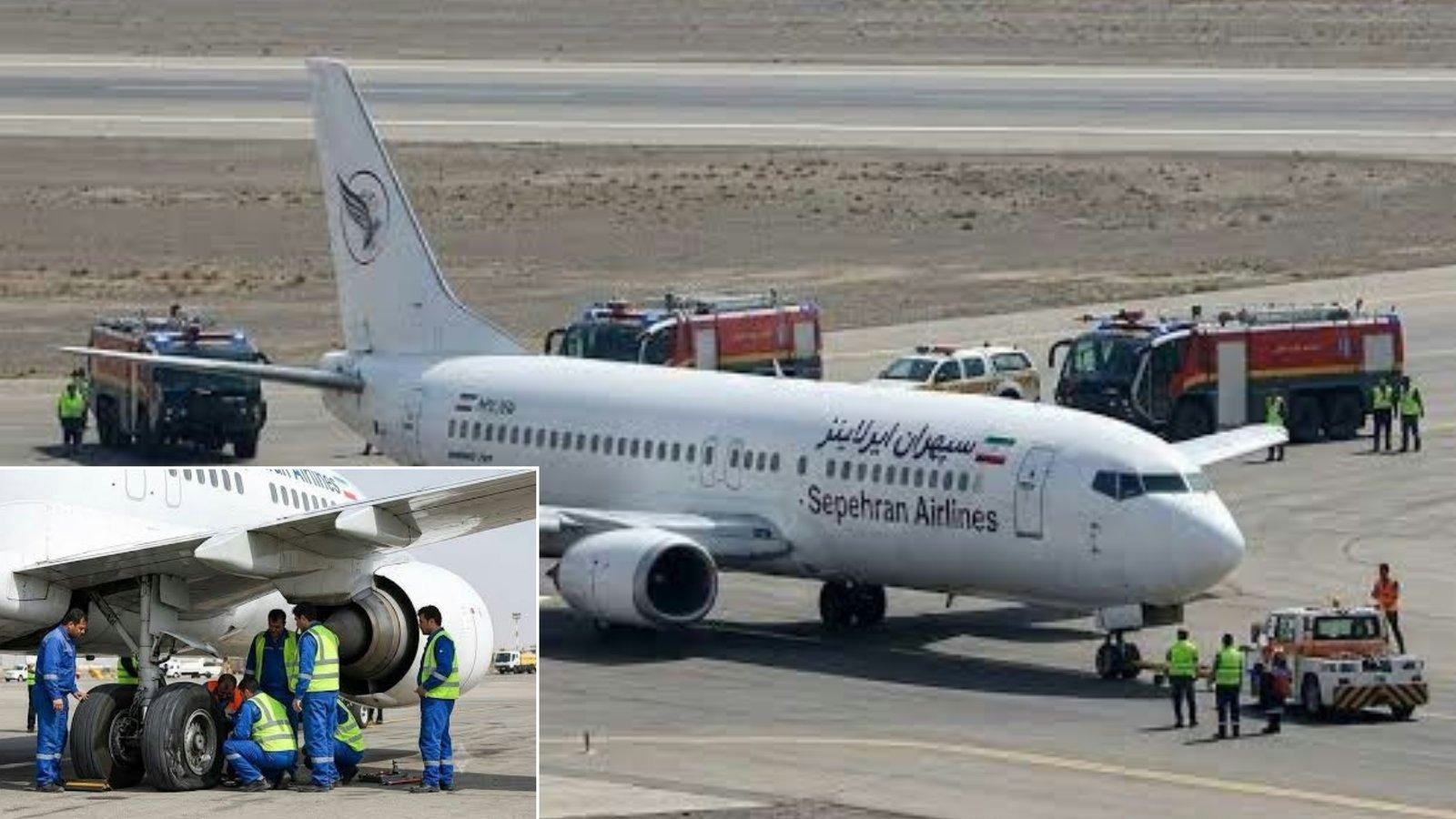
Sepehran Airlines B737 Returns to Mashhad After Tyre and Engine Issues

Etihad Deploys Widebody Fleet to Meet Strong Demand
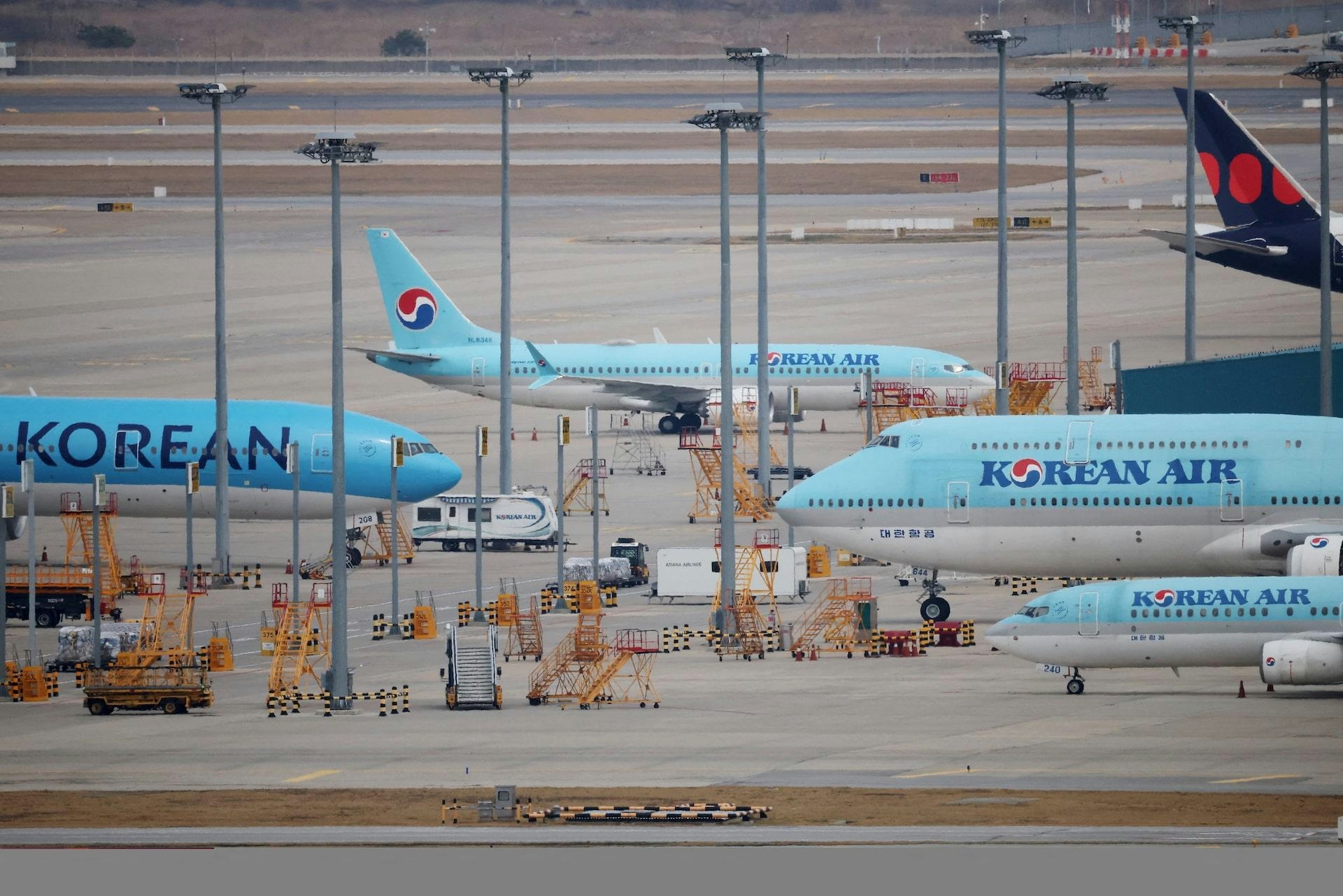
Korean Air Finalizes $36.2 Billion Deal with Boeing
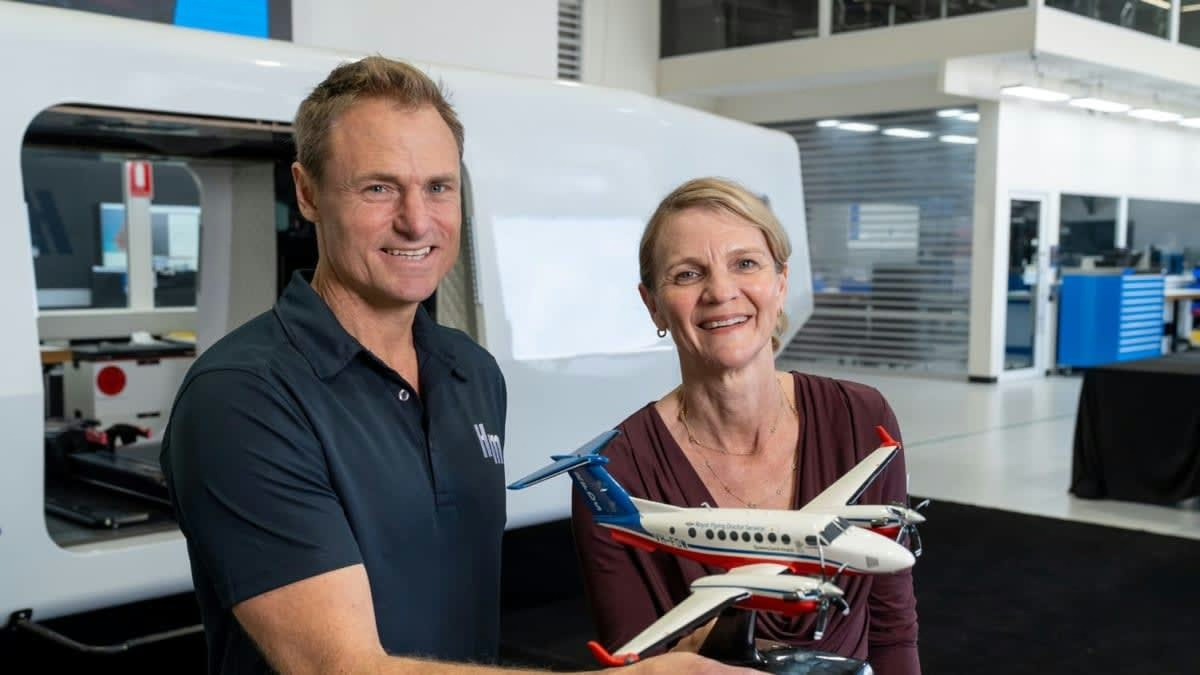
Australia’s RFDS Queensland Section Orders Six King Air 260Cs

Korean Air Finalizes Order for 103 Boeing Jets and Engines
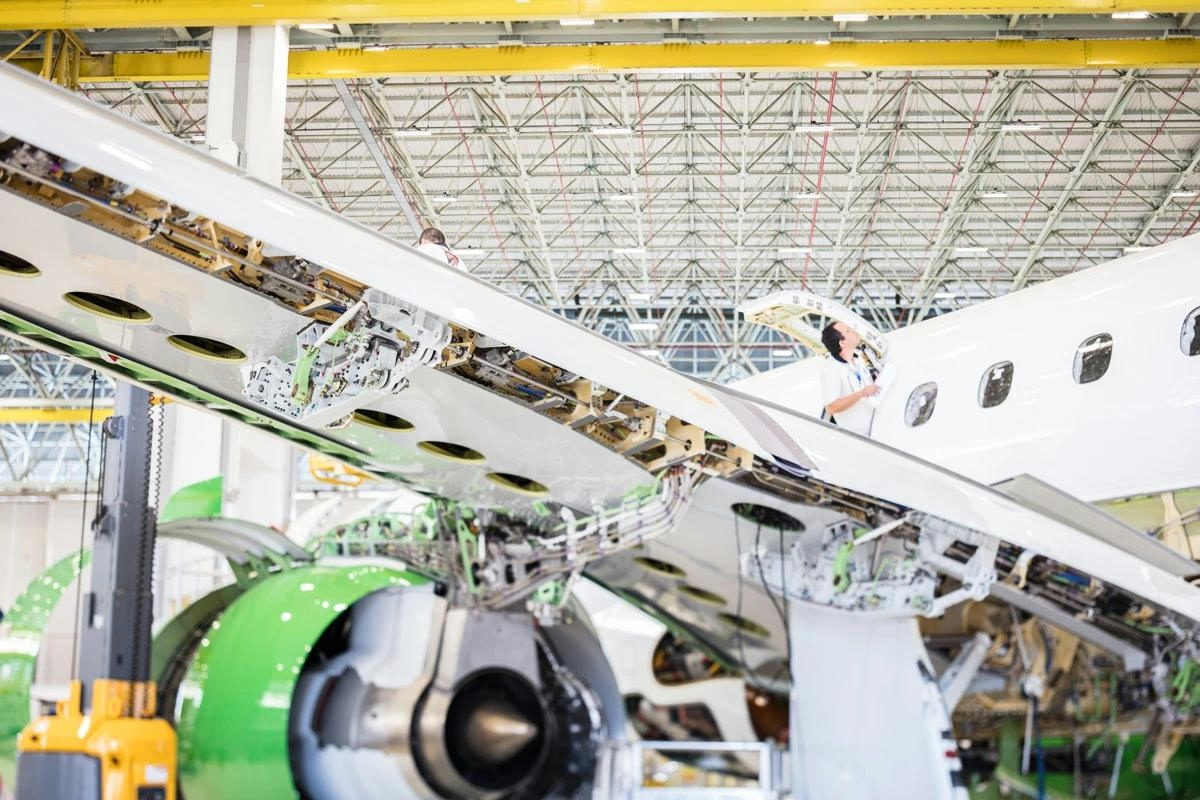
Embraer E195-E2 Features Distinctive Engine Placement Among Regional Jets
What Passengers Can Expect on Boeing’s New 777X Jet

How Ethiopian Airlines Became Africa’s Leading Carrier Amid Gulf Competition
Joby Aviation Extends Autonomous Flight Capabilities with Cross-Country Tour
