
KI-Erkenntnisse in konkrete Maßnahmen überführen

Trends
Categories
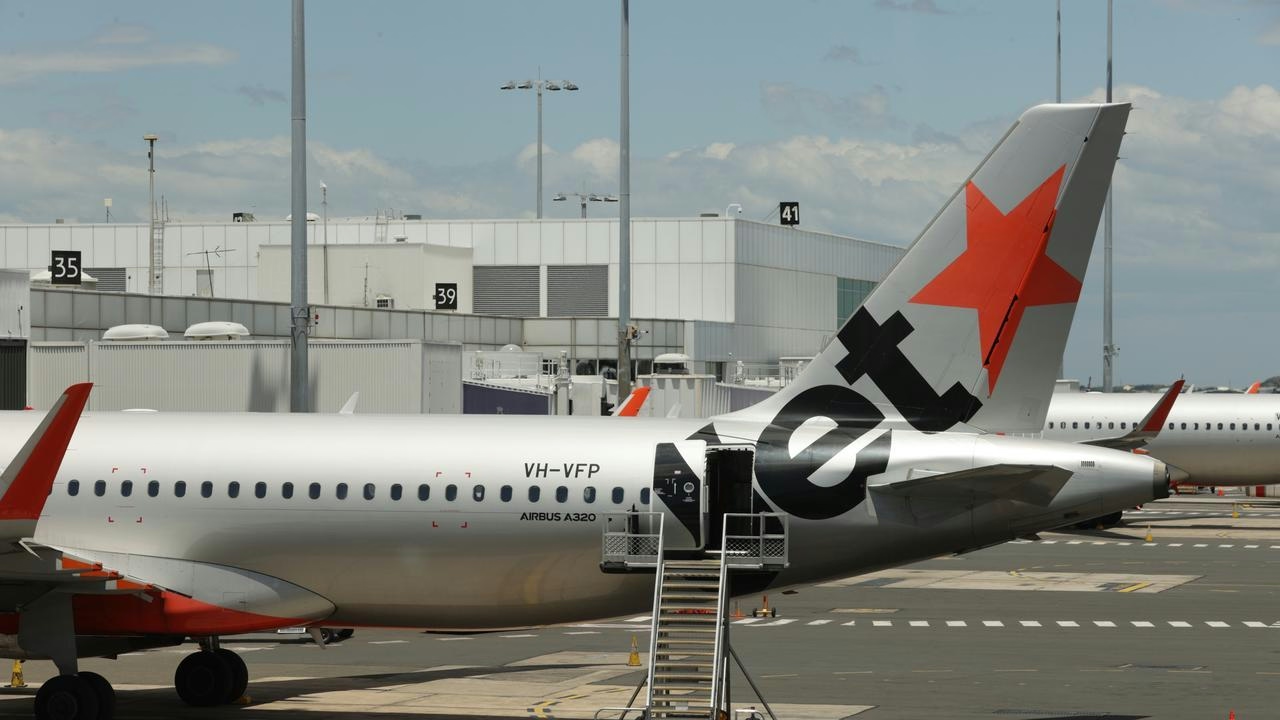
Thousands of Airbus Aircraft Grounded by Software Glitch
Thousands of Airbus Aircraft Grounded by Software Glitch
Critical Software Vulnerability Grounds Airbus A320 Fleet
Airbus was compelled to ground a substantial portion of its global fleet late Friday after detecting a critical software vulnerability affecting its A320 family of aircraft. The issue, linked to intense solar radiation, raised serious concerns about potential data corruption within flight control systems, prompting immediate and widespread action across the aviation sector.
The European manufacturer confirmed that over 6,000 A320 family aircraft worldwide were impacted by the malfunction. The company explained that “intense solar radiation may corrupt data critical to the functioning of flight controls,” and acknowledged identifying a significant number of affected planes. This vulnerability threatened the integrity of flight data during periods of heightened solar activity, necessitating urgent intervention.
Regulatory Response and Industry Impact
In response, the European Union Aviation Safety Agency (EASA) temporarily suspended flights on certain Airbus models. This decision followed an incident involving a JetBlue flight from Florida to Mexico, which was forced to make an emergency landing after experiencing a sudden loss of altitude. Reports indicated that approximately 15 passengers required hospitalization as a result of the event.
The grounding occurred amid the peak holiday travel season, causing widespread disruption. Major airlines including Lufthansa, Swiss, Austrian Airlines, and American Airlines rapidly mobilized to deploy emergency software updates aimed at rectifying the vulnerability. Sara Ricci, communications chief for Airbus’s commercial aircraft division, stated that approximately 85 percent of the affected aircraft could be remedied swiftly, with most updates or software reversions completed in under two hours per plane. “The vast majority will be back in the sky very soon,” Ricci affirmed.
While some carriers, such as Brussels Airlines, reported no impact on their operations, others managed to complete the necessary software adjustments by the end of the day, thereby minimizing the duration of the disruptions.
Challenges of Modern Aircraft Systems and Solar Radiation
This incident has brought into sharp focus the increasing complexity of modern aircraft systems and the particular vulnerabilities posed by solar radiation to “fly-by-wire” technology, which depends extensively on electronic flight controls. As airlines and regulators worked expeditiously to restore normal operations, the episode underscored the critical importance of robust software safeguards in maintaining aviation safety.

Etihad Airways Suspends Airbus A380 Flights on Key Route

Aditya Birla Group Seeks Approval for Aircraft Leasing in GIFT City

Qatar Airways Highlights Innovation and Connectivity at Arabian Travel Market 2026

Hong Kong's Five-Year Plan Includes Andrew Fan's Aircraft Parts Processing Hub Proposal

ACIA Aero Leasing Delivers ATR72-600 to Air Nostrum

RTX Appoints Jill Albertelli as Head of Pratt & Whitney

TAT Technologies Joins Beyond Aero Hydrogen Aircraft Program

AURAK Study Highlights Barriers to Air Taxi Adoption in Emerging Economies

Xiamen Air Selects Altitude for 787 Maintenance at Heathrow

Etihad and Swissport Extend Global Partnership
