Bild

KI-Erkenntnisse in konkrete Maßnahmen überführen

Trage dich noch heute in die AeroGenie-Warteliste ein!

Trends

Categories

Toyota Partners with Joby to Develop Electric Air Taxis
July 1, 2026By ePlane AI
Toyota Partners with Joby to Develop Electric Air Taxis
0
0
Toyota
Joby Aviation
Electric Air Taxis

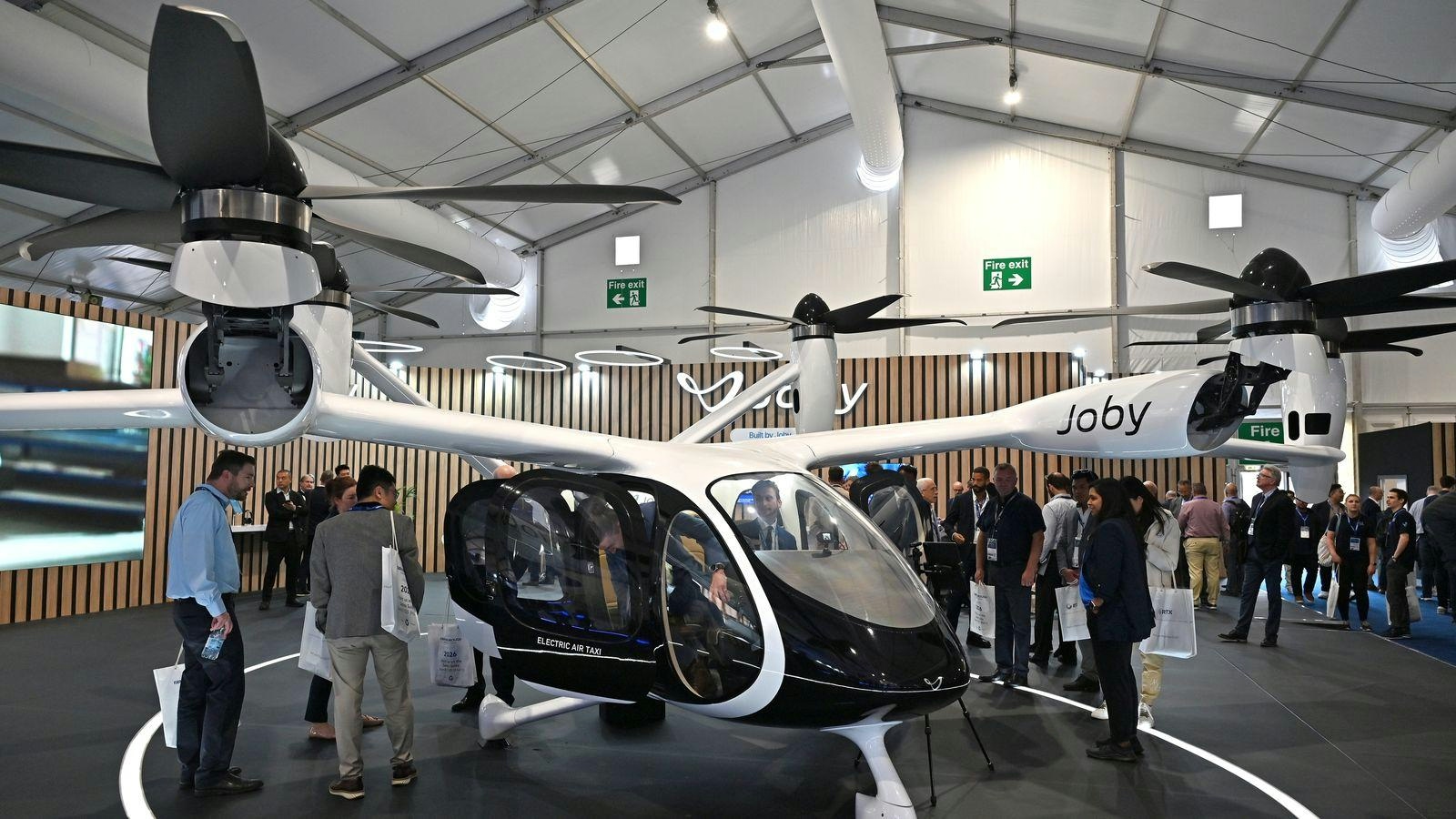
Toyota Partners with Joby Aviation to Develop Electric Air Taxis

Toyota Motor Corporation has announced a strategic joint venture with Joby Aviation aimed at manufacturing electric air taxis, marking the company’s formal entry into the burgeoning field of urban air mobility. The collaboration will focus on the development of electric vertical takeoff and landing (eVTOL) aircraft designed for commercial use, expanding Toyota’s technological footprint beyond its traditional automotive sector.

Strategic Diversification and Market Position

This initiative reflects Toyota’s broader strategy to diversify its operations and pursue long-term growth opportunities outside conventional vehicle manufacturing. Listed on the Tokyo Stock Exchange under the ticker TSE:7203, Toyota’s stock currently trades at ¥2,724.5. The share price has experienced mixed performance, with a 13.9% increase over the past year and a 61.2% rise over five years, yet it has declined by 19.8% year to date. The partnership with Joby Aviation positions Toyota to gain early exposure to the nascent but rapidly evolving eVTOL market, which is expected to play a significant role in the future of urban transportation.

Challenges and Market Dynamics

Industry analysts highlight several challenges facing the air taxi sector, including the complexity of regulatory approvals, the advancement of requisite technologies, and intensifying competition as multiple firms race to commercialize urban air mobility solutions. Toyota’s announcement has reportedly prompted some competitors to accelerate their own eVTOL development efforts and seek government endorsements to maintain a competitive advantage.

Investor response to the joint venture has been cautiously optimistic, viewing the move as a forward-looking diversification of Toyota’s business portfolio. However, the stock currently trades approximately 34% below the consensus analyst target price of ¥3,657.6, and some valuation models indicate it is about 36.5% above its estimated fair value. Recent trading momentum has been subdued, with shares declining 6.2% over the past month, possibly reflecting investor uncertainty as the air taxi project progresses.

As Toyota ventures into air mobility, the company confronts both significant opportunities and considerable risks. The success of this joint venture will depend on overcoming regulatory and technological barriers while establishing a competitive presence in a rapidly changing market. For investors, the partnership with Joby Aviation represents a bold step toward the future of transportation, with the potential to significantly influence Toyota’s growth trajectory in the years ahead.

More news
Jeppesen ForeFlight Introduces AI Strategy and Engine for Aviation

Jeppesen ForeFlight Introduces AI Strategy and Engine for Aviation

Jeppesen ForeFlight Launches Airflow™: A New AI Engine Tailored for Aviation AUSTIN, Texas, July 1, 2026 — Jeppesen ForeFlight has introduced Airflow™, an artificial intelligence engine specifically designed for the aviation industry. This launch represents a pivotal advancement in the company’s commitment to embedding responsible AI across all facets of aviation. Developed over several years and grounded in extensive industry expertise, Airflow™ is intended to optimize a wide range of operations, from crew and fleet planning to day-of-flight management and flight deck solutions. A Flexible, Aviation-Centric AI Platform Airflow™ forms the core AI engine for Jeppesen ForeFlight, integrating commercial data, proprietary customer information, and deep domain knowledge in safety, certification, and contextual reasoning. Its open, model-agnostic architecture provides customers with the flexibility to incorporate their own AI agents, utilize third-party solutions, or deploy Jeppesen ForeFlight’s native agents. This modular approach enables organizations to adopt AI technologies at a pace that suits their operational needs, with customizable levels of human oversight and reduced costs compared to previous technology transitions. The company has already previewed its initial product for the General Aviation market: the ForeFlight AI Connector. This MCP server connects ForeFlight Mobile to a customer’s existing OpenAI ChatGPT environment, allowing users to query AI for flight planning, refueling options, and to develop AI-driven workflows using their own data. Jeppesen ForeFlight plans to extend compatibility to other AI platforms, including Google’s Gemini and Anthropic’s Claude, thereby offering users the freedom to select their preferred AI experience. Later in the year, Airflow™ will expand its offerings to serve the Commercial and Business aviation sectors, with military-specific capabilities anticipated to follow. Addressing Industry Challenges with Aviation Intelligence Brad Surak, CEO of Jeppesen ForeFlight, emphasized the critical need for domain-specific AI in aviation. “General AI is confident, but often wrong. In our industry, these mistakes can lead to costly or even catastrophic outcomes,” he stated. Surak underscored that artificial intelligence alone is insufficient; what is required is “aviation intelligence” — the assurance that accurate data, contextual understanding, and rigorous reasoning are consistently applied and cross-checked against industry safety and governance standards. Airflow™ is positioned as a differentiated AI solution that customers can deploy according to their own timelines and operational requirements. Despite its potential, Jeppesen ForeFlight faces significant challenges in implementing its AI strategy. The company must navigate competition from other aviation technology providers, maintain stringent data quality and security standards, and overcome market skepticism regarding AI reliability. Industry reports have highlighted increasing concerns about AI transparency and user control, issues that may affect adoption rates and invite regulatory scrutiny. Market response to Airflow™ is expected to be marked by strong interest from users seeking advanced AI capabilities, while competitors may accelerate enhancements to their own AI offerings. Jeppesen ForeFlight’s extensive presence across crew, fleet, operations, and flight deck performance gives it a competitive advantage over generic AI platforms and single-point solutions. Airflow™ distinguishes itself through its ability to reason within the specific context of aviation, delivering trusted workflows that reflect operational realities and prioritize safety and governance. As the aviation sector continues to evolve, Jeppesen ForeFlight’s AI initiative aims to establish a new benchmark for intelligent and responsible technology in the skies.
EU Extends Zero-Tariff Agreement on U.S. Aircraft Parts Amid Airbus-Boeing Trade Talks

EU Extends Zero-Tariff Agreement on U.S. Aircraft Parts Amid Airbus-Boeing Trade Talks

EU Extends Zero-Tariff Agreement on U.S. Aircraft Parts Amid Airbus-Boeing Trade Talks The European Union has announced an extension of its suspension of tariffs on U.S. aircraft and aviation components, preserving a zero-duty framework for transatlantic aerospace trade as negotiations over the longstanding Airbus-Boeing dispute proceed. This extension allows aircraft, engines, and critical aviation parts to move freely between Europe and the United States, maintaining stability in one of the world’s most interconnected manufacturing sectors. Covering approximately $4 billion worth of U.S.-origin aviation goods—including commercial aircraft, jet engines, avionics, and essential spare parts—the tariff suspension was initially introduced in 2021 as a temporary measure aimed at de-escalating trade tensions. By continuing this arrangement, the EU seeks to support the smooth functioning of aerospace supply chains while talks toward a comprehensive resolution remain ongoing. Background: A Complex Trade Dispute The tariff suspension arises from a protracted dispute over alleged state subsidies provided to Airbus and Boeing, which previously resulted in reciprocal tariffs on billions of dollars’ worth of goods on both sides of the Atlantic. Both the United States Trade Representative (USTR) and the European Commission have recognized the economic risks posed by prolonged tariff escalation, particularly for industries dependent on cross-border production and just-in-time supply chains. Aircraft manufacturing is a highly globalized industry, with components designed, produced, and assembled across multiple countries. The extension of the zero-tariff agreement effectively maintains a cooling-off period, allowing negotiators to pursue a long-term settlement without disrupting industrial operations or global supply chains. Market Implications and Industry Response The EU’s decision is expected to benefit airlines, manufacturers, leasing companies, and maintenance providers throughout Europe and North America. By keeping aviation supply chains free from tariffs, the move supports safety, efficiency, and cost control—factors emphasized by both the European Commission’s Directorate-General for Trade and U.S. aviation regulators. Nonetheless, the extension introduces new market dynamics. With U.S. parts remaining more accessible, European aircraft manufacturers may face heightened competition. In response, both Airbus and Boeing could adjust their supply chain strategies to leverage the tariff-free environment, potentially reshaping sourcing and production decisions. Industry stakeholders have largely welcomed the extension, underscoring the importance of regulatory predictability as the aviation sector continues to recover from recent supply chain disruptions and rising operational costs. Safeguards and Future Negotiations The EU’s commitment to the zero-tariff arrangement includes built-in safeguards, allowing tariff preferences to be suspended if the United States breaches the agreement’s terms. This provision is designed to protect European interests and may influence the trajectory of future negotiations, ensuring that both parties remain motivated to reach a durable resolution. As discussions between Brussels and Washington continue, the extension of the zero-tariff agreement highlights the critical role of cooperation in maintaining industrial continuity and securing global supply chains within the transatlantic aerospace sector.
The Piston Aircraft Market: Past Trends, Current Status, and Future Outlook

The Piston Aircraft Market: Past Trends, Current Status, and Future Outlook

The Piston Aircraft Market: Past Trends, Current Status, and Future Outlook A Historical Perspective on Certified Piston Aircraft The golden era of certified piston aircraft spanned from the late 1950s through the mid-1980s, a period marked by significant innovation and diversity in general aviation. During this time, manufacturers such as Cessna, Piper, Beechcraft, Mooney, Grumman, Bellanca, Commander, and Socata produced a wide array of models that became staples in the aviation community. Cessna’s lineup included the 210 Centurion, 177 Cardinal, and a range of piston twins like the 310, 337 Skymaster, and 421 Golden Eagle. Piper contributed with its Comanche, Cherokee Six, Saratoga, Seneca, and Navajo models, while Beechcraft offered the Bonanza, Baron, Duke, and Queen Air. Other notable aircraft included Mooney’s M20 series, Grumman’s AA-5 Tiger, Bellanca’s Viking, Commander’s 112 and 114, and Socata’s Trinidad. This vibrant market began to contract as product liability concerns intensified. Although the General Aviation Revitalization Act of 1994 provided some legal relief to manufacturers, the industry had already experienced significant upheaval. Cessna withdrew from most of its complex single-engine aircraft and all piston twins, Piper reduced its offerings primarily to training aircraft and the M-series, and Beechcraft narrowed its focus to the Bonanza and Baron models. This consolidation culminated in November 2025 when Textron announced the cessation of Bonanza and Baron production once existing order backlogs were fulfilled. Market Dynamics and Manufacturing Challenges The reduction in piston aircraft production was not driven by a decline in pilot interest or market demand. Rather, it reflected the challenges legacy manufacturers faced in maintaining profitable production levels amid rising liability risks and outdated supply chain infrastructures. The industry’s traditional manufacturing frameworks were ill-suited to the evolving market conditions, which demanded either high-volume output or a shift toward newer, more economically viable models. The end of the Bonanza’s production run is particularly noteworthy. First flown in December 1945, the Bonanza has been produced continuously for nearly 80 years, with over 18,000 units delivered. In 2024, only five Bonanzas were delivered, underscoring the economic impracticality of maintaining production for such legacy models. After Textron sold its original Plant II, where Bonanza and Baron aircraft were manufactured, production moved to a larger facility optimized for high-volume manufacturing. Producing a limited number of these aircraft annually in such a setting proved unsustainable. Instead of investing in a smaller-scale production line tailored to these models, Textron redirected its focus toward newer, premium aircraft such as the Denali. Current Market Outlook and Future Prospects The piston aircraft market today faces a complex landscape shaped by both challenges and emerging opportunities. Maintaining production efficiency amid fluctuating demand remains a critical concern, especially as electric and hybrid aircraft begin to enter the market and vie for attention. The recent acquisition of Continental Aerospace Technologies by Arcline Investment Management signals renewed confidence in the sector’s growth potential. This move has prompted competitors to enhance their product offerings and expand their market presence in response to Continental’s strengthened position. Market sentiment remains cautiously optimistic. While brokers report tightening demand, the overall market continues to demonstrate resilience, supported by incentives like bonus depreciation and a robust global aviation sector. Looking forward, advancements in manufacturing technologies and the ongoing expansion of aviation worldwide suggest a promising future for piston aircraft. Although the era of mass-produced legacy models is drawing to a close, innovation and adaptation are ensuring that piston-powered aircraft will continue to play a vital role in general aviation.
Air New Zealand Delays Boeing 787 Deliveries, Extends Fleet Expansion to 2027 Amid Growing Travel Demand

Air New Zealand Delays Boeing 787 Deliveries, Extends Fleet Expansion to 2027 Amid Growing Travel Demand

Air New Zealand Delays Boeing 787 Deliveries, Extends Fleet Expansion to 2027 Amid Growing Travel Demand Delivery Postponements and Operational Challenges Air New Zealand has announced a further delay in the delivery of two Boeing 787 Dreamliners, originally scheduled to arrive before the end of the 2026 financial year. The aircraft will now be delivered in the first half of fiscal year 2027. This postponement is attributed to ongoing manufacturing challenges at Boeing, reflecting persistent supply chain disruptions that continue to affect airlines worldwide as they strive to modernize their fleets and accommodate increasing travel demand. The delay arrives at a critical juncture for Air New Zealand, which is operating amid elevated fuel costs and residual impacts from earlier engine maintenance issues. The airline has successfully restored several previously grounded Dreamliners; however, at one point, up to 20% of its fleet was out of service due to engine and delivery setbacks. These operational disruptions have compelled the airline to carefully manage its existing resources while planning for future expansion. Financial Pressures and Market Response Rising fuel prices have further complicated Air New Zealand’s operational landscape. The airline has managed to offset only 25% to 40% of the increased fuel costs through hedging strategies and two rounds of fare adjustments. With fuel price volatility remaining a significant concern, Air New Zealand has indicated that additional fare increases may be implemented in resilient markets to mitigate ongoing cost pressures. Despite these challenges, demand for international travel remains strong across the Asia-Pacific region, North America, and Europe. Air New Zealand’s Dreamliner fleet continues to serve as the backbone of its international operations, connecting New Zealand with key destinations including the United States, Australia, Singapore, Japan, China, and the Pacific Islands. The airline emphasizes that fleet renewal remains a strategic priority, essential for enhancing operational efficiency, reducing emissions, and improving passenger experience. Industry Context and Future Outlook The revised delivery timeline for Air New Zealand’s Dreamliners reflects a broader industry trend, as airlines globally grapple with aircraft production delays. Competitors are similarly adapting to these challenges: Japan’s ANA remains confident in its Boeing 777-9 deliveries beginning in 2027 but has contingency plans in place, while India’s IndiGo is scaling back its European network and Boeing 787-9 fleet in response to comparable cost and operational pressures. For Air New Zealand, the delayed Dreamliners remain part of its existing order and will be integrated into the fleet once manufacturing schedules permit. The airline’s commitment to fleet modernization remains steadfast, with next-generation aircraft expected to deliver improved operational efficiency, lower operating costs through enhanced fuel efficiency, greater passenger comfort, reduced carbon emissions, and expanded long-haul capabilities. As the global aviation sector continues to recover from years of disruption, Air New Zealand’s experience underscores how aircraft availability and fuel costs have become critical factors influencing airline growth, route planning, and the capacity to meet rising passenger demand.
South Mountain Aviation Receives FAA Part 145 Repair Station Certification

South Mountain Aviation Receives FAA Part 145 Repair Station Certification

South Mountain Aviation Secures FAA Part 145 Repair Station Certification South Mountain Aviation has achieved a significant milestone with the award of the Federal Aviation Administration’s (FAA) Part 145 Repair Station Certification. This recognition, presented by Greg Travis, Manager of the Baltimore Flight Standards District Office (FSDO), follows an intensive 18-month approval process and underscores the company’s commitment to excellence in small jet maintenance across the Mid-Atlantic region. Rapid Growth and Expanded Capabilities Established just two and a half years ago, South Mountain Aviation has swiftly positioned itself as a reliable provider of maintenance and repair services for light and very light jets. The company has addressed a critical regional need, offering timely and high-quality service options that previously required aircraft owners to travel considerable distances or incur premium costs. With the new Part 145 certification, South Mountain Aviation is authorized to broaden its service portfolio. This expansion includes avionics sales and service and the ability to support a wider range of aircraft models such as Gulfstreams, Globals, Hawkers, and Citation Jets. The company’s comprehensive offerings encompass aircraft phase and document inspections, AOG mobile service, aircraft management and tracking, heavy check inspections, heavy maintenance on Citation aircraft, non-disruptive testing including jet X-rays, as well as airplane fabric and interior repairs. Leadership, Expertise, and Industry Partnerships The company was co-founded by licensed airframe professionals Ian Terry and Jayce Keefer, alongside Ben Rider, owner of Rider Jet Center. Leveraging strong industry relationships and support from Textron Aviation and other key partners, South Mountain Aviation has gained access to specialized tools and resources essential for delivering tailored maintenance solutions. This foundation has helped the company cultivate a loyal clientele, including several prominent regional and national industry leaders. Ian Terry emphasized the team’s dedication, stating, “We know pilots want their aircraft serviced safely and efficiently, and we’re proud to be the go-to maintenance choice for business and private jet owners.” The company’s workforce has grown from two to six employees and is projected to double by 2027. Staff members bring extensive experience acquired through on-the-job training and factory instruction with major manufacturers such as Textron Aviation, Williams International, and Cirrus Aircraft. This expertise supports South Mountain Aviation’s reputation for personalized service and operational flexibility. Challenges and Market Outlook While the Part 145 certification opens new avenues for growth, it also imposes stringent regulatory compliance requirements and demands the maintenance of high service standards. South Mountain Aviation faces competition from established maintenance, repair, and operations (MRO) providers, who may respond by enhancing their own certifications or expanding service offerings to protect market share. Nonetheless, recent industry data indicates a robust market for business jets and private aviation, presenting promising growth opportunities for certified repair stations. As South Mountain Aviation continues to expand its capabilities and workforce, it aims to meet increasing demand while upholding its commitment to quality and customer satisfaction.
Business Aviation Industry to Hold First AI Symposium in September

Business Aviation Industry to Hold First AI Symposium in September

Business Aviation Industry to Hold First AI Symposium in September Launching a Dedicated Forum for AI in Business Aviation The business aviation sector is set to host its inaugural Artificial Intelligence Symposium for Business Aviation (AISBA) on September 15–16 at Embry-Riddle Aeronautical University’s Daytona Beach campus, with an opening reception on September 14. This event, organized through a collaboration of three leading industry organizations, seeks to equip operators, brokers, and professionals with a deeper understanding of artificial intelligence and its practical applications within the industry. The symposium will offer a comprehensive program, beginning with a full day of strategic sessions focused on AI use cases, strategic considerations, and applied learning across various tools. An optional half-day workshop will follow, providing hands-on experience. Registration is complimentary for students with valid identification, and net proceeds beyond event costs will be directed toward student scholarships via the National Air Transportation Foundation. Addressing Industry Challenges and Opportunities AISBA is designed as a platform-neutral forum, deliberately avoiding promotion of any single AI product. Instead, it aims to foster discussions on how AI can enhance decision-making, improve business performance, and strengthen customer engagement. This initiative arrives at a critical juncture, as the business aviation industry confronts significant challenges in AI adoption. Infrastructure capacity remains a pressing concern, highlighted recently by Signature Aviation CEO Tony Lefebvre, who emphasized the need for careful planning as AI technologies become more integrated. Public skepticism toward AI is also notable, with surveys indicating that 80% of Americans harbor doubts about the technology and demand greater transparency regarding AI-generated information. Industry leaders share this cautious optimism, recognizing AI’s potential benefits while underscoring the importance of responsible and transparent implementation. Reactions within the industry are expected to be mixed. While some competitors may accelerate AI initiatives to enhance operational efficiency, others may raise concerns about governance and oversight of AI-driven decisions. The symposium’s organizers acknowledge these complexities and intend to promote open dialogue about both the opportunities and risks associated with AI in business aviation. Perspectives from Industry Leaders and Educators Greg Johnson, president and CEO of Tuvoli, stressed the necessity of a dedicated forum for these critical conversations. He remarked, “Private aviation is navigating one of the most significant periods of change in its history. Tuvoli created AISBA because this industry deserves a serious, independent forum to examine what AI actually means for how we run our businesses—not a conference about technology for technology’s sake, but a conversation between people who are genuinely committed to this industry’s future.” Curt Castagna, president and CEO of the National Air Transportation Association, expressed support for the initiative, stating, “NATA is pleased to support AISBA as a trusted industry forum that helps aviation businesses cut through the noise and better understand how AI can be applied responsibly to unlock new possibilities, strengthen business strategy, and support long-term business performance.” Joe Gibney, dean of the David B. O’Maley College of Business at Embry-Riddle, highlighted the educational significance of the event. He noted, “AISBA embodies the philosophy that the most effective business education happens where industry challenges and classroom learning intersect. Our students will not simply attend this symposium—they will engage directly with the executives, entrepreneurs, and innovators shaping the future of business aviation.” As the business aviation sector navigates the complexities and promise of artificial intelligence, the inaugural AISBA aims to serve as a balanced and informed platform to advance responsible innovation.
Safran Opens LEAP MRO Facility in Querétaro, Mexico

Safran Opens LEAP MRO Facility in Querétaro, Mexico

Safran Opens LEAP MRO Facility in Querétaro, Mexico Safran Aircraft Engines has officially inaugurated a new maintenance, repair, and overhaul (MRO) facility in Querétaro, Mexico, dedicated to servicing CFM International’s LEAP engines. This US$140 million investment represents a significant milestone in Safran’s strategy to expand its global MRO network and reinforce its presence across the Americas. Facility Capabilities and Strategic Importance The 50,000 square meter site consolidates two MRO shops servicing both CFM56 and LEAP engines, alongside an advanced engine test cell and a dedicated repair facility. By 2030, the Querétaro facility is projected to handle up to 350 LEAP engine shop visits annually, supporting the rapidly growing global fleet of approximately 10,000 LEAP engines—a number expected to double by the end of the decade. The LEAP engine family powers many of the latest generation narrowbody aircraft, including the Airbus A320neo and Boeing 737 MAX, underscoring the facility’s strategic importance in the aviation sector. This expansion forms part of Safran Aircraft Engines’ broader €1 billion investment aimed at enhancing its worldwide MRO capabilities. Recent facility openings in India, Morocco, and Belgium complement the Querétaro site, which will feature one of the world’s most advanced engine test cells for CFM engines. This test cell is designed to conduct up to 350 engine tests annually by 2030, with plans for further capacity growth. Workforce Development and Regional Impact At full operational capacity, the new LEAP maintenance shop will employ more than 450 people. Currently, Safran Aircraft Engine Services Americas operates four facilities in Querétaro, employing approximately 1,450 staff, with projections to increase this number to nearly 2,000 by 2030. To support this expansion, an on-site training center has been established in partnership with local educational institutions. This center is expected to train over 300 inspectors and technicians annually, fostering skills development and contributing to job creation in the region. Safran’s longstanding presence in Mexico—spanning 35 years and encompassing 21 facilities with over 16,000 employees—positions the group as the largest employer in the country’s aerospace sector. However, the launch of the LEAP MRO facility also presents challenges, including integrating local workforce capabilities, managing complex logistics, and ensuring compliance with stringent international aviation standards. Market Implications and Industry Response Industry analysts suggest that Safran’s expansion in Querétaro is likely to intensify competition among engine MRO providers in the Americas. Competitors may respond by enhancing their service offerings or expanding geographically to maintain market share. As Safran continues to invest in advanced technology and workforce development, the Querétaro facility is poised to play a pivotal role in supporting the maintenance needs of the expanding LEAP engine fleet worldwide.
Rcapital Acquires Adams Aviation

Rcapital Acquires Adams Aviation

Rcapital Acquires Adams Aviation Amid Evolving European Aviation Sector Rcapital has completed the acquisition of Adams Aviation Supply Company from Incora, securing a strategic foothold within Europe’s general and business aviation maintenance supply chain. Established in 1968 and based in Crawley, West Sussex, Adams Aviation is renowned for its swift parts delivery, stringent traceability standards, and technical proficiency. The company holds ISO 9001:2015 certification alongside UK CAA Part 145 and EASA Part 145 maintenance approvals. It also operates a specialised repair centre dedicated to aviation headsets, helmets, and emergency locator transmitters. Strategic Position and Operational Continuity As a first-line distributor, Adams Aviation maintains direct relationships with leading component manufacturers and sustains a comprehensive inventory to ensure immediate dispatch to airlines, operators, maintenance providers, armed forces, and aircraft manufacturers globally. The existing management team will remain intact, with Rcapital poised to offer strategic and operational support aimed at propelling the company’s forthcoming growth phase. Market Context and Industry Challenges This acquisition occurs amid significant consolidation within the European aviation market, where major players such as Lufthansa and Air France-KLM continue to reinforce their market positions despite persistent industry challenges. Market analysts have highlighted potential infrastructure capacity constraints as a critical issue, a concern recently underscored by Signature Aviation CEO Tony Lefebvre in an Aviation Week survey. These bottlenecks could impact the sector’s evolution and operational efficiency. In response to these shifting dynamics, competitors are anticipated to implement more flexible ticketing policies and increase investments in sustainable aviation fuel technologies to safeguard their market shares. Within this complex environment, Rcapital’s management of Adams Aviation will be closely observed as the company undertakes operational integration while navigating broader market forces.
AFI KLM E&M Extends Component Support Agreement for Boeing 737

AFI KLM E&M Extends Component Support Agreement for Boeing 737

AFI KLM E&M Extends Component Support Agreement for Boeing 737 Air France Industries KLM Engineering & Maintenance (AFI KLM E&M) and LOT Polish Airlines have renewed their longstanding component support agreement for LOT’s Boeing 737 fleet. The extended contract now encompasses 31 Boeing 737 MAX aircraft and secures the partnership through 2033, underscoring the strong collaboration between the two companies and LOT’s sustained confidence in AFI KLM E&M’s maintenance capabilities. Strengthening a Strategic Partnership Under the terms of the renewed agreement, AFI KLM E&M will continue to provide LOT with a dedicated Boeing 737NG/MAX component pool solution. This arrangement guarantees reliable component availability, streamlined logistics, and enhanced operational performance for the Polish carrier’s growing fleet. Marcel Kuijn, Vice President Sales Europe at AFI KLM E&M, highlighted the significance of the extension, stating that it reflects LOT’s trust in their expertise and commitment to supporting the airline’s operational efficiency and expansion plans over the coming decade. Dorota Dmuchowska, Chief Operating Officer of LOT Polish Airlines, emphasized the critical role of stable partnerships in the current aviation environment. She noted that extending the agreement with AFI KLM E&M allows LOT to build upon a proven cooperation model, ensuring consistent component support that underpins the safe, reliable, and cost-effective operation of its fleet. This collaboration, she added, forms a solid foundation for the airline’s continued growth. Navigating a Changing Aviation Landscape The contract extension arrives amid significant shifts in the global aviation market. Boeing is increasing production of its 737 series, aiming for a monthly output of 70 aircraft. This surge presents challenges for maintenance, repair, and overhaul (MRO) providers like AFI KLM E&M, which must maintain supply chain resilience and meet rising component demand. Concurrently, competition within the MRO sector is intensifying, with Airbus ramping up its production rates and other service providers vying for long-term contracts with airlines operating Boeing fleets. Recent industry developments further illustrate the robust demand for the 737 series. Vietnam Airlines, for instance, has secured a $2.9 billion loan to finance an order for 50 Boeing 737 MAX 8 aircraft, highlighting the model’s enduring popularity and the escalating need for dependable maintenance and component support services worldwide. As airlines expand their fleets and manufacturers accelerate production, the renewed agreement between AFI KLM E&M and LOT Polish Airlines positions both companies to effectively manage evolving market dynamics, ensuring operational stability and supporting future growth.
Starlux to Begin Deliveries of Eight Leased A321neos in 2028

Starlux to Begin Deliveries of Eight Leased A321neos in 2028

Starlux to Receive Eight Leased A321neos Starting in 2028 Taiwanese airline Starlux Airlines is set to expand its fleet with the delivery of eight additional Airbus A321neo aircraft leased from BOC Aviation, beginning in 2028. These aircraft will be equipped with CFM International Leap-1A engines, as confirmed in a statement by the Singapore-based lessor on July 1. The jets will be sourced from BOC Aviation’s existing orderbook, following Starlux’s earlier announcement in March regarding its decision to acquire new narrowbody aircraft through the leasing company. Paul Kent, chief commercial officer at BOC Aviation, expressed enthusiasm about the partnership, highlighting the significance of the transaction for Taiwan’s newest international carrier. He emphasized that the A321neos slated for delivery are among the most fuel-efficient models currently in production and are expected to enhance Starlux’s regional network expansion. Fleet Composition and Operational Challenges Starlux operates an all-Airbus fleet, currently comprising 13 A321neos powered by the same Leap-1A engines. Its widebody lineup includes Airbus A350-900s, A350-1000s, and A330-900s, enabling the airline to pursue growth in both regional and long-haul markets. The addition of eight more A321neos will further bolster its narrowbody capacity. Nonetheless, the integration of these new aircraft presents several operational and logistical challenges. Starlux must navigate the complexities of incorporating additional aircraft into its existing fleet, ensuring adherence to stringent safety and regulatory requirements. Moreover, the airline faces potential risks related to delivery schedules, as Airbus has reportedly informed some customers of delays affecting A320neo series deliveries planned for 2027 and 2028. Such delays could have implications for Starlux’s timeline. Market Implications and Competitive Dynamics Starlux’s fleet expansion is poised to intensify competition within the Asia-Pacific regional aviation market. Rival carriers may respond by revising their fleet strategies or increasing orders for comparable next-generation aircraft to safeguard their market shares. As Starlux advances its growth objectives, the effective integration of the new A321neos will be pivotal in sustaining its competitive edge amid a dynamic and challenging industry landscape.
line









