
KI-Erkenntnisse in konkrete Maßnahmen überführen

Trends
Categories
Travel Industry Adapts to AI While Preserving Unique Experiences
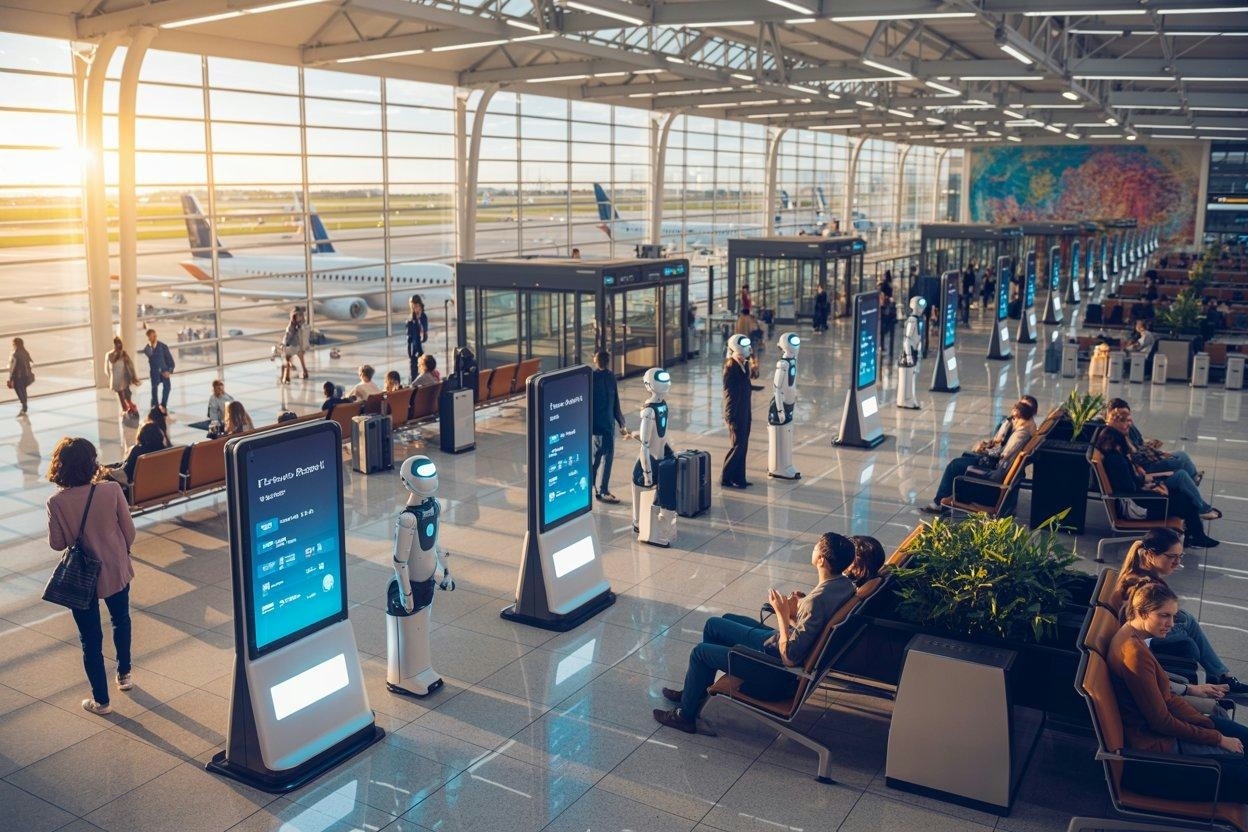
Travel Industry Adapts to AI While Preserving Unique Experiences
The global travel and tourism sector is experiencing a significant transformation as artificial intelligence (AI) increasingly influences how travelers search for, book, and engage with their journeys. Industry strategist Jacqueline Nunley highlights a shifting competitive landscape, where the contest extends beyond traditional rivalries among airlines and hotels to a broader challenge between the efficiency of machine logic and the irreplaceable value of human experience.
Across prominent destinations such as London, Paris, Dubai, and Sydney, AI-powered tools are playing a growing role in travel decision-making. Recent data indicates that up to 40% of travelers now utilize AI platforms for planning, with 25% comfortable entrusting AI to manage their bookings entirely. While these systems excel at optimizing price and efficiency, there is mounting concern that travel risks becoming a purely transactional process, devoid of the unique moments that render journeys memorable.
The Pricing Arms Race
Hospitality revenue managers in key cities have observed a new dynamic emerging from AI integration: agents powered by AI are exploiting dynamic pricing models by booking discounted rates during off-peak hours, often between 2:00 AM and 4:00 AM. This behavior has sparked a pricing arms race, where providers compete primarily on algorithmic speed rather than the quality or distinctiveness of their offerings. Consequently, even unique experiences—such as cultural tours or boutique accommodations—face the danger of being overlooked if they do not fit neatly into the structured data frameworks that AI systems depend upon.
The Risk of Losing the Human Touch
A fundamental challenge arises as AI optimizes for measurable factors like price, amenities, and ratings but struggles to capture the emotional resonance and contextual nuances that define meaningful travel experiences. For instance, a boutique guesthouse renowned for its live music or local expertise may be bypassed in favor of a large hotel chain that better aligns with AI search parameters. This trend threatens the industry’s most valuable asset: the ability to create memorable, authentic experiences that foster customer loyalty and generate word-of-mouth recommendations.
Industry Responses and Strategic Shifts
The potential over-reliance on automation has elicited varied responses within the travel sector. Some market observers express skepticism toward AI-driven services that fail to deliver the authenticity travelers desire. In response, certain competitors are enhancing AI capabilities to provide more tailored and immersive experiences, while others emphasize human-led services to distinguish themselves from fully automated platforms.
Recent developments illustrate this strategic balancing act. Indian online travel companies are expanding beyond simple ticket sales by integrating AI to offer comprehensive, personalized travel experiences that cater to diverse consumer preferences. Trip.com Group’s international expansion strategy focuses on leveraging AI alongside hyperlocalization to establish itself as the leading local player in each market, combining innovative technology with regional insights. Similarly, HBX Group’s acquisition of AI startup Bridgify aims to automate operations and improve cross-selling of travel experiences, signaling a commitment to operational efficiency without compromising customer engagement.
Navigating the AI Era
As AI continues to reshape the travel industry, the central challenge remains how airlines, hotels, and destinations can maintain visibility, relevance, and appeal in an AI-mediated environment. The solution may lie in striking an appropriate balance—employing AI to streamline logistics and personalize offerings while preserving the human touch and unique experiences that make travel truly unforgettable.

Etihad Airways Suspends Airbus A380 Flights on Key Route

Aditya Birla Group Seeks Approval for Aircraft Leasing in GIFT City

Qatar Airways Highlights Innovation and Connectivity at Arabian Travel Market 2026

Hong Kong's Five-Year Plan Includes Andrew Fan's Aircraft Parts Processing Hub Proposal

ACIA Aero Leasing Delivers ATR72-600 to Air Nostrum

RTX Appoints Jill Albertelli as Head of Pratt & Whitney

TAT Technologies Joins Beyond Aero Hydrogen Aircraft Program

AURAK Study Highlights Barriers to Air Taxi Adoption in Emerging Economies

Xiamen Air Selects Altitude for 787 Maintenance at Heathrow

Etihad and Swissport Extend Global Partnership
