Bild

AeroGenie — Ihr intelligenter Copilot.

Fragen Sie alles. Analysieren Sie alles. Handeln Sie sofort.

Trends

Categories

UK Airlines Use AI and WhatsApp to Reduce Passenger Queues
February 25, 2026By ePlane AI
UK Airlines Use AI and WhatsApp to Reduce Passenger Queues
0
0
AI In Aviation
Passenger Experience
Digital Messaging Platforms

UK Airlines Harness AI and WhatsApp to Alleviate Passenger Queues

Digital Messaging as a Strategic Response to Staffing Challenges

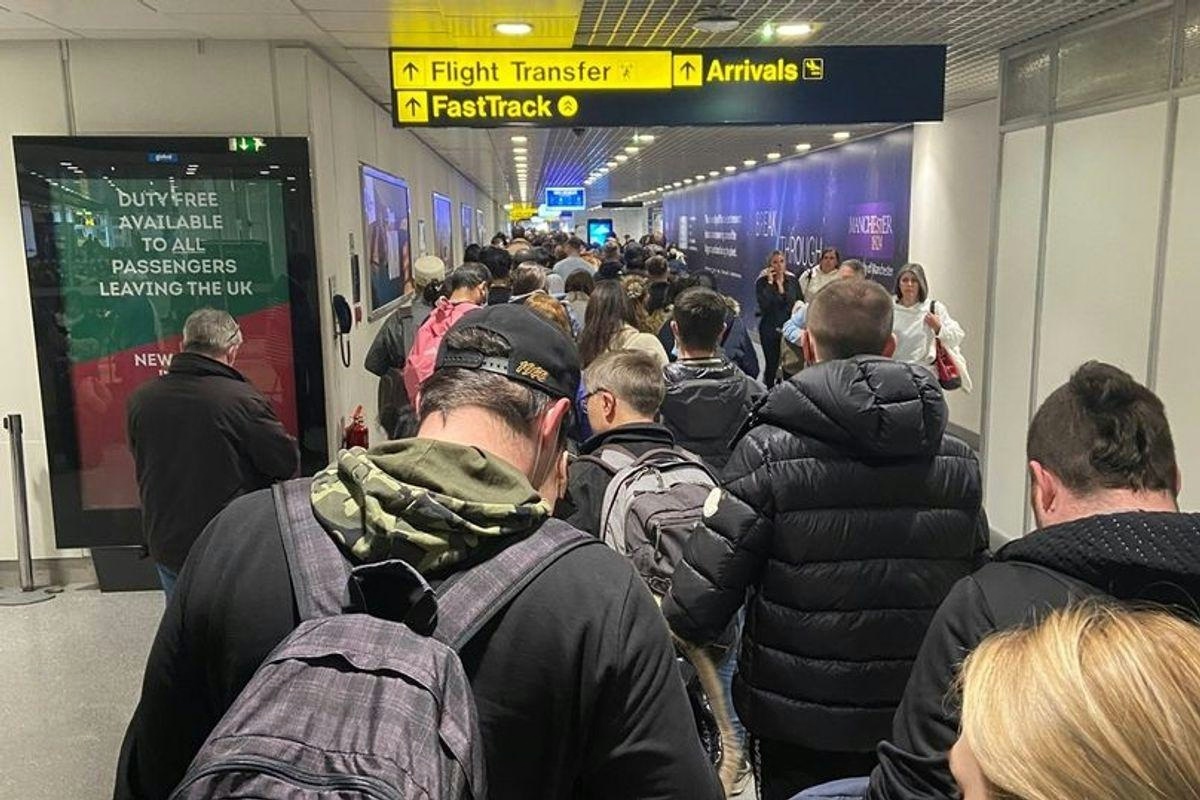
In response to persistent staffing shortages and anticipated border delays, UK airlines and travel operators are increasingly turning to advanced artificial intelligence (AI) and messaging platforms such as WhatsApp to manage passenger flows and reduce airport queues. These digital solutions are being implemented in preparation for longer immigration processing times associated with the forthcoming EU Entry/Exit System, as well as ongoing recruitment difficulties following Brexit, according to communications provider Infobip.

Airlines have intensified their use of proactive digital messaging to keep passengers informed well before they arrive at the airport. Automated notifications now extend beyond simple flight updates to include reminders about necessary documentation, live flight status, and the handling of more complex requests such as rebooking and baggage tracking. This approach is designed to divert routine inquiries away from airport counters and call centres, thereby allowing staff to concentrate on issues requiring direct, in-person assistance.

WhatsApp has emerged as a particularly effective channel for real-time, two-way communication with UK travellers. Virgin Atlantic, in collaboration with Infobip, piloted a WhatsApp chatbot at London Heathrow, which led to an 11% increase in online check-in rates. This rise in online check-ins contributes to smoother airport operations by reducing congestion at check-in counters and shortening queues during peak travel times. The chatbot also provides real-time flight updates, encouraging passengers to act promptly and navigate the airport more efficiently. Simon Langthorne, Head of CRM at Virgin Atlantic, emphasized that empowering customers with convenient, real-time notifications via WhatsApp not only enhances the travel experience but also optimizes airport operations.

Integrating AI: Benefits and Limitations

The deployment of agentic AI—systems capable of autonomously performing actions such as changing flights or providing baggage status updates—reflects growing consumer demand for swift and seamless service. Airlines are experimenting with digital service models that lessen dependence on airport staff for routine requests, a strategy driven by rising passenger volumes and the high costs of maintaining large operational teams.

Nonetheless, the integration of AI at scale presents significant challenges. Industry stakeholders express concerns regarding the maturity of AI technologies and their ability to make sound independent decisions in complex or exceptional circumstances. Successful implementation requires robust, enterprise-grade infrastructure and seamless integration with existing airline systems. Consequently, the effectiveness of AI in real-world operations has come under increased scrutiny.

Responses among competitors vary: some airlines are accelerating their AI initiatives to gain a competitive edge, while others adopt a more cautious stance, underscoring the necessity of human oversight in critical decision-making processes.

Enhancing Revenue and Passenger Service Through Conversational Channels

Beyond operational efficiencies, conversational platforms like WhatsApp are also being leveraged to support sales processes, enabling passengers to transition from enquiry to booking confirmation within a single chat interface. This integrated approach addresses rising customer expectations for fast and convenient service, particularly during periods of disruption.

James Stokes, Head of Enterprise for the UK and Nordics at Infobip, encapsulated the sector’s predicament by noting the immense pressure on the travel industry to deliver smooth passenger experiences despite systemic challenges.

As UK airlines continue to explore the potential of AI and messaging technologies, striking the right balance between automation and human judgment remains a central concern, with the overarching aim of enhancing both operational efficiency and the overall passenger journey.

More news
Seven Airlines to Launch Wide-Body Flights in Former Yugoslav Markets

Seven Airlines to Launch Wide-Body Flights in Former Yugoslav Markets

Seven Airlines to Launch Wide-Body Flights in Former Yugoslav Markets The upcoming summer season, spanning from March 29 to October 24, will see seven airlines operating regular wide-body services from former Yugoslav markets. A total of 1,836 wide-body flights have been scheduled in both directions, marking a modest 2.3% increase compared to last year. Nevertheless, this figure remains 25.8% below pre-pandemic levels recorded in 2019, largely due to diminished activity in the Croatian market. Notably, several major carriers that served Croatia seven years ago—such as American Airlines, Air Canada Rouge, Emirates, and Korean Air—are no longer operating there. However, United Airlines is set to introduce a new route from Newark to Split, signaling renewed interest from North American airlines in the region. Regional Capacity and Key Routes Belgrade is expected to lead the region in wide-body capacity this summer. Air Serbia plans to operate 812 flights to and from its hub, utilizing up to four Airbus A330-200 aircraft. This represents a 10.9% increase in operations compared to the previous year. The Serbian carrier will also launch seasonal flights between Belgrade and Toronto from May 23 to September 26. Alongside continued services by China Southern Airlines and Hainan Airlines, Belgrade’s wide-body seat capacity is projected to rise by 8.2%, reaching a total of 283,514 seats. In Zagreb, South Korean low-cost carrier T’way Air will resume its seasonal Seoul-Zagreb service on June 27 using the A330-200, marking its third consecutive year on the route. However, the airline will operate nine fewer roundtrips than last year. Air Transat will also return to Zagreb, maintaining its previous schedule with the A330-200 and resuming service on May 9. Although Air Transat will operate one fewer roundtrip than in the prior season, a one-off Montreal-Zagreb flight will keep the total number of flights consistent with 2025. Despite these efforts, Zagreb’s wide-body capacity is expected to decline by 10.2%, falling to 61,440 seats. United Airlines is poised to drive growth in Croatia’s wide-body capacity this summer by maintaining its Newark-Dubrovnik service with the Boeing 767-400 and adding an additional roundtrip. The airline will also inaugurate Newark-Split flights, offering three weekly rotations between April 30 and September 7 with the Boeing 767-300ER. Meanwhile, TUI Airways has scheduled 88 wide-body operations to Dubrovnik using its Boeing 787-8 aircraft. Competitive Landscape and Operational Challenges The entry and expansion of these seven airlines occur within an increasingly competitive environment. Established carriers such as Ethiopian Airlines and Israir are also expanding their long-haul routes in the region, intensifying competition. Market responses are expected to be mixed; while the availability of direct flights may stimulate passenger demand, concerns remain regarding pricing strategies and service quality. Competitors may respond with strategic adjustments, including increased flight frequencies or promotional offers, to protect their market share. Airlines also face logistical challenges, including securing airport slots and navigating complex regulatory frameworks across the region. These factors could affect the smooth implementation of new wide-body services. Despite these hurdles, the forthcoming summer season reflects cautious optimism for the recovery and growth of long-haul connectivity in the former Yugoslav markets.
Etihad Airways Withdraws Airbus A380 from 6 Major Global Routes

Etihad Airways Withdraws Airbus A380 from 6 Major Global Routes

Etihad Airways Withdraws Airbus A380 from Six Major Global Routes ABU DHABI – Etihad Airways has officially ceased Airbus A380 operations on six key international routes from its Abu Dhabi International Airport (AUH) hub, marking a notable shift in the airline’s long-haul strategy. Once among the few carriers operating the 486-seat superjumbo, the UAE-based airline is streamlining its fleet to better align with evolving market dynamics and operational requirements. Currently, Etihad operates seven active A380s from a fleet of nine, including one aircraft recently returned from storage in France. While the airline continues to deploy the double-decker on select high-demand routes, it has permanently withdrawn the A380 from major airports across Australia, the United States, Asia, and India. Discontinued A380 Routes and Impact The six routes from which the A380 has been withdrawn include John F. Kennedy International Airport (JFK) in New York, Sydney Airport (SYD), Melbourne Airport (MEL), Chhatrapati Shivaji Maharaj International Airport (BOM) in Mumbai, Incheon International Airport (ICN) in Seoul, and King Abdulaziz International Airport (JED) in Jeddah. New York JFK recorded the highest number of A380 departures among these destinations, with 2,413 flights operated between 2015 and 2020, and again from 2024 until mid-2025. Sydney followed closely with 2,194 departures, including periods of twice-daily service. Melbourne and Mumbai experienced shorter durations of A380 deployment, while Seoul and Jeddah saw limited or short-term operations. The withdrawal from Sydney and Melbourne effectively ends Etihad’s A380 presence in Australia, and the cessation of JFK flights removes the aircraft from the U.S. market. Operational and Market Considerations Etihad’s decision reflects broader industry challenges, including rising operational costs, shifting passenger demand, and intensifying competition. The replacement of the A380 with aircraft such as the Airbus A350-1000 may increase operational expenses due to new crew training requirements and adjustments in fleet utilization. While some passengers accustomed to the spacious cabins of the A380 may express disappointment, others may perceive little difference in their travel experience. Meanwhile, competitors like Emirates continue to invest heavily in the A380, potentially positioning themselves to attract travelers seeking the superjumbo experience. Etihad’s withdrawal could prompt competitive responses as airlines vie for market share on high-demand routes. Despite these challenges, Etihad’s robust financial performance—highlighted by a near 50% increase in net profit and ongoing fleet expansion plans—demonstrates the airline’s confidence in managing this transition while maintaining its competitive position. Changes on the New York Route Etihad operated its final A380 flight to New York JFK on June 23, 2025, replacing the aircraft with the Airbus A350-1000, which offers 371 seats across two classes. The A350-1000 introduces Etihad’s latest business class product but eliminates the First Class Apartments and The Residence suites previously available on the A380. This redeployment also frees up A380 capacity for other long-haul markets. Between July and November 2025, Etihad carried 162,677 round-trip passengers on the JFK route, with both seat capacity and traffic declining by approximately 9 to 10 percent compared to the previous year. Current and Future A380 Network Looking ahead, Etihad plans 2,104 A380 departures from Abu Dhabi in 2026, marking its fourth-highest annual deployment. The A380 will continue to serve five destinations: London Heathrow (LHR), Paris Charles de Gaulle (CDG), Singapore Changi (SIN), Narita International (NRT) in Tokyo, and Toronto Pearson (YYZ). Notably, Tokyo Narita will receive its first-ever Etihad A380 service beginning June 17, 2026, while Singapore joined the network last year, expanding Etihad’s high-capacity footprint in Southeast Asia. As Etihad reshapes its long-haul network, the airline remains focused on balancing operational efficiency, passenger preferences, and competitive positioning within a rapidly evolving global aviation landscape.
Archer Aviation Sues Vertical Aerospace Over Valo Air Taxi Design, Impacting Major Airlines

Archer Aviation Sues Vertical Aerospace Over Valo Air Taxi Design, Impacting Major Airlines

Archer Aviation Initiates Legal Action Against Vertical Aerospace Over Valo Air Taxi Design A significant legal confrontation has emerged between Archer Aviation and Vertical Aerospace, drawing the attention of major international airlines including United Airlines, Delta Air Lines, American Airlines, British Airways, and Virgin Atlantic. Archer has filed a lawsuit in a federal court in the Eastern District of Texas, accusing the UK-based Vertical Aerospace of infringing on patents related to Archer’s Midnight electric vertical takeoff and landing (eVTOL) aircraft through the design of Vertical’s newly introduced Valo air taxi. The lawsuit alleges that key design elements of the Valo—specifically its fuselage, wing structure, V-tail configuration, and flight control systems—bear substantial similarity to patented features of Archer’s Midnight model. Archer is seeking both an injunction to halt production or deployment of the Valo and monetary damages. Vertical Aerospace has categorically denied these claims, maintaining that the Valo was developed independently and is safeguarded by its own intellectual property rights. Implications for the Advanced Air Mobility Sector and Airline Industry This dispute arises at a critical juncture for the advanced air mobility industry, as both companies have announced plans to deploy electric air taxi networks aimed at connecting airports with city centers in major metropolitan hubs such as New York and London. These services are poised to significantly reduce transfer times for premium airline passengers and short-stay tourists, potentially revolutionizing urban transportation and enhancing the overall passenger experience. The timing of the lawsuit coincides with a resurgence in transatlantic travel demand. The United Kingdom anticipates 45.5 million inbound visits by 2026, while international arrivals in the United States continue to recover across key markets. Airlines, many of which are investing in or forming partnerships with air taxi developers, view improved airport connectivity as a cornerstone of their future operational strategies. The outcome of this legal battle could directly influence the speed at which ultra-fast airport transfer services become commercially available, thereby affecting competitive dynamics and the trajectory of innovation within urban air mobility. Archer’s litigation against Vertical adds to its ongoing intellectual property disputes with other eVTOL manufacturers, including Joby Aviation, underscoring the increasing significance of patent protection in this rapidly evolving sector. The case has attracted heightened scrutiny from investors, who may reconsider the risk profiles of companies engaged in the eVTOL market. In response, competitors are expected to bolster their patent portfolios and intensify public relations efforts to defend their technological claims. While both Archer and Vertical await certification from aviation regulators for their respective aircraft, the resolution of this lawsuit could establish important legal precedents governing technology development and market entry in the eVTOL industry. For airlines and travelers, the stakes remain substantial, as the dispute’s outcome may determine the timeline for the introduction of next-generation airport-to-city air taxi services on both sides of the Atlantic.
Philippine Airlines Reduces Wait Times Using AI Contact Center

Philippine Airlines Reduces Wait Times Using AI Contact Center

Philippine Airlines Reduces Wait Times Using AI Contact Center Modernizing Customer Service Through Digital Transformation Philippine Airlines has significantly improved its customer service operations by implementing Twilio Flex, an AI-powered contact center platform. This strategic move has reduced average customer wait times to under one minute, marking a substantial enhancement in service efficiency. The initiative forms part of a comprehensive modernization program launched following the airline’s 2021 restructuring, aimed at streamlining customer interactions and boosting operational performance. As Asia’s oldest continuously operating commercial airline, Philippine Airlines serves approximately 31 domestic and 39 international destinations, with passenger numbers exceeding 16 million in 2025. The modernization effort addresses the fragmentation of customer service channels, particularly during peak travel periods and disruption events such as flight delays or cancellations. By consolidating communications across voice, chat, and online platforms, the airline provides its agents with a unified view of each passenger’s journey, enabling faster and more personalized responses. Mark Anthony Munsayac, Vice President for Customer Experience, emphasized the airline’s commitment to digital transformation and cultural reshaping. He noted that customer service and loyalty are now central to the airline’s recovery strategy, alongside fleet upgrades and selective route expansion. Since emerging from Chapter 11 restructuring in 2021, Philippine Airlines has reported improved financial and operational results, including a return to profitability. Integration, Challenges, and Industry Context The new contact center platform integrates seamlessly with the airline’s existing customer systems, facilitating a more cohesive service experience. Expanded self-service options and reduced handling times have contributed to operational efficiencies and cost savings. According to internal data cited by Munsayac, the average wait time in the contact center has dropped to less than one minute since the platform’s implementation. Despite these gains, the transition to AI-driven customer service has presented challenges. The airline has made significant upfront investments in technology and staff training to ensure effective integration of AI systems. Customer reactions have been mixed; while many appreciate the faster service, some remain cautious about the reliability of AI interactions. Competitors in the airline industry are responding diversely, with some adopting similar technologies and others reinforcing human-centric service models to maintain competitive advantage. This dynamic unfolds amid broader industry uncertainty driven by rapid advancements in artificial intelligence, which continue to shape consumer expectations and competitive strategies. Future Plans and Strategic Outlook Looking forward, Philippine Airlines intends to expand automation across both chat and voice channels, introducing new functionalities for rebookings and bookings, particularly during periods of high contact volume caused by disruptions. Munsayac highlighted that these improvements have contributed to a notable increase in customer satisfaction, which recent measurements place at approximately 95%, positioning the airline among the industry’s stronger performers. The platform is also being utilized to enhance cross-departmental communication, linking customer experience, marketing, engineering, and loyalty teams. This integration allows for targeted messaging, such as reminders to frequent flyers who have not prepaid for baggage. The airline is in the final stages of designing an end-to-end communication platform aimed at delivering a more personalized passenger experience. As Philippine Airlines advances its digital transformation, it continues to balance technological innovation with the imperative of maintaining customer trust in a rapidly evolving market environment.
Aviation Regulator Considers Harsher Penalties and Safety Ratings for Charter Operators

Aviation Regulator Considers Harsher Penalties and Safety Ratings for Charter Operators

Aviation Regulator Proposes Stricter Penalties and Public Safety Ratings for Charter Operators Heightened Regulatory Response Following Fatal Crashes In the wake of two tragic crashes involving small charter aircraft within a single month, which resulted in the loss of 12 lives, India’s Directorate General of Civil Aviation (DGCA) is poised to implement comprehensive reforms targeting non-scheduled operator permit (NSOP) holders, including charter and private jet operators. These measures aim to enhance safety standards and restore public confidence in the country’s charter aviation sector. Central to the DGCA’s proposals is the introduction of a public safety rating system for charter operators. These ratings, based on operators’ safety records, will be published on the regulator’s official website. Additionally, operators will be mandated to disclose critical safety information on their own platforms, including details about aircraft age, maintenance history, and pilot experience. This transparency initiative is designed to empower customers with essential information regarding the safety standards of the aircraft they choose to charter. Stricter Enforcement and Accountability Measures The DGCA plans to enforce more severe penalties for safety violations. Pilots found breaching flight duty time limits or attempting landings below prescribed safety minima could face license suspensions of up to five years. Operators failing to comply with regulatory standards risk suspension of their operating licenses. These measures come amid increased scrutiny following a series of aviation incidents, including Air India’s recent grounding of a Boeing 787-9 due to a fuel switch error, highlighting the urgent need to reinforce safety culture within the industry. During a recent meeting with all NSOP operators, the DGCA underscored that safety must take precedence over commercial considerations, including charter commitments and VIP movements. The regulator reaffirmed that decisions made by pilots-in-command to divert, delay, or cancel flights on safety grounds are final and must not be overridden by operators for commercial reasons. The meeting identified several critical issues contributing to recent accidents, such as non-adherence to standard operating procedures (SOPs), inadequate flight planning, and deficiencies in pilot training. In response, the DGCA announced a zero-tolerance policy toward safety compromises in the NSOP sector, accompanied by immediate measures including mandatory public disclosure of fleet and crew safety data, increased random audits of cockpit voice recorders, fuel records, and technical logs to detect unauthorized operations or data falsification. Furthermore, the regulator emphasized personal accountability for senior management in cases of systemic non-compliance, extending responsibility beyond pilots alone. Enhanced oversight will be applied to older aircraft and those undergoing ownership changes. Maintenance facilities will be subject to rigorous audits, with mandatory outsourcing to approved organizations if deficiencies are identified. The DGCA also called for the implementation of real-time weather update systems and stricter adherence to SOPs, supported by recurrent pilot training focused on weather awareness and decision-making. Implications for the Charter Aviation Market These reforms are expected to increase operational costs for charter operators, who may need to invest significantly in compliance and safety upgrades. Market dynamics could shift as consumers increasingly favor operators with higher safety ratings, potentially providing a competitive advantage to those who adapt swiftly. Industry players may respond by enhancing their own safety protocols or lobbying against the proposed regulatory changes. A senior DGCA official encapsulated the regulator’s firm stance: “The message is clear to NSOP operators: Either operate with 100% compliance of all norms or surrender your licence and go home. They have to fall in line or be out of business.” With the aviation sector under intense scrutiny, the DGCA’s decisive actions signal a renewed commitment to prioritizing passenger safety and operational transparency across India’s charter flight industry.
Advanced Fighter Jet Integrates AI for Threat Detection

Advanced Fighter Jet Integrates AI for Threat Detection

Advanced Fighter Jet Integrates AI for Threat Detection Breakthrough in Combat Identification Technology Lockheed Martin has achieved a significant milestone by successfully flight testing an artificial intelligence-enabled Combat Identification capability on the F-35 Lightning II. Conducted at Nellis Air Force Base, this demonstration marks the first instance in which a tactical AI model independently generated combat identification during flight, enhancing the pilot’s ability to detect and classify hostile radar emissions with greater precision. The test was part of Project Overwatch, an initiative that integrated a proprietary machine learning model into the F-35’s information fusion system. Unlike conventional heads-up displays, the F-35 delivers flight and threat data directly onto the pilot’s helmet visor and a wide-area cockpit display. During the trial, pilots received identification cues simultaneously from both the legacy system and the new AI model, enabling real-time comparison and validation of threat information. Addressing Complex Threat Environments The AI system demonstrated a remarkable capacity to resolve ambiguities among complex radiofrequency emitters, a challenge that has intensified as modern air defense systems frequently modify radar modes, wavelengths, and transmission patterns. Traditional systems often flag unfamiliar signals without providing precise identification, leaving pilots to make critical decisions amid uncertainty. This challenge was exemplified during NATO patrols following Russia’s invasion of Ukraine, where F-35 pilots encountered S-300 (SA-20) missile systems operating in previously uncataloged modes. While the aircraft detected these emissions, positive identification was only possible after ground teams updated the threat database. Project Overwatch seeks to shorten this cycle by enabling engineers to label new emitters, retrain the AI model within minutes, and reload updated software during the same mission planning window. This rapid reprogramming capability reduces decision latency and significantly enhances situational awareness in contested airspace. Implications and Industry Response As air defense environments grow increasingly complex, the integration of AI introduces both opportunities and challenges. Ensuring robust cybersecurity is critical to protect AI systems from adversarial attacks, particularly as threat actors employ AI to accelerate reconnaissance and evade detection. The reliability of AI-driven identification depends heavily on the quality and integrity of training data, raising concerns about potential misuse or skewed outputs. The defense industry is actively responding to these technological shifts. The ongoing AI supercycle is anticipated to drive a surge in mergers and acquisitions within aerospace and defense sectors, as companies seek to consolidate expertise and maintain competitive advantage. Rival firms are accelerating their own AI integration efforts, focusing on developing trustworthy and secure systems to mitigate risks associated with data manipulation and adversarial threats. Lockheed Martin’s demonstration represents a pivotal advancement in combat aviation, underscoring both the promise and complexity of deploying AI in high-stakes operational environments. As AI becomes increasingly embedded in defense platforms, the industry faces the dual imperative of harnessing technological advantages while safeguarding against emerging risks.
Air Canada Begins Repatriation Flights from Puerto Vallarta Amid Cartel Violence

Air Canada Begins Repatriation Flights from Puerto Vallarta Amid Cartel Violence

Air Canada Initiates Emergency Repatriation Flights from Puerto Vallarta Amid Cartel Violence **Toronto** — In response to escalating cartel violence in Puerto Vallarta, Mexico, Air Canada has commenced emergency repatriation flights to evacuate hundreds of Canadian travelers stranded by the unrest. The airline has deployed its long-haul Boeing 787-9 Dreamliners to maximize passenger capacity and expedite the return of affected individuals. This swift action follows a weekend marked by severe disruptions to transport infrastructure across the state of Jalisco. Surge in Violence and Its Impact on Travel The crisis began on Sunday, February 22, after a military operation in Tapalpa resulted in the death of Nemesio Oseguera Cervantes, known as "El Mencho," the leader of the Jalisco New Generation Cartel (CJNG). In retaliation, cartel members orchestrated widespread "narco-blockades," setting fire to vehicles at more than 250 locations across 20 Mexican states. Puerto Vallarta and Guadalajara experienced some of the most intense violence, with street clashes and arson severely disrupting daily life and leaving many tourists stranded. In light of these events, Air Canada initially suspended all flights to Puerto Vallarta for two days due to safety concerns. However, the airline announced on Monday that it would resume operations under a modified schedule designed to facilitate the evacuation of Canadian travelers. By replacing standard narrowbody aircraft with 298-seat Boeing 787-9 Dreamliners, Air Canada aims to clear the backlog of passengers awaiting departure in hotels and airport terminals. Coordinated Repatriation Efforts and Industry Response Air Canada’s decision to resume flights followed consultations with the Government of Canada and Mexican authorities. The airline confirmed that full operations from Montreal, Toronto, and Vancouver to Puerto Vallarta would recommence on Tuesday, February 24. The use of larger aircraft from Toronto and Montreal is intended to provide an additional 258 seats of capacity, accelerating the repatriation process. The operation faces considerable challenges, including ensuring passenger safety amid ongoing security risks, managing complex logistics, and maintaining close coordination with Mexican officials. The volatile situation has also affected the broader aviation industry, with increased insurance costs and heightened travel advisories. Several major carriers, including American Airlines, United Airlines, and Southwest Airlines, have suspended flights to the region, underscoring widespread concerns about traveler safety. Safety Advisories and Travel Recommendations While Air Canada resumes its flights, Global Affairs Canada continues to advise extreme caution for Canadians in the area. The federal government updated its travel advisory on Tuesday, emphasizing that although no significant new security incidents had been reported in the previous 24 hours, the situation remains unpredictable. Canadians are urged to proceed to the airport only if their flights are confirmed and to maintain a low profile while traveling to the terminal. Monitoring local media for updates on roadblocks or curfews is also strongly recommended. Updated Flight Schedule for Repatriation To support the evacuation effort, Air Canada has upgraded or rescheduled key flights departing on February 24, 2026. Flights from Toronto (AC 1262) and Montreal (AC 1323) to Puerto Vallarta have been upgraded to Boeing 787-9 aircraft, increasing seating capacity. Additionally, service from Vancouver (AC 1266) to Puerto Vallarta has resumed. As the situation continues to develop, Air Canada and Canadian authorities remain vigilant, prioritizing the safe return of citizens amid ongoing instability in the region.
ANAC Launches Public Consultations on Reliability-Based Maintenance Rules

ANAC Launches Public Consultations on Reliability-Based Maintenance Rules

ANAC Initiates Public Consultations on Reliability-Based Maintenance Regulations Brazil’s National Civil Aviation Agency (ANAC) has commenced two 90-day public consultations, beginning on 24 February 2026, concerning proposed Instruções Suplementares (IS) that could substantially transform airline maintenance practices and influence fleet availability for corporate travel. The draft regulations—IS 120-017A and IS 91.409-002A—seek to harmonize Brazilian maintenance standards with international benchmarks established by the US Federal Aviation Administration (FAA) and the European Union Aviation Safety Agency (EASA). Proposed Regulatory Changes and Industry Impact IS 120-017A introduces statistical criteria for reliability-centered maintenance (RCM), permitting airlines to extend component overhaul intervals when supported by comprehensive performance data. Meanwhile, IS 91.409-002A requires rigorous engine trend monitoring aimed at preventing in-flight power-loss events. ANAC projects that these reforms could yield annual direct maintenance cost savings exceeding R$120 million for Brazilian operators. Such financial efficiencies may enable carriers to increase flight frequencies on less profitable domestic routes, thereby enhancing regional business connectivity. Additionally, improved engine health monitoring is anticipated to bolster on-time performance across the national network. Context of Regulatory Scrutiny and Industry Response These initiatives emerge amid intensified global scrutiny of aviation oversight frameworks. Recent audits, including evaluations of United Airlines’ maintenance supervision, have exposed challenges such as oversight deficiencies, workforce shortages, and erosion of institutional knowledge within regulatory bodies. These findings have intensified demands for more stringent regulatory controls and greater transparency. Consequently, industry analysts expect ANAC’s proposed reforms to invite similar scrutiny within Brazil, potentially compelling regulators to reinforce oversight mechanisms and mitigate risks observed in other jurisdictions. In response, some industry participants are proactively adopting enhanced maintenance protocols and deploying advanced management systems. For instance, companies like PEMAC are prioritizing reliability and regulatory compliance through sophisticated maintenance management platforms, thereby establishing elevated standards for operational safety and efficiency. Implications for Corporate Travel and Stakeholder Engagement The regulatory changes may necessitate adjustments in scheduling and crew management for corporate travel planners. Platforms such as VisaHQ are positioned to assist by providing streamlined visa application services for Brazilian-bound crew members and assignees, offering updated entry requirements and guided support to facilitate mobility management. Stakeholders—including air operator certificate (AOC) holders, maintenance, repair, and overhaul (MRO) providers, and industry associations—are invited to submit feedback through ANAC’s Consultas Setoriais portal by 4 December 2026. The finalization of these rules is anticipated in the second quarter of 2027, with a phased implementation period ranging from 12 to 24 months for affected carriers. Global mobility teams and industry observers are advised to monitor the progression of this rule-making process closely. While extended maintenance intervals could enhance aircraft availability and reduce last-minute cancellations that disrupt business travel, the introduction of stricter engine trend monitoring may initially increase maintenance-related groundings as airlines adapt to new data collection and analysis requirements. The evolving regulatory landscape will continue to demand a careful balance between cost efficiency, operational reliability, and robust oversight.
Do the Airbus A380 and A340-600 Share the Same Engines?

Do the Airbus A380 and A340-600 Share the Same Engines?

Do the Airbus A380 and A340-600 Share the Same Engines? A common misconception within aviation circles is that the Airbus A380 and A340-600 share the same engines. This assumption largely stems from the fact that both aircraft are four-engined widebodies from Airbus and have featured Rolls-Royce Trent branding in certain configurations. However, the reality is more complex and highlights important distinctions in engine design and application. Engine Differences and Technical Specificities The Airbus A340-600 was specifically engineered around the Rolls-Royce Trent 500 series, with the Trent 556 variant being the primary engine developed to meet the long-haul performance requirements of the A340-500 and A340-600 models. These engines were tailored with different thrust ratings to suit the unique demands of each aircraft variant. Conversely, the Airbus A380 was introduced with two distinct engine options: the Rolls-Royce Trent 900 and the Engine Alliance GP7200. The latter is a product of a joint venture between General Electric and Pratt & Whitney. Importantly, the A380 cannot operate with Trent 500 engines, nor can the A340-600 be fitted with the Trent 900 or GP7200. Despite sharing some design principles and manufacturing expertise within the Trent engine family, the hardware is not interchangeable between these aircraft. This differentiation in engine selection has broader implications for market dynamics and airline operational strategies. The A380’s dual engine options and the A340-600’s reliance on the Trent 556 have influenced airline preferences, particularly in the context of fuel efficiency, maintenance, and performance. Recent challenges in engine supply chains, including production disruptions linked to disputes with Pratt & Whitney, have further complicated Airbus’s sourcing strategies. In response, Airbus has sought additional engines from CFM International, a joint venture between Safran and GE Aerospace, underscoring the complexity of engine procurement in today’s aerospace industry. While aerospace manufacturers often develop families of engines that share core architecture and technological advancements, they rarely produce direct replacements that can be swapped across different aircraft types. This explains Airbus’s decision to offer two engine suppliers for the A380 and why the ongoing efficiency debate between the Trent 900 and GP7200 remains a significant topic within the industry. Analysts continue to evaluate how factors such as load factor, mission length, aircraft weight, and operational constraints influence the per-seat efficiency of large aircraft. A Brief Overview of the Airbus A340-600 Introduced in the early 2000s, the Airbus A340-600 was the stretched, long-range flagship of the A340 family. Designed to compete with the Boeing 747 in passenger capacity, it featured an advanced wing design, additional centerline landing gear, and increased fuel capacity to support ultra-long-haul missions. Typical seating configurations accommodate approximately 380 to 384 passengers, though this varies by airline. Despite its reputation for smooth, quiet cruising and strong payload-range capabilities, the A340-600 struggled to maintain competitiveness against newer, more fuel-efficient twin-engine widebodies such as the Airbus A330, A350, and Boeing 777 and 787. Rising fuel costs and the superior economics of twinjets ultimately led to the end of the A340 program, although a limited number of A340-600s remain in service today. While the A380 and A340-600 share certain design heritage, their distinct engine choices reflect broader trends and challenges within the aviation industry, encompassing technological evolution, operational efficiency, and supply chain complexities.
Explosive Trace Detection Market Projected to Reach $2.72 Billion by 2031

Explosive Trace Detection Market Projected to Reach $2.72 Billion by 2031

Explosive Trace Detection Market Projected to Reach $2.72 Billion by 2031 Market Growth Driven by Security Enhancements and Technological Innovation According to a recent report by Mordor Intelligence, the global explosive trace detection (ETD) market is anticipated to expand significantly, growing from $1.85 billion in 2026 to $2.72 billion by 2031. This growth corresponds to a compound annual growth rate (CAGR) of 8.06%, underpinned by increasing global security concerns, stringent regulatory frameworks, and the ongoing modernization of airport and cargo screening infrastructure worldwide. Market Overview and Key Drivers The ETD market is witnessing robust expansion as governments intensify efforts to strengthen aviation and cargo security protocols. Explosive trace detection systems have become essential components in airports, cargo terminals, defense installations, and critical infrastructure, where they facilitate the identification of trace explosive materials. The drive to enhance passenger and freight screening processes, alongside airport expansions and upgrades in cargo handling facilities, is propelling the adoption of advanced ETD technologies. Several key trends are shaping the market landscape. The integration of artificial intelligence into ion mobility spectrometry analyzers is reducing false alarm rates while preserving high detection sensitivity, thereby improving checkpoint efficiency and minimizing operational delays. Regulatory bodies, particularly in Europe, are enforcing more rigorous cargo screening mandates, prompting logistics operators to deploy both portable and fixed ETD systems to ensure compliance. Additionally, advancements in sensor miniaturization have led to the development of dual-mode vapor and particle detection systems, which are increasingly incorporated into drones and mobile platforms to enable remote inspections in high-risk or restricted environments. Market Segmentation and Competitive Dynamics The ETD market is segmented across multiple dimensions, including product type—comprising handheld, portable/movable, and fixed systems—and detection technologies such as ion mobility spectrometry (IMS), mass spectrometry (MS), Raman and FTIR spectroscopy, differential ion trap mobility, as well as colorimetric and chemiluminescence methods. Sampling modes include particle-swab, vapor-sniffer, and dual-mode systems. End-use sectors span commercial applications, defense, critical infrastructure and law enforcement, and cargo and logistics. Geographically, the market covers North America, Europe, Asia-Pacific, South America, the Middle East, and Africa. The competitive landscape is moderately concentrated, with leading companies such as Smiths Detection Group Ltd., Rapiscan Systems, Teledyne Technologies, Bruker Corporation, and Leidos Holdings dominating the sector. Competition primarily revolves around detection accuracy, cost efficiency, user-friendliness, and after-sales support. To address evolving market demands and regulatory challenges, these firms are investing heavily in research and development, forging strategic partnerships, and enhancing product capabilities. Despite promising growth prospects, the market faces challenges including stringent regulatory compliance, rapid technological evolution, and competition from emerging entrants. These factors are driving increased innovation and efforts to broaden market penetration while optimizing cost-effectiveness. Outlook As global trade and passenger traffic continue to recover, the ETD market is positioned for sustained expansion. The forecast underscores a growing preference for portable and dual-mode detection systems that offer a balance between operational efficiency and detection precision. With evolving security threats and ongoing upgrades to screening infrastructure, explosive trace detection technologies are expected to remain integral to global security frameworks, supporting the market’s projected valuation of $2.72 billion by 2031.
line










