Bild

AeroGenie — Ihr intelligenter Copilot.

Fragen Sie alles. Analysieren Sie alles. Handeln Sie sofort.

Trends

Categories

Unilode and SATCO Expand Partnership with New LAX MRO Facility and Supply Agreement
March 17, 2026By ePlane AI
Unilode and SATCO Expand Partnership with New LAX MRO Facility and Supply Agreement
0
0
Unilode Aviation Solutions
SATCO
LAX MRO Facility

Unilode and SATCO Expand Partnership with New LAX MRO Facility and Supply Agreement

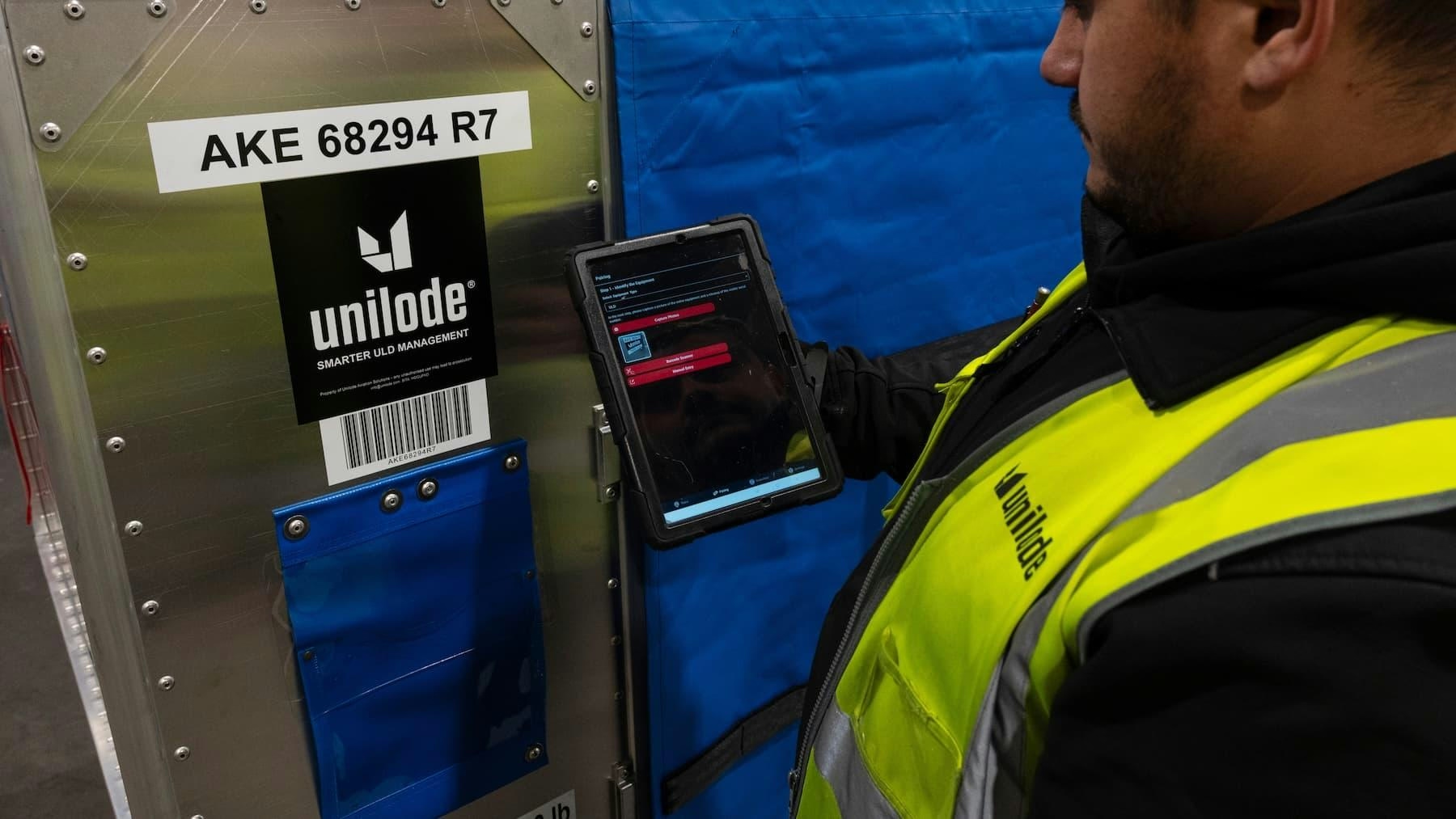
Unilode Aviation Solutions and SATCO, a prominent manufacturer of aviation cargo equipment and restraint systems, have announced a significant expansion of their strategic partnership through the inauguration of a new maintenance, repair, and overhaul (MRO) facility at Los Angeles International Airport (LAX). This development coincides with the signing of a long-term cargo net supply agreement, further solidifying the collaboration between the two companies.

Strengthening Regional Presence and Service Capabilities

The jointly invested LAX facility will enable Unilode to offer on-site unit load device (ULD) maintenance and repair services, directly supporting SATCO’s growing installed base throughout the Americas. This initiative forms part of Unilode’s broader strategy to enhance its regional footprint by replicating its established global MRO model, thereby ensuring consistent service standards across its network. The facility is expected to improve operational efficiency and responsiveness, addressing the increasing demand for reliable ULD maintenance in a critical logistics hub.

Navigating Industry Challenges Through Strategic Collaboration

The expansion arrives amid mounting challenges within the aviation logistics sector. The market for used aircraft and engine parts remains intensely competitive, with companies such as AerSale reporting ongoing difficulties in sourcing essential feedstock. Furthermore, regulatory scrutiny and operational volatility continue to affect supply chain dynamics. The MRO sector itself is grappling with constrained capacity, unpredictable material lead times, and limited engine shop availability—factors that have compelled airlines like Alaska Airlines to revise their sourcing strategies.

In response to these pressures, Unilode’s decision to source ULD-related products from SATCO aims to bolster supply chain resilience and support sustained operational performance. This partnership reflects a strategic approach to industry challenges, paralleling moves by competitors who are forging alliances to secure critical parts and enhance supply chain stability, as exemplified by StandardAero’s recent agreement with Robinson Helicopter Company.

Janis Balkens, Chief Operations Officer of Unilode, highlighted the importance of the expanded partnership, stating, “The opening of the new LAX facility and our decision to integrate SATCO nets into the Unilode network mark an important step forward in our partnership. This collaboration mirrors the successful operating model we have established globally, strengthens our supply chain, and reinforces the strong relationship we have built with SATCO. We value this partnership and look forward to growing together in support of our customers worldwide.”

Michael Howell, Senior Vice President of Operations at SATCO, underscored the shared commitment between the companies: “We place great importance on long-term relationships built on trust, quality, and shared values. The opening of the LAX facility and our expanded partnership with Unilode reflect our shared commitment to supporting the global air cargo industry with reliable safety-first products, including SATCO’s industry-leading Fire Resistant ULDs and Fire Containment Covers.”

As the air cargo and MRO sectors continue to confront supply chain complexities and competitive pressures, the Unilode-SATCO partnership at LAX is poised to deliver enhanced operational capabilities and improved customer support across the Americas.
More news
Boeing Adjusts Supply Chain Amid Conflict Zone Challenges

Boeing Adjusts Supply Chain Amid Conflict Zone Challenges

Boeing Adjusts Supply Chain Amid Conflict Zone Challenges Supply Chain Disruptions Linked to Middle East Conflict Boeing is undertaking a comprehensive reassessment of its global supply chain in response to escalating conflict in the Middle East, which is disrupting critical transport corridors and introducing new risks to aircraft production. In March 2026, the aerospace manufacturer requested that its suppliers evaluate their exposure to the region, particularly regarding shipping and logistics, as rising tensions threaten the smooth transit of essential components across continents. Although the Middle East is not a primary source of aircraft parts, its strategic position as a transit hub connecting Europe, Asia, and Africa makes it a vital link in Boeing’s supply network. The recent escalation of conflict, notably in Iran, has compelled cargo operators to reroute shipments, resulting in longer transit times and complicating the delivery of time-sensitive materials. These logistical diversions, coupled with a tightening of global air freight capacity and surging oil prices approaching $100 per barrel, have driven up transportation costs and intensified pressure on already strained supply chains. Boeing’s review extends beyond its immediate suppliers to include lower-tier partners who may rely on affected airspace or shipping lanes. Companies have been instructed to report any dependence on routes passing through the conflict zone, as even minor delays risk disrupting assembly schedules and delivery commitments. The company emphasized, “As we continue to monitor the situation in the Middle East, we are assessing potential impacts to the stability of our supply chain.” Broader Industry Challenges and Market Implications The supply chain difficulties are compounded by broader challenges facing the aviation sector. The industry is still recovering from disruptions triggered by the COVID-19 pandemic, including persistent shortages of semiconductors, castings, engine parts, and skilled labor. Many manufacturers, including Boeing, operate with limited inventory buffers, rendering them vulnerable to even modest logistical setbacks. Additionally, rising production costs driven by tariff volatility and labor shortages further complicate efforts to sustain stable output. Despite a surge in commercial aircraft orders in January 2026 that signals renewed confidence in the aerospace market, ongoing conflicts in the Middle East are constraining air cargo capacity and elevating freight rates, threatening to undermine these positive trends. The instability is also impacting global food supply chains, with increased production costs and disruptions in key imports and exports potentially affecting Boeing indirectly through higher operational expenses and delivery delays. Beyond logistics, the Middle East remains a critical market for Boeing, particularly for long-haul widebody aircraft favored by major carriers such as Emirates, Qatar Airways, and Etihad Airways. These airlines represent a significant portion of Boeing’s widebody backlog and future growth prospects. Prolonged instability in the region could therefore have repercussions not only on production and delivery schedules but also on demand for new aircraft. As Boeing and its suppliers navigate these multifaceted challenges, the company’s proactive review seeks to identify vulnerabilities early and mitigate risks that could slow production. However, with rising costs, tariff uncertainties, and ongoing labor shortages, maintaining steady production flows is becoming increasingly complex amid a volatile global environment.
GA Telesis Engine Services Secures CFM56-7B Overhaul Contract with Garuda Indonesia

GA Telesis Engine Services Secures CFM56-7B Overhaul Contract with Garuda Indonesia

GA Telesis Engine Services Secures CFM56-7B Overhaul Contract with Garuda Indonesia Strategic Partnership Amid Industry Challenges GA Telesis Engine Services (GATES), the maintenance, repair, and overhaul (MRO) division of GA Telesis LLC, has been awarded a pivotal contract to provide overhaul services for the CFM56-7B engines powering Garuda Indonesia’s Boeing 737 Next-Generation fleet. The contract, secured through a competitive Request for Proposal (RFP) process, marks a significant collaboration between the two companies. The first engine under this agreement is currently en route to GATES’s primary facility in Helsinki, Finland, where it will undergo a comprehensive performance restoration. Gunnar Sigurfinnsson, President of GA Telesis Engine Services, expressed the company’s pride in being entrusted with Garuda Indonesia’s critical engine assets. He highlighted the Helsinki facility’s capability to deliver precise technical services and industry-leading turnaround times, which are essential to maintaining the operational excellence of a premier carrier such as Garuda. Avinash Singh, Vice President of Sales for the Asia-Pacific and Middle East regions, underscored the strategic importance of this contract, noting that it demonstrates GATES’s ability to balance technical reliability with cost efficiency. Singh described the arrival of the first Garuda engine at the Helsinki shop as a milestone that signals the beginning of a long-term partnership with Indonesia’s national airline. From Garuda Indonesia’s perspective, Pak Mukhtaris, Director of Maintenance, emphasized the airline’s confidence in GA Telesis as a global MRO provider. He noted that the company’s reputation for quality and flexible service offerings aligns closely with Garuda’s commitment to safety and operational performance, particularly as the airline continues to optimize its CFM56-7B fleet. Navigating Supply Chain Disruptions in the Aviation Aftermarket This contract comes at a challenging time for the global aviation aftermarket, which is grappling with significant supply chain disruptions. Ongoing conflicts in the Middle East have adversely affected air cargo capacity and freight rates, intensifying existing bottlenecks in engine parts availability and testing services. As a result, waiting times for overhauls of CFM56-5B and -7B engines have extended to between four and six months. Additionally, the industry’s gradual transition toward newer Leap engines has further constrained repair slot availability for CFM56 engines across Europe. In response to these pressures, GE Aerospace has increased investment in the manufacturing of CFM56 turbine blades to mitigate shortages. Meanwhile, competitors within the MRO sector are intensifying efforts to secure critical parts and streamline repair processes to maintain their market positions. Against this backdrop, GA Telesis’s ability to secure and execute this contract with Garuda Indonesia underscores its resilience and operational strength in a highly competitive and constrained market environment. About GA Telesis and GA Telesis Engine Services Oy GA Telesis is a global leader in aerospace aftermarket solutions and lifecycle management, operating across 54 locations in 30 countries. The company provides integrated services including parts distribution, logistics, inventory management, leasing, engine overhaul, and MRO. GA Telesis is committed to sustainability and innovation, leveraging advanced technologies and digital transformation to enhance efficiency and performance. GA Telesis Engine Services Oy, based in Helsinki, specializes in MRO services for aircraft engines, focusing primarily on the GE CF6-80C2 and CFM56 engine families. The company is recognized for its dedication to quality, innovation, and sustainability, supporting the performance and longevity of aircraft engines worldwide.
What Sets the Airbus A350’s Wing Design Apart from Other Widebodies

What Sets the Airbus A350’s Wing Design Apart from Other Widebodies

What Sets the Airbus A350’s Wing Design Apart from Other Widebodies When the Airbus A350 entered commercial service, it quickly distinguished itself among long-haul aircraft. While passengers often note its quieter cabin and larger windows, aviation experts emphasize a less visible but critical innovation: the aircraft’s unique wing design. Characterized by its length, slenderness, and remarkable flexibility, the A350’s wings can bend several meters upward during flight. This intentional feature plays a central role in enhancing the aircraft’s overall performance. A Clean-Sheet Approach to Wing Design The A350 represents a departure from Airbus’s previous models, as it was developed from a clean sheet rather than as a derivative of an existing aircraft. This approach granted engineers the opportunity to integrate the latest advances in aerodynamics and materials science from the outset. The goal was to maximize efficiency, reduce fuel consumption, and support ultra-long-range operations without the constraints of legacy designs. Although aircraft wings may appear similar at a glance, technological progress has significantly transformed their design over the decades. The A350’s wing, with its pronounced sweep and adaptive trailing edge, exemplifies this evolution. Much like a bird’s wing, the trailing edge can adjust dynamically during flight, optimizing the aerodynamic profile for varying phases and conditions. This adaptability reduces drag, improves fuel efficiency, and enhances performance on extended routes, underscoring Airbus’s decision to develop an entirely new wing rather than modify an older concept. Size, Shape, and Advanced Materials The A350’s wings are immediately recognizable for their exceptional length and slender shape, tailored specifically to meet the demands of long-haul travel. With a maximum range of approximately 9,000 nautical miles, the aircraft enables airlines to connect distant city pairs such as New York to Singapore or Auckland to Doha. Achieving this range efficiently depends heavily on the wing’s ability to balance lift, weight, and aerodynamic efficiency. A key factor in this performance is the extensive use of advanced materials. The wings are constructed predominantly from carbon-fiber-reinforced composites, which provide greater strength and reduced weight compared to traditional aluminum. This material choice not only lowers the overall aircraft weight but also allows for the wing’s signature flexibility, further enhancing aerodynamic efficiency and reducing fuel consumption. Industry Impact and Future Developments The innovative wing design of the A350 has had a notable influence on the widebody aircraft market. Airbus is currently exploring a stretched variant of the A350-1000 to meet anticipated demand for larger aircraft, while simultaneously working to increase production rates across the A350 family. These initiatives are unfolding amid ongoing supply chain challenges that could impact delivery schedules and market dynamics. At the same time, competitors such as Boeing are advancing their own widebody designs to maintain competitiveness in response to the A350’s technological advancements. How Airbus manages its production and supply chain issues will be closely monitored by airlines and industry analysts, as these factors may significantly influence customer decisions and the future trajectory of long-haul aviation. The Airbus A350’s wing design stands out not only for its distinctive appearance but also for the advanced engineering and materials that underpin its efficiency and performance, establishing a new benchmark for modern widebody aircraft.
Experimental Aircraft Makes Emergency Landing After Ignition Failure

Experimental Aircraft Makes Emergency Landing After Ignition Failure

Experimental Aircraft Forced to Land After Ignition Failure In March 2024, a student pilot operating an experimental X-Air H aircraft was compelled to execute an emergency landing near Twin Airpark (8NC2) in Caroleen, North Carolina, following a complete loss of engine power caused by an ignition system failure. The incident is comprehensively documented in a recent National Transportation Safety Board (NTSB) accident report. Sequence of Events and Emergency Response The pilot had initially departed from Twin Airpark en route to Rutherford County Airport (KFQD) to refuel, taking on approximately 18 gallons of fuel before returning to 8NC2. After completing a routine landing, the pilot commenced a series of touch-and-go maneuvers from Runway 14. While flying the downwind leg of the traffic pattern and reducing engine power, the engine suddenly lost all thrust. Despite immediate attempts to restart the engine—utilizing the electric fuel pump and engaging the choke—the engine remained unresponsive. The pilot then executed a forced landing in a nearby field, during which the nose landing gear collapsed. The aircraft sustained substantial damage, particularly to the fuselage at the main landing gear mounting points. Investigation Findings A thorough post-accident examination revealed that the spark plugs exhibited normal coloration, and all cylinders demonstrated proper compression and valvetrain movement. Continuity of the crankshaft and camshaft was confirmed, and inspection of the oil filter showed no abnormalities. However, when the engine was manually rotated with the battery and ignition switch activated, the ignition coil failed to generate a spark, conclusively indicating a failure within the ignition system. The NTSB determined the probable cause of the accident to be a total loss of engine power resulting from this ignition system failure. Broader Implications for Experimental Aviation This incident underscores the persistent challenges associated with experimental aircraft, particularly in terms of reliability and safety. While the report does not detail immediate market reactions or responses from competitors, such events typically attract heightened scrutiny from aviation regulatory bodies and can adversely affect the reputations of aircraft manufacturers. They may also contribute to delays in development schedules as safety protocols are reassessed and technical systems are refined. The emergency landing of the X-Air H coincides with a recent high-profile event involving a JetBlue flight that made an emergency landing at Newark Airport due to an engine malfunction. Both cases highlight the critical importance of rigorous safety measures and the operational disruptions that can arise from mechanical failures. The NTSB continues to publish detailed accident reports like this one to serve as educational resources, enabling pilots and manufacturers to learn from incidents and advance aviation safety standards.
FACC Invests €350 Million to Expand Capacity and Innovation

FACC Invests €350 Million to Expand Capacity and Innovation

FACC Invests €350 Million to Expand Capacity and Innovation FACC has announced a substantial investment of approximately €350 million to enhance its technological capabilities and expand its global operations. This strategic move is designed to support sustained growth through 2030, aligning with prevailing market forecasts. At the heart of this initiative is the development of a new high-tech manufacturing facility in St. Martin im Innkreis, Upper Austria, which will reinforce the company’s regional footprint and production capabilities. Expansion of Production and Research Facilities The forthcoming plant, covering 20,000 square meters, is set to significantly increase FACC’s capacity to produce large-scale structural components for passenger aircraft, including elevators and ailerons. Upon completion, the facility will double the aerostructures production capacity at the site. In addition to manufacturing, the project incorporates a dedicated research area aimed at advancing manufacturing processes and technologies for next-generation commercial aircraft. FACC plans to allocate around €120 million specifically for this new facility, with construction slated to begin at the end of 2026 and operations expected to commence by mid-2028. The full expansion is targeted for completion by the end of 2029. The new plant will be seamlessly integrated with FACC’s existing Plant 3, facilitating operational efficiency and synergy. The expansion is anticipated to generate approximately 300 new jobs at the Upper Austria site by 2030, representing a significant contribution to the local economy. Strategic Significance and Industry Context Chief Executive Officer Robert Machtlinger described the investment as a landmark decision, underscoring FACC’s long-term commitment to the region. He emphasized that the expansion will strengthen the company’s position as an innovative partner to international aerospace customers, supporting both ongoing programs and the development of future aircraft technologies. This ambitious expansion occurs amid intensifying competition within the aerospace sector. Competitors such as ABB have recently announced significant investments, including a $75 million commitment to expand manufacturing and research and development operations in India. Similarly, companies like Karas Plating have invested in automation and capacity upgrades, exemplified by a £1.5 million automated silver-plating line, to enhance their competitive standing. These developments reflect a broader industry trend of strategic investments aimed at capturing future growth opportunities. Market analysts suggest that FACC’s considerable investment will attract heightened scrutiny regarding cost control and operational efficiency. As competitors pursue parallel strategies, maintaining an innovative edge and ensuring that investments yield measurable performance improvements will be critical for FACC’s continued success. With this latest investment, FACC aims to consolidate its role as a leading supplier in the global aerospace industry, navigating the challenges and opportunities presented by a rapidly evolving market landscape.
Bombardier Shares Decline Amid Aviation Sector Slowdown and Supply Chain Issues

Bombardier Shares Decline Amid Aviation Sector Slowdown and Supply Chain Issues

Bombardier Shares Decline Amid Aviation Sector Slowdown and Supply Chain Issues Bombardier (ISIN: CA0977512007), the Canadian manufacturer specializing in business jets, is experiencing a decline in its share price amid a broader slowdown in the aviation sector and persistent supply chain disruptions. As of March 17, 2026, European investors tracking the stock on Xetra are closely observing the company’s performance for signs of recovery. However, ongoing challenges continue to cloud the near-term outlook for margins and cash flow. Sector-Wide Challenges and Company Performance The recent volatility in Bombardier’s shares reflects widespread headwinds affecting the aviation industry. Since divesting its rail business in 2021, Bombardier has concentrated exclusively on luxury private jets. Despite this strategic focus, the company has reported softer order intake alongside ongoing supply chain bottlenecks. These difficulties are not unique to Bombardier; competitors such as Dassault Aviation are also grappling with delivery delays caused by sluggish supply chains. Workforce challenges further compound sector pressures, as illustrated by Hyundai’s eVTOL subsidiary Supernal, which recently reduced its workforce significantly. Despite these obstacles, Bombardier has shown resilience. Demand for flagship models like the Global 7500 remains strong among ultra-high-net-worth individuals, even as corporate fleet renewals slow amid tighter cost controls. A notable development is Bombardier’s recent agreement with Vista, involving up to 160 Challenger 3500 jets valued at nearly $5 billion, signaling sustained interest in business aviation despite the challenging environment. Market Dynamics and Strategic Positioning On Xetra, where Bombardier shares trade alongside the Toronto listing, European investors note thinner liquidity compared to North American exchanges, which tends to amplify price swings in response to news. The company’s business jet segment now depends heavily on order backlog, backlog conversion, and aftermarket services to maintain revenue stability. Bombardier’s backlog remains robust at over $15 billion, providing some visibility, though delivery delays stemming from supplier constraints continue to erode investor confidence. Since exiting the transportation sector, Bombardier has streamlined its operations into a pure-play business aviation firm, focusing on premium, long-range jets. This strategic shift has enhanced operating leverage, with services revenue now accounting for more than 30% of total sales, offering a more stable and recurring income stream. Nevertheless, the capital-intensive nature of jet production exposes Bombardier to risks from raw material inflation and labor shortages—key concerns for investors focused on margins. The Global jet lineup now generates over 70% of Bombardier’s revenues, supported by strong brand loyalty in North America and growing demand from the Middle East. European sales, particularly relevant for Xetra investors, represent approximately 25% of deliveries and benefit from service centers located in Germany and Switzerland. However, regulatory pressures related to emissions and noise standards may necessitate costly upgrades, presenting a trade-off between compliance and short-term profitability. Private aviation demand has become increasingly bifurcated. While fractional ownership and charter services remain steady, outright corporate purchases have slowed as companies scrutinize luxury expenditures more closely. Bombardier’s order book reflects this trend, with steady inflows for ultra-long-range models but deferrals in the mid-size segment. Persistent inflation, geopolitical tensions, and intensified competition from Gulfstream and Dassault continue to weigh on market sentiment. For investors in the DACH region, Bombardier’s emphasis on reliability and cabin customization remains attractive. Nonetheless, the current environment presents a complex mix of opportunities and risks as the aviation sector navigates ongoing uncertainty.
Jet AirWerks and Stratton Aviation Reach Agreement on CFM56-5B/7B Engine Teardowns

Jet AirWerks and Stratton Aviation Reach Agreement on CFM56-5B/7B Engine Teardowns

Jet AirWerks and Stratton Aviation Forge Partnership to Enhance CFM56-5B/7B Engine Teardowns Strategic Collaboration Amid Growing Aftermarket Demand Jet AirWerks, LLC, an FAA Part 145 Repair Station specializing in engine component maintenance, repair, and overhaul (MRO) services, has formalized an agreement with Stratton Aviation, LLC, a prominent global provider of aftermarket parts trading and technical services. This partnership focuses on the disassembly of CFM56-5B/7B engines at Jet AirWerks’ Engine Services Center, with the objective of optimizing the workflow from engine induction through to the overhaul of parts sourced directly from teardowns. John Moeder, Vice President of Sales and Marketing at Jet AirWerks, emphasized the significance of the collaboration, stating, “We’re very excited to grow our partnership with Stratton. This agreement streamlines the process from engine induction to the overhaul of parts coming directly from teardown and makes it possible for us to invest more in our Engine Services Center.” Nicole Sobers, Vice President of CFM Engines at Stratton Aviation, highlighted the critical role of such partnerships in meeting rising market demands: “As demand for Used Serviceable Material (USM) continues to grow, partnerships like this are crucial to maintaining reliable supply for our global customers. Dedicated teardown capacity and rapid turnaround times allow us to convert newly acquired whole assets into available inventory within weeks.” Market Context and Industry Implications The agreement arrives amid significant challenges within the engine aftermarket sector. Industry-wide bottlenecks in testing and material availability have intensified, prompting companies such as Magnetic Group to expand their CFM56 workscopes to alleviate these constraints. The increasing need for expedited repairs and modular replacements of aging engines has resulted in extended waiting periods for testing and heightened competition for USM. Competitors including AerSale have reported difficulties in sourcing sufficient feedstock, underscoring the escalating demand for used serviceable components. In response to these pressures, Stratton Aviation intends to substantially grow its CFM56 asset portfolio throughout 2026. To accommodate this expansion and support the new agreement, Jet AirWerks has invested in additional gantry space, creating dedicated induction slots specifically for Stratton’s engines. Concurrently, broader industry initiatives, such as GE Aerospace’s investment in CFM56 turbine blade manufacturing, reflect a sustained commitment to maintaining and upgrading these widely utilized engines, which may further influence the dynamics of the teardown market. Company Profiles Jet AirWerks LLC, headquartered in Arkansas City, Kansas, operates as an FAA Part 145 Repair Station with expertise in the maintenance, repair, and overhaul of jet engine components from the CFM56, CF6, and CF34 engine families. Since its establishment in 2007, the company has overhauled hundreds of thousands of parts for the MRO aftermarket and holds certifications from the FAA, EASA, CAAC, and UK CAA. Stratton Aviation LLC is a global commercial aviation aftermarket enterprise specializing in the acquisition, teardown, repair, and distribution of aircraft and engine components. Serving airlines, MRO providers, leasing companies, and trading partners, Stratton delivers high-quality USM and cost-effective aftermarket solutions through a fully integrated platform. The company also operates a dual-certified FAA and EASA Part 145 repair station.
GE Aerospace’s Carbon Fiber Composites Debut on the GE9X Engine After 30 Years

GE Aerospace’s Carbon Fiber Composites Debut on the GE9X Engine After 30 Years

GE Aerospace’s Carbon Fiber Composites Mark a New Era with the GE9X Engine In 1995, GE Aerospace revolutionized commercial aviation by introducing polymer composite fan blades on the GE90 widebody engine. This innovation replaced traditional titanium blades with carbon fiber composites, significantly reducing engine weight and enhancing fuel efficiency. The GE90’s 22 lightweight composite fan blades not only contributed to the engine’s world-record thrust but also enabled a larger fan diameter—128 inches on the GE90 and an even greater 134 inches on the GE9X. Over nearly three decades and hundreds of millions of flight hours, these polymer matrix blades have demonstrated superior durability compared to their titanium predecessors, collectively accumulating over 300 million flight hours across multiple engine platforms. Nicholas Kray, chief consulting engineer for composite design at GE Aerospace, describes the introduction of polymer matrix composite fan blades as “one of the most consequential material innovations in the history of commercial jet engines.” He emphasizes that this advancement was transformative for both engine efficiency and durability, setting a new standard in jet engine design. Evolution and Challenges of Composite Technology in Jet Engines Following the success of the GE90, GE Aerospace expanded its composite technology to other engine models. The carbon fiber composite fan blade and composite containment case were adapted for the GEnx engine, which now powers two-thirds of Boeing 787 Dreamliners. In 2016, CFM International—a joint venture between GE Aerospace and Safran Aircraft Engines—introduced similar composite components for the LEAP engine, targeting the narrowbody aircraft market. The GE9X engine, designed to power Boeing’s new 777X, represents the most advanced application of this technology to date. Its fan blades are meticulously crafted from carbon fibers woven into polymer resin matrices, engineered to optimize strength, fatigue resistance, and weight savings. However, the integration of carbon fiber composites into the GE9X presents significant challenges. The engine’s advanced design necessitates rigorous testing and validation to ensure reliability and performance under demanding conditions. While the aviation industry widely anticipates growing demand for advanced materials due to their efficiency and weight reduction benefits, concerns remain regarding the higher costs associated with carbon fiber composites. Competitors may respond by adopting similar technologies or exploring alternative materials to maintain their competitive advantage. Ultimately, the market’s reception of the GE9X engine’s performance and reliability will be crucial in determining the future role of composite materials in aviation. As GE Aerospace continues to push the boundaries of jet engine technology, the legacy of its 1995 innovation remains a central force driving the pursuit of more efficient, durable, and sustainable flight.
PennAero Acquires TriMas Aerospace

PennAero Acquires TriMas Aerospace

PennAero Acquires TriMas Aerospace, Enhancing Global Aerospace Capabilities PennAero has completed the acquisition of TriMas Corporation’s aerospace assets, merging two established manufacturers to form a more comprehensive independent supplier serving the global aerospace, defense, space, and advanced energy sectors. This strategic integration significantly broadens PennAero’s product portfolio and engineering expertise, positioning the combined company as a more robust long-term partner for both existing and prospective clients. Expansion of Product Portfolio and Market Reach The acquisition incorporates several prominent TriMas Aerospace businesses into PennAero’s operations, including Monogram Aerospace Fasteners, Allfast Fastening Systems, Mac Fasteners, TFI Aerospace, Martinic Engineering, RSA Engineered Products, Weldmac Manufacturing Company, and TAG (formerly TriMas Aerospace Germany). These entities bring with them extensive customer relationships and deep technical knowledge across major commercial and defense programs worldwide. For current customers, operations are expected to continue without interruption, now supported by enhanced resources and expanded capabilities. PennAero’s increased scale offers an independent alternative to the industry’s largest consolidators, providing a competitive option for companies seeking flexibility and innovation in their supply chains. PennAero specializes in manufacturing externally threaded structural fasteners, gears, latches, manifolds, and precision components for leading airframe and engine manufacturers such as Boeing and Airbus. The company also produces high-performance components for the semiconductor and space industries. With engineering and manufacturing facilities spanning North America, Europe, and Asia, the combined organization is well positioned to deliver enhanced technical capabilities and a broader global footprint. Integration Challenges and Market Implications Despite the strategic advantages, the acquisition presents several challenges for PennAero. Integrating TriMas Aerospace’s operations will require meticulous management to ensure seamless alignment of processes and corporate cultures. The company must also navigate ongoing regulatory and tariff uncertainties, address supply chain pressures, and work diligently to realize the anticipated synergies from the transaction. These factors may influence market sentiment, potentially causing fluctuations in stock prices as investors assess the strategic fit and growth prospects of the merged entity. Competitors are likely to respond to PennAero’s expanded presence by intensifying efforts to capture market share, accelerating innovation in product development, or pursuing strategic adjustments to maintain competitiveness. This dynamic is particularly relevant as demand in the aerospace sector continues its recovery. With its enhanced capabilities and global reach, PennAero aims to solidify its position as a key independent supplier within the aerospace and advanced manufacturing industries, while carefully managing the complexities inherent in such a significant integration.
Juneyao Airlines and Lufthansa Technik Sign Engine Services Agreement

Juneyao Airlines and Lufthansa Technik Sign Engine Services Agreement

Juneyao Airlines and Lufthansa Technik Sign Engine Services Agreement A Landmark Partnership in Engine Maintenance Juneyao Group, a prominent player in China’s aviation industry, has entered into an exclusive, long-term engine services agreement with Lufthansa Technik. This deal represents the largest of its kind for Lufthansa Technik in China and encompasses comprehensive overhaul services for over 40 engine events across Juneyao Air, the group’s full-service airline, and its low-cost carrier subsidiary, 9 Air. Under the terms of the agreement, Lufthansa Technik will deliver overhaul, condition monitoring, and engineering consultancy services for Juneyao Air’s CFM56-5B engines and 9 Air’s CFM56-7B engines. All maintenance activities will be conducted at Lufthansa Technik’s engine facility in Hamburg, Germany, ensuring that both airlines sustain optimal operational readiness. This collaboration builds upon more than a decade of partnership between the two companies, which previously focused on Single Component Maintenance and Mobile Engine Services, now expanding to include full engine overhaul support. Junjin Wang, Chairman of Juneyao Group, emphasized the importance of a reliable technical partner, stating, “We require a dependable and experienced partner to support our high-performance operations, particularly during peak travel periods. Based on numerous positive experiences with Lufthansa Technik, we have placed our trust in their expertise. To ensure stable operations and seamless technical processes, it is essential for us to collaborate with a reliable partner, and we look forward to strengthening this cooperation even further.” Navigating Industry Challenges Amid Growth Ambitions While the agreement highlights mutual confidence in a sustained partnership, both Juneyao Group and Lufthansa Technik face a complex and evolving global aviation landscape. Lufthansa Technik, despite its aspirations for growth, must contend with ongoing geopolitical and economic challenges that continue to impact the industry worldwide. The competitive environment is intensifying, with other engine service providers such as MTU Aero Engines forecasting significant gains in their commercial series business by 2026, which may influence market dynamics and customer preferences. Broader trends within the aviation sector also have the potential to shape market reactions to this partnership. Regions like Brazil exemplify the dual nature of the industry’s prospects, presenting both structural barriers and substantial growth opportunities. Furthermore, the sector’s dependence on financing and government support, particularly evident in markets such as the United States, could affect the implementation and strategic positioning of large-scale service agreements like this one. Despite these challenges, the new agreement underscores the commitment of both Juneyao Group and Lufthansa Technik to operational excellence and long-term collaboration. As the aviation industry continues to evolve, the partnership aims to uphold high standards of reliability and performance across their fleets.
line