
KI-Erkenntnisse in konkrete Maßnahmen überführen

Trends
Categories
United Airlines 787 Engine Fire Last Month Challenged Firefighting Efforts
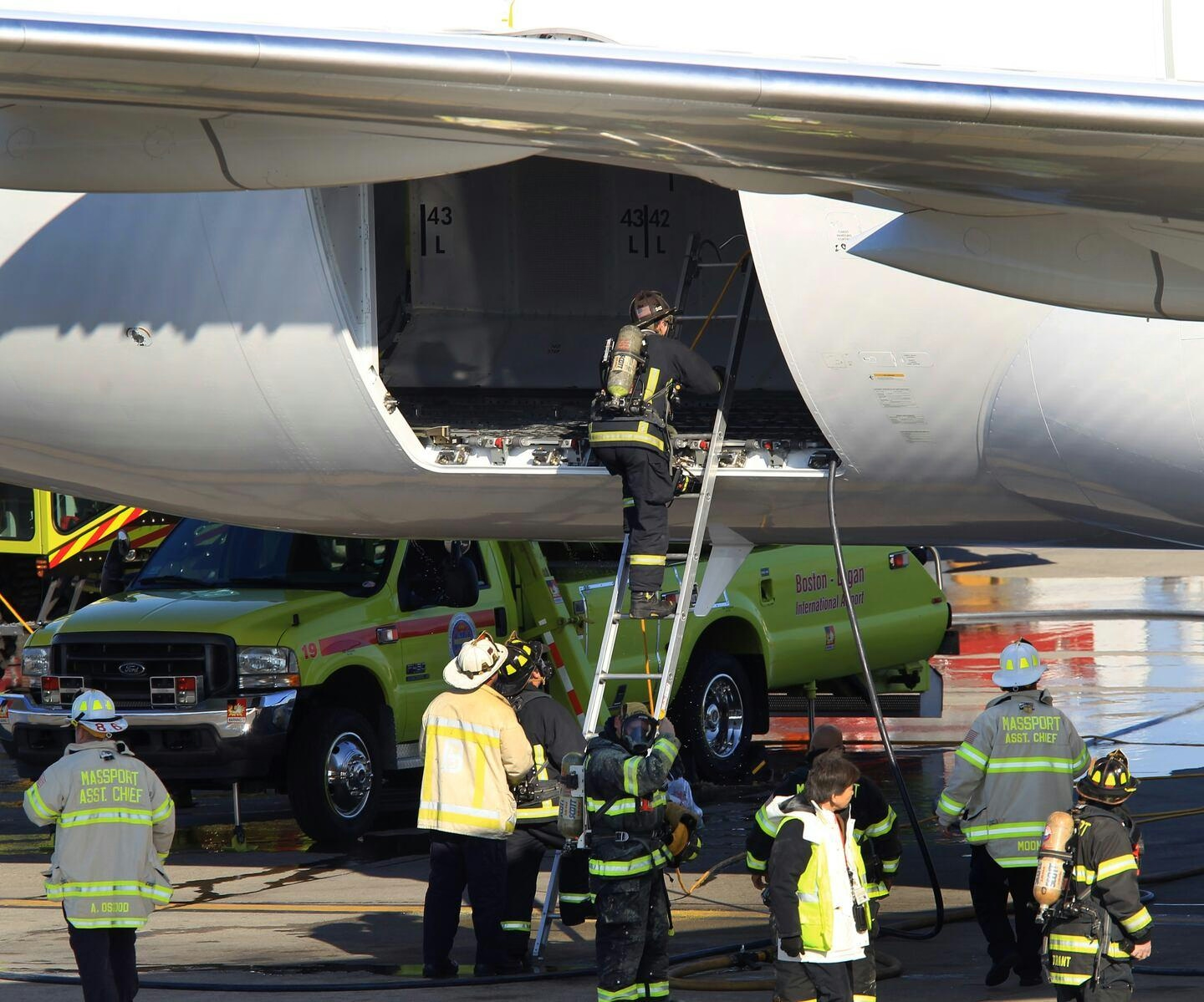
United Airlines 787 Engine Fire Exposes Challenges in Firefighting and Raises Industry Concerns
A persistent engine fire aboard a United Airlines Boeing 787-9 last month highlighted significant challenges in extinguishing in-flight blazes, causing extensive damage to critical engine components and prompting scrutiny of engine reliability and firefighting protocols within the aviation sector.
Incident Overview and Immediate Response
On 2 March, United flight 2127, departing Los Angeles International Airport for Newark Liberty, encountered a serious engine malfunction at approximately 17,000 feet. The aircraft, equipped with twin GE Aerospace GEnx-1B76A engines, experienced strong vibrations accompanied by a drop in the left engine’s N2 speed. Shortly thereafter, the flight crew received a “L ENGINE FIRE” warning via the engine indicating and crew alerting system (EICAS), initiating the engine fire checklist.
Despite deploying the first fire extinguisher bottle, the warning briefly ceased but reappeared within 30 seconds. A second fire bottle was discharged, yet the fire warnings persisted. The crew declared an emergency and returned to Los Angeles, ultimately landing safely on a single engine. Following the landing, an evacuation was conducted on the runway using emergency slides. All passengers and crew evacuated without injury.
Damage Assessment and Ongoing Investigation
Subsequent inspections revealed extensive sooting and thermal damage concentrated around the external surfaces of the engine core module, extending toward the pylon connection. Borescope examinations identified damage within the high-pressure turbine, although the thrust reverser halves on both sides showed minimal thermal impact. A flight attendant reported observing flames emanating from the left engine after landing.
The National Transportation Safety Board (NTSB) released a preliminary report detailing these findings but has yet to determine the root cause of the engine failure. The investigation remains active, with Boeing, GE Aerospace, and United Airlines yet to provide official comments.
Industry Implications and Market Reactions
The difficulties encountered in extinguishing the fire have intensified concerns regarding the reliability of the GEnx engine and the adequacy of current firefighting measures. Industry analysts suggest that this incident may prompt airlines and manufacturers to reassess safety protocols and engine design standards. Market responses could include increased scrutiny of fleets powered by GEnx engines and potential revisions to operational procedures at United Airlines and other carriers.
In response to growing safety considerations, some competitors have adjusted their fleet strategies. For instance, All Nippon Airways (ANA) has reportedly converted certain 787-10 orders to the 787-9 variant, reflecting a broader reevaluation of aircraft procurement decisions. Concurrently, United Airlines has recently reduced its capacity by 5% to mitigate rising fuel costs, a development that may further influence market dynamics as the industry balances operational efficiency with safety imperatives.
The NTSB’s investigation continues as the aviation community closely monitors the situation, anticipating potential impacts on engine safety standards and firefighting protocols worldwide.

Etihad Airways Suspends Airbus A380 Flights on Key Route

Aditya Birla Group Seeks Approval for Aircraft Leasing in GIFT City

Qatar Airways Highlights Innovation and Connectivity at Arabian Travel Market 2026

Hong Kong's Five-Year Plan Includes Andrew Fan's Aircraft Parts Processing Hub Proposal

ACIA Aero Leasing Delivers ATR72-600 to Air Nostrum

RTX Appoints Jill Albertelli as Head of Pratt & Whitney

TAT Technologies Joins Beyond Aero Hydrogen Aircraft Program

AURAK Study Highlights Barriers to Air Taxi Adoption in Emerging Economies

Xiamen Air Selects Altitude for 787 Maintenance at Heathrow

Etihad and Swissport Extend Global Partnership
