Bild

KI-Erkenntnisse in konkrete Maßnahmen überführen

Trage dich noch heute in die AeroGenie-Warteliste ein!

Trends

Categories

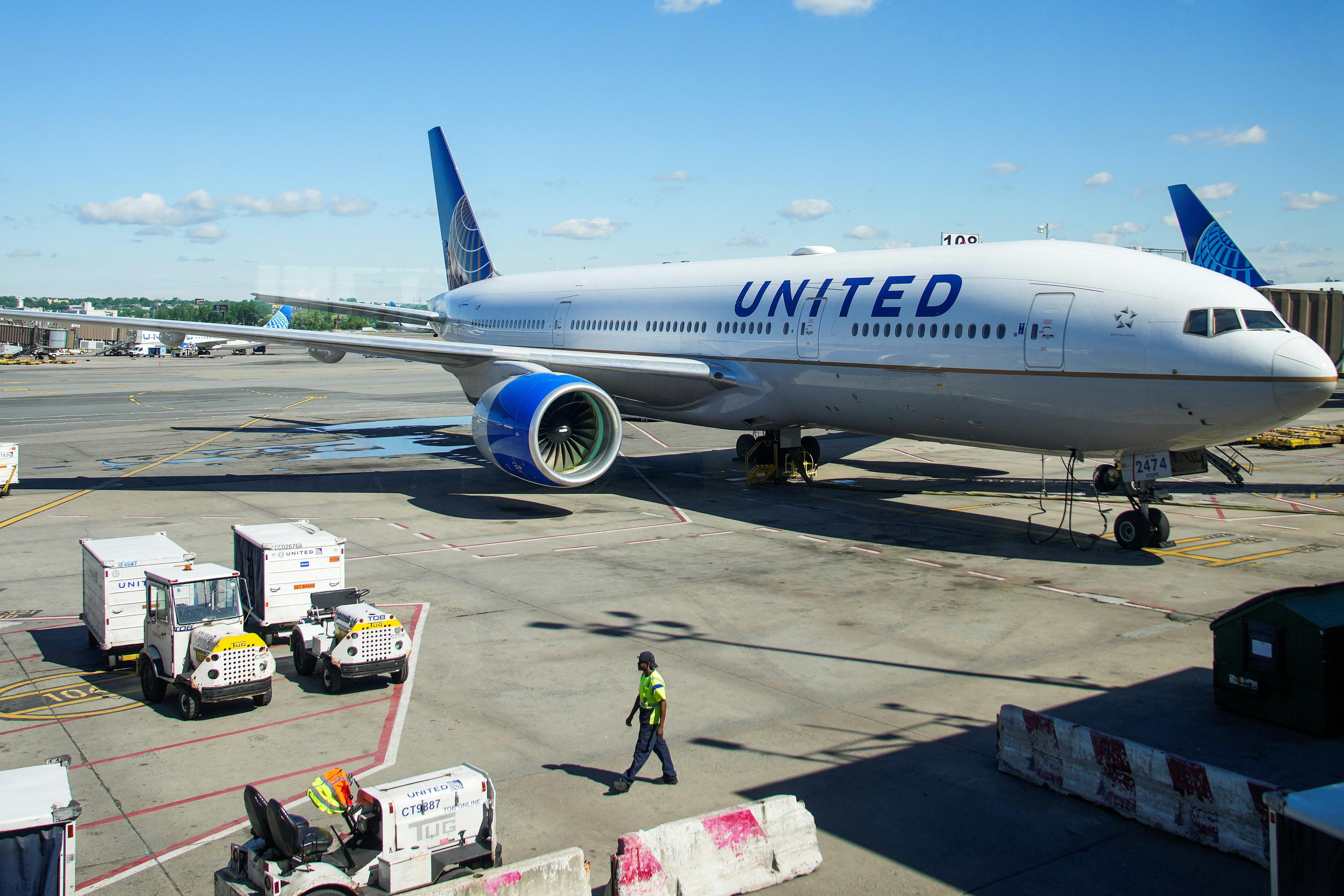
United Airlines to Reduce Widebody Domestic Flights by 26% in 2026
April 3, 2026By ePlane AI
United Airlines to Reduce Widebody Domestic Flights by 26% in 2026
0
0
United Airlines
Widebody Fleet Reduction
Jet Fuel Prices

United Airlines to Reduce Widebody Domestic Flights by 26% in 2026

Strategic Response to Rising Fuel Costs and Market Changes

United Airlines has announced a 26% reduction in its domestic widebody aircraft operations for 2026, signaling a major adjustment in its fleet deployment strategy. This decision comes amid a surge in jet fuel prices, exacerbated by geopolitical tensions in Iran, which CEO Scott Kirby warns could cost the airline up to $11 billion. Fuel prices have more than doubled in recent weeks, with projections suggesting oil could reach $175 per barrel and remain above $100 through the end of 2027. In response, United is realigning its fleet to better navigate these economic pressures and shifting market demands.

Fleet Realignment and Route Adjustments

The planned cutback primarily affects United’s Boeing 767, 777, and 787 aircraft, traditionally used on high-capacity domestic routes connecting major hubs, premium transcontinental corridors, and Hawaii services. Rising fuel expenses, evolving labor agreements, and changing passenger demand have made narrowbody aircraft increasingly viable for many domestic flights. Modern narrowbodies such as the Boeing 737 MAX and Airbus A321XLR now offer extended range capabilities and enhanced premium cabins, enabling United to maintain service standards while improving operational efficiency.

Consequently, the airline is reallocating widebody jets to international long-haul routes, where their larger capacity and extended range provide better unit economics. This shift reflects a broader strategic emphasis on optimizing fleet utilization in a challenging cost environment.

Impact on Key Domestic Markets

The reduction in widebody flights will affect several important domestic markets. Major hub-to-hub routes, including Chicago O’Hare to Denver and Dallas to Houston, will see fewer widebody operations as many services transition to narrowbody aircraft. Transcontinental routes from Chicago, Houston, and Denver to West Coast cities such as Los Angeles and San Francisco will experience selective reductions in widebody flights, particularly where competition from low-cost carriers is intensifying.

Hawaii routes will largely retain widebody service due to strong leisure demand, although some lower-demand flights may shift to high-capacity narrowbodies. The extent of these changes will vary regionally, with secondary city pairs more likely to see significant shifts toward narrowbody equipment, while core routes maintain some widebody frequency.

Implications for Business and Premium Travelers

The reduction in domestic widebody flights presents a nuanced impact for business and premium travelers. While access to widebody amenities on certain domestic routes may diminish, United is reinforcing its commitment to premium travel. The airline is investing in a comprehensive fleet upgrade and equipping its widebody aircraft with SpaceX Starlink high-speed internet, aiming to enhance the onboard experience on remaining domestic widebody and international flights.

Navigating Market Volatility

United’s decision to reduce planned capacity by five percentage points this year reflects a cautious approach amid volatile fuel markets and uncertain demand. By optimizing its fleet and concentrating widebody assets on international and high-yield routes, the airline seeks to sustain global connectivity and premium service offerings while mitigating the financial impact of soaring oil prices.

More news
Russia Tests Unmanned SKY-TRUCK Helicopter in Extreme Heat and Sandstorms

Russia Tests Unmanned SKY-TRUCK Helicopter in Extreme Heat and Sandstorms

Russia Tests Unmanned SKY-TRUCK Helicopter in Extreme Heat and Sandstorms Belarusian engineers are preparing the heavy SKY-TRUCK unmanned helicopter to face one of aviation’s most demanding challenges: operating reliably in desert heat and sandstorms. Developed by the Minsk-based design bureau “Unmanned Helicopters” under the UAVHELI brand, the SKY-TRUCK is scheduled for rigorous flight and ground testing this summer under conditions of high temperatures, sand, and dust storms. This specially adapted variant aims to demonstrate its durability and operational capability in some of the world’s harshest environments. Unlike smaller package drones, the SKY-TRUCK is designed as a robust cargo aircraft intended for critical deliveries to offshore oil platforms, ships, and remote locations where delays in medical shipments or spare parts could have severe consequences. The forthcoming desert trials will focus on evaluating the helicopter’s heat-management systems, sealed electronics, power units, and resistance to dust contamination—factors essential to ensuring reliable operation beyond controlled environments. Sand and dust present significant hazards to aviation hardware, potentially impairing sensors, engines, and flight systems simultaneously. The ability to withstand these elements is crucial for any unmanned aircraft intended for real-world logistics applications. Technical Features and Operational Capabilities The SKY-TRUCK employs a coaxial helicopter design, featuring dual main rotors arranged on the same axis, which eliminates the need for a traditional tail rotor. With a maximum takeoff weight of approximately 5,181 pounds, it can carry up to 1,323 pounds in an AIR BOX container mounted beneath the fuselage. Publicly available specifications indicate the drone can sustain flights of up to four hours, reach speeds of approximately 99 miles per hour, and cover distances nearing 298 miles. Engineered to deliver urgent cargo such as medical supplies or technical components, the helicopter targets locations that are difficult to access by conventional means. For operators, this capability promises faster and more flexible logistics solutions for offshore vessels or remote facilities where operational downtime carries significant costs. Addressing Global Operational Demands UAVHELI underscores that the SKY-TRUCK must perform reliably across a broad spectrum of climates, including the diverse conditions found within Russia itself. However, ambitions for a wider international market necessitate that the aircraft withstand extreme cold, heat, humidity, salt fog, and dust. The desert testing phase is therefore a critical milestone, designed to validate the platform’s readiness for the unpredictable and demanding conditions where unmanned logistics aircraft are most needed. Market and Strategic Significance The introduction of the SKY-TRUCK coincides with growing global interest in unmanned cargo systems, which promise faster deliveries and reduced transportation costs. Market attention is likely to focus not only on the technological advancements embodied by the platform but also on its potential military applications, given the strategic importance of reliable unmanned logistics in contested or remote regions. Competitors in the unmanned aerial vehicle sector may respond by accelerating investments in similar technologies to match or surpass Russia’s progress. The success of the SKY-TRUCK in extreme environments could establish a new benchmark for unmanned cargo aviation, influencing both commercial and defense markets worldwide.
The US Air Force’s T-7A Trainer Emerges as Its First Software-Defined Combat Jet

The US Air Force’s T-7A Trainer Emerges as Its First Software-Defined Combat Jet

The US Air Force’s T-7A Trainer Emerges as Its First Software-Defined Combat Jet After more than six decades of service, the Northrop T-38 Talon is set to be replaced as the U.S. Air Force’s primary jet trainer. Originally designed during the Cold War to prepare pilots for that era’s aircraft, the T-38 has become increasingly obsolete, unable to meet the demands of training pilots for today’s advanced fifth-generation fighters. The Boeing–Saab T-7A Red Hawk is positioned to fill this critical gap, ushering in a new era of software-defined, digitally engineered training aircraft. A New Era in Pilot Training The T-7A Red Hawk distinguishes itself as the Air Force’s first software-driven trainer, featuring an open architecture that facilitates rapid upgrades and modernization. This digital foundation has accelerated the aircraft’s development timeline by five to ten years. However, it also requires the Air Force to adapt its acquisition processes to fully exploit digital engineering and ensure the platform’s long-term flexibility and relevance. Named in honor of the legendary Tuskegee Airmen, the Red Hawk bears a distinctive red-tailed paint scheme reminiscent of the P-51 Mustangs flown by these World War II pilots. The first squadron to receive the T-7A will be the 99th Flying Training Squadron, which directly traces its heritage to the original Tuskegee unit. The program recently achieved Milestone C, authorizing Low-Rate Initial Production after completing more than 500 flight hours and collecting 9,000 data points. The initial contract, valued at $219 million, covers 14 T-7A aircraft along with spare parts, support equipment, and training provided by Boeing personnel. The Air Force aims to reach Initial Operating Capability by summer 2027. Over the next decade, it plans to acquire a total of 351 aircraft and 46 ground-based simulators, with deliveries scheduled for five Air Education and Training Command bases: Joint Base San Antonio–Randolph, Laughlin Air Force Base, and Sheppard Air Force Base in Texas; Columbus Air Force Base in Mississippi; and Vance Air Force Base in Oklahoma. Challenges and Market Dynamics Despite its promise, the T-7A faces challenges in broader adoption. Boeing recently withdrew from the U.S. Navy’s trainer competition, citing that the T-7A does not meet the Navy’s specific requirements. Meanwhile, BAE Systems is promoting the T-7 for the United Kingdom’s Royal Air Force, highlighting ongoing competition in the global trainer market. Market reactions remain mixed as the Air Force navigates the integration of this software-defined platform and explores its potential expansion to other military branches. T-7A Red Hawk: Key Specifications The T-7A is powered by a single General Electric F404-GE-103 afterburning turbofan engine, delivering 12,000 pounds of thrust at military power and up to 18,000 pounds with afterburner. The aircraft measures 46 feet in length, with a wingspan of 30.6 feet and a height of 13.7 feet. It can reach speeds of 550 knots calibrated airspeed (approximately Mach 0.95) and operate at altitudes up to 31,000 feet. The Red Hawk has a gross weight of 21,000 pounds and a range of 990 nautical miles. While it carries no armament, weapons training is simulated through embedded systems. As the T-7A Red Hawk enters production, it represents a significant advancement in pilot training, combining digital innovation with a storied legacy. Its ultimate success will depend not only on its technological capabilities but also on the Air Force’s ability to adapt to a rapidly evolving defense landscape.
Airbus' software-defined aircraft could update like smartphones

Airbus' software-defined aircraft could update like smartphones

Airbus Advances Software-Defined Aircraft to Enable Smartphone-Style Updates Purchasing a new airliner today is often compared to acquiring a smartphone that cannot be updated: once an aircraft enters service, integrating new digital features is a complex and time-consuming process. Traditionally, engineers must ground the plane, access equipment bays, replace hardware components, install updated software, and conduct rigorous testing before the aircraft can resume operations. While this approach has reliably supported aviation for decades, it increasingly conflicts with the rapid pace of digital innovation. Airbus is seeking to revolutionize this paradigm. The European aerospace leader is investing heavily in what it terms the software-defined aircraft—a new generation of airliners conceived as highly connected digital platforms from the outset. In these aircraft, software will play a dominant role in determining capabilities, reducing reliance on hardware modifications. If successful, future jets could receive new features and upgrades throughout their operational lives, akin to smartphones, computers, or modern automobiles that benefit from regular software updates. This shift represents potentially the most significant technological advancement in civil aviation since Airbus introduced fly-by-wire controls over 40 years ago. Transforming Aircraft into Adaptive Digital Platforms Modern airliners already depend extensively on software for flight controls, engine management, cockpit displays, cabin systems, and maintenance operations. The Airbus A350, for instance, employs modular avionics that allow multiple applications to share computing resources. However, most digital systems remain closely tied to the hardware installed during manufacturing. Upgrading or adding new functions typically requires physical intervention and comprehensive certification before the aircraft can return to service. Airbus aims to disrupt this model with its Next-Generation System Platform (NGSP), which consolidates dozens of individual computing units into a limited number of high-performance computers capable of managing multiple functions simultaneously. This approach not only enhances computing power but also increases the aircraft’s adaptability throughout its service life, enabling more flexible and efficient updates. Enhancing Operational Efficiency and Reducing Downtime For airlines, aircraft downtime translates directly into lost revenue. Software-defined aircraft could significantly reduce maintenance-related ground time by enabling many updates to be delivered remotely, eliminating the need to physically ground planes for manual software changes. Continuous data streaming from onboard systems would facilitate early detection of worn components, allowing for proactive maintenance that minimizes delays and cancellations. Airbus also envisions opportunities to optimize fuel consumption, improve overall performance, and simplify configuration management—all achievable without extensive physical modifications. Although these advancements may be imperceptible to passengers, airlines stand to benefit from lower maintenance costs, fewer operational disruptions, and increased aircraft availability. Navigating Challenges and Industry Implications Despite the promise of software-defined aircraft, Airbus faces considerable challenges. Heightened connectivity raises cybersecurity concerns, as increased exposure to digital threats could compromise aircraft safety. Regulatory compliance will be paramount, with aviation authorities expected to rigorously evaluate the safety and reliability of remotely delivered software updates. Additionally, integrating these new digital platforms with existing fleets presents technical complexities. Market reactions have been mixed, with some industry experts expressing skepticism regarding the feasibility and reliability of software-defined upgrades in aviation. Competitors are unlikely to remain passive; rival manufacturers may accelerate their own software initiatives or develop comparable technologies to maintain competitive advantage. The stakes are particularly high amid reports that American Airlines is considering a widebody aircraft order from either Boeing or Airbus to compete with Delta and United. This decision could significantly influence market dynamics and the adoption of next-generation aircraft technologies. As Airbus advances its vision, the aviation industry will be closely observing whether airliners can truly evolve as seamlessly as the digital devices that have become integral to daily life.
United Airlines Introduces First Widebody Suite with Cloud-Based In-Flight Entertainment

United Airlines Introduces First Widebody Suite with Cloud-Based In-Flight Entertainment

United Airlines Launches First Widebody Suite Featuring Cloud-Based In-Flight Entertainment United Airlines has introduced a groundbreaking advancement in in-flight entertainment (IFE) with the debut of its new Boeing 787-9 aircraft, marking the first widebody jet to adopt a cloud-based IFE system. This innovation represents a significant shift from traditional onboard entertainment setups, fundamentally altering how digital content is delivered and managed at cruising altitude. Transforming the In-Flight Entertainment Experience Conventional IFE systems have long depended on bulky servers housed within the aircraft, which made content updates slow, costly, and often resulted in outdated entertainment options for passengers. United’s latest system replaces this hardware-intensive model with a cloud-based platform powered by Panasonic’s Astrova technology and SpaceX’s Starlink satellite network. This integration enables each seatback screen to operate as a personalized streaming portal, delivering studio-approved content directly from the cloud with real-time updates, eliminating the need for manual content uploads. Beyond enhancing entertainment variety, this shift offers operational and environmental benefits. By removing centralized server racks, extensive cabling, and localized media storage, United reduces the aircraft’s weight by several hundred pounds. This weight reduction contributes to lower fuel consumption and simplifies maintenance procedures, thereby improving the airline’s efficiency and sustainability across its widebody fleet. A Connected, Personalized Journey United’s new Polaris Studio suites transform the aircraft into a node within a global digital network rather than an isolated data environment. Passengers can authenticate personal streaming profiles, access live app data, and enjoy tailored entertainment options that closely resemble the smart TV experience at home. The system’s open-architecture software, combined with continuous satellite connectivity, ensures a seamless data pipeline throughout all flight phases. This allows travelers to resume content seamlessly, even across multiple journeys. Despite the promise of this technological leap, challenges remain. Integrating cloud-native IFE and maintaining consistent, high-speed connectivity at altitude require substantial investment and meticulous planning. Additionally, passenger adaptation to new interfaces and features will be critical. Early feedback, however, indicates strong enthusiasm among business travelers and premium customers, who are increasingly seeking enhanced onboard experiences. Industry Implications and Competitive Response United’s innovation is already influencing the broader airline industry. Competitors such as American Airlines are reportedly accelerating their own fleet upgrades to match or exceed the capabilities introduced by United and Delta. The industry-wide transition toward satellite-based IFE, driven by the expanding capabilities of Starlink, is poised to reshape onboard service quality, pricing structures, and product offerings across carriers. By redefining the in-flight entertainment landscape with its cloud-based suite, United Airlines is setting a new standard for connectivity, passenger engagement, and operational efficiency, signaling a transformative era for air travel.
Air Canada Expands Widebody Flights to U.S., Driving Growth in Transborder Travel

Air Canada Expands Widebody Flights to U.S., Driving Growth in Transborder Travel

Air Canada Expands Widebody Flights to U.S., Driving Growth in Transborder Travel Strategic Expansion of Widebody Capacity Air Canada is significantly increasing its widebody flight operations to the United States this summer, with a record 35 percent growth in capacity. This expansion represents one of the largest surges in transborder travel in recent years, fueled by a robust recovery in demand and a rising preference among travelers for premium comfort on international routes, even those of shorter duration. The airline’s strategy involves deploying more widebody aircraft, typically reserved for long-haul flights, on key U.S.-bound routes. This approach not only increases seat availability but also enhances the onboard experience and strengthens connectivity between major Canadian hubs and prominent American cities. By substituting some narrowbody services with widebody jets, Air Canada has effectively increased overall seating capacity without adding additional flights. This shift improves operational efficiency and helps maintain schedule integrity during the busy summer travel season. The move aligns with a broader network optimization effort designed to meet evolving passenger expectations, particularly in the leisure and business travel segments, where pent-up demand and strong booking trends are evident across major U.S. destinations. The expanded presence of premium cabins further positions Air Canada as a competitive force in the transborder market, where service quality and comfort remain critical differentiators. Operational Challenges and Competitive Pressures Despite the ambitious expansion, Air Canada faces notable challenges. Delays in the delivery of Airbus A321XLR jets, now more than two years behind schedule, have introduced operational complexities. These setbacks have compelled the airline to adopt more flexible business strategies to sustain its network plans, underscoring the importance of maximizing the utilization of existing widebody assets to meet rising demand. The competitive environment is also intensifying. U.S. carriers such as American Airlines are accelerating their international growth by placing new widebody orders with Boeing and Airbus, aiming to keep pace with rivals Delta and United. Concurrently, political tensions have contributed to a decline in U.S.-Canada travel, prompting some Canadian airlines to reduce U.S. capacity and scale back marketing efforts south of the border. Nevertheless, Air Canada and other Canadian carriers remain optimistic about the long-term potential of the U.S. market. The current expansion of widebody operations reflects a strategic commitment to capturing growth opportunities amid ongoing supply chain disruptions and shifting geopolitical dynamics. Reinforcing Leadership in North American Aviation Air Canada’s 35 percent increase in widebody flights to the United States signals renewed confidence in transborder travel. By leveraging its widebody fleet and adapting to operational and market challenges, the airline is reshaping seasonal travel dynamics and reinforcing its leadership position within North American aviation. This expansion underscores Air Canada’s dedication to enhancing passenger experience and connectivity while navigating a complex and evolving industry landscape.
Air Canada Increases Widebody Flights to the U.S. by 35% This Summer

Air Canada Increases Widebody Flights to the U.S. by 35% This Summer

Air Canada Increases Widebody Flights to the U.S. by 35% This Summer Air Canada is significantly expanding its widebody flight operations to the United States this summer, increasing capacity by 35 percent compared to the same period last year. Data from aviation analytics firm Cirium reveals that the Canadian flag carrier will operate 188 one-way widebody flights on transborder routes in the third quarter of 2024, up from 139 in the third quarter of 2023. This growth, concentrated primarily on two key routes, underscores Air Canada’s strategic effort to bolster its presence in the highly competitive U.S. market amid ongoing industry challenges. Focused Expansion on Vancouver–Newark and Toronto–Los Angeles Routes The majority of Air Canada’s increased widebody service will be deployed on the Vancouver–Newark and Toronto–Los Angeles corridors. Between Vancouver International Airport (YVR) and Newark Liberty International Airport (EWR), Air Canada will operate daily Boeing 787-9 flights. Covering a distance of 2,961 miles in just over five hours, these flights depart Vancouver in the morning and arrive in Newark by late afternoon. This route faces direct competition from JetBlue’s year-round Vancouver–JFK service and United Airlines’ seasonal Vancouver–Newark flights, highlighting the competitive dynamics Air Canada must navigate. On the Toronto Pearson International Airport (YYZ) to Los Angeles International Airport (LAX) route, Air Canada will offer up to two daily widebody flights on select days, utilizing Boeing 787-8, 787-9, or 777-200LR aircraft. This corridor, one of Toronto’s busiest transborder routes, also features service from Porter Airlines, which operates narrowbody Embraer E195-E2 jets. The non-stop journey spans 2,172 miles and takes up to five hours, making it a critical link in Air Canada’s transborder network. Operational Challenges and Competitive Landscape Air Canada’s widebody expansion occurs amid a complex industry environment marked by intense competition and operational hurdles. Major U.S. carriers, including American Airlines, are reportedly considering substantial widebody aircraft orders to keep pace with rivals such as Delta Air Lines and United Airlines. Internationally, Etihad Airways is also expanding its widebody fleet in anticipation of returning to pre-pandemic capacity levels. At the same time, Air Canada is facing delays in the delivery of its new Airbus A321XLR jets. These setbacks may constrain the airline’s ability to fully capitalize on its increased widebody capacity, particularly as it seeks to optimize its fleet deployment across both transborder and long-haul international routes. Market Outlook and Strategic Implications Despite these challenges, Air Canada and other Canadian carriers remain optimistic about growth prospects in the U.S. market. This positive outlook persists even as overall travel demand shows signs of softening, partly influenced by ongoing political tensions between Canada and the United States. Cirium data indicates that in the third quarter of 2025, Air Canada operated a comparable number of widebody flights to the U.S., with the Toronto–Los Angeles route continuing to be a focal point, including select dates featuring double-daily widebody service. As Air Canada expands its widebody footprint south of the border, its ability to manage competitive pressures and operational complexities will be critical to sustaining momentum throughout the busy summer travel season.
Jeppesen ForeFlight Introduces ForeFlight Airflow Cockpit Engine

Jeppesen ForeFlight Introduces ForeFlight Airflow Cockpit Engine

Jeppesen ForeFlight Launches ForeFlight Airflow Cockpit Engine Integrating AI with Aviation Expertise Jeppesen ForeFlight, a Colorado-based leader in aviation technology, has introduced ForeFlight Airflow, an innovative cockpit automation engine designed to support pilot decision-making by combining artificial intelligence with extensive flight-planning data, operational records, and regulatory frameworks. This new system aims to enhance safety and efficiency in the cockpit by providing a sophisticated tool that complements, rather than replaces, human expertise. A Supportive Tool Emphasizing Safety and Governance ForeFlight Airflow distinguishes itself from other AI-driven systems by focusing on traceability, multi-source reasoning, and stringent governance. Developed over several years, the engine leverages Jeppesen ForeFlight’s deep experience in flight-planning and cockpit software to ensure that every decision is grounded in accurate data and industry safety protocols. Brad Surak, CEO of Jeppesen ForeFlight, emphasized the importance of what he terms “aviation intelligence,” stating that the system applies the right data, context, and reasoning consistently, while adhering to rigorous safety and governance standards. Navigating Market Challenges and Regulatory Complexities The launch of ForeFlight Airflow arrives amid rapid advancements in cockpit technology and a competitive market dominated by established players. Jeppesen ForeFlight faces the dual challenge of differentiating its product and ensuring seamless integration with existing aircraft systems. Moreover, the company must carefully navigate the complex regulatory landscape that governs the adoption of new cockpit technologies, a critical factor in gaining industry acceptance. Industry analysts anticipate a favorable reception, particularly among business aviation operators seeking advanced flight management solutions that enhance operational safety and efficiency. However, the introduction of ForeFlight Airflow is also expected to prompt competitors to accelerate their own AI-driven developments or enhance existing offerings to maintain their market share. By anchoring its new cockpit engine in aviation-specific data, regulatory compliance, and proven safety protocols, Jeppesen ForeFlight aims to establish a new benchmark in cockpit automation—one that augments pilot expertise while meeting the stringent demands of the aviation sector.
Passenger Captures Boeing 777 Engine Fire in Flight

Passenger Captures Boeing 777 Engine Fire in Flight

Passenger Captures Boeing 777 Engine Fire in Flight A passenger aboard United Airlines Flight 328 recorded a harrowing video showing the right engine of a Boeing 777-200 engulfed in flames shortly after takeoff from Denver International Airport in February 2021. The footage, which has recently resurfaced on social media and been mistakenly attributed to a new event, actually documents the emergency that compelled the aircraft to return safely to Denver. Incident Overview and Passenger Account United Airlines Flight 328 was en route from Denver to Honolulu, carrying 231 passengers and 10 crew members, when the right engine failed moments after departure. The flight crew promptly declared an emergency and executed a safe return to the airport, with no injuries reported among those on board or on the ground. The passenger video vividly captures the engine ablaze, with its cowling missing, as the plane remained airborne. One passenger, David Delucia, recounted the terrifying experience to The Denver Post, stating, “I can honestly say I thought we were going to die at one point—because we started dropping altitude right after the explosion. I grabbed my wife’s hand and said, ‘We’re done.’” Aftermath and Investigation The engine failure resulted in debris scattering across residential neighborhoods in Broomfield, Colorado. Local police released images showing large engine parts found outside homes and in nearby fields, urging residents not to disturb the wreckage to preserve evidence for investigators. The Broomfield Police Department emphasized on Twitter, “If you find debris PLEASE don’t touch it or move it. The @NTSB wants all debris to remain in place for investigation.” Audio recordings from air traffic control captured the tense moments as the flight crew declared the emergency, with a United pilot stating, “Mayday, aircraft just experienced engine failure, need to turn immediately.” The Federal Aviation Administration (FAA) and the National Transportation Safety Board (NTSB) launched thorough investigations into the incident. Authorities examined the damaged engine and recovered debris to determine the cause of the failure. Broader Implications for Aviation Safety The renewed circulation of the video has reignited public concern over airline safety and intensified scrutiny of aircraft maintenance protocols. High-profile incidents such as this often prompt regulatory reviews and can lead to increased oversight of airline operations. In the aftermath, airlines and manufacturers may face market pressures, including fluctuations in stock prices as investors respond to perceived risks. Competitors frequently seize such moments to highlight their own safety records and bolster public relations efforts aimed at maintaining passenger confidence. The aviation industry continues to confront challenges related to supply chain disruptions and engine reliability, with ongoing initiatives to enhance safety standards and reassure travelers worldwide. It is important to clarify that the video in question depicts the February 20, 2021, emergency involving United Airlines Flight 328 and is not connected to any recent aviation incident.
The Role of Aerospace Innovation in American History

The Role of Aerospace Innovation in American History

The Role of Aerospace Innovation in American History For over two centuries, American innovation has consistently expanded the nation’s horizons, with aerospace technology playing a pivotal role in this advancement. Since the Wright Brothers achieved the first powered flight in 1903, the aerospace industry has fundamentally transformed travel, commerce, and defense, while also shaping the American identity. Richard Aboulafia, managing director at AeroDynamic Advisory, emphasizes that the country’s scientific and technological foundation would be a mere fraction of its current state without aerospace. Key developments in material sciences, electronics, communications, and global connectivity can all be traced back to significant investments in this sector. Aviation as a Symbol of American Ingenuity Aviation has long stood as a testament to American creativity and determination. Boeing historian Anna Italiano remarks on the extraordinary progress made since the initial powered flight, describing the achievements as “astronomical.” Companies such as Boeing began as modest start-ups, embodying the nation’s spirit of vision and perseverance. Over time, collaboration between government and industry has positioned the United States as a global leader, fostering international tourism, global supply chains, and the modern economy. Moreover, advancements in defense and space systems have bolstered national security and propelled scientific discovery. Market Dynamics and Recent Developments The aerospace sector has faced its share of challenges and market complexities. The historic initial public offering (IPO) of SpaceX on June 12, 2026, highlighted the substantial market capitalization of private aerospace firms and introduced new dynamics to financial markets. As the sole publicly traded private company in the space launch industry, SpaceX’s IPO posed unprecedented challenges for traders, particularly concerning hedging strategies and risk management. The market’s reaction underscored both the promise and volatility inherent in such pioneering ventures. This event also reaffirmed the enduring partnership between American industry and defense, a relationship that continues to influence the sector’s trajectory. While competitor responses remain uncertain, the emphasis on maintaining the United States’ competitive edge in technology and innovation is unmistakable. Milestones in American Aerospace Innovation The history of American aerospace is marked by significant milestones that have shaped the industry’s evolution. The Wright Brothers’ first powered flight in 1903 launched the aviation age, followed by the jet propulsion revolution in the 1940s, which introduced faster and more efficient aircraft. The Boeing 707’s inaugural scheduled transatlantic flight in 1958 made air travel more accessible to the public. The 1960s and 1970s saw NASA’s Apollo Program advance space exploration, culminating in the 1969 moon landing. In 1983, President Reagan authorized the civilian use of GPS, expanding its applications beyond military navigation. The Boeing 777, introduced in 1994 and designed entirely with 3D computer graphics, set new standards for long-distance air travel. The 2000s witnessed the rise of commercial spaceflight companies such as SpaceX and Blue Origin, with NASA partnering to open new frontiers for tourism and research. In the 2010s, drones transitioned from military use to widespread adoption in civilian and commercial sectors. Throughout its history, the American aerospace industry has demonstrated remarkable resilience and adaptability, successfully navigating technological, economic, and market shifts. Its legacy is one of relentless innovation, ensuring that the United States remains at the forefront of global aerospace leadership.
Salary Comparison of Airbus A350 and Boeing 777 Captains in 2026

Salary Comparison of Airbus A350 and Boeing 777 Captains in 2026

Salary Comparison of Airbus A350 and Boeing 777 Captains in 2026 Market Preferences and Fleet Composition The Airbus A350-1000 is increasingly recognized as the largest airliner that US-based carriers are willing to acquire, with Delta Air Lines at the forefront of this trend. Conversely, American Airlines and United Airlines have demonstrated a preference for Boeing’s widebody aircraft, particularly the 777-300ER and the 787 Dreamliner. Across the United States, there has been a noticeable shift away from very large widebodies toward smaller, more fuel-efficient models such as the A330neo, the Boeing 787 family, and the A350-900. Globally, both the Boeing 777 and Airbus A350 maintain significant commercial presence, with approximately 70 operators for the 777—including cargo airlines—and 38 for the A350. However, no US carrier currently operates both aircraft types, complicating direct salary comparisons within a single airline. Consequently, any analysis must consider cross-airline comparisons, taking into account factors such as pilot seniority, fleet pay categories, and years of experience. Pilot Compensation and Fleet Assignments In practice, captain salaries for the A350 and 777 are largely comparable among US airlines operating these aircraft. Compensation is primarily influenced by seniority and the fleet pay category rather than the manufacturer of the aircraft. The Boeing 777 serves as the flagship widebody for American and United, while the A350 holds that status at Delta. Both aircraft types are typically assigned to the most senior pilots, reflecting their prestige and operational importance within each airline’s fleet. Delta’s current widebody fleet includes 41 A350s, 81 A330s, and 57 Boeing 767s, with the latter being gradually retired. American and United maintain all-Boeing widebody fleets: American operates 67 Boeing 777s and 70 Boeing 787s, while United’s fleet comprises 53 Boeing 767s, 96 Boeing 777s, and 87 Boeing 787s. Notably, United recently canceled its order for 45 A350s, reaffirming its commitment to Boeing widebodies. Other US carriers with widebody operations include Hawaiian Airlines, which operates A330s, and Alaska Airlines, which has incorporated Boeing 787s acquired from Hawaiian. Global Pay Trends and Future Outlook Internationally, pilot remuneration for the A350 and 777 remains largely equivalent within the same airline and country, with geographic location exerting a more significant influence on pay levels than aircraft type. Pilots based in the US or Western Europe generally receive higher compensation compared to their counterparts in other regions. Looking ahead to 2026, several factors may influence the widebody pilot market. The Airbus A350-1000 continues to face engine durability concerns, particularly with the Rolls-Royce Trent XWB-97, as underscored by Emirates. These technical challenges could impact airline purchasing decisions. Meanwhile, Singapore Airlines is reportedly considering an order for at least 50 of the industry’s largest jets, potentially favoring the Boeing 777X over the A350-1000. American Airlines is also evaluating new widebody acquisitions to maintain competitiveness with Delta and United, both of which have recently expanded their fleets. As of May 2026, commercial order data indicates Airbus leads with 379 firm orders for its larger aircraft variants, compared to just 13 for Boeing. This disparity suggests a possible shift in market preference toward Airbus, which may eventually affect pilot demand and fleet assignments. While the choice between the A350 and 777 has minimal direct impact on captain salaries in the US, evolving industry trends, technical issues, and shifting market dynamics are likely to shape the future environment for widebody pilots. For the time being, seniority and fleet assignment remain the primary determinants of compensation for captains operating these flagship aircraft.
line









