
KI-Erkenntnisse in konkrete Maßnahmen überführen

Trends
Categories
U.S. Air Force Launches $16 Billion Advanced Engine Program
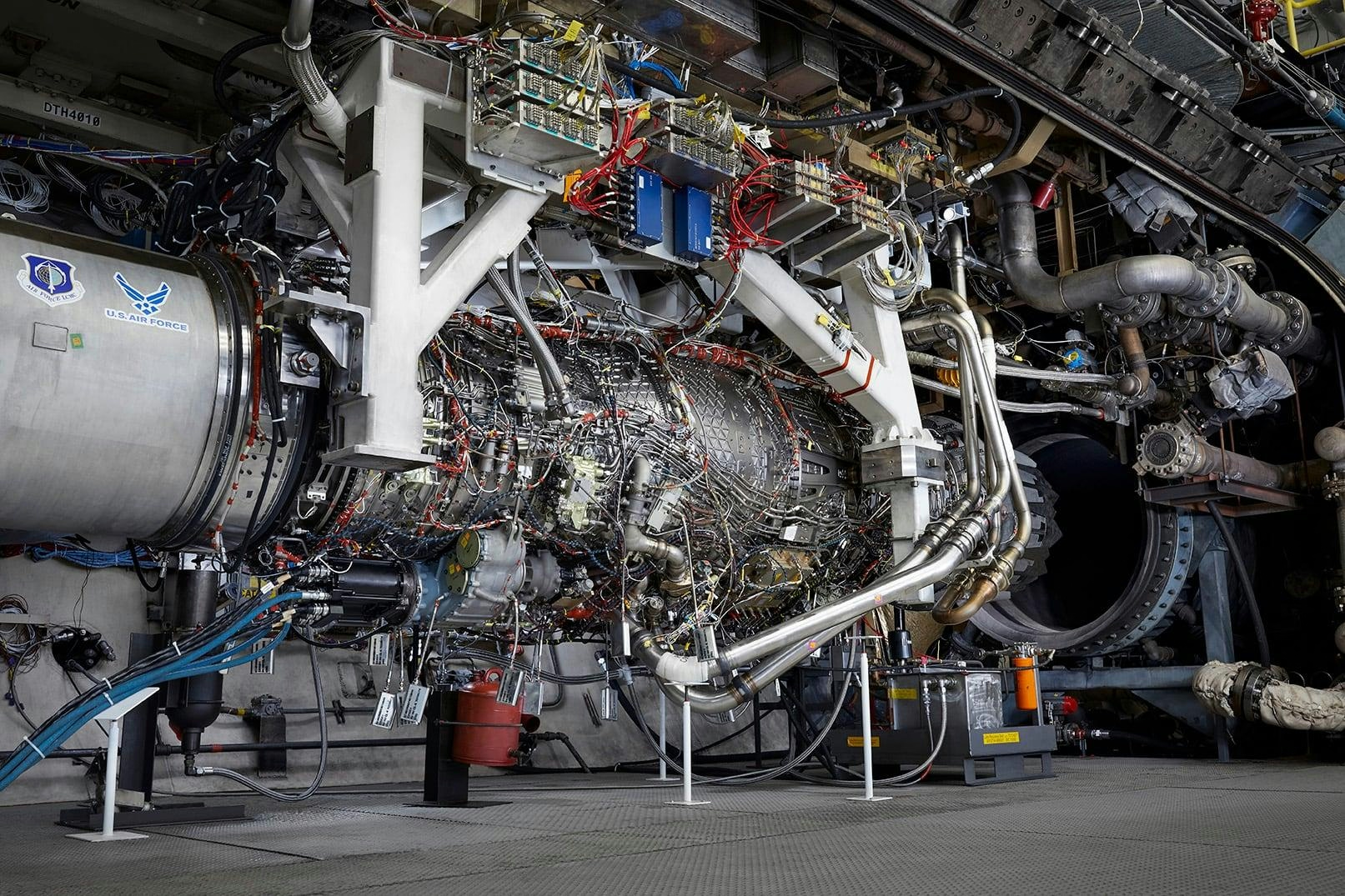
U.S. Air Force Launches $16 Billion Advanced Engine Program
Accelerating Propulsion Innovation for Future Military Aircraft
The U.S. Air Force is set to initiate a comprehensive $16 billion contract program aimed at expediting the development of advanced propulsion technologies for next-generation military aircraft. Known as the Advanced Propulsion Acquisition Contract (APAC), this initiative seeks to foster rapid innovation, support the creation of cutting-edge engines, and streamline the deployment of new technologies across a variety of platforms.
Oversight of APAC will be managed by the Air Force Life Cycle Management Center’s Propulsion Directorate. The contract will be structured as an indefinite delivery, indefinite quantity (IDIQ) agreement, providing the flexibility to engage multiple companies through task orders as specific requirements emerge. This arrangement covers a broad spectrum of activities, ranging from early-stage research and design to production, fielding, and long-term sustainment of propulsion systems.
Officials emphasize that APAC is designed to provide the Air Force with expedited access to innovative propulsion concepts and engineering methodologies. The program aims to support both incremental improvements and transformative breakthroughs, ultimately enhancing air combat capabilities for U.S. forces and allied partners.
Industry Competition and Contract Structure
APAC does not allocate a fixed funding amount upfront; instead, task orders will be issued as funds become available through future Air Force budgets, interagency collaborations, or other government sources. Proposals are due by April 13, with the Air Force intending to select multiple contractors to form an initial pool. The contract’s flexible framework also permits new entrants to join after two years, encouraging sustained competition and enabling emerging firms with novel technologies to participate throughout the program’s duration.
The initiative is expected to attract significant interest from leading engine manufacturers, including General Electric, Pratt & Whitney, and Rolls-Royce. These companies are likely to intensify efforts to secure contracts or develop competing technologies. However, the program’s scale and ambition may invite heightened scrutiny from Congress and defense analysts, particularly concerning cost-effectiveness and the balance between innovation and budgetary constraints.
Supporting Next-Generation Platforms and Emerging Technologies
While APAC does not specify particular propulsion systems or aircraft platforms, it is positioned to support several prominent Air Force programs. Notably, the Collaborative Combat Aircraft (CCA) initiative, which focuses on developing autonomous combat drones to operate alongside manned fighters, stands to benefit. Industry proposals for these platforms emphasize compact propulsion systems, digital engineering techniques, and the use of 3D-printed components. APAC could accelerate the maturation and production transition of these technologies.
Additionally, the contract may contribute to propulsion upgrades and sustainment efforts for existing aircraft fleets. Recent Air Force investments in programs such as the Next Generation Adaptive Propulsion and the Adaptive Engine Transition Program underscore the service’s ongoing commitment to advancing engine technology.
Strategic Considerations and Market Impact
The development of new engine designs for autonomous systems presents considerable technical challenges, compounded by competition among established manufacturers and emerging innovators. The Air Force’s continued pursuit of programs like the E-7A Wedgetail, despite opposition within the Pentagon, reflects a broader strategic emphasis on maintaining and enhancing airborne capabilities. This focus is likely to influence propulsion market dynamics and drive further innovation.
As the Air Force advances with APAC, the program’s success will hinge on effectively balancing rapid technological progress with fiscal discipline, all while navigating a competitive and closely monitored defense industry environment.
Embraer Delivers 2,000th E-Jet as Airbus A220 Seeks Market Share
iniBuilds Releases Second In-Depth A380 Video
Ryanair and Alaska Airlines Apply AI to Operational Decision-Making

Digital Payments, AI, and Aviation Strengthen Philippines-India Relations
PlaneSense Suspends PC-12 Jet Card Sales
How AI Could Transform Bird-Strike Prevention for Business Aviation
American Airlines and Boeing Complete First 737 MAX Landing Gear Swap
Vietjet and Thales sign major MRO and AI deals in Paris
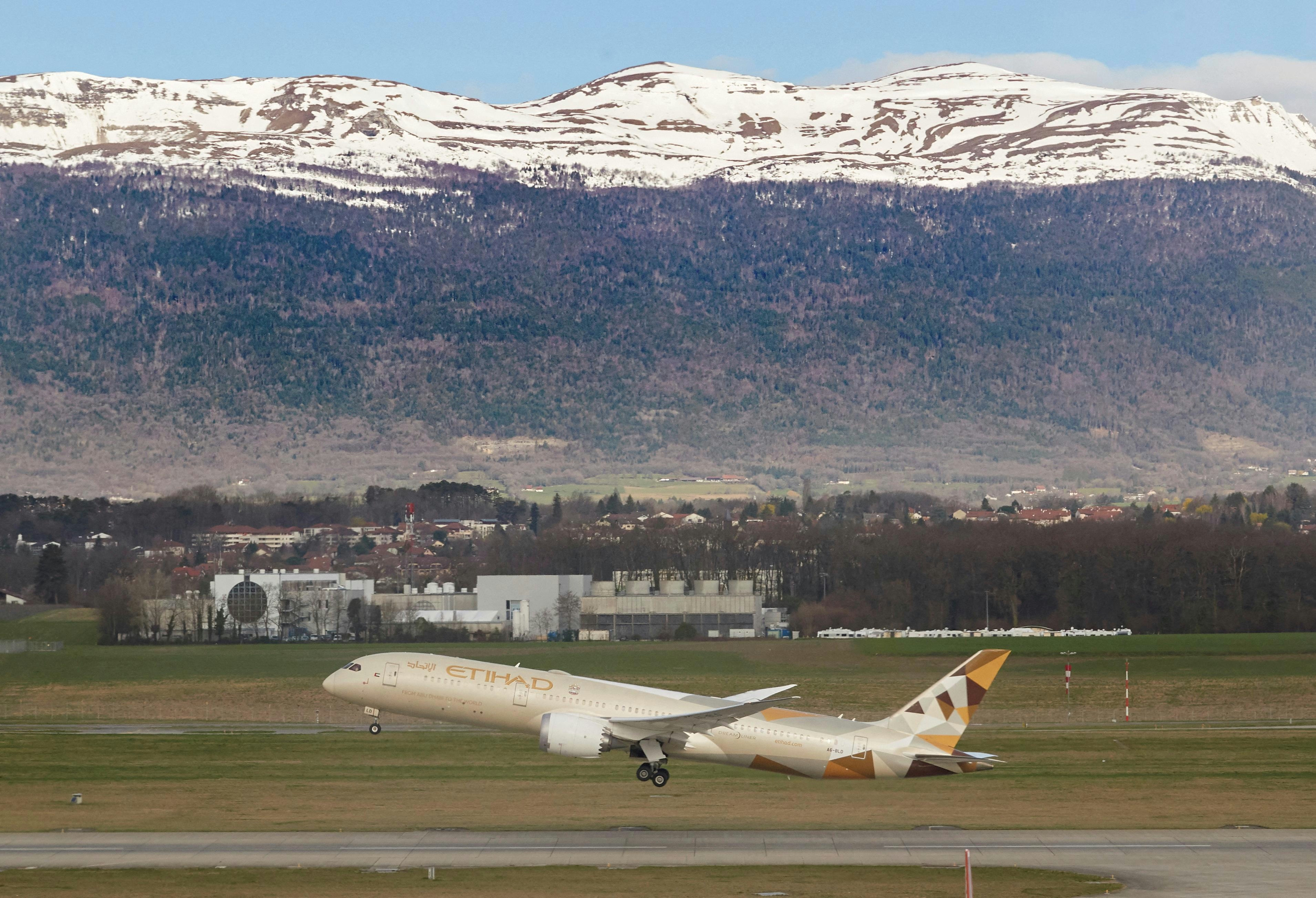
Etihad CEO Cites Aircraft Capacity as Limiting Factor Amid Growth in China and Africa

Artificial Intelligence Enters the Cockpit
