
KI-Erkenntnisse in konkrete Maßnahmen überführen

Trends
Categories
Volato Group and Alignment Engine Inc. Announce AI Infrastructure Merger
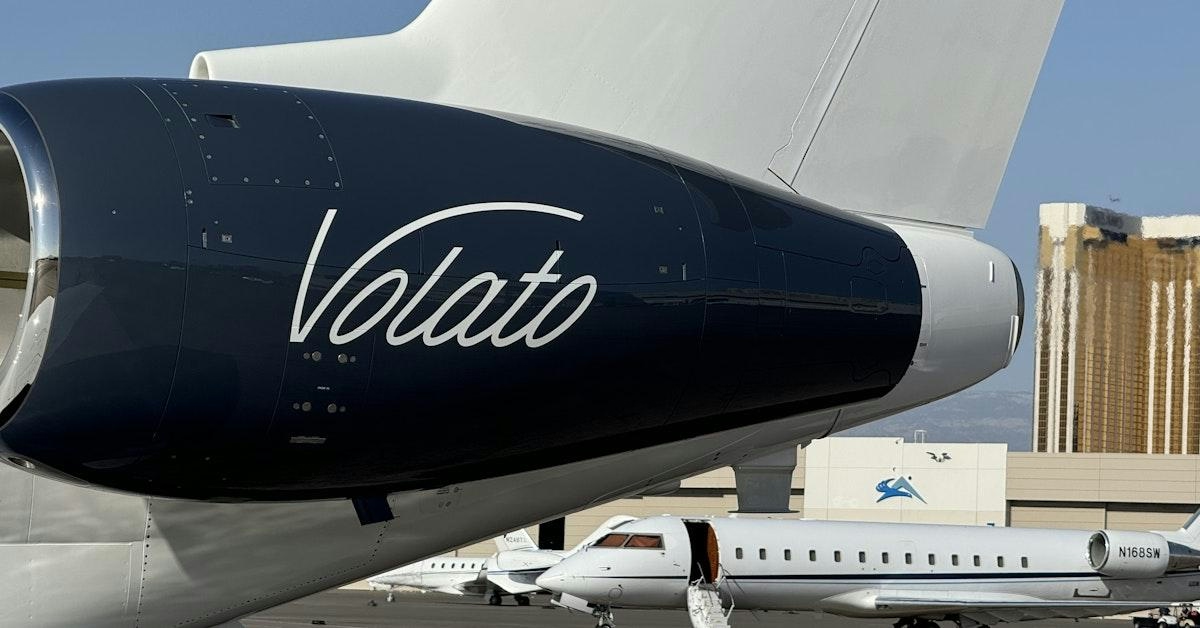
Volato Group and Alignment Engine Inc. Announce AI Infrastructure Merger
Volato Group, known for its Vaunt empty-leg program, has entered into a definitive agreement to merge with Alignment Engine Inc., an Ohio-based AI infrastructure company, in an all-stock transaction valued at approximately $500 million. This merger signifies a strategic transformation for Volato, which will now concentrate its efforts on data centers, high-performance computing, and artificial intelligence infrastructure.
Strategic Shift and Corporate Realignment
The merger follows Volato’s recent divestment from its fractional and jet card aviation businesses, which were transferred to FlyExclusive through a strategic agreement. Several of Volato’s divisions have been sold to FlyExclusive, where Volato’s CEO, Matt Liotta, also holds the position of chief business officer. Earlier this year, Volato terminated a separate merger agreement with critical minerals firm M2i, further underscoring its shift away from its traditional aviation focus.
Volato’s existing portfolio includes the Vaunt private aviation membership marketplace and an aviation AI software business. The company has developed AI-driven operational software tailored for aviation enterprises, notably through its Parslee autonomous-work platform, which integrates business context, shared memory, and human oversight to enhance operational efficiency.
Alignment Engine’s Role and Future Leadership
Alignment Engine is currently constructing a campus in Ohio designed to support high-density computing workloads essential for AI training, inference, machine learning, and other advanced computing applications. Its platform integrates powered data center infrastructure, GPU computing, advanced networking, and proprietary technologies. Upon completion of the merger, Alignment Engine’s CEO, Chris Ensey, will assume leadership of the combined entity. Ensey emphasized the critical importance of power and compute capacity in sustaining AI’s continued expansion.
The transaction is expected to close shortly after the execution of the definitive agreement. The merged company will be publicly traded through Volato’s SOAR listing on the New York Stock Exchange. As of the latest market data, Volato Group’s market capitalization stands just below $15 million, with SOAR shares having traded between $0.10 and $3.87 over the past year and opening at $0.25 today.
Opportunities and Challenges Ahead
While the merger positions Volato to broaden its scope beyond software into tangible AI infrastructure, it also presents significant challenges. The integration of operations and retention of key personnel pose risks, alongside potential disruptions to ongoing business activities. Market reactions have been mixed; some investors express concern over integration complexities, whereas others remain optimistic about the potential synergies and growth prospects. The merger may also prompt competitors in the AI infrastructure sector to accelerate their expansion efforts, intensifying competition.
Furthermore, both companies must navigate the rapidly evolving AI landscape, which includes risks related to algorithmic flaws and the fast pace of technological change. This transaction marks a major pivot for Volato, aligning its future with the burgeoning demand for AI infrastructure and high-performance computing, while simultaneously exposing the company to new operational and market risks as it moves away from its aviation origins.

Etihad Airways Suspends Airbus A380 Flights on Key Route

Aditya Birla Group Seeks Approval for Aircraft Leasing in GIFT City

Qatar Airways Highlights Innovation and Connectivity at Arabian Travel Market 2026

Hong Kong's Five-Year Plan Includes Andrew Fan's Aircraft Parts Processing Hub Proposal

ACIA Aero Leasing Delivers ATR72-600 to Air Nostrum

RTX Appoints Jill Albertelli as Head of Pratt & Whitney

TAT Technologies Joins Beyond Aero Hydrogen Aircraft Program

AURAK Study Highlights Barriers to Air Taxi Adoption in Emerging Economies

Xiamen Air Selects Altitude for 787 Maintenance at Heathrow

Etihad and Swissport Extend Global Partnership
