
KI-Erkenntnisse in konkrete Maßnahmen überführen

Trends
Categories
Why Airbus Designed the A380 Cockpit on a Separate Deck
Why Airbus Designed the A380 Cockpit on a Separate Deck
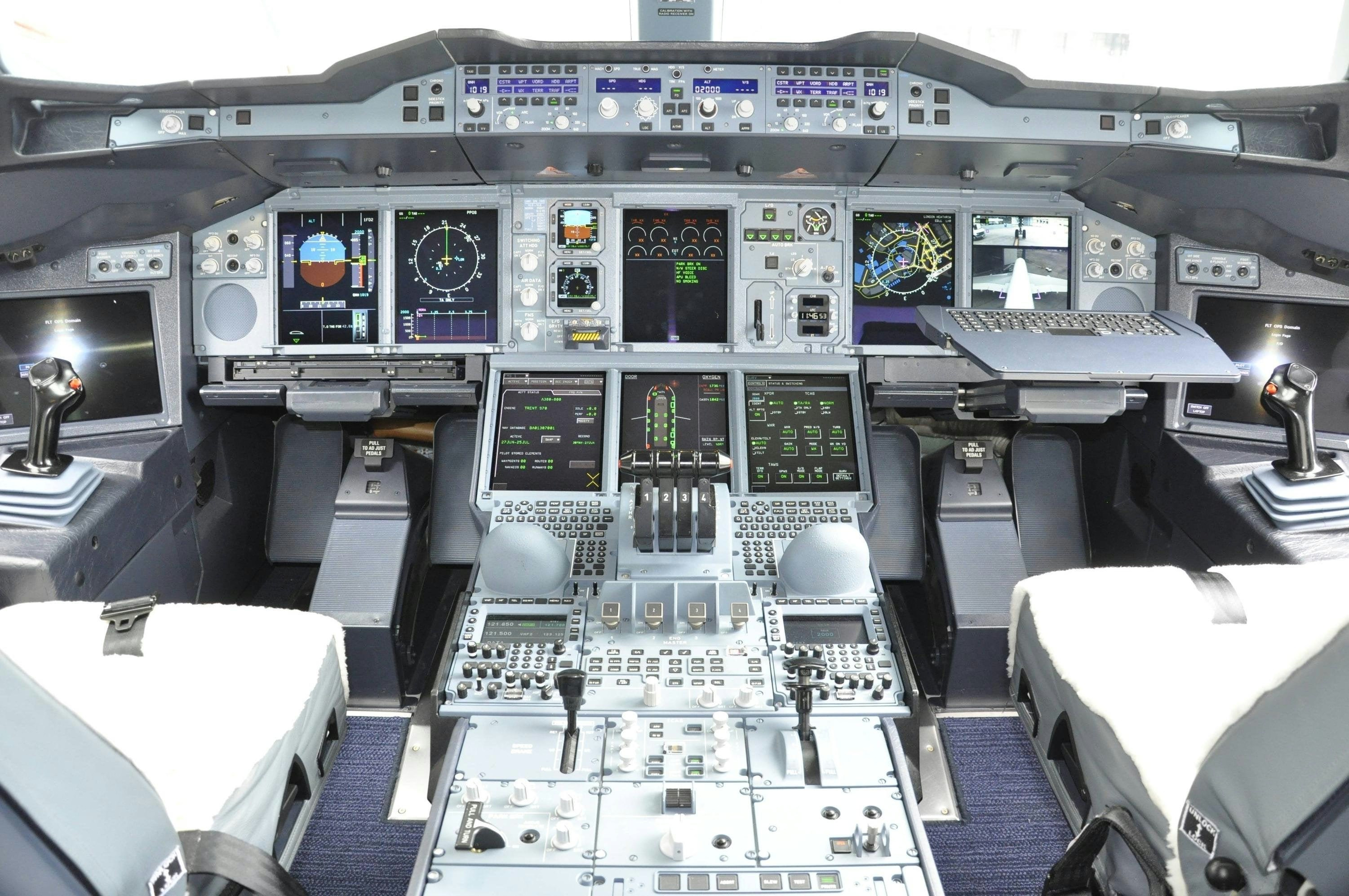
When the Airbus A380 entered commercial service with Singapore Airlines in October 2007, it marked a significant milestone in aviation as the world’s largest passenger aircraft. With a capacity exceeding 850 passengers and a full double-deck configuration, the A380 compelled engineers to rethink conventional aircraft design principles. Among its most distinctive features is the placement of the cockpit—not on the main or upper passenger decks, but on a dedicated intermediate level. This unconventional design choice reflects Airbus’s strategic focus on maximizing passenger space, enhancing operational efficiency, and streamlining flight operations.
The Cockpit’s Unique Position
Unlike the Boeing 747, whose raised cockpit emerged primarily from cargo-loading requirements, the A380’s cockpit is situated between the two passenger decks. Pilots access the flight deck via a short staircase from the main deck, positioned just ahead of the main staircase leading to the upper deck. This intermediate location is more than a mere design novelty; it offers several operational advantages. By aligning the pilots’ eye level with that of other Airbus widebody aircraft, ground maneuvering and taxiing become more intuitive, which reduces pilot training time and enhances safety. Additionally, the cockpit’s placement allows for a more streamlined nose profile, reducing aerodynamic drag and cockpit noise, thereby improving overall flight deck comfort. Crucially, positioning the cockpit on a separate deck frees both the main and upper decks entirely for passenger seating, supporting the A380’s mission as a high-capacity aircraft.
Contrasting Design Philosophies
A comparison with the Boeing 747 highlights the distinct design philosophies underpinning these aircraft. The 747’s iconic “hump” was originally conceived to accommodate a hinged nose door for cargo loading, with the cockpit raised above the main deck. Although the upper deck was later adapted for passenger use, it was never intended as a full-length cabin. In contrast, Airbus designed the A380 from the outset as a passenger-first aircraft. The full-length upper deck was a deliberate choice aimed at maximizing capacity and passenger comfort rather than a byproduct of cargo considerations. The decision to place the cockpit on a separate deck was integral to this vision, enabling both decks to be fully dedicated to passengers and amenities.
Operational and Market Considerations
While the intermediate cockpit offers clear benefits, it also introduces operational complexities. Maintenance and crew operations can become more challenging due to the additional movement required between decks. Airlines must balance these factors against the operational efficiencies gained, considering potential impacts on turnaround times and crew coordination. Some carriers have expressed concerns about increased operational costs associated with the A380’s unique layout. In response, competitors have emphasized the simplicity and cost-effectiveness of their cockpit designs, which are typically integrated within a single deck. By highlighting reduced maintenance demands and streamlined crew operations, rival manufacturers position their aircraft as more efficient alternatives in the market.
A Reflection of Airbus’s Philosophy
The A380’s cockpit placement ultimately embodies Airbus’s commitment to passenger experience and operational innovation. Despite presenting certain logistical challenges, the design facilitates the aircraft’s unprecedented capacity and comfort, establishing a new benchmark for high-capacity air travel. Far from being a mere technical curiosity, the A380’s unique cockpit offers insight into the priorities and ambitions that shaped one of the most remarkable achievements in modern aviation.

Etihad Airways Suspends Airbus A380 Flights on Key Route

Aditya Birla Group Seeks Approval for Aircraft Leasing in GIFT City

Qatar Airways Highlights Innovation and Connectivity at Arabian Travel Market 2026

Hong Kong's Five-Year Plan Includes Andrew Fan's Aircraft Parts Processing Hub Proposal

ACIA Aero Leasing Delivers ATR72-600 to Air Nostrum

RTX Appoints Jill Albertelli as Head of Pratt & Whitney

TAT Technologies Joins Beyond Aero Hydrogen Aircraft Program

AURAK Study Highlights Barriers to Air Taxi Adoption in Emerging Economies

Xiamen Air Selects Altitude for 787 Maintenance at Heathrow

Etihad and Swissport Extend Global Partnership
