
KI-Erkenntnisse in konkrete Maßnahmen überführen

Trends
Categories
Why the Airbus A300 Remains in Service Longer Than the A310
Why the Airbus A300 Remains in Service Longer Than the A310
Historical Context and Development
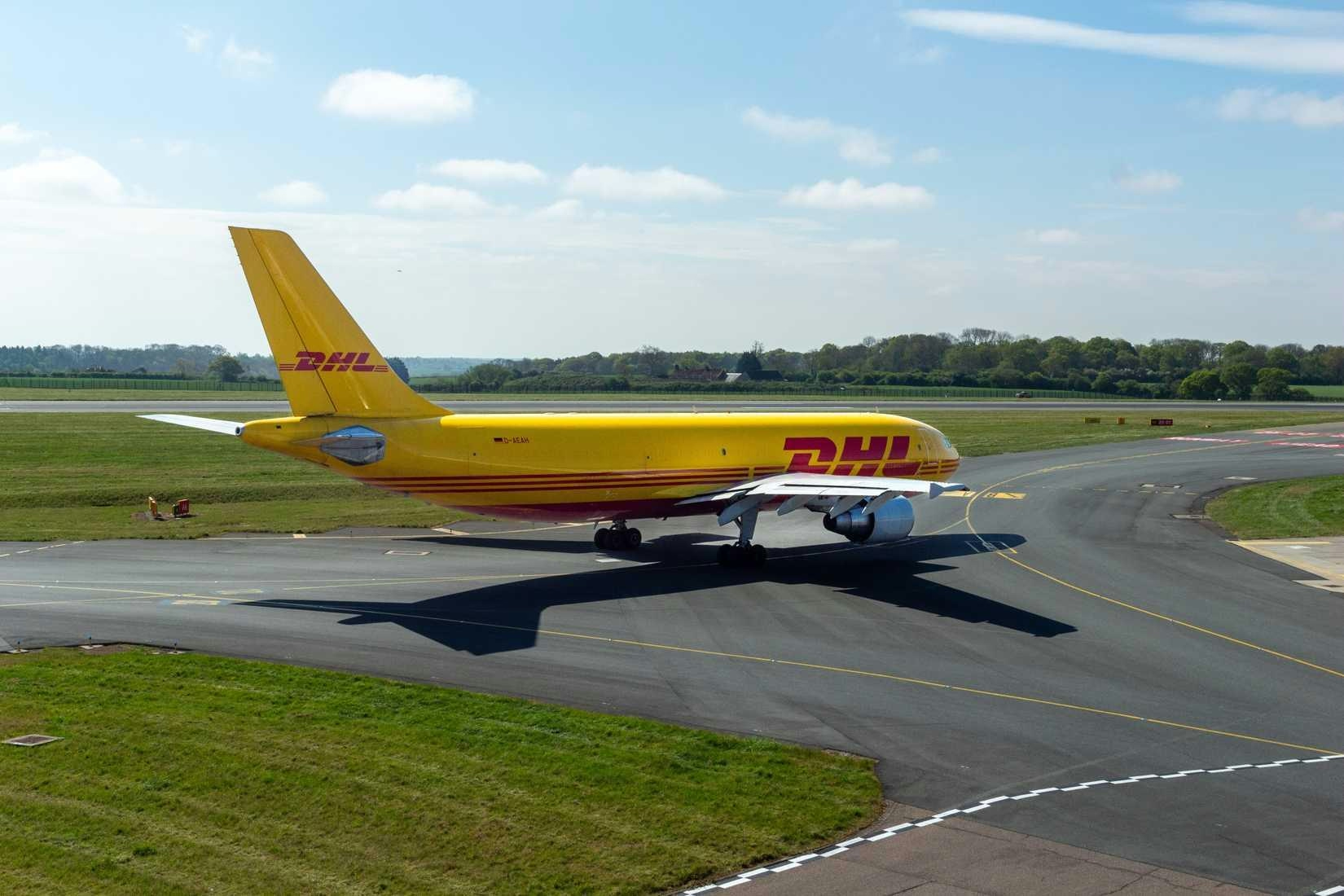
The Airbus A300, which entered service with Air France in 1974, represented a significant milestone for the emerging European aerospace manufacturer. As the world’s first twin-engine widebody jetliner, the A300 challenged prevailing norms by offering airlines a lighter and more economical alternative to the tri-engine aircraft that dominated commercial aviation at the time. Its innovative design incorporated pioneering composite materials, quickly garnering attention and orders that helped establish Airbus as a formidable competitor in the global aviation market.
Nearly a decade later, Airbus introduced the A310 with Swissair in 1983. This aircraft featured a shorter fuselage but boasted greater range and an even more advanced application of composite materials. The A310 also emphasized cockpit and parts commonality, reflecting Airbus’s strategic focus on simplifying crew training and fleet maintenance. Despite these technological advancements, the A310 did not achieve the same level of popularity or operational longevity as the A300.
Production, Popularity, and Operational Factors
The A300 enjoyed a notably long production run of 36 years, from its prototype in 1971 until 2007, with a total of 561 units delivered. In contrast, the A310 was produced for only 20 years, between 1978 and 1998, with 255 aircraft delivered. While the A310 eliminated the need for a flight engineer—a role that has since become obsolete in modern cockpits—the A300’s larger capacity and established reliability maintained its appeal among airlines.
A critical factor contributing to the A300’s extended service life is its robust design and operational versatility. Its efficiency and higher service ceiling have made it adaptable to a wide range of roles, including both passenger transport and cargo operations. Airlines have found the A300 particularly resilient amid supply chain disruptions and shifting market dynamics, enabling it to remain relevant as fleets evolved over time.
Conversely, the A310, despite its technical improvements, encountered operational challenges that affected its long-term viability. Incidents such as a runway incursion in Delhi, attributed to poor visibility, highlighted some of the difficulties faced by operators of the type. While such events were not unique to the A310, they underscored operational hurdles that may have influenced airlines’ decisions to retire the model earlier.
Market Impact and Legacy
The A300’s adaptability to diverse operational requirements, combined with its larger order volume and extended production period, has ensured its continued presence in airline fleets worldwide. Although the A310 played a significant role during Airbus’s formative years, it ultimately experienced less demand and a shorter operational lifespan. The enduring popularity of the A300 stands in contrast to later Airbus models such as the A380 and A330-800, which struggled to replicate its commercial success.
In essence, the Airbus A300’s durable design, operational flexibility, and resilience to industry challenges have enabled it to outlast the more modern A310, securing its status as a mainstay in the history of commercial aviation.
Comments

Etihad Airways Suspends Airbus A380 Flights on Key Route

Aditya Birla Group Seeks Approval for Aircraft Leasing in GIFT City

Qatar Airways Highlights Innovation and Connectivity at Arabian Travel Market 2026

Hong Kong's Five-Year Plan Includes Andrew Fan's Aircraft Parts Processing Hub Proposal

ACIA Aero Leasing Delivers ATR72-600 to Air Nostrum

RTX Appoints Jill Albertelli as Head of Pratt & Whitney

TAT Technologies Joins Beyond Aero Hydrogen Aircraft Program

AURAK Study Highlights Barriers to Air Taxi Adoption in Emerging Economies

Xiamen Air Selects Altitude for 787 Maintenance at Heathrow

Etihad and Swissport Extend Global Partnership
