
KI-Erkenntnisse in konkrete Maßnahmen überführen

Trends
Categories
Why the Boeing 747-8 Uses a Specific Engine Type
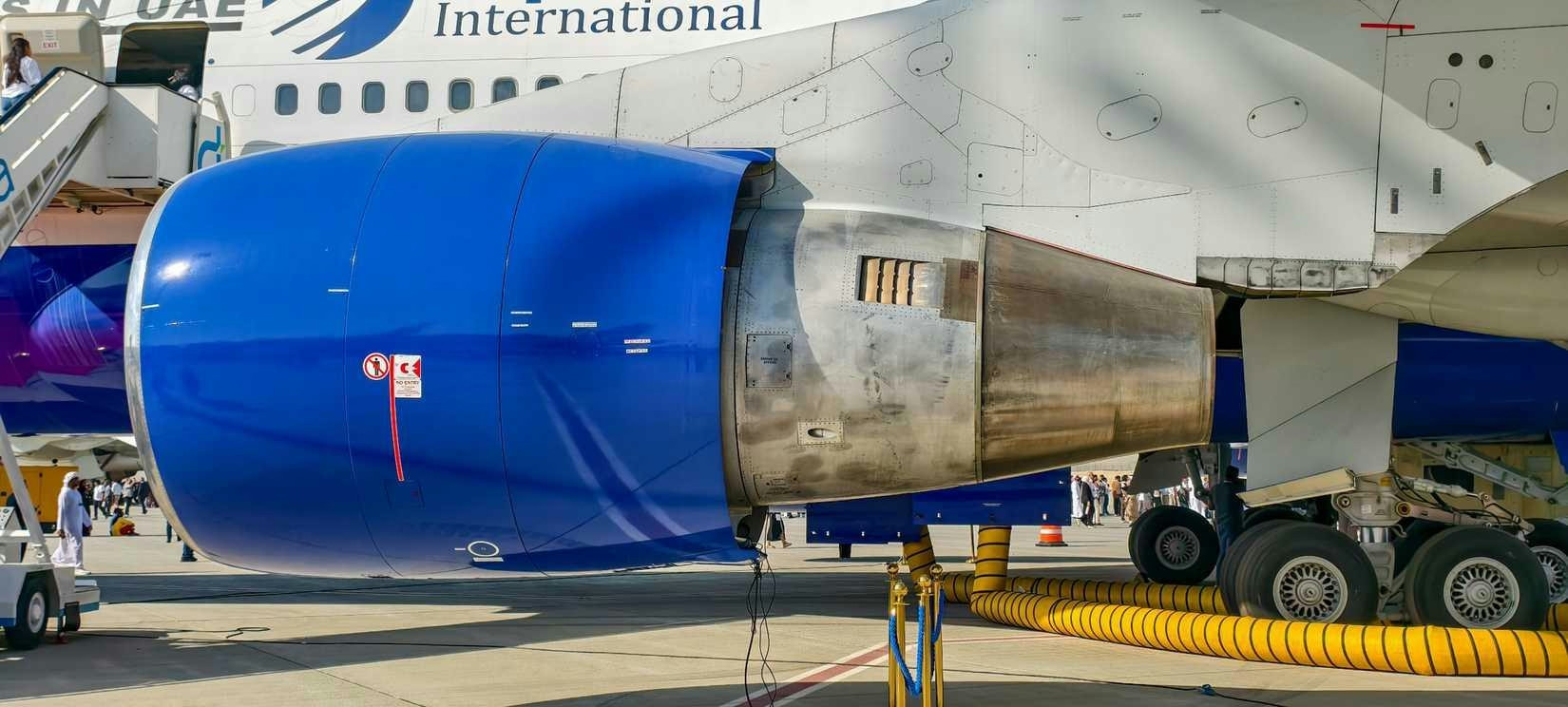
Why the Boeing 747-8 Uses a Specific Engine Type
The Boeing 747-8 represents a notable departure from its predecessors by being powered exclusively by a General Electric engine. Unlike earlier models, which offered airlines a choice among multiple engine manufacturers, the 747-8 relies solely on the GE GEnx-2B turbofan. This engine is closely related to the powerplant used on the Boeing 787 Dreamliner. The decision to adopt a single engine type was influenced by both economic and strategic factors, reflecting significant shifts within the aviation industry.
Historical Context and Market Shifts
In previous decades, it was common for aircraft such as the Boeing 747-400 to be available with several engine options. The 747-400, for instance, could be equipped with the Pratt & Whitney PW4000, General Electric CF6, or Rolls-Royce RB211 engines. Among the 694 aircraft delivered in the 747-400 family, the GE CF6 emerged as the most popular choice. However, the economics of engine development have evolved considerably. The substantial costs involved in designing, certifying, and supporting multiple engines for a single aircraft type have become increasingly prohibitive, particularly as the market for very large aircraft has contracted.
When Boeing launched the 747-8 program in the 2000s, the company faced a markedly different market environment. Initial projections anticipated sales of 300 to 400 updated jumbo jets, including a significant number of freighters. Ultimately, only 155 747-8s were delivered—48 passenger variants and 107 freighters. This limited production volume made it financially unfeasible to support multiple engine options. Consequently, Boeing capitalized on its partnership with General Electric, selecting an engine that had already benefited from extensive investment and development through the 787 program.
Engine Performance and Industry Impact
The GE GEnx-2B engine, along with the more recent GE Passport engine, has contributed significantly to the 747-8’s reputation for reliability and efficiency. The market has generally responded favorably to the performance of these engines, which align with Boeing’s objectives of improving operational economics and maintaining competitiveness in the long-haul segment. By standardizing on a single, advanced engine, Boeing has been able to streamline maintenance procedures, reduce operational costs, and enhance fuel efficiency—factors that are increasingly critical as airlines prioritize sustainability and cost-effectiveness.
Boeing’s engine strategy has not gone unnoticed by competitors. Rolls-Royce, for example, continues to advance its engine technologies for both military and commercial aircraft, achieving new regulatory milestones and certifications. These developments highlight the ongoing competition in the wide-body aircraft market, where engine performance and reliability remain key differentiators.
In hindsight, Boeing’s decision to equip the 747-8 with a single, state-of-the-art engine was both a pragmatic response to market realities and a strategic effort to secure the aircraft’s long-term viability. While the era of offering multiple engine options for large jets appears to be waning, the emphasis on bespoke, high-performance engines has positioned Boeing—and the 747-8—competitively within a challenging global market.

Eight Aboard Twin-Engine Cessna Crash in Remote Alaska
American Airlines Plans to Receive New Aircraft Deliveries in 2026
Delta Flight Returns to Atlanta Airport Due to Engine Trouble

Samoa Airways Recovers Damaged DHC-6-300 Aircraft
Man Ingested by Frontier Airlines Engine Marks Denver’s Sixth Airfield Security Breach in Three Years

The Advantages and Disadvantages of Owning Versus Leasing a Private Jet
Former Spirit Employees Express Concerns Over AI Partnership With Google
China Certifies Pilotless Air Taxi for Export; Sri Lanka First Buyer

US Pilot Hourly Pay Ranges from $90 for Regional to $465 for Widebody Flights

NASA Chooses University Teams to Support Aviation Research
