
Orquesta conocimientos de IA para convertirlos en acción

Tendencias
Categories
27 Russian Il-76 Flights Fail to Resolve Kaveri Engine Issues; Certification Expected by 2027
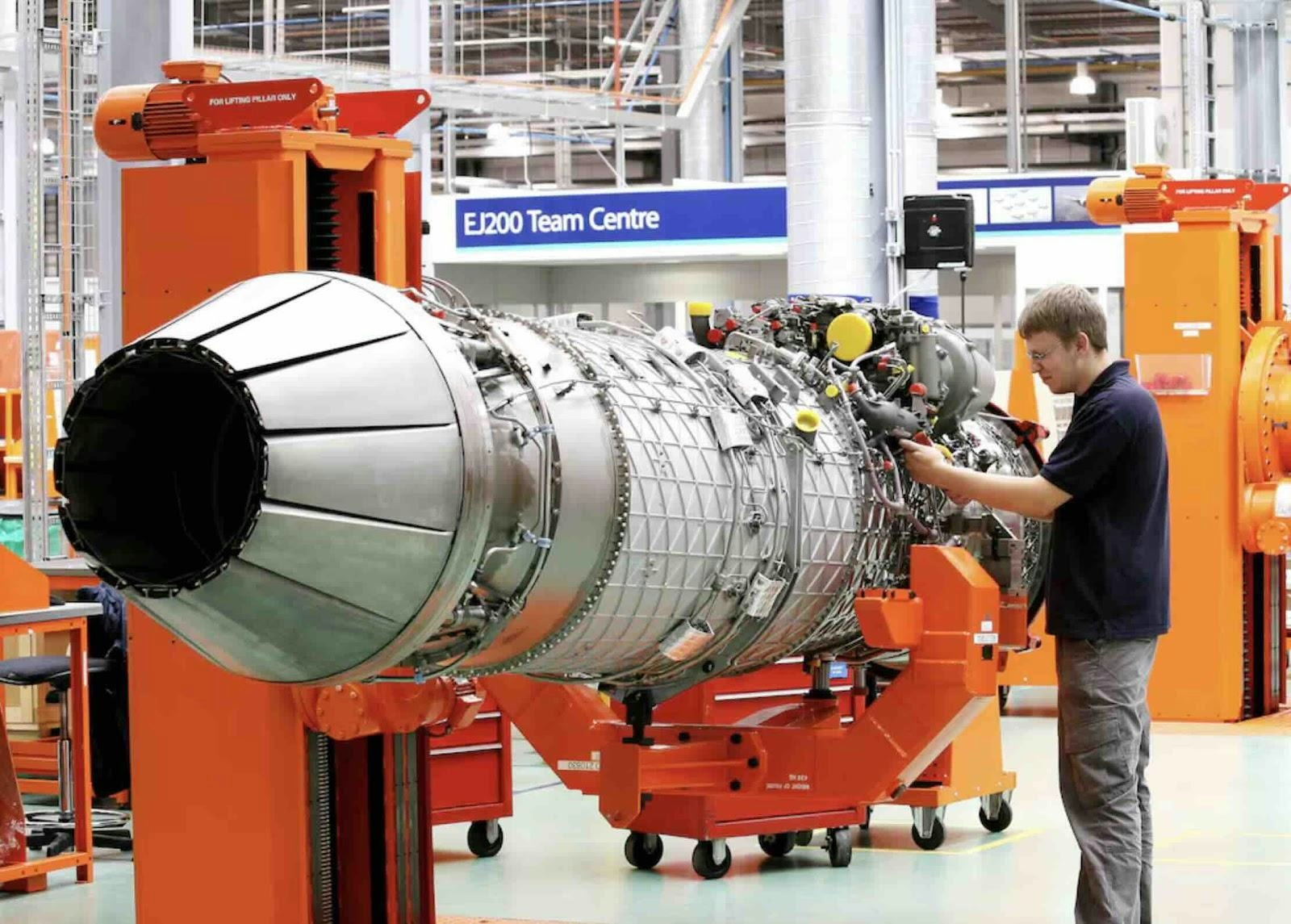
Kaveri Engine Certification Delayed Following Extensive Il-76 Flight Tests
The Indian Kaveri aircraft engine, developed to power indigenous combat aircraft, continues to encounter significant technical challenges, resulting in a further delay in its certification timeline. Despite 27 test flights conducted using a specially modified Russian Il-76LL flying laboratory, critical issues remain unresolved, pushing the expected certification date to 2027.
Testing and Technical Challenges
The Kaveri engine program initially targeted certification by 2026. However, sources reveal that additional testing and evaluations are now necessary, extending the timeline. The Il-76LL aircraft, equipped with one Kaveri prototype engine replacing one of its four standard engines, has been central to the program’s flight testing phase. Over 27 sorties totaling 55 hours, the engine was assessed at altitudes reaching 12 kilometers and speeds up to Mach 0.7. These in-flight trials were designed to validate the engine’s performance under operational conditions beyond ground-based testing.
Despite these extensive efforts, the Kaveri engine has yet to satisfy the endurance and reliability standards required for certification. The persistent technical difficulties have not only prolonged the development schedule but have also raised concerns among potential users and stakeholders. Industry observers note increasing skepticism about the engine’s readiness, particularly as competing manufacturers continue to advance their technologies.
Competitive Landscape and Program Implications
The delay occurs amid significant progress by rival engine manufacturers. Firms such as CFM International and GE Aerospace are strengthening their market positions with engines like the Leap and CF6-80C2, both of which have secured certifications and expanded their global footprint. As the Kaveri program struggles with ongoing issues, these competitors are poised to maintain or enhance their dominance in the military aviation engine sector.
The development of the Kaveri engine, which began in the late 1980s, highlights the complexity inherent in producing a reliable indigenous powerplant for combat aircraft. While the use of the Il-76LL flying laboratory has afforded valuable real-flight testing opportunities, the protracted timeline underscores the formidable technical and engineering challenges involved.
With certification now anticipated no earlier than 2027, the Kaveri program remains a long-term project. Until the engine’s technical problems are fully addressed and certification is achieved, India’s aspirations for a domestically powered combat aircraft will continue to face stiff competition from established global players.

Etihad and Swissport Extend Global Partnership

Sepehran Airlines B737 Returns to Mashhad After Tyre and Engine Issues

Etihad Deploys Widebody Fleet to Meet Strong Demand

Korean Air Finalizes $36.2 Billion Deal with Boeing

Australia’s RFDS Queensland Section Orders Six King Air 260Cs

Korean Air Finalizes Order for 103 Boeing Jets and Engines

Embraer E195-E2 Features Distinctive Engine Placement Among Regional Jets

What Passengers Can Expect on Boeing’s New 777X Jet

How Ethiopian Airlines Became Africa’s Leading Carrier Amid Gulf Competition

Joby Aviation Extends Autonomous Flight Capabilities with Cross-Country Tour
