
Orquesta conocimientos de IA para convertirlos en acción

Tendencias
Categories
A380 Flight Lab Reveals Updated Design for Open Fan Tests
A380 Flight Lab Reveals Updated Design for Open Fan Tests
Advancing Open Fan Technology Through Flight Testing
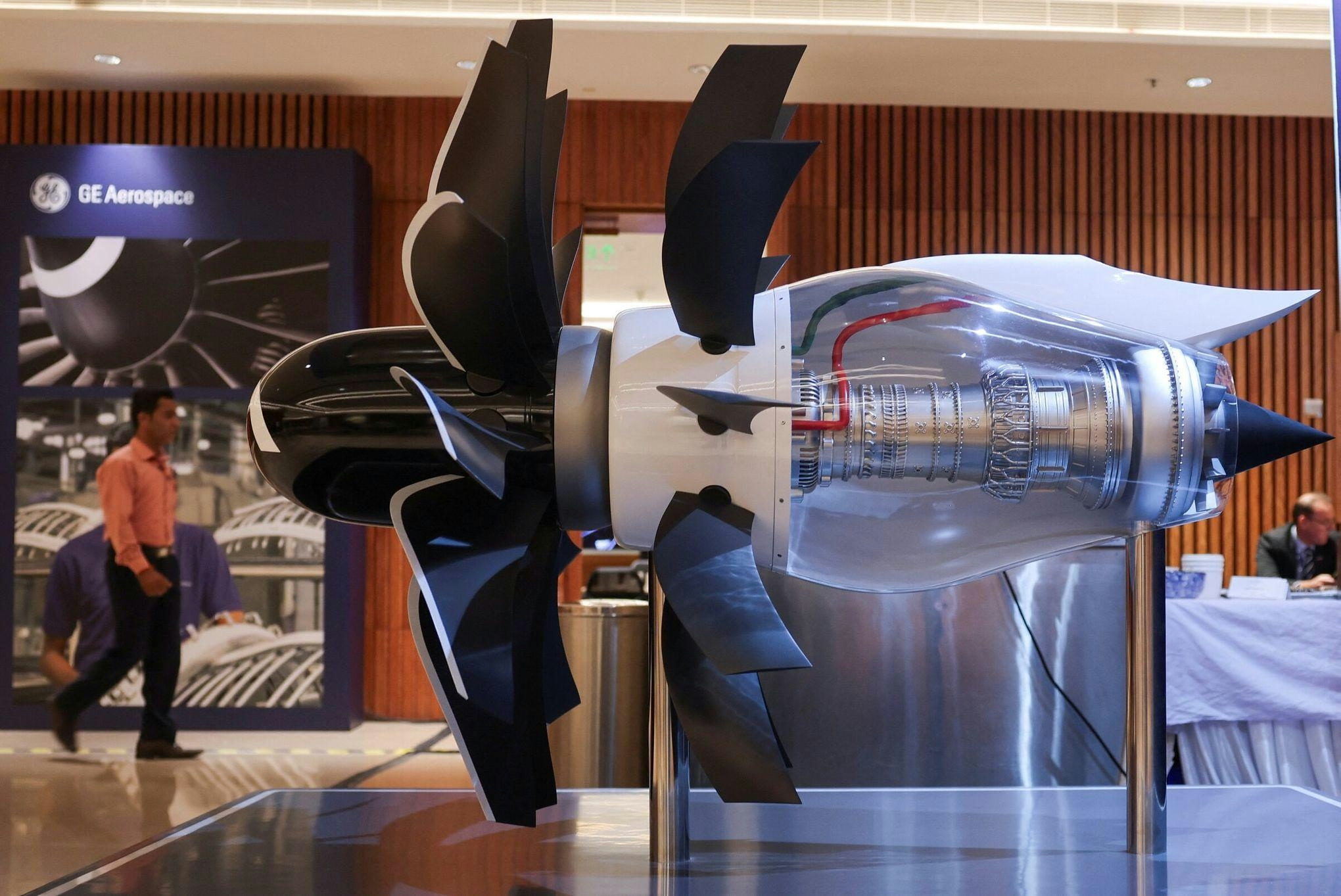
Airbus and CFM International have unveiled a new livery for the A380 Flight Lab at the Farnborough International Airshow, highlighting the aircraft’s central role in the forthcoming CFM RISE Open Fan flight test campaign. Scheduled to commence later this decade, this initiative seeks to validate the technology readiness of the Open Fan engine, a key component of CFM’s RISE (Revolutionary Innovation for Sustainable Engines) technology demonstration program aimed at future commercial aircraft propulsion.
The Open Fan engine represents a significant departure from conventional turbofan designs by removing the traditional engine casing to accommodate a larger, exposed fan. This innovative configuration is anticipated to enhance fuel efficiency and reduce aerodynamic drag, thereby delivering substantial environmental and operational advantages. Recently, Airbus and CFM engineering teams completed the first conceptual flight test design review, marking a critical milestone in the integration of the aircraft and engine systems.
Challenges and Industry Response
Integrating the advanced Open Fan technology into the existing A380 platform presents considerable technical challenges. Modifying the airframe to accommodate the new engine design, ensuring its reliability and safety, and managing the complexities of airborne testing—expected to begin around 2029—pose significant hurdles. Airbus and CFM are collaborating closely to address these issues as the program progresses from design to demonstration phases.
The market reaction to the Open Fan concept has been varied. While the potential for improved efficiency is widely recognized, some airlines remain cautious about the practicality and cost-effectiveness of adopting such a radically different engine architecture. Concerns have been raised regarding the expenses associated with retrofitting existing fleets and the operational implications of integrating this new technology.
Meanwhile, competitors in the aerospace industry are closely observing the RISE program. Rival engine manufacturers are promoting their own advancements in propulsion technology, emphasizing gains in engine efficiency and accelerated development schedules. These companies are positioning themselves as frontrunners in next-generation aircraft propulsion, aiming to assure customers of their preparedness to meet future sustainability and performance requirements.
As the flight testing phase approaches, Airbus and CFM continue to focus on overcoming integration challenges and demonstrating the Open Fan engine’s viability. The success of this program may prove pivotal in shaping the future landscape of commercial aviation propulsion.

Etihad Airways Suspends Airbus A380 Flights on Key Route

Aditya Birla Group Seeks Approval for Aircraft Leasing in GIFT City

Qatar Airways Highlights Innovation and Connectivity at Arabian Travel Market 2026

Hong Kong's Five-Year Plan Includes Andrew Fan's Aircraft Parts Processing Hub Proposal

ACIA Aero Leasing Delivers ATR72-600 to Air Nostrum

RTX Appoints Jill Albertelli as Head of Pratt & Whitney

TAT Technologies Joins Beyond Aero Hydrogen Aircraft Program

AURAK Study Highlights Barriers to Air Taxi Adoption in Emerging Economies

Xiamen Air Selects Altitude for 787 Maintenance at Heathrow

Etihad and Swissport Extend Global Partnership
