
Orquesta conocimientos de IA para convertirlos en acción

Tendencias
Categories
Advances Propel Growth in Low-Altitude Business Sector
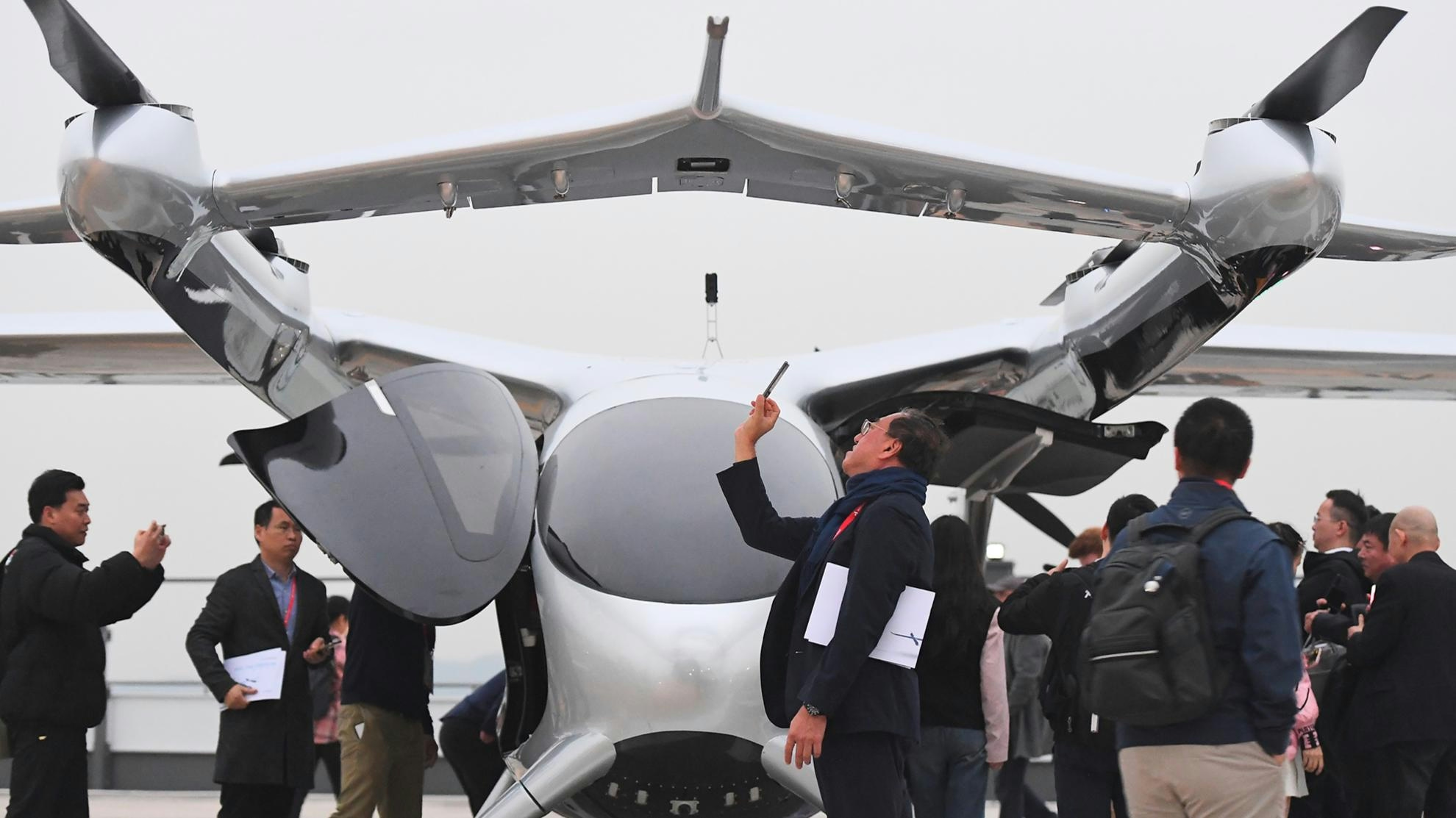
Advances Propel Growth in Low-Altitude Business Sector
Technological Milestones and Industry Progress
Volant Aerotech’s VE25-100 electric vertical take-off and landing (eVTOL) aircraft captured significant attention at a recent Shanghai exposition, underscoring China’s rapid advancements in the low-altitude economy. The sector is transitioning from conceptual planning to active implementation, with industry stakeholders making notable progress supported by favorable government policies, a strengthening domestic supply chain, and sustained research and development efforts. Experts suggest these developments are establishing a solid foundation for the sector’s anticipated expansion.
In a June interview, Dong Ming, founder and CEO of Shanghai-based Volant Aerotech, emphasized that the long-term success of the low-altitude economy depends on proven commercial viability. He highlighted the importance of delivering travel solutions that are comfortable, safe, and cost-effective for passengers, while ensuring sustainable returns for operators and growth opportunities for manufacturers and suppliers.
A significant milestone was achieved on May 28 when Volant Aerotech completed China’s first piloted transition flight of a commercial passenger eVTOL aircraft in Zigong, Sichuan province. This accomplishment positions Volant as the third company worldwide to reach such a stage in eVTOL development. Dong noted that this success is expected to accelerate subsequent test flights and the overall development of the model.
Challenges and Market Dynamics
Despite these advances, the sector faces considerable challenges. Safety concerns have intensified following a recent plane crash in Beijing, leading to uncertainty and temporary suspensions of services in parts of the industry. These incidents have triggered mixed reactions in the market, with some investors diverting their focus to other high-profile opportunities, such as the anticipated SpaceX initial public offering, which has caused temporary declines in space-related stocks.
Moreover, escalating geopolitical tensions, including the ongoing conflict involving Iran and recent military interceptions of Iranian drones, highlight the complex and volatile environment in which low-altitude operations must evolve. These factors add layers of uncertainty to the sector’s development trajectory.
Dong stressed that the gradual commercialization of the low-altitude economy depends on establishing a comprehensive and sustainable industrial value chain. He projected that over the next three to five years, Volant Aerotech aims to achieve revenues of 10 billion yuan (approximately $1.47 billion) and a market valuation of 100 billion yuan, reflecting the sector’s promising outlook.
Policy Support and Emerging Innovations
Luo Jun, an expert on the low-altitude economy, pointed out that the industry has been officially recognized as an emerging pillar alongside aerospace in China’s 15th Five-Year Plan (2026–30). This formal policy endorsement is expected to further stimulate innovation and market exploration.
On June 4, another significant development occurred with the public unveiling of the WaveFly 5X, a consumer-grade wing-in-ground craft developed by Suzhou-based Navee. The craft operates just 50 to 60 centimeters above water at speeds reaching 85 kilometers per hour and is claimed to be the first of its kind globally. Wang Yaozhang, Navee’s chief product officer, announced plans to commence production by the end of the year, initially targeting an output of 100 units. The company intends to scale production to 2,000 units annually by 2027, contingent on market demand, with a focus on high-end overseas markets before expanding regionally.
Despite recent setbacks and global uncertainties, China’s low-altitude business sector continues on a growth trajectory, propelled by technological breakthroughs, supportive policies, and a clear vision for commercial viability.

Etihad and Swissport Extend Global Partnership
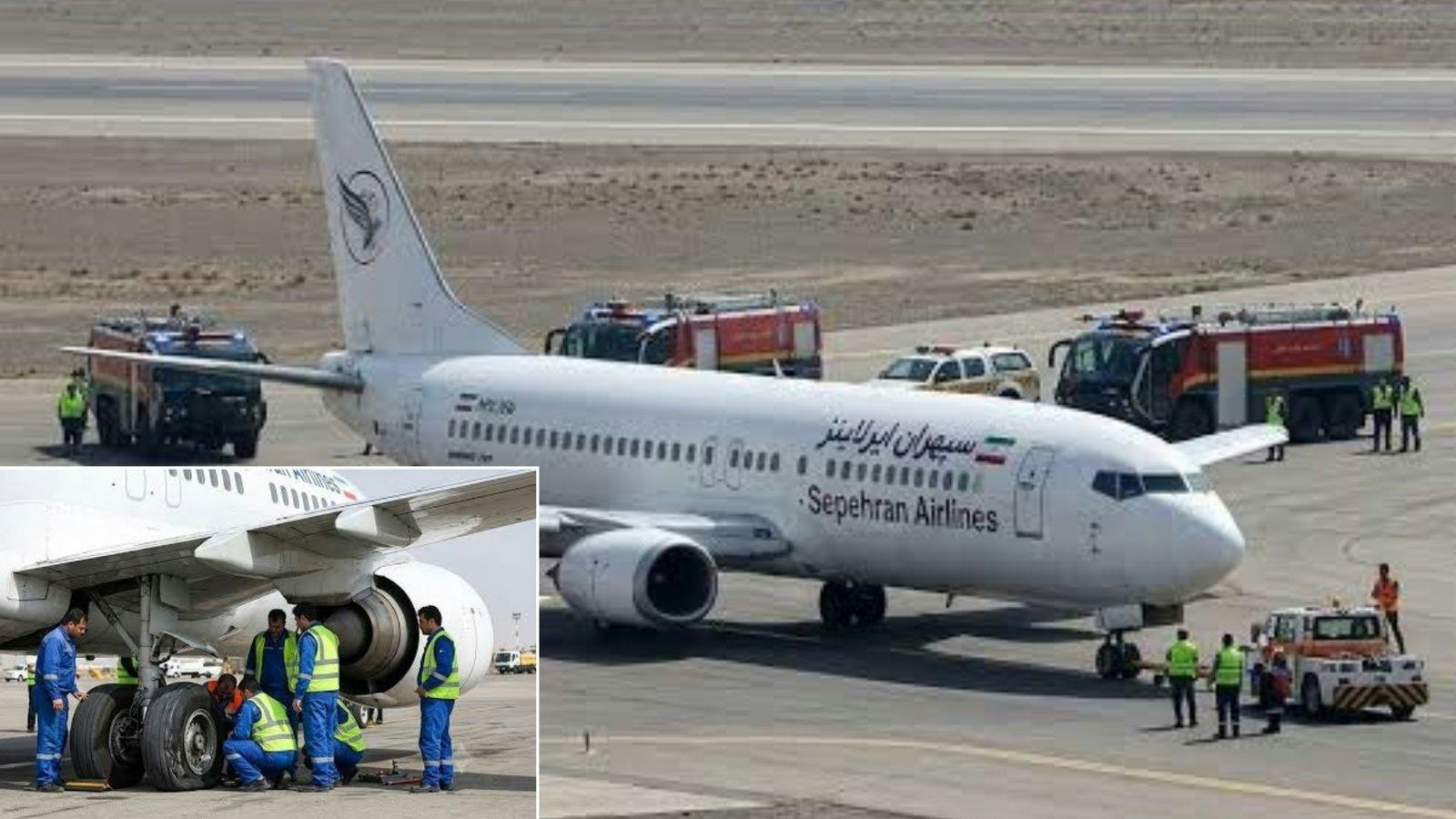
Sepehran Airlines B737 Returns to Mashhad After Tyre and Engine Issues

Etihad Deploys Widebody Fleet to Meet Strong Demand

Korean Air Finalizes $36.2 Billion Deal with Boeing
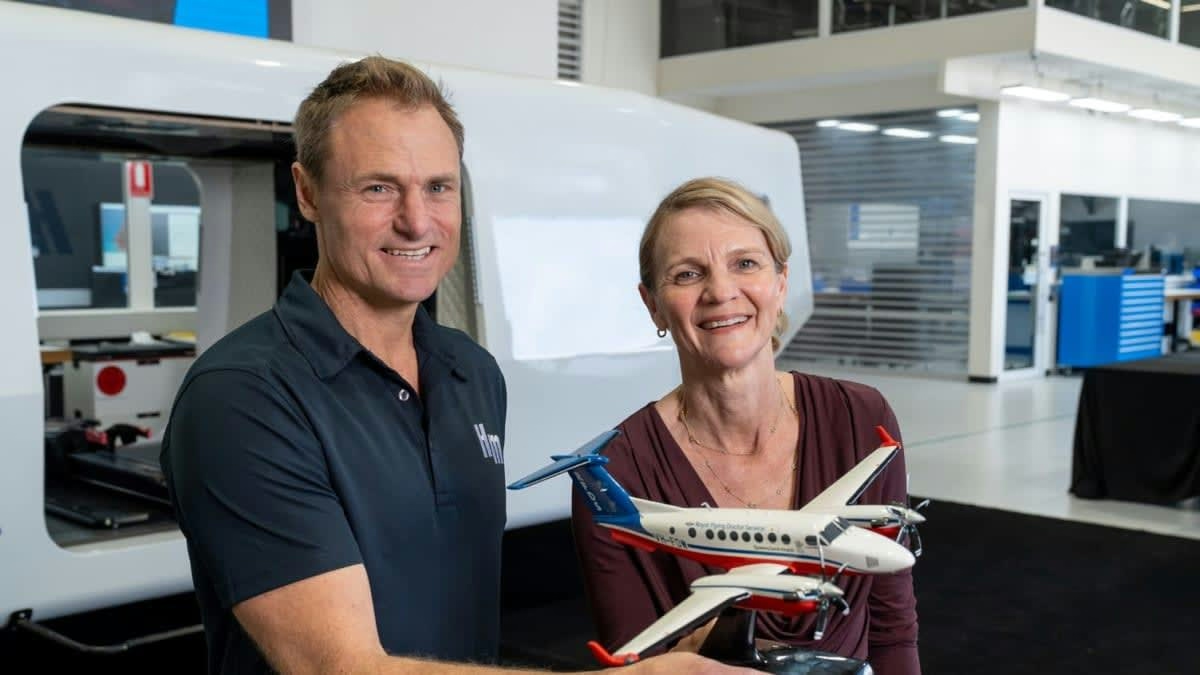
Australia’s RFDS Queensland Section Orders Six King Air 260Cs
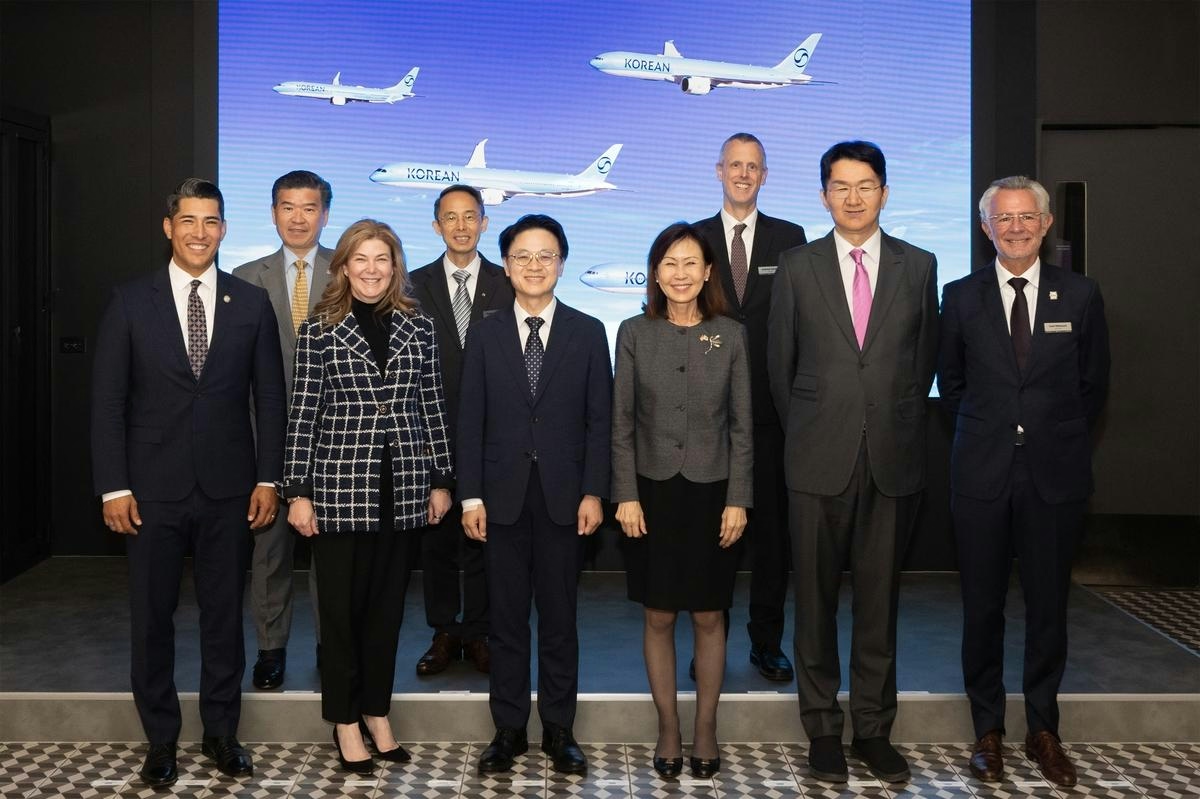
Korean Air Finalizes Order for 103 Boeing Jets and Engines

Embraer E195-E2 Features Distinctive Engine Placement Among Regional Jets

What Passengers Can Expect on Boeing’s New 777X Jet

How Ethiopian Airlines Became Africa’s Leading Carrier Amid Gulf Competition

Joby Aviation Extends Autonomous Flight Capabilities with Cross-Country Tour
