
Orquesta conocimientos de IA para convertirlos en acción

Tendencias
Categories
Advancing Electrification in Aviation
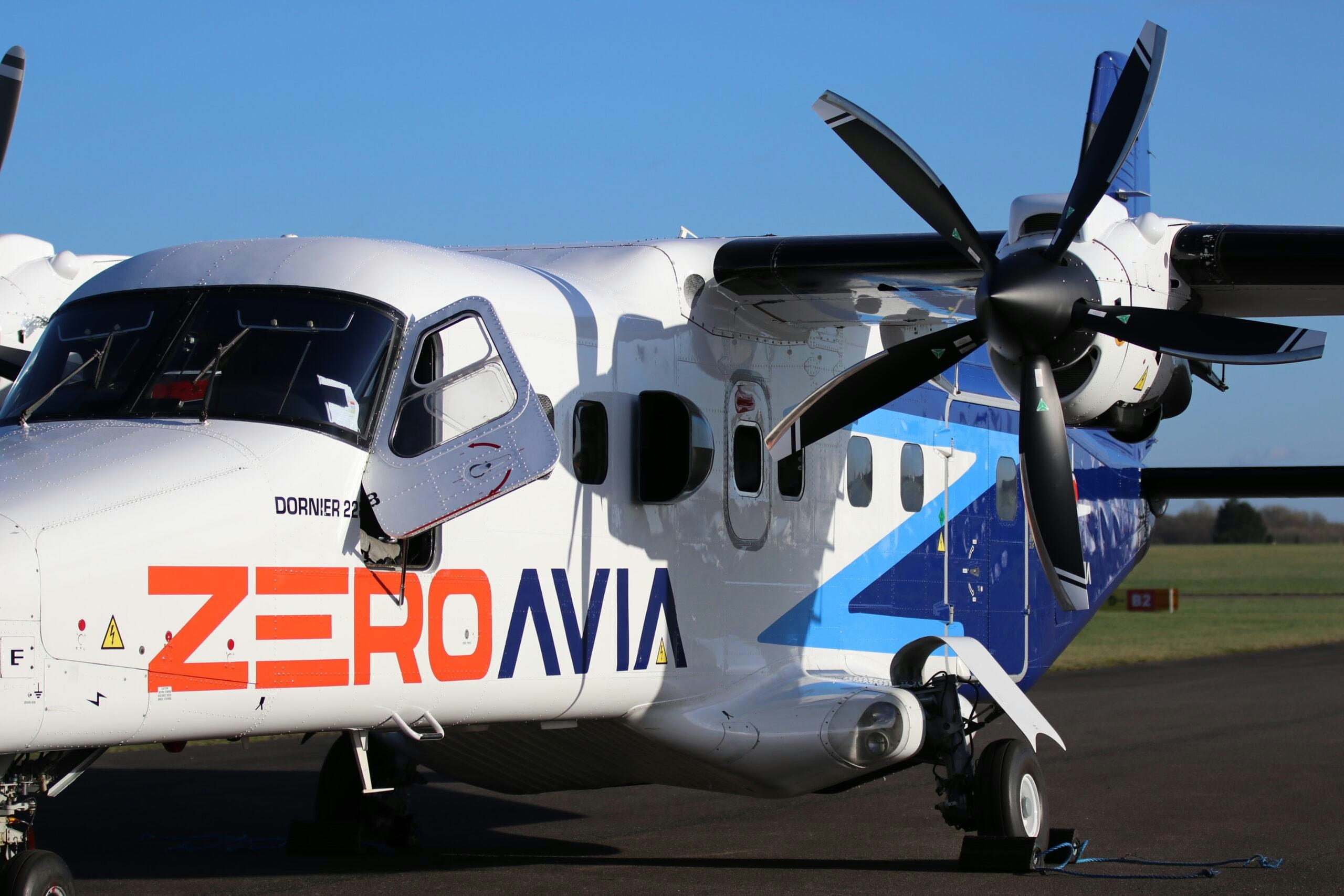
Advancing Electrification in Aviation
A New Frontier at the Paris Air Show
The Paris Air Show marked a significant milestone in the evolution of electric aviation, with the first major order awarded not to an established aircraft manufacturer but to a newcomer in the air-taxi sector. Brazilian operator Revo committed to purchasing 50 of Eve Air Mobility’s four-passenger, all-electric vertical take-off and landing (eVTOL) aircraft. Eve Air Mobility is among a growing cadre of startups—including Bell Textron, Joby Aviation, and Vertical Aerospace—dedicated to transforming electric flight from concept to reality.
Technical Challenges and Emerging Solutions
Despite the enthusiasm surrounding electric propulsion, the aviation industry faces formidable technical challenges. Aviation fuel boasts an energy density exceeding 10 kWh/kg, vastly outperforming even the most advanced lithium-ion batteries, which deliver only several hundred watt-hours per kilogram. This disparity presents a significant obstacle to fully electric flight for anything beyond drones or small aircraft. However, electric motors offer a weight advantage over combustion engines, partially offsetting the burden imposed by heavy batteries. This balance has enabled companies such as Slovakian manufacturer Pipistrel to successfully market the Velis Electro, an electric training aircraft. Although it has a shorter range, the Velis Electro offers lower maintenance and fuel costs, making it an attractive option for flight schools where training sessions are brief.
Electric air taxis and short-range cargo drones stand to benefit from these advantages, particularly as they are not constrained by the need for traditional airstrips. Nevertheless, energy density remains a critical limitation. As passenger and cargo loads increase, the practicality of electric flight diminishes. According to MIT materials science professor Yet-Ming Chiang, batteries must achieve an energy density of at least 1 kWh/kg to render regional electric aircraft viable—a market segment that accounts for approximately 80% of domestic flights in the United States.
Current lithium-ion battery technology, which typically employs graphite anodes and nickel-based cathodes, is projected to plateau below 300 Wh/kg, according to Alex Holland, research director at IDTechEx. In response, companies like Amprius Technologies are exploring silicon nanowire anodes to push these boundaries, while Magnix claims its latest battery design reaches 400 Wh/kg, though specific details remain undisclosed. Silicon anodes, however, present their own challenges, including expansion and cracking during charging cycles. Researchers are developing ultra-thin nanowires to mitigate these issues, a breakthrough that could also address the high power demands of takeoff—a critical consideration for both drones and personal transport aircraft.
Regulatory and Economic Considerations
Beyond the technical hurdles, the path to electrification in aviation is further complicated by stringent safety regulations and the substantial research and development costs associated with advanced power systems. Battery technology must not only improve in terms of energy density and power output but also comply with rigorous safety and environmental standards. These factors have contributed to a mixed market response: while some investors are optimistic about the potential of green aviation, others remain cautious, mindful of the significant technical and regulatory challenges that lie ahead.
As innovation continues to drive progress, the promise of electric aviation remains compelling. However, widespread adoption will depend on overcoming persistent obstacles in battery technology, regulatory approval, and economic feasibility.

Etihad Airways Suspends Airbus A380 Flights on Key Route

Aditya Birla Group Seeks Approval for Aircraft Leasing in GIFT City

Qatar Airways Highlights Innovation and Connectivity at Arabian Travel Market 2026

Hong Kong's Five-Year Plan Includes Andrew Fan's Aircraft Parts Processing Hub Proposal

ACIA Aero Leasing Delivers ATR72-600 to Air Nostrum

RTX Appoints Jill Albertelli as Head of Pratt & Whitney

TAT Technologies Joins Beyond Aero Hydrogen Aircraft Program

AURAK Study Highlights Barriers to Air Taxi Adoption in Emerging Economies

Xiamen Air Selects Altitude for 787 Maintenance at Heathrow

Etihad and Swissport Extend Global Partnership
