Imagen

Orquesta conocimientos de IA para convertirlos en acción

¡Únete hoy a la lista de espera de AeroGenie!

Tendencias

Categories

AI-Generated Level D Environments Unveiled at WATS 2026
May 5, 2026By ePlane AI
AI-Generated Level D Environments Unveiled at WATS 2026
0
0
Level D Simulation
AI-Generated Environments
Flight Training Technology

AI-Generated Level D Environments Unveiled at WATS 2026

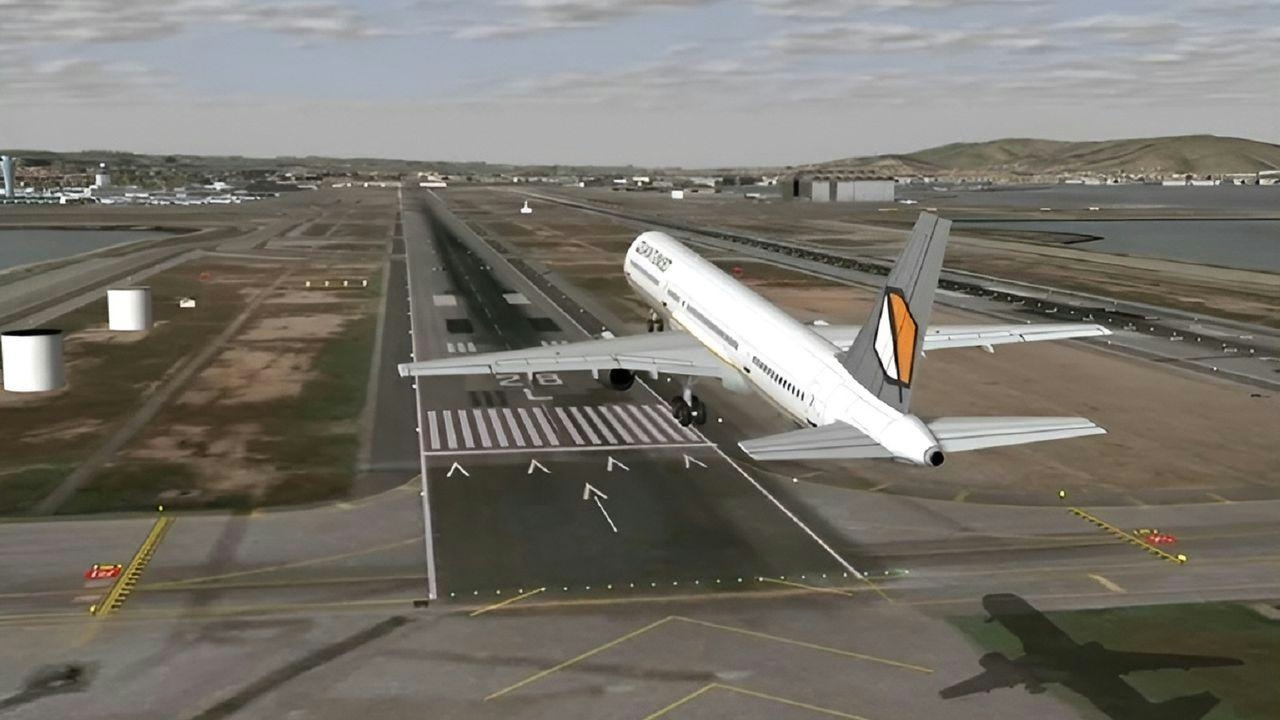
Quantum3D has introduced a groundbreaking live demonstration of AI-generated Level D simulation environments at the World Aviation Training Symposium (WATS) 2026 in Orlando. The event, held from May 5 to 7 at Booth 413, showcased a real-time simulated flight from John F. Kennedy International Airport to Manhattan. This simulation is powered by Quantum3D’s MANTIS S real-time image generator and developed in collaboration with Blackshark.ai and Olmos. The demonstration underscores the potential of AI-assisted content creation to accelerate the development of Level D-compliant Common Database (CDB) training environments, representing a significant advancement in flight training technology.

Advancing Flight Training with AI-Driven Simulations

The New York scenario presented at WATS features high-density urban rendering alongside authentic approach and departure environments from JFK, all formatted in CDB. These visuals are tailored to support both traditional commercial aviation and the emerging sector of electric vertical takeoff and landing (eVTOL) operations within complex urban airspace. Murat Kose of Quantum3D emphasized the industry’s demand for rapid, scalable, and high-quality simulation environments, stating, “We are bringing AI-driven 3D worlds to Level D simulation, enabling faster, more flexible pilot training without compromising standards.”

In addition to the New York demonstration, Quantum3D showcased MANTIS operating a variety of Level D-compliant airports in CDB format, drawing from an extensive global library of over 30,000 airfield models. This breadth of content highlights the company’s commitment to delivering comprehensive and versatile training solutions.

Industry Challenges and Market Response

Despite the promise of streamlined and enhanced pilot training, the introduction of AI-generated environments presents notable challenges. Industry stakeholders may encounter difficulties in integrating these new systems with existing infrastructure, potentially resulting in delays and increased costs. Market reactions have been mixed; while some investors express optimism about the potential for more immersive and efficient training simulations, others remain cautious due to the technical complexities and financial investments required for widespread adoption.

The unveiling at WATS 2026 is likely to prompt competitors within the simulation sector to accelerate their own AI-driven initiatives, intensifying the race to develop advanced training solutions. As the aviation training industry navigates these rapid technological advancements, the interplay between innovation, cost management, and system integration will remain a critical focus for all stakeholders involved.

More news
Rest and Sleep Facilities for Cabin Crew on the Airbus A350-1000

Rest and Sleep Facilities for Cabin Crew on the Airbus A350-1000

Rest and Sleep Facilities for Cabin Crew on the Airbus A350-1000 Dedicated Crew Rest Areas on Ultra-Long-Haul Flights On ultra-long-haul flights, the rest arrangements for cabin crew extend far beyond simply occupying an empty passenger seat. Modern widebody aircraft such as the Airbus A350-1000 are specifically designed with dedicated rest compartments for crew members. These facilities enable staff to rotate through scheduled breaks, ensuring they remain alert and effective in both service delivery and emergency response during flights that can exceed 18 hours in duration. These rest areas are deliberately concealed from passengers. On the A350-1000, crew rest compartments are typically accessed through unmarked doors located near or within the rear galley. Rather than entering at aisle level, crew members ascend a compact staircase into a compartment situated above the passenger cabin, commonly known as the “crown area.” This vertical separation provides a quiet and private environment without compromising valuable cabin space. Design and Functionality of Crew Rest Compartments Inside the rest area, the environment is functional and subdued, featuring a series of bunks separated by curtains, basic lighting, climate controls, and essential safety equipment such as seatbelts and oxygen masks. The design adheres to stringent safety regulations that govern everything from bunk dimensions to emergency access protocols. Notably, these compartments contain no avionics and serve no flight control functions. The proximity of these rest areas to the galley is strategically chosen for operational efficiency. Crew members can seamlessly hand over their duties, take their scheduled rest, and return to service discreetly, without passengers becoming aware of their absence. The doors to these compartments are intentionally plain, preserving the illusion that no additional space lies behind them. Passengers passing by are unlikely to suspect the presence of a hidden sleep area just steps away. Variations and Operational Challenges The configuration of crew rest facilities on the A350-1000 varies among airlines. Some place bunks above the main cabin, while others locate them below deck, accessible via ladders or stairs. This flexibility allows airlines to customize the layout according to their operational requirements and service models. The integration of advanced crew rest facilities presents certain challenges. The A350-1000’s luxury-focused cabins, which include first-class suites with private bathrooms, underscore the increasing emphasis on passenger comfort but also raise questions about balancing space allocation for crew welfare. Airlines such as Emirates have expressed interest in incorporating similar amenities for their crews; however, operational difficulties persist. Emirates, for example, is currently contending with engine durability issues on the A350-1000, which have delayed both the aircraft’s adoption and the introduction of new crew rest features. Similarly, Qantas’s Project Sunrise, an ambitious initiative to launch nonstop ultra-long-haul flights, has encountered repeated delays due to supply chain disruptions affecting the delivery of specially modified A350-1000 aircraft. These setbacks directly impact the rollout of enhanced crew rest areas, highlighting the complexities involved in integrating such amenities while maintaining aircraft reliability and adhering to delivery schedules. The concealed rest facilities on the Airbus A350-1000 exemplify the delicate balance between operational efficiency, crew welfare, and passenger experience—a dynamic challenge as airlines continue to expand the frontiers of ultra-long-haul travel.
Nigeria’s Aircraft Leasing Company to Receive Tax Holidays

Nigeria’s Aircraft Leasing Company to Receive Tax Holidays

Nigeria’s Aircraft Leasing Company to Benefit from Tax Holidays Efforts to Reduce Air Travel Barriers in Africa Nigeria’s Minister of Aviation and Aerospace Development, Festus Keyamo, has called for the removal of obstacles impeding air travel across the African continent. Speaking at the inaugural African Air Transport Conference in Lomé, Keyamo urged governments to lower taxes and charges on air tickets, emphasizing that reducing travel costs would significantly enhance accessibility for millions of Africans. He also advocated for a visa-free Africa, highlighting that easier cross-border movement would foster greater connectivity, stimulate trade, and boost tourism throughout the region. Launch of a Government-Backed Aircraft Leasing Company In a major policy announcement, Keyamo revealed that Nigeria is establishing a government-supported aircraft leasing company designed to facilitate the renewal of airline fleets. This initiative will provide tax holidays and other incentives to attract investors, thereby alleviating the financial pressures faced by local carriers. The move aims to encourage domestic airlines to modernize their fleets and reduce dependence on foreign leasing firms, potentially transforming Nigeria’s aviation landscape. Challenges and Market Implications Despite the promising outlook, the success of Nigeria’s aircraft leasing company hinges on overcoming several significant challenges. Securing adequate private capital and development bank financing remains a critical obstacle, alongside navigating the complex regulatory environment. Furthermore, the company must carve out a competitive position in the global aircraft leasing market, which is currently dominated by established international players such as Azorra, known for its recent expansion of the Embraer E195-E2 orderbook. The announcement has generated increased interest among Nigerian airlines, which stand to benefit from more accessible leasing options and potentially reduced costs. Conversely, international competitors are expected to intensify their efforts to maintain market share within Africa. Keyamo’s statements and the leasing company initiative underscore Nigeria’s broader strategy to strengthen its aviation sector, enhance regional connectivity, and assert itself as a leading force in African air transport.
How the Airbus A350 Was Designed to Prevent Failure

How the Airbus A350 Was Designed to Prevent Failure

How the Airbus A350 Was Designed to Prevent Failure The Airbus A350 embodies decades of aerospace innovation, integrating technologies refined through both the superjumbo A380 and the military-grade A400M. This next-generation widebody aircraft incorporates a range of advancements, from the extensive use of composite materials to some of the most resilient and redundant avionics systems ever installed in a commercial airliner. Central to the A350’s design philosophy is the prioritization of safety and reliability, achieved through stringent production standards and equipping pilots with advanced operational tools. Advanced Composite Materials and Structural Design A hallmark of the A350 Xtra Wide Body is its unprecedented use of carbon fiber reinforced plastic (CFRP), which constitutes 53% of the aircraft’s weight—surpassing any other commercial jet currently in production. This durable yet lightweight material was developed through Airbus’s prior experience with the A400M tactical airlifter and the A380. The extensive stress data and safety margins established during the development of these earlier aircraft provided a solid foundation for the A350’s airframe and systems. Airbus’s transition from traditional metal to composite structures was a gradual process. While the A380 introduced CFRP in key structural components, the A400M’s rigorous military testing environment pushed the boundaries of composite technology. The A400M test fleet endured extreme operational conditions, including rough tactical airfield landings, allowing engineers to analyze how CFRP, reinforced with epoxy resin, responded to intense structural stress. These findings informed the development of interlayer-toughened epoxy for the A350, significantly reducing the risk of delamination and micro-cracking. In terms of fuselage construction, Airbus adopted a four-panel design for the A350, diverging from Boeing’s single-piece barrel approach used in the 787 Dreamliner. This design enables tailored panel thickness, with the top and bottom panels reinforced to withstand vertical loads while the side panels remain lighter. Manufacturing innovations such as Automated Tape Laying and Liquid Resin Transfer Molding have further enhanced production precision and efficiency. Operational Challenges and Industry Impact Despite its advanced engineering, the A350 has encountered operational challenges. A recent incident involving a China Eastern Airlines A350-900 saw total brake failure during taxiing, resulting in a collision with a passenger airbridge. The flight crew successfully brought the aircraft to a stop using reverse thrust, underscoring the critical role of redundant safety systems and the reality that even the most sophisticated designs can experience failures. Delivery delays have also affected airlines dependent on the A350. Qantas, for instance, postponed its Project Sunrise ultra-long-haul flights between Australia, London, and New York due to delays in receiving its specially modified A350-1000 aircraft. Airbus has informed other customers of further delivery postponements later this decade, contributing to a recent decline in the company’s share value. Balancing Innovation with Reliability The Airbus A350 represents a significant milestone in the aerospace industry’s quest for safer and more efficient air travel. By leveraging lessons from both commercial and military programs, Airbus has developed a jetliner that sets new benchmarks for structural integrity and operational safety. Nonetheless, recent incidents and delivery setbacks highlight the ongoing challenges inherent in introducing cutting-edge technology to the market while maintaining reliability at scale.
Deutsche Aircraft showcases multi-role innovation at ILA Berlin

Deutsche Aircraft showcases multi-role innovation at ILA Berlin

Deutsche Aircraft Showcases Multi-Role Innovation and Sustainable Solutions at ILA Berlin At ILA Berlin 2026, Deutsche Aircraft unveiled a series of technological advancements and strategic partnerships that underscore its dedication to innovation and sustainability within regional and special-mission aviation. The German original equipment manufacturer (OEM) highlighted significant progress in the development and industrialisation of its next-generation D328eco® regional turboprop, positioning itself at the forefront of both commercial and multi-role aviation sectors. Technological Advancements and Strategic Partnerships In collaboration with Sierra Nevada Corporation, Deutsche Aircraft introduced an integrated uncrewed aircraft system designed to complement the D328MR platform. This new capability extends operational reach for intelligence, surveillance, disaster response, and environmental monitoring missions, targeting both civil and governmental multi-role operations. The integration of uncrewed systems reflects the company’s commitment to expanding the versatility and effectiveness of its aircraft in diverse operational contexts. Further advancing sustainable aviation, Deutsche Aircraft partnered with INERATEC to showcase a fully integrated synthetic fuel-to-flight solution. This demonstration featured a D328® Multi-Role Maritime Patrol Aircraft alongside a containerised synthetic fuel production unit and autonomous refuelling concepts. The scalable ecosystem enables on-site synthetic fuel generation, supporting lower-emission, resilient operations in remote and mission-critical environments. This innovation reduces logistical dependencies and enhances operational autonomy, addressing key challenges in sustainable mission execution. Deutsche Aircraft also announced a long-term supply agreement with Hexcel to incorporate advanced composite materials into the D328eco airframe. This partnership aims to optimise weight reduction, durability, and fuel efficiency, thereby supporting both performance and sustainability objectives. Additionally, it strengthens the resilience of the European aerospace supply chain by fostering closer industrial collaboration. Supported by Germany’s LuFo Klima programme, Deutsche Aircraft demonstrated progress in sustainable aviation research, including sustainable aviation fuel (SAF) readiness, advanced testing, and acoustic optimisation. The German Aerospace Center’s (DLR) D328 UpLift research aircraft and simulator were showcased to highlight ongoing validation trials, reflecting the company’s focus on practical, data-driven advancements in reducing environmental impact. Industry Challenges and Market Dynamics Deutsche Aircraft acknowledged persistent supply chain challenges, particularly in equipment sourcing. To address these issues, the company plans to introduce its own landing gear design, aiming to enhance supply chain reliability and operational independence. This strategic move is intended to mitigate risks associated with external suppliers and ensure greater control over critical components. Market reception to the D328MR has been positive, especially due to its short take-off and landing capabilities and lower operational costs. These features have garnered interest from European defence and parapublic sectors. However, the competitive landscape remains intense. At ILA Berlin, companies such as Elbit Systems presented advanced defence technologies, including airborne laser systems and drones, while Boeing and Rheinmetall unveiled an enhanced Ghost Bat for Germany, signalling robust competition within the defence and aerospace markets. Commitment to Collaboration and Sustainability Nico Neumann, CEO of Deutsche Aircraft, emphasised the importance of collaboration across the European aerospace ecosystem during ILA Berlin 2026. He stated, “From sustainable propulsion concepts and applied research to multi-role mission capabilities and industrial partnerships, we are translating innovation into practical aviation solutions. The momentum and engagement we experienced throughout the week reinforce our commitment to shaping a more sustainable, resilient future for regional aviation.” Through its integrated approach—combining technological innovation, strategic partnerships, and a focus on sustainability—Deutsche Aircraft is positioning itself as a key player in the evolving European aerospace sector.
The Role of Aviation in Linking Global Economies and Communities

The Role of Aviation in Linking Global Economies and Communities

The Role of Aviation in Linking Global Economies and Communities Every day, millions of passengers rely on a complex aviation ecosystem that connects cities, countries, and economies across the globe. This system encompasses commercial airlines, airports, aircraft manufacturers, and maintenance providers, forming a critical foundation for global mobility and economic development. As passenger traffic recovers and demand for air connectivity intensifies, the aviation sector is entering a new phase characterized by modernization, sustainability initiatives, and digital transformation. Aviation’s Integral Contribution to the Global Economy Aviation remains a cornerstone of the global transportation network, facilitating international trade, supporting tourism, enabling business travel, and linking remote regions to major economic hubs. The sector’s growth is propelled by increasing urbanization, rising disposable incomes, and the expansion of the middle class worldwide, all of which drive higher demand for air travel. In response, airlines are investing heavily in fuel-efficient aircraft and advanced technologies aimed at enhancing operational performance while reducing environmental impact. Market analyses underscore this upward trajectory. According to Mordor Intelligence, the global aviation market is projected to expand from $358.85 billion in 2025 to $524.14 billion by 2030, reflecting a compound annual growth rate (CAGR) of 5.77%. This growth is underpinned by rising passenger volumes, fleet expansions, and sustained investments in aviation infrastructure. Market Dynamics and Regional Developments The aviation market continues to broaden as airlines introduce new routes and augment fleet capacities. Commercial aviation dominates the industry, with passenger travel constituting the majority of activity. Cargo aviation also plays a vital role, underpinning global supply chains and supporting the rapid growth of e-commerce. Regionally, North America maintains a leading position, commanding 34.87% of the global market share. This dominance is attributed to its extensive airline networks, robust passenger demand, and ongoing investments in technology and infrastructure. Meanwhile, the Asia-Pacific region is emerging as one of the fastest-growing markets, driven by rapid economic development and escalating demand for air travel. Emerging Trends and Industry Challenges The aviation industry is undergoing significant transformation, driven by several key trends. Airlines are increasingly adopting next-generation, fuel-efficient aircraft and integrating Sustainable Aviation Fuel (SAF) to mitigate environmental impacts. Digital technologies are enhancing operational efficiency and improving passenger experiences, while predictive maintenance techniques are reducing aircraft downtime. Concurrently, airport modernization projects aim to increase capacity and elevate service standards. Despite these advancements, the sector faces notable challenges. Persistent engine supply constraints, highlighted by airline executives at the recent IATA Annual General Meeting in Rio de Janeiro, are expected to continue for at least the next five years, according to United Airlines CEO Scott Kirby. Volatility in fuel prices remains a major concern, as jet fuel constitutes a significant portion of airline operating costs. Economic uncertainties may also lead consumers to curtail discretionary spending, potentially dampening demand following the peak summer travel season. Additionally, operational complications have arisen from the flawed implementation of the European entry and exit system, affecting carrier efficiency. Nevertheless, demand for air travel remains strong in key markets such as Spain and Portugal, reaffirming aviation’s enduring role in connecting people and economies worldwide. Outlook for the Aviation Industry As the aviation sector confronts both opportunities and obstacles, its focus on modernization, sustainability, and digital innovation will be essential. By adapting to shifting market conditions and addressing operational challenges, the industry is poised to continue linking global economies and communities, fostering growth and connectivity in the years ahead.
Middle East Tensions Have Limited Impact

Middle East Tensions Have Limited Impact

Middle East Tensions Have Limited Impact on Malaysia’s Aviation MRO Sector The escalating conflict in the Middle East has introduced fresh uncertainty into global markets, sparking concerns over fuel prices, supply chains, and operational stability across various industries. Despite these challenges, Malaysia’s aviation maintenance, repair, and overhaul (MRO) sector has so far experienced only a limited immediate impact. Operational Stability Amid Rising Costs Kong Hon Leong, managing director and executive plant leader of GE Engine Services (Malaysia) Sdn Bhd (GEESM), confirms that the company has not yet felt significant operational disruptions. While closely monitoring the situation and maintaining communication with customers, Kong acknowledges that rising fuel prices have increased costs associated with running engines in test cells during maintenance. Nevertheless, he describes these cost increases as manageable and not a major concern at the business level at this stage. This operational resilience is reflected across the broader MRO sector, which remains largely driven by regulatory and safety imperatives. Shamsul Kamar Abu Samah, CEO of National Aerospace Industry Corp Malaysia (NAICO Malaysia), emphasizes that MRO activities continue to ensure aircraft airworthiness regardless of geopolitical challenges. He notes that airlines have not cancelled aircraft orders, nor have manufacturers such as Boeing and Airbus announced any production scale-backs. According to Shamsul Kamar, the sector’s fundamentals remain intact despite the geopolitical tensions. Emerging Opportunities and Sector Outlook The ongoing instability in the Middle East may, in fact, create new opportunities for Malaysian MRO providers. Airlines operating in conflict-affected regions could increasingly seek maintenance support, aircraft parking, and technical services outside their home markets. Shamsul Kamar highlights Malaysia’s capability to service aircraft beyond its domestic operators, positioning the country as a potential hub for Middle Eastern carriers should the conflict persist. This perspective is shared by Base Maintenance Malaysia Sdn Bhd (BMM), a local venture of Singapore’s SIA Engineering Co Ltd. BMM chairman Foo Kean Shuh points out that the industry has already endured significant supply chain disruptions during the Covid-19 pandemic and has seen gradual improvements since. While the company is monitoring the geopolitical developments closely, Foo reports no significant impact to date. In fact, BMM has observed increased interest from prospective customers seeking alternative maintenance options amid the current uncertainties. Broader Market Reactions and Risk Management Challenges Malaysia’s aviation sector’s muted response to Middle East tensions aligns with broader market reactions. CNBC commentator Jim Cramer advises vigilance but notes that market responses have been relatively subdued so far. Steve Brice, Chief Investment Officer at Standard Chartered, anticipates some market weakness over the summer but maintains a cautiously optimistic long-term outlook, particularly in light of major upcoming IPOs. Meanwhile, Bosch CEO Stefan Hartung confirms that the company remains on track to meet its 2026 targets, though he remains alert to potential supply chain disruptions linked to the region. However, the conflict has exposed vulnerabilities in risk management, especially within the insurance sector, where fluctuating rates and availability are prompting significant strategic adjustments. For now, Malaysia’s MRO industry continues to demonstrate resilience, with sector leaders closely monitoring developments and prepared to adapt should the conflict’s impact deepen.
Malaysia’s aerospace ambitions take flight

Malaysia’s aerospace ambitions take flight

Malaysia’s Aerospace Ambitions Take Flight As the global aerospace industry grapples with ongoing supply chain disruptions, Malaysia is rapidly establishing itself as a pivotal hub for major aerospace investments. Leading international companies, including the US-based GE Aerospace and Singapore’s SIA Engineering Co Ltd (SIAEC), are expanding their operations in the country, attracted by Malaysia’s skilled workforce, well-developed aviation infrastructure, and competitive cost advantages. Expanding Infrastructure and Capacity GE Aerospace is currently developing a new 500,000 square foot engine overhaul facility in Sepang, Selangor. This initiative forms part of GE’s broader US$45 million investment plan targeting its Asia-Pacific maintenance, repair, and overhaul (MRO) network over the next five years. The facility is expected to be operational by 2028 or 2029. The initial phase will focus on constructing a dedicated engine test cell, followed by the establishment of a comprehensive MRO facility within the subsequent year. Kong Hon Leong, managing director and executive plant leader of GE Engine Services (Malaysia) Sdn Bhd (GEESM), highlighted that this expansion will at least double the company’s current annual engine overhaul capacity at its existing 300,000 square foot facility in Subang, which currently employs approximately 700 workers. In parallel, SIA Engineering Co Ltd has inaugurated its Base Maintenance Malaysia Sdn Bhd (BMM) operation at Subang Airport. The first of two planned hangars is already operational, capable of accommodating two wide-body and one narrow-body aircraft simultaneously. A second hangar is scheduled to open by the end of the year, which will increase the facility’s capacity to handle up to six aircraft maintenance checks concurrently. BMM’s CEO, Lee Yang Loong, emphasized Malaysia’s strong aerospace talent pool and existing infrastructure as key factors influencing the investment decision. He noted the presence of numerous training institutions and a steady supply of skilled aerospace professionals that support maintenance activities. Additionally, the availability of six pre-developed aircraft hangars at Subang Airport, constructed by Impeccable Vintage Properties Sdn Bhd—a subsidiary of Khazanah Nasional Bhd—has expedited the facility’s operational readiness compared to greenfield developments elsewhere. Strategic Challenges and Policy Directions Despite these promising developments, Malaysia’s aerospace ambitions face significant challenges. The country aims to transition from a manufacturing-centric economy to one that captures greater value within the aerospace sector, necessitating comprehensive policy reforms and active stakeholder engagement. The chief investment officer of Khazanah Nasional Bhd has underscored the importance of moving beyond manufacturing to develop capabilities that secure a larger share of the industry’s economic benefits. The National Defence Industry Policy (NDIP) 2026–2030 further reflects this strategic shift, emphasizing the goal of establishing a self-reliant military and defense industry. This policy highlights the critical role of innovation and the reduction of dependence on foreign technology in achieving national security and technological advancement objectives. Regional competition is intensifying, with markets such as Hong Kong actively promoting aerospace technology development. Malaysia’s capacity to innovate, align its aerospace sector with national security priorities, and cultivate a self-sustaining ecosystem will be decisive factors in its ability to emerge as a leading regional aerospace hub. As global demand for aircraft maintenance continues to rise, Malaysia’s expanding role in the aerospace industry is increasingly evident. However, the country’s future leadership in this sector will depend on how effectively it addresses policy challenges, fosters innovation, and navigates competitive pressures in the coming years.
US and Global Partners Address AI-Driven Changes in Travel Payment Systems

US and Global Partners Address AI-Driven Changes in Travel Payment Systems

US and Global Partners Address AI-Driven Changes in Travel Payment Systems The United States has joined forces with a coalition of countries—including the United Kingdom, Singapore, the United Arab Emirates, India, Germany, Australia, Japan, South Korea, and Canada—to confront the rapid transformation of travel payment systems driven by artificial intelligence. As major corporations such as Visa, Mastercard, OpenAI, and Google accelerate the integration of AI into booking and payment processes, the travel industry is preparing for profound changes anticipated by 2026. AI Agents Reshape Travel Payments By 2026, AI-powered agents are expected to become central to how travelers book and pay for flights and accommodations. These digital agents, supported by leading payment and technology companies, will automate much of the booking process, enabling travelers to establish spending limits and preferences. Airlines including Emirates, Lufthansa, Delta, British Airways, and Singapore Airlines are actively preparing for a fundamental shift in service distribution and pricing models as AI-driven systems become standard. Visa and Mastercard have announced that their automated digital agents will comply with self-imposed spending controls, providing consumers with greater oversight while streamlining transactions. Recent fintech research indicates that 77 percent of users now rely on AI during their shopping journeys, reflecting a significant shift in consumer behavior and expectations. Leading Countries in AI Travel Payment Adoption Countries with advanced digital payment infrastructures are leading this transformation. The anticipated impact on the global travel payment landscape varies among these nations. The United States, with OpenAI and Visa’s cross-integration, is expected to experience very high adoption. The United Kingdom’s strong fintech sector and airline digitization position it for high adoption, while Singapore’s 77 percent AI shopping adoption base also forecasts very high impact. The UAE’s automation in aviation and luxury travel, India’s rapid digital payments and online travel agency growth, Japan’s digital tourism frameworks, and South Korea’s mobile-first AI commerce integration all contribute to high adoption levels. Germany, Canada, and Australia are also notable players, with medium to medium-high anticipated outcomes. These countries are poised to set the pace for global adoption, shaping how tourism and business travel payments are processed worldwide. Challenges and Industry Response Despite the promising outlook for AI-driven travel payments, the transition faces significant challenges. The Global Business Travel Association (GBTA) has identified obstacles such as limited AI adoption, fragmented data systems, and inconsistent traveler experiences. Market responses remain mixed, with some companies emphasizing governance, security, and data quality to build trust in AI-powered commerce. Industry leaders, as discussed at the Skift Data + AI Summit, stress the importance of clear ownership, robust technical foundations, and transparency to ensure successful implementation. The recent sale of American Express Global Business Travel (Amex GBT) to Long Lake Capital Management highlights the evolving role of AI in the sector and may prompt other travel management companies to accelerate their AI adoption efforts to maintain competitiveness. Looking Ahead As artificial intelligence continues to reshape travel payments, the industry confronts both opportunities and challenges. The coming years will test the ability of airlines, payment providers, and technology firms to deliver secure, seamless, and trustworthy experiences for travelers around the world.
JAL and Partners to Develop Aircraft MRO Facility at Vietnam’s Van Don Airport

JAL and Partners to Develop Aircraft MRO Facility at Vietnam’s Van Don Airport

JAL and Partners to Develop Aircraft MRO Facility at Vietnam’s Van Don Airport Japan Airlines (JAL), in collaboration with Hong Kong Aircraft Engineering Company (HAECO), Toyota Tsusho, and Vietnam’s Sun Group, has announced plans to establish a large-scale aircraft Maintenance, Repair, and Overhaul (MRO) complex at Van Don International Airport in northern Vietnam. The consortium will form a joint venture company to oversee the project, which involves a total investment of $360 million, with operations expected to commence in 2028. A Strategic Aviation Hub for Vietnam The new facility will be constructed on a 20-hectare site within Van Don International Airport and is poised to become one of the largest aircraft maintenance hubs in Vietnam. Designed to service up to four wide-body and two narrow-body aircraft simultaneously, the complex aims to meet the increasing demand for sophisticated aviation maintenance services in the country. This development reflects Vietnam’s ambition to reduce reliance on established regional MRO centers in Singapore, Malaysia, and Thailand, where much of its current aircraft maintenance is outsourced. Each partner in the joint venture brings distinct expertise to the project. HAECO will provide advanced maintenance technologies and extensive global operational experience. Sun Group, with its strong background in airport and infrastructure development within Vietnam, will manage the foundational construction. Toyota Tsusho will oversee the global supply chain and operational logistics, while JAL will contribute its operational and maintenance expertise, emphasizing safety, quality, and human resource development. Market Potential and Challenges According to the Civil Aviation Authority of Vietnam, the domestic MRO market is projected to reach $7.4 billion by 2030. The establishment of this facility is expected to enhance Vietnam’s self-sufficiency in aircraft maintenance, facilitate technology transfer, and encourage the clustering of related industries. These developments are anticipated to stimulate regional economic growth and generate employment opportunities. Despite the promising outlook, the project faces significant challenges. The joint venture must navigate complex regulatory and logistical hurdles to ensure compliance with stringent international maintenance standards. Additionally, securing a skilled workforce remains a critical concern, given the specialized nature of MRO operations and the current shortage of qualified technicians in Vietnam. Regional Implications and Competitive Landscape The entry of this joint venture into the regional MRO market is likely to intensify competition. Established players such as Emirates, with its extensive MRO facility in Dubai, and VietJet’s MRO center in Thailand may respond by enhancing their own capabilities or pursuing new strategic partnerships to maintain market share and operational efficiency. This heightened competition could drive innovation and elevate standards across the Asia-Pacific aviation maintenance sector, ultimately benefiting airlines operating in the region. By developing a major MRO hub at Van Don, JAL and its partners aim not only to address Vietnam’s growing aviation maintenance needs but also to position the country as a significant player in the regional aircraft maintenance industry.
Silla University’s Aviation Maintenance Department Graduates Its First Dual Degree Student

Silla University’s Aviation Maintenance Department Graduates Its First Dual Degree Student

Silla University Celebrates First Graduate of Dual Degree Aviation Maintenance Program Silla University in Busan has reached a pivotal moment in international aviation maintenance education by graduating its first student from a dual degree program in partnership with South East Technological University (SETU) in Ireland. This milestone arrives amid a growing global shortage of skilled aviation maintenance professionals, as experienced workers retire and demand for qualified technicians intensifies. At the same time, many recent graduates, particularly in technology sectors, continue to face a challenging employment landscape marked by high unemployment and limited hiring opportunities. A Groundbreaking Dual Degree Collaboration Sugeun Kim, a student in Silla University’s Department of Aviation Maintenance, was selected as the inaugural participant in the dual degree program jointly administered with SETU’s Department of Aerospace and Mechanical Engineering. The program enables students to earn degrees from both institutions by completing three years of study at Silla University followed by one year at SETU. Kim is scheduled to begin his studies at SETU in September 2026. This initiative differs from traditional exchange programs by offering formal recognition of Silla University’s aviation maintenance curriculum from a leading European institution. SETU, one of Ireland’s foremost public universities with approximately 18,000 students and over 2,000 faculty and staff, is highly regarded for its expertise in aerospace and aviation maintenance education. Kim’s acceptance into the program was the result of a rigorous selection process, including interviews with SETU professors and international exchange officers. His English proficiency, subject knowledge, and academic aptitude were thoroughly evaluated. Silla University attributes this success to its enhanced English language instruction, practical training, and strong industry partnerships, which collectively prepare students to compete on an international stage. Addressing Industry Needs Amid Global Workforce Challenges The timing of this achievement is particularly noteworthy as the Maintenance, Repair, and Overhaul (MRO) market expands across Europe, the Middle East, and Asia, intensifying competition for globally skilled talent. Other institutions, such as Sinclair Community College and Sierra Nevada Corporation, are similarly investing in specialized training and workforce development to meet industry demands, highlighting the critical role of programs like Silla’s dual degree initiative. Despite the robust demand within aviation maintenance, the broader job market for recent graduates remains difficult, especially in technology-related fields where unemployment rates remain high and hiring is slow. Silla University’s approach aims to provide its graduates with a competitive advantage by equipping them with international credentials and practical experience. Looking forward, Silla University’s Department of Aviation Maintenance plans to expand overseas employment opportunities and deepen international educational cooperation through the dual degree program. The university is actively building a global network for aviation maintenance talent development, with ambitions to extend its reach to Europe, Australia, and the Middle East. Professor Youngin Kim of Silla University’s Department of Aviation Maintenance remarked, “This is not only an individual achievement for the student but also a demonstration of the international competitiveness of Silla University’s aviation maintenance education. We will continue to expand global educational programs so our students can showcase their capabilities in the global aviation industry.”
line









