
Orquesta conocimientos de IA para convertirlos en acción

Tendencias
Categories
Air India Flight AI 2910 Aborts First Landing at Delhi Airport, Lands Safely on Second Attempt
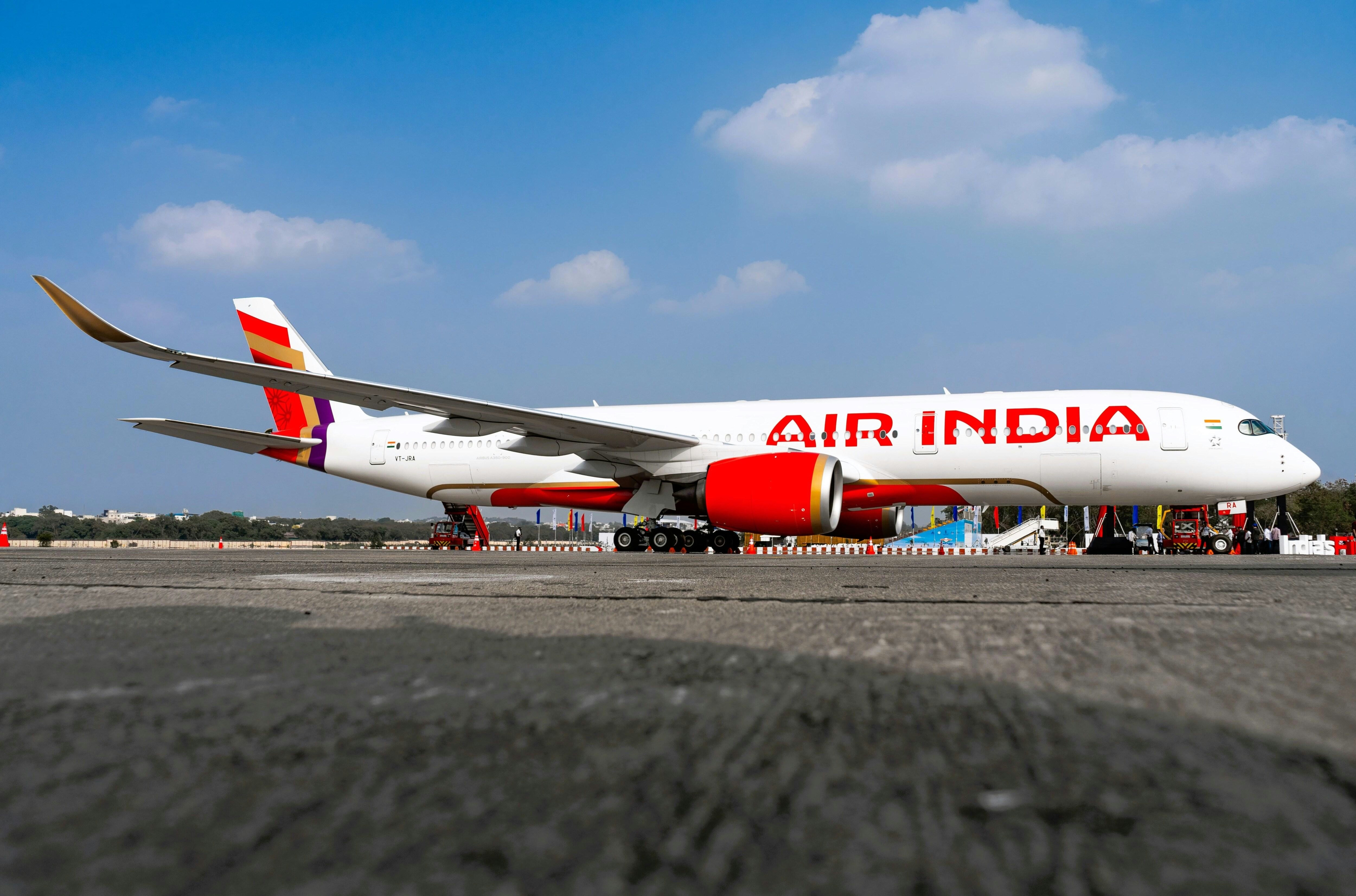
Air India Flight AI 2910 Aborts Initial Landing at Delhi, Lands Safely on Second Attempt
An Air India flight operating from Mumbai to Delhi aborted its first landing attempt at Indira Gandhi International Airport on Monday evening, executing a go-around before successfully touching down on the second try, according to sources cited by PTI.
Details of the Incident
Flight AI 2910, operated with an Airbus A320neo, encountered an unstabilised approach during its initial landing attempt. A source familiar with the event explained that the pilot discontinued the approach after certain critical landing parameters were not met. A passenger onboard described the situation, stating, “Apart from touching down, the aircraft took off again as some landing parameters were not met. The pilot announced a go-around, after which the aircraft landed safely.” Air India confirmed the incident in an official statement, emphasizing that the go-around was a routine safety procedure. The airline noted, “The aircraft landed safely on its second attempt, and all passengers and crew have disembarked.” Flight tracking data from Flightradar24.com corroborated the use of an A320neo for this service. The exact number of passengers onboard was not immediately disclosed.
Broader Implications for India’s Aviation Sector
This aborted landing has drawn attention to the broader challenges confronting India’s aviation industry. Such incidents typically trigger scrutiny from aviation safety authorities, who may investigate operational procedures and assess whether any technical or procedural deficiencies contributed to the unstabilised approach. While the situation was resolved without harm, operational disruptions can raise concerns among investors and stakeholders regarding an airline’s reliability.
The competitive landscape may also be affected, as rival carriers could leverage such incidents to underscore their own safety records and operational efficiency, intensifying sector competition. Compounding these challenges are ongoing staffing shortages within India’s aviation regulator and air traffic control, issues highlighted by lawmakers. These shortages can hinder effective oversight and the capacity to respond promptly to incidents, underscoring the critical need for robust regulatory and operational frameworks.
Despite these systemic challenges, Air India’s adherence to established safety protocols ensured a safe outcome for all onboard. The airline’s measured response and the successful landing on the second attempt underscore the vital role of rigorous training and procedural compliance in safeguarding passenger safety.

Etihad Airways Suspends Airbus A380 Flights on Key Route

Aditya Birla Group Seeks Approval for Aircraft Leasing in GIFT City

Qatar Airways Highlights Innovation and Connectivity at Arabian Travel Market 2026

Hong Kong's Five-Year Plan Includes Andrew Fan's Aircraft Parts Processing Hub Proposal

ACIA Aero Leasing Delivers ATR72-600 to Air Nostrum

RTX Appoints Jill Albertelli as Head of Pratt & Whitney

TAT Technologies Joins Beyond Aero Hydrogen Aircraft Program

AURAK Study Highlights Barriers to Air Taxi Adoption in Emerging Economies

Xiamen Air Selects Altitude for 787 Maintenance at Heathrow

Etihad and Swissport Extend Global Partnership
