Imagen

AeroGenie — Tu copiloto inteligente.

Pregunta cualquier cosa. Analiza todo. Actúa al instante.

Tendencias

Categories

Airbus Advances Cybersecurity Efforts and Prepares A321XLR Launch
April 27, 2026By ePlane AI
Airbus Advances Cybersecurity Efforts and Prepares A321XLR Launch
0
0
Airbus
Cybersecurity
A321XLR

Airbus Advances Cybersecurity Efforts and Prepares A321XLR Launch

Strengthening Cybersecurity Across Europe

Airbus is intensifying its cybersecurity initiatives with the recent announcement of its plan to acquire Quarkslab, a Paris-based firm specializing in advanced cybersecurity solutions. Quarkslab is recognized for its QShield technology, which safeguards software and hardware against AI-driven threats and reverse engineering attacks. This acquisition, expected to finalize later this year pending regulatory approval, represents a strategic move to enhance Airbus’s digital defenses amid increasing cyber risks. Financial terms of the deal were not disclosed.

This acquisition follows closely on the heels of Airbus’s March 2026 purchase of UK-based Ultra Cyber and the earlier integration of Germany’s Infodas in 2024. Together, these moves are building a comprehensive pan-European cybersecurity network that spans France, Germany, the UK, Spain, and Finland. Airbus aims to not only protect its own operations but also to strengthen its Defence and Space division, positioning it as a key growth driver beyond the company’s traditional commercial aircraft business. The aerospace sector is expected to see heightened cybersecurity competition as rivals respond to Airbus’s expanded capabilities.

Defence Sector Growth and Commercial Aviation Milestone

Airbus’s defence segment continues to demonstrate robust momentum, with a record €17.7 billion in order intake reported in 2025 and double-digit revenue growth reaching €13.4 billion. The company’s book-to-bill ratio of 1.3 indicates that new orders are outpacing deliveries, providing a solid foundation for further investment, particularly in cybersecurity and related technologies.

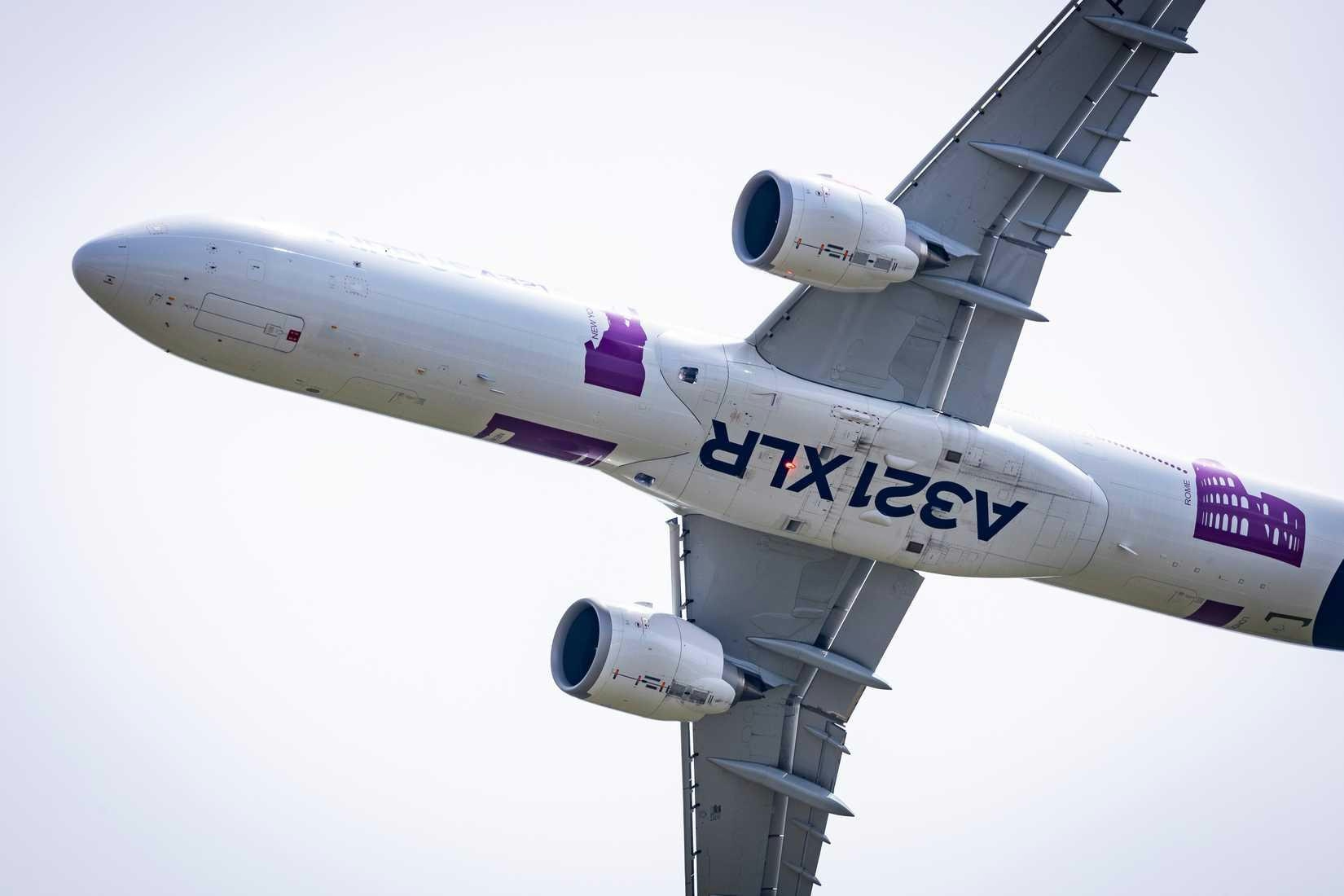
In commercial aviation, Airbus has achieved a significant milestone with the delivery of the first A321XLR to Air Canada at its Hamburg facility. This delivery marks Air Canada as the first Canadian operator of the ultra-long-range narrowbody aircraft. The jet, leased from SMBC Aviation Capital, is the initial unit of 30 firm orders. Despite certification delays that postponed delivery by over two years, the A321XLR’s entry into service is notable for its extended range of up to 4,700 nautical miles and its fuel efficiency, consuming nearly a third less fuel per seat compared to older models.

Air Canada plans to deploy the A321XLR on routes from Montreal to Palma de Mallorca starting in June, with additional destinations including Berlin, Nantes, Toulouse, and Edinburgh to follow. The airline is outfitting the aircraft with lie-flat beds, a first for a single-aisle jet in its fleet, and holds options for ten more A321XLRs alongside orders for eight A350-1000 widebodies as part of its fleet modernization strategy. The A321XLR’s capabilities are expected to reshape market dynamics, with competitors such as United Airlines also introducing the model with premium features, signaling a shift toward upgrading narrow-body fleets and expanding long-haul route networks.

Market Context and Outlook

Despite these strategic advances, Airbus’s stock has declined by 16% this year to €41.20, reflecting investor caution ahead of the company’s first-quarter results. The juxtaposition of strong operational progress with market skepticism highlights the challenges Airbus faces in balancing innovation and execution within a rapidly evolving aerospace landscape. With a record backlog and targeted investments in cybersecurity, Airbus is positioning itself for sustained growth amid these complexities.

More news
Boeing Tests Autonomous Landing System on CH-47F Chinook Helicopter

Boeing Tests Autonomous Landing System on CH-47F Chinook Helicopter

Boeing Advances Autonomous Landing System on CH-47F Chinook Helicopter Boeing has achieved a significant milestone in autonomous flight technology by successfully completing the first fully automated approach and landing of a CH-47F Chinook helicopter. This accomplishment highlights the progress of Boeing’s Approach-to-X (A2X) technology, integrated with an upgraded Digital Automated Flight Control System (DAFCS), which enables the helicopter to land precisely with all four wheels touching down without any pilot intervention. Flight Testing and System Capabilities Since its initial flight on a U.S. Army CH-47F in January, the autonomous system has undergone more than 150 approaches under various conditions, ranging from 100-foot hovers to full landings. These tests have demonstrated remarkable precision, with an average final positioning error of less than five feet. The system allows pilots to input key parameters such as landing zone, final altitude, approach angle, and starting speed, while the software autonomously manages the approach and landing sequence. Pilots retain the ability to override or adjust the flight path and glide slope if operational circumstances require it. Deanna DiBernardi, Boeing’s H-47 Human Factors Engineering lead, explained that the interface and control laws were designed to align with how pilots naturally conduct an approach. The primary objective is to reduce pilot workload, enabling crews to maintain greater situational awareness during tactical operations. By automating the landing process, the system allows pilots to focus more on monitoring their environment, enhancing overall mission safety and effectiveness. Industry Context and Future Prospects Boeing plans to continue flight testing before delivering a finalized software package to the U.S. Army, which may consider integrating the technology across its Chinook fleet. While the system has received positive market feedback and reflects the Army’s growing confidence in autonomous capabilities, Boeing faces challenges related to regulatory approval and integration with existing military protocols. The competitive landscape is intensifying, with rivals such as Sikorsky developing similar autonomous systems for platforms like the UH-60 Black Hawk, currently under Army evaluation. Sikorsky’s unmanned variant, capable of transporting heavier payloads, further underscores the evolving race in military aviation autonomy. Boeing’s recent return to profitability and ongoing industrial restructuring position the company well to navigate these challenges. However, broader geopolitical tensions, particularly with China, may influence future development trajectories and market opportunities. As the pursuit of autonomous military aircraft accelerates, Boeing’s advancements with the CH-47F Chinook exemplify both the potential and complexity inherent in integrating advanced automation into defense aviation.
Aviation Fuel Prices Set Between N1,760 and N2,037 per Litre

Aviation Fuel Prices Set Between N1,760 and N2,037 per Litre

Aviation Fuel Prices Projected Between N1,760 and N2,037 per Litre The Federal Government of Nigeria has announced that aviation fuel prices are expected to range between N1,760 and N2,037 per litre. This projection follows a series of high-level meetings aimed at stabilising fuel supply and addressing the escalating debt crisis within the country’s aviation sector. Stakeholder Engagement and Pricing Recommendations The price forecast emerged from a two-day summit held on April 22 and 23, 2026, convened by the Minister of Aviation and Airspace Management. The meeting brought together key representatives from the aviation and petroleum industries, including officials from the Ministry of Aviation, Ministry of Petroleum Resources, Nigerian Midstream and Downstream Petroleum Regulatory Authority (NMDPRA), Federal Airports Authority of Nigeria (FAAN), Nigerian Airspace Management Agency (NAMA), Nigerian Civil Aviation Authority (NCAA), airline operators, and aviation fuel marketers. Following these discussions, a technical committee was established to investigate ongoing supply and pricing challenges and to propose actionable solutions. Meeting on April 24, the committee recommended that the indicative end-user price of aviation turbine kerosene (ATK) be set between N1,760 and N1,988 per litre in Lagos, and between N1,809 and N2,037 per litre in Abuja. These figures were derived from Platts average rates recorded between April 17 and 23, 2026. The committee, however, cautioned that prices may fluctuate beyond these ranges due to market volatility, geopolitical tensions, and differing operational costs among suppliers. Impact on the Aviation Sector and Policy Responses The sharp rise in aviation fuel prices—doubling within an eight-week period—has placed considerable strain on airline operating budgets, with fuel costs now constituting 20 to 30 percent of total expenses. This surge threatens to increase airfares and exacerbates financial pressures on airlines already contending with rising operational costs. Given the global nature of energy markets, domestic fuel prices remain heavily influenced by international rates, while ongoing supply disruptions in Europe and Asia further complicate the situation. The absence of policy instruments such as a Strategic Petroleum Reserve has limited the government’s capacity to mitigate these impacts. To address these challenges, the committee recommended that the NMDPRA instruct marketers to sell aviation fuel directly to airline operators during the specified period to enhance distribution efficiency. It also called for regulatory reviews of pricing components, including recent premium adjustments and refinery cost variations, to promote greater price stability. Further recommendations included enhanced collaboration among the NMDPRA, FAAN, and NCAA to streamline airside operations by validating distributors with adequate infrastructure and reducing the number of operators based on agreed criteria. Regarding the mounting debts within the sector, the Ministry of Aviation was urged to facilitate consultative meetings between oil marketers and airline operators to resolve outstanding financial obligations. The committee also proposed that marketers consider offering a 30-day credit window to alleviate financial pressures on airlines. Industry Responses and Future Considerations In response to the fuel price crisis, airlines are exploring various strategies to mitigate the impact, including fare adjustments and the potential adoption of alternative sustainable aviation fuels (SAF). However, uncertainties remain regarding the pricing and availability of SAF. The current situation is regarded as unprecedented, with unique logistical challenges and limited policy flexibility potentially resulting in prolonged effects on demand and industry operations. The committee further proposed incorporating aviation fuel into the Federal Government’s naira-for-crude initiative as part of broader efforts to stabilise supply and pricing within the sector.
Aerospace Maintenance Chemicals Expected to Grow Through 2035 Amid Fleet Expansion and Composite Repairs

Aerospace Maintenance Chemicals Expected to Grow Through 2035 Amid Fleet Expansion and Composite Repairs

Aerospace Maintenance Chemicals Market Set for Sustained Growth Through 2035 The global aerospace maintenance chemicals market is anticipated to experience robust expansion through 2035, driven by the growth of commercial aviation fleets, the aging of existing aircraft, and increasingly stringent safety and environmental regulations. According to the latest IndexBox report, as the industry moves into 2026, demand dynamics are broadening, procurement processes are becoming more disciplined, and supply chains are diversifying across regions. Market Segmentation and Competitive Dynamics Aerospace maintenance chemicals encompass a range of products including corrosion inhibitors, degreasers, sealants, deicing fluids, and composite repair resins. These chemicals are critical for maintaining airworthiness, operational efficiency, and the longevity of key aircraft components such as airframes, engines, landing gear, and cabin interiors. The market is divided into two primary segments: a high-volume, price-sensitive category catering to routine cleaning and non-critical maintenance at regional maintenance, repair, and overhaul (MRO) facilities and airlines; and a low-volume, ultra-premium segment focused on safety-critical applications where certification, traceability, and performance assurance justify higher prices. Control over distribution channels remains a significant competitive advantage. Specialized chemical distributors and direct sales teams are often integrated into broader MRO supply contracts, reinforcing supplier relationships. Innovation within the sector is largely driven by regulatory mandates and operational challenges, including the adoption of new aircraft materials such as composites and advanced alloys, stricter limits on volatile organic compound (VOC) emissions, and the demand for faster curing times in maintenance processes. Market Challenges and Strategic Responses Despite positive growth prospects, the market faces challenges from potential supply chain disruptions. The expansion of fleets and increased use of composite materials are elevating demand for specialized chemicals, intensifying competition among suppliers. This environment is fostering innovation in areas such as self-healing polymers and advanced titanium alloys. In response, industry players are increasingly engaging in strategic partnerships, mergers, and acquisitions to consolidate market share and enhance technological capabilities. The long-term trajectory of the aerospace maintenance chemicals market is closely linked to global air traffic growth, fleet age, and the complexity of next-generation aircraft. Commercial air traffic is projected to grow at an average annual rate of 3.5% to 4.0%, supported by rising middle-class populations in the Asia-Pacific and Middle East regions, as well as network expansions by low-cost carriers. This growth results in higher aircraft utilization rates and more frequent maintenance cycles. The global aircraft fleet is expected to increase from approximately 28,000 in 2025 to over 40,000 by 2035. A significant portion of this growth will consist of next-generation models such as the Boeing 787 and Airbus A350, which require specialized composite repair chemicals and advanced sealants. Additionally, the aging of the current fleet—averaging 12 to 14 years in service—heightens the demand for intensive corrosion control, cleaning, and lubrication. Regulatory and Supply Considerations Regulatory developments, including tighter VOC emission limits imposed by authorities such as the Federal Aviation Administration (FAA) and the European Union Aviation Safety Agency (EASA), are accelerating the transition toward water-based and low-VOC chemical formulations. On the supply side, raw material costs for specialty silicones, fluoropolymers, and epoxy resins are expected to remain stable with moderate inflationary pressures, while logistics costs are normalizing following the disruptions caused by the COVID-19 pandemic. The expansion of MRO capacity in the Asia-Pacific and Middle East regions further supports market growth, as new facilities are established to service rapidly growing regional fleets. Provided there are no major geopolitical disruptions or prolonged economic downturns, the aerospace maintenance chemicals market is forecast to grow at a compound annual growth rate (CAGR) of 4.8% from 2026 to 2035. The market index, with 2025 as the base year (index=100), is projected to reach 155 by 2035, reflecting cumulative real growth of 55% over the decade.
Aviation Industry Struggles Amid Worsening Jet Fuel Shortage

Aviation Industry Struggles Amid Worsening Jet Fuel Shortage

Aviation Industry Faces Severe Disruptions Amid Escalating Jet Fuel Shortage Nigeria’s aviation sector is currently confronting a severe jet fuel (Jet A1) shortage that has led to widespread flight delays, cancellations, and operational disruptions across major airports in Lagos, Abuja, and other key domestic routes. This crisis has been exacerbated by escalating geopolitical tensions and persistent supply chain constraints. Since the onset of the US-Israel conflict and the closure of the Strait of Hormuz—a vital maritime passage responsible for approximately one-fifth of the global fuel supply—jet fuel prices have surged by more than 300 percent. The shortage extends beyond Nigeria’s borders, affecting airlines worldwide. Jet fuel prices have doubled within weeks, significantly increasing operational costs for carriers globally. United Airlines CEO Scott Kirby recently indicated that airfares would need to increase by at least 20 percent for airlines to cover rising fuel expenses. The International Energy Agency has issued warnings that Europe may have only six weeks of jet fuel reserves remaining, heightening concerns over widespread flight cancellations and schedule reductions. Several major European airport hubs are already preparing for potential emergency fuel shortages, highlighting the global scale of the crisis. Impact on Nigeria’s Aviation Sector and Industry Response In Nigeria, the consequences have been immediate and profound. Airlines are struggling to maintain regular flight schedules, with Air Peace reducing its London-Heathrow service to three flights per week. Other carriers report extended waiting times and frequent rescheduling, sometimes multiple times within a single day. The Airline Operators of Nigeria (AON) recently threatened to shut down operations, prompting federal government intervention that urged a suspension of the planned action pending further stakeholder consultations. Following discussions involving the Ministry of Aviation and Aerospace Development and oil marketers, authorities approved a 30 percent discount on debts owed by airlines to service providers. Despite this concession, operators are demanding a full waiver of fees from the Federal Airports Authority of Nigeria (FAAN), Nigerian Civil Aviation Authority (NCAA), and Nigerian Airspace Management Agency (NAMA), arguing that the current relief measures are inadequate given the magnitude of the crisis. Adding to the sector’s challenges, the Aviation Ground Handlers Association of Nigeria (AGHAN) has issued a seven-day ultimatum warning that ground handling companies—including SAHCO and NAHCO—may suspend services from Tuesday, April 28, 2026, due to over N9 billion in outstanding debts owed by airlines. Industry analysts stress that the crisis is not attributable to mismanagement by individual carriers nor is it unique to Nigeria. Aviation analyst Fred Chukwuelobe noted, “This is a global aviation challenge driven by supply constraints, price volatility, and persistent disruptions in the fuel value chain.” The global pricing of jet fuel, even for domestic supply, has further complicated efforts to stabilize the sector. With logistical challenges intensifying and limited policy options available, observers warn that the aviation industry faces the prospect of prolonged disruptions unless immediate and coordinated interventions are undertaken. Both airlines and regulatory authorities are seeking a swift resolution, but the outlook remains uncertain as the crisis continues to evolve domestically and internationally.
Airbus A380 Executes Turn Exceeding Maximum Bank Angle

Airbus A380 Executes Turn Exceeding Maximum Bank Angle

Airbus A380 Executes Turn Exceeding Maximum Bank Angle Unprecedented Maneuver Captured on Video A striking video has emerged showing an Airbus A380 performing an exceptionally steep turn that surpassed its certified maximum bank angle. Recorded over the United Kingdom and shared by the 3 Minutes of Aviation YouTube channel, the footage depicts the large airliner executing a maneuver rarely seen in commercial operations. Such aggressive banking is typically confined to test flights or demonstration events rather than routine passenger service, especially for an aircraft of the A380’s size. Although the aircraft’s livery is obscured by foggy conditions, it is believed to be an early prototype engaged in a test flight without passengers. These maneuvers are sometimes conducted to assess the airframe’s behavior under extreme conditions or to highlight the aircraft’s capabilities during airshows. The video indicates the A380 exceeded its standard maximum bank angle of 30 degrees, despite regulations allowing up to 33 degrees for this class of aircraft. Industry Implications and Regulatory Concerns The incident has attracted significant attention due to both its dramatic nature and the potential ramifications for the aviation sector. Exceeding certified bank angles can trigger scrutiny from aviation authorities, who may require thorough inspections or impose temporary grounding to verify compliance with safety standards. Such regulatory interventions could disrupt Airbus’s delivery timelines and affect its competitive position, particularly as Boeing experiences a resurgence in orders and deliveries. Airlines operating the A380 might also be compelled to reassess their operational procedures and maintenance regimes in response to the event, potentially incurring additional costs and operational changes. Competitors like Boeing could leverage the situation to emphasize the reliability and safety of their own aircraft, seeking to capitalize on any uncertainty surrounding the A380. The A380’s Commercial Journey and Ongoing Challenges Since its introduction in 2007 as a challenger to the Boeing 747’s dominance in long-haul travel, the Airbus A380 has had a mixed commercial trajectory. Despite its technical innovations and popularity among aviation enthusiasts, the aircraft has struggled to meet sales expectations. Of the 15 airlines that have operated the A380, five have already retired the type, citing high development costs and evolving market demands. While the recent footage highlights the A380’s remarkable engineering and handling capabilities, it also underscores the challenges Airbus faces in maintaining confidence among regulators, airlines, and passengers. The incident serves as a reminder of the delicate balance between demonstrating aircraft performance and adhering to stringent safety standards in the aviation industry.
Inside the Development of the New 'Air Taxi' for Urban Travel

Inside the Development of the New 'Air Taxi' for Urban Travel

Inside the Development of the New 'Air Taxi' for Urban Travel California-based Joby Aviation is pioneering a new electric-powered air taxi designed to revolutionize urban transportation. This innovative aircraft, which combines elements of both airplanes and helicopters, aims to reduce lengthy commutes to mere minutes, offering rapid, on-demand flights at a cost comparable to a typical Uber ride. By enabling vertical takeoff and landing, the air taxi is particularly suited to congested city environments where space is at a premium. Vision and Operational Plans Joby Aviation’s prototype has recently been showcased in a demonstration by NBC’s Sam Brock, highlighting the company’s ambitious vision for the future of urban travel. The firm is preparing for demonstration flights between Manhattan and JFK Airport, with plans to initiate passenger services in New York, Texas, and Florida as early as the latter half of this year. These developments underscore Joby’s commitment to making urban air mobility a practical and accessible option for everyday commuters. Legal and Regulatory Challenges Despite its technological advancements, Joby faces significant legal and regulatory obstacles. The company is currently involved in disputes with competitor Archer Aviation, including allegations related to trade secrets and business relationships. Additional accusations have surfaced regarding Joby’s representations of its operations and its business connections to China. Furthermore, the US International Trade Commission is conducting an investigation into potential import violations by the company. In the face of these challenges, Joby remains focused on meeting regulatory standards and scaling its operations. The company has announced it will release its first quarter 2026 financial results on May 5, 2026, demonstrating a commitment to transparency amid ongoing scrutiny. As the competition to launch commercial air taxi services intensifies, Joby’s progress and its capacity to navigate legal and regulatory complexities will be closely monitored by industry experts and prospective passengers. Should the company succeed, its electric air taxis could herald a new era in urban transportation, offering a faster, cleaner, and more convenient mode of travel within and between cities.
Innodyne Systems Recognized as Best DER Repair in 2026 Top Shop Awards

Innodyne Systems Recognized as Best DER Repair in 2026 Top Shop Awards

Innodyne Systems Honored as Best DER Repair in 2026 Top Shop Awards Innodyne Systems, a subsidiary of First Class Air, has been distinguished with the 2026 Top Shop Award for "Best DER Repair" by The145.com, a respected authority in the aviation maintenance, repair, and overhaul (MRO) industry. This accolade highlights Innodyne’s engineering expertise and steadfast commitment to “The First Class Way,” exemplifying superior quality, reliability, and customer service within the global aviation sector. Recognition in a Competitive Industry The Top Shop Awards are among the most prestigious honors in aviation MRO, with winners selected from thousands of nominations worldwide by airlines, suppliers, and industry professionals. The evaluation criteria focus on performance, engineering innovation, turnaround time, and customer support—key factors that distinguish leading Designated Engineering Representative (DER) repair providers. Innodyne’s achievement underscores its position at the forefront of engineering-driven repair solutions and the development of DER-approved repairs. The company is widely recognized for delivering high-quality, cost-effective alternatives to original equipment manufacturer (OEM) maintenance. These solutions enable customers to extend component life, enhance reliability, and reduce overall maintenance expenses. Isac Roths, CEO of First Class Air, remarked, “Being recognized as the Top Shop Best DER Repair 2026 winner by our industry peers is a tremendous honor. This award reflects the expertise, innovation, and dedication of the Innodyne team. Their ability to develop high-value repair solutions and deliver for customers every day embodies The First Class Way—doing things the right way, with a focus on quality, responsiveness, and long-term value.” Expertise and Industry Impact Innodyne specializes in FAA- and EASA-certified MRO and DER repair services for complex airframe and electrical components, including nacelles, thrust reversers, flight control surfaces, and structural systems. Its capabilities encompass composite, metallic, and electro-mechanical components, supporting a broad spectrum of aftermarket solutions throughout the aircraft lifecycle. As part of First Class Air, Innodyne’s engineering and repair expertise complements a comprehensive platform that includes distribution, MRO services, manufacturing, teardown programs, and supply chain solutions. Industry analysts suggest that Innodyne’s recognition may trigger notable market responses. The award is likely to attract increased investor interest, potentially strengthening Innodyne’s market position. Concurrently, competitors may feel compelled to enhance their repair services, invest in new technologies, or improve customer satisfaction to maintain or regain market share. Some rivals might also initiate public relations efforts to highlight their own capabilities and service metrics in reaction to Innodyne’s accomplishment. This distinction further solidifies Innodyne Systems’ reputation as a trusted partner to airlines, operators, and MRO organizations worldwide, while reinforcing First Class Air’s dedication to delivering consistent, high-quality service across its portfolio of companies. For additional information about Innodyne Systems and its services, visit firstclassair.com/innodyne-systems. About First Class Air First Class Air is an integrated group of aviation aftermarket companies offering distribution, MRO and DER repair, PMA manufacturing, aircraft teardown, exchange programs, and supply chain solutions to operators globally. Its specialized subsidiaries—including Survival Products, Cargo Repair, First Class Air Support, Cobalt Aero Services, and Innodyne Systems—serve cargo, commercial, regional, military, and business aviation customers throughout the aircraft lifecycle.
How Airports Are Preparing for Advanced Air Mobility

How Airports Are Preparing for Advanced Air Mobility

How Airports Are Preparing for Advanced Air Mobility Airports worldwide are undergoing significant modernization efforts to address emerging challenges in safety and sustainability. Among the most transformative developments is the integration of electric vertical takeoff and landing (eVTOL) air taxis, autonomous drones, and other advanced air mobility (AAM) aircraft. This evolution presents a complex array of technological, regulatory, infrastructural, and workforce challenges that airports must address to accommodate these new forms of air transportation. Integrating eVTOL Operations into Existing Airport Environments The Greater Orlando Aviation Authority (GOAA), which manages Orlando International Airport (KMCO) and Orlando Executive Airport (KORL) in Florida, has articulated a clear objective: to safely incorporate future eVTOL operations within a major hub airport setting. This involves developing standardized procedures designed to minimize the workload on air traffic controllers and reduce disruptions to traditional aviation activities. Orlando International is among the first U.S. airports to announce plans for a dedicated vertiport, with operations targeted for 2028. These vertiports—electrified takeoff and landing pads—represent a critical component of the broader AAM infrastructure. Beyond vertiports, airports will need to ensure robust energy supplies, implement advanced traffic management systems tailored for uncrewed aircraft, and make substantial investments in workforce recruitment and training to support these novel operations. The U.S. Department of Transportation is contributing to this transition through its Brand New Air Traffic Control System (BNATCS) initiative, which aims to replace outdated equipment, digitize communications, and build new facilities over the next three years. Complementing these efforts, real-world trials such as those planned under the eVTOL Integration Pilot Program (eIPP) this summer will help define operational requirements and best practices. Global Momentum and Industry Developments The push toward AAM is not confined to the United States. Internationally, countries like Japan are preparing to launch commercial AAM operations as early as 2027-28, underscoring a global race to establish automated air taxi services. This international momentum is driving competitors to accelerate their own initiatives or forge strategic partnerships to maintain a competitive edge in the rapidly evolving aviation sector. In March, GOAA began negotiations with potential vertiport developers and operators, shortlisting two candidates. The next phase of this process is expected to commence in early 2026, with contract awards anticipated by summer. On the West Coast, Archer Aviation has secured the lease for Hawthorne Municipal Airport (KHHR), positioning it as the future hub of a Los Angeles air taxi network. This network could play a significant role during the 2028 Olympic Games by transporting spectators and athletes, potentially mirroring Orlando’s vertiport development. Vertiport manufacturers are also advancing rapidly. Skyports has been electrifying its Downtown Heliport in Manhattan since last year and announced plans for several vertiports in Florida to support Archer’s Midnight aircraft. Landings is developing a network connecting 12 locations in upstate New York, while UrbanV, in partnership with Signature Aviation, is launching a nationwide vertiport network beginning in New York, Florida, California, and Texas. Signature Aviation has formed partnerships with leading manufacturers including Archer, Beta Technologies, Boeing’s Wisk Aero, Embraer’s Eve Air Mobility, and operator UrbanLink Air Mobility. Beta Technologies alone has secured certification for commercial operations at 54 sites across 24 states. As airports and industry stakeholders navigate regulatory complexities and invest in new infrastructure, the future of advanced air mobility is rapidly materializing both in the United States and internationally.

Aviation CRM Software Market Outlook Through 2035

Aviation CRM Software Market Outlook Through 2035 The global aviation Customer Relationship Management (CRM) software market is on a trajectory of substantial growth, with its valuation expected to increase from USD 509.57 million in 2026 to USD 1.87 billion by 2035. This growth corresponds to a compound annual growth rate (CAGR) of 15.7%, driven primarily by the aviation sector’s ongoing digital transformation and a heightened focus on improving passenger experience alongside operational efficiency. Digital Adoption and Emerging Market Trends Industry data reveals that approximately 88% of major international airlines have implemented digitized customer interface systems, now managing 95% of passenger data touchpoints electronically. The global aircraft fleet, numbering around 28,000, has experienced a 14% rise in digital adoption, reflecting the sector’s commitment to modernization. Passenger loyalty remains a critical focus, with 62% of aviation organizations prioritizing loyalty modules to retain 75% of their high-value frequent flyers. Cloud-based CRM solutions are increasingly prevalent, representing 68% of new deployments in 2024. The integration of real-time flight data has enhanced operational responsiveness by 22%, while 40% of airlines are investing in predictive analytics to anticipate and mitigate up to 85% of travel disruptions. Omnichannel communication strategies are gaining momentum, with 70% of market participants employing these tools to effectively engage 90% of their target customers. Furthermore, 55% of CRM users report a 30% reduction in customer service wait times, underscoring the operational advantages of advanced CRM systems. Regional Focus: The United States Market In the United States, CRM software commands a significant portion of aviation IT budgets, with 45% of regional spending allocated to customer engagement platforms. North American airlines have widely adopted specialized CRM tools, managing 80% of corporate travel contracts and witnessing a 15% annual increase in passengers utilizing mobile apps for bookings. AI-driven chatbots have been integrated by 78% of U.S. carriers, automating the resolution of half of routine inquiries. Regional operators are also expanding CRM capabilities to encompass cargo operations. Additionally, 65% of U.S. aviation firms report a 25% increase in ancillary sales driven by personalized CRM marketing efforts. Projections indicate that by 2028, 85% of domestic operators will transition to unified cloud platforms to oversee nearly all data security protocols, further consolidating the role of CRM in aviation IT infrastructure. Market Drivers and Challenges The surge in global passenger traffic, which has increased by 20%, is a primary catalyst for CRM software adoption, prompting 85% of airlines to upgrade from legacy systems to modern, data-driven platforms. Despite this momentum, the market faces challenges including high implementation costs and the necessity for continuous technological advancement to keep pace with evolving aircraft systems and regulatory demands. As airlines intensify efforts to enhance operational efficiency and safety, investments in CRM software are anticipated to grow. Competitive pressures may drive increased mergers and acquisitions, alongside the development of more sophisticated and user-friendly CRM solutions. Recruitment challenges within the business aviation sector also pose potential constraints, as companies seek skilled personnel capable of managing and leveraging advanced CRM technologies. Outlook The aviation CRM software market is poised for sustained expansion through 2035, shaped by ongoing digital innovation, shifting customer expectations, and the industry’s commitment to operational excellence. As airlines and aviation firms confront technological and workforce challenges, CRM solutions will remain integral to their strategies for customer engagement and competitive differentiation.
Japan Airlines Tests Humanoid Robots to Address Worker Shortage

Japan Airlines Tests Humanoid Robots to Address Worker Shortage

Japan Airlines to Trial Humanoid Robots Amid Labor Shortages Japan Airlines (JAL) is preparing to introduce humanoid robots into airport ground operations as part of a strategic response to the country’s escalating labor shortage. Starting in May 2026, JAL Grand Service, in collaboration with GMO AI & Robotics Trading, will initiate a phased trial at Japanese airports. This marks the first large-scale experiment in Japan deploying humanoid robots for ground handling tasks, reflecting an innovative approach to addressing workforce deficits in the aviation sector. Addressing Labor Challenges with Humanoid Robotics Japan’s aviation industry is grappling with a shrinking working-age population alongside a surge in inbound tourism, creating a widening gap between labor supply and operational demand. The trial aims to assess whether humanoid robots, designed to mimic human form and movement, can assist with physically demanding duties such as baggage loading, cargo transport, and potentially aircraft cabin cleaning. Unlike traditional automation systems, which often require extensive infrastructure modifications and struggle with the dynamic, unpredictable environment of airport ground operations, humanoid robots offer the promise of greater adaptability and seamless integration within existing facilities. Despite the potential benefits, the initiative faces considerable skepticism. Research from Stanford University highlights that humanoid robots currently fail 88% of the time when performing routine household tasks, casting doubt on their reliability in the high-pressure context of airport operations. Industry experts, including ASI CEO Mel Torrie, have questioned the economic feasibility of humanoid robots compared to autonomous vehicles, which are already gaining traction in logistics by combining mobility with manipulation capabilities. Structure and Objectives of the Experiment The project will commence with a comprehensive analysis of current airport workflows to identify tasks suitable for robotic assistance. Subsequent phases will involve rigorous testing within simulated airport environments to evaluate performance and safety. The overarching goal is for humanoid robots to collaborate with human staff by undertaking repetitive or physically strenuous tasks, thereby alleviating workload pressures and contributing to more sustainable operational models. JAL Grand Service, leveraging its extensive experience in ground operations, will establish operational criteria and oversee the evaluation of the robots’ safety and effectiveness. GMO AI & Robotics Trading, a subsidiary of GMO Internet Group, will supply the humanoid robots and develop their movement algorithms. The company recently inaugurated a humanoid research facility in Shibuya and launched a “Humanoid Dispatch Service,” underscoring its broader ambition to integrate robotic solutions into everyday life. Industry Implications and Cultural Context While some competitors prioritize autonomous vehicles and other complementary technologies, Japan’s deep-rooted expertise in robotics and cultural receptiveness to automation may provide a competitive advantage in advancing humanoid solutions. However, as artificial intelligence increasingly drives robotics innovation, Japan’s traditional strength in physical hardware may not guarantee sustained leadership in this evolving field. GMO Internet Group has designated 2026 as the “First Year of Humanoids,” signaling a strong commitment to expanding the societal role of robots. Should JAL’s experiment demonstrate success, it could catalyze wider adoption of humanoid robots across airports and other sectors confronting similar labor shortages. Nonetheless, significant technical and economic challenges remain before humanoid robots can reliably assume the demanding responsibilities of airport ground operations.
line










