
Orquesta conocimientos de IA para convertirlos en acción

Tendencias
Categories
Airbus and Rolls-Royce Secure £5 Billion Deal to Supply Indian Airlines
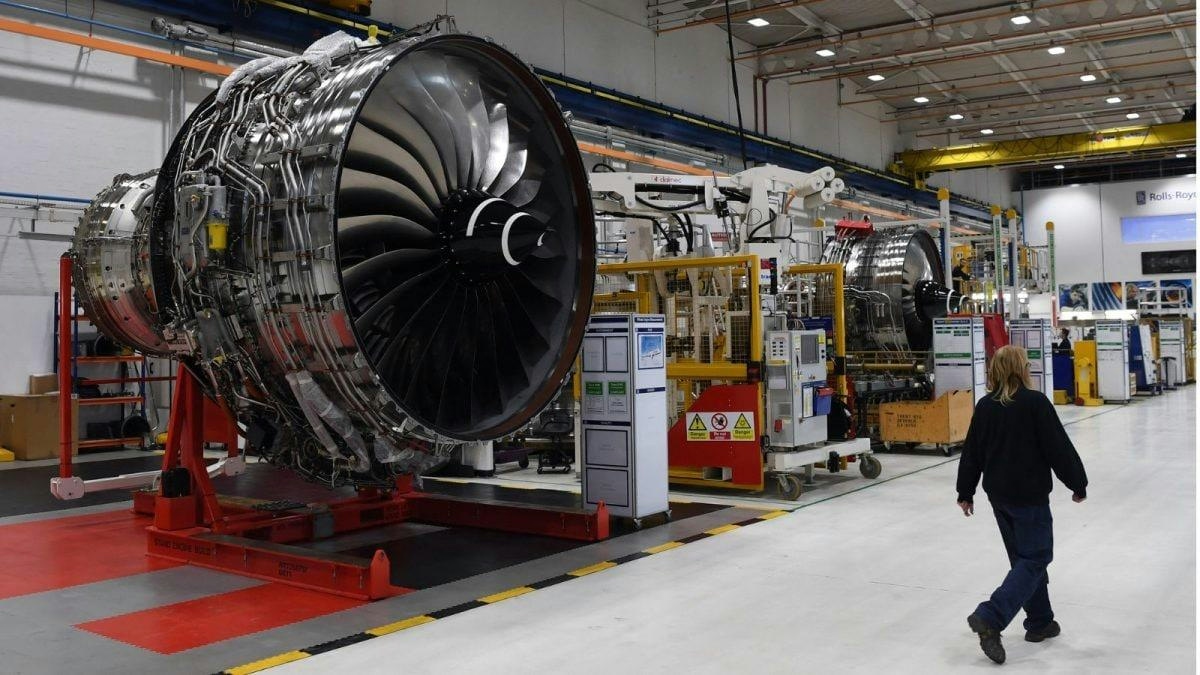
Airbus and Rolls-Royce Secure £5 Billion Contract to Supply Indian Airlines
Airbus and Rolls-Royce have finalized a landmark £5 billion agreement to supply aircraft and engines to leading Indian airlines, marking a significant development under the recently enacted free trade agreement (FTA) between India and the United Kingdom. Announced on Thursday, the contract forms part of a wider initiative involving 26 British companies expanding their commercial presence in India.
Strengthening India’s Aviation Sector and UK Manufacturing
More than half of the Airbus aircraft destined for the Indian market will be equipped with Rolls-Royce engines, predominantly the advanced Trent XWB model. This collaboration is poised to support India’s rapidly expanding aviation industry by enhancing connectivity and facilitating the growth of its commercial aviation infrastructure. The deal also promises to sustain thousands of jobs across key UK manufacturing sites, including Filton, Broughton, and Derby, where Rolls-Royce maintains its headquarters.
Despite the positive outlook, the aerospace sector faces ongoing challenges. Industry experts have pointed to persistent supply chain disruptions that may affect the timely delivery of aircraft and engines. Furthermore, the agreement is expected to intensify competition within the Indian market, with rivals such as Boeing preparing to increase their aircraft deliveries to Indian carriers. For instance, Akasa Air has announced plans to significantly expand its fleet with additional Boeing aircraft in the coming years.
Broader Economic Impact and Industry Expansion
Market responses to the deal have been varied. While some investors regard the contract as a strategic move to consolidate Airbus and Rolls-Royce’s foothold in one of the world’s fastest-growing aviation markets, others have raised concerns about the financial risks and operational complexities inherent in fulfilling such a large-scale order.
The India-UK FTA aims to reduce or eliminate tariffs on goods and services, with the objective of boosting bilateral trade to $120 billion by 2030 and generating employment opportunities in both countries. The agreement is already catalyzing further investment. International Aerospace Manufacturing Private Limited (IAMPL), a joint venture between Rolls-Royce and Hindustan Aeronautics Limited (HAL), is expanding its Hosur facility with a £30 million investment.
Other British companies are also capitalizing on the improved trade relations. Carbon Clean, a provider of carbon capture technology, plans to invest £7.6 million in establishing a new office in Mumbai. Medical technology firm Occuity has secured a £74.3 million export contract with India’s Remidio Innovative Solutions, while specialty chemicals company Johnson Matthey has obtained contracts exceeding £20 million. Additionally, the Marcus Evans Group, a global business intelligence agency, intends to open a Mumbai office, supported by an export and investment pipeline valued at £69 million over five years.
As Airbus and Rolls-Royce move forward with their commitments, this deal highlights both the opportunities and complexities of operating within a dynamic and competitive global aviation market.

Etihad Airways Suspends Airbus A380 Flights on Key Route

Aditya Birla Group Seeks Approval for Aircraft Leasing in GIFT City

Qatar Airways Highlights Innovation and Connectivity at Arabian Travel Market 2026

Hong Kong's Five-Year Plan Includes Andrew Fan's Aircraft Parts Processing Hub Proposal

ACIA Aero Leasing Delivers ATR72-600 to Air Nostrum

RTX Appoints Jill Albertelli as Head of Pratt & Whitney

TAT Technologies Joins Beyond Aero Hydrogen Aircraft Program

AURAK Study Highlights Barriers to Air Taxi Adoption in Emerging Economies

Xiamen Air Selects Altitude for 787 Maintenance at Heathrow

Etihad and Swissport Extend Global Partnership
