Imagen

AeroGenie — Tu copiloto inteligente.

Pregunta cualquier cosa. Analiza todo. Actúa al instante.

Tendencias

Categories

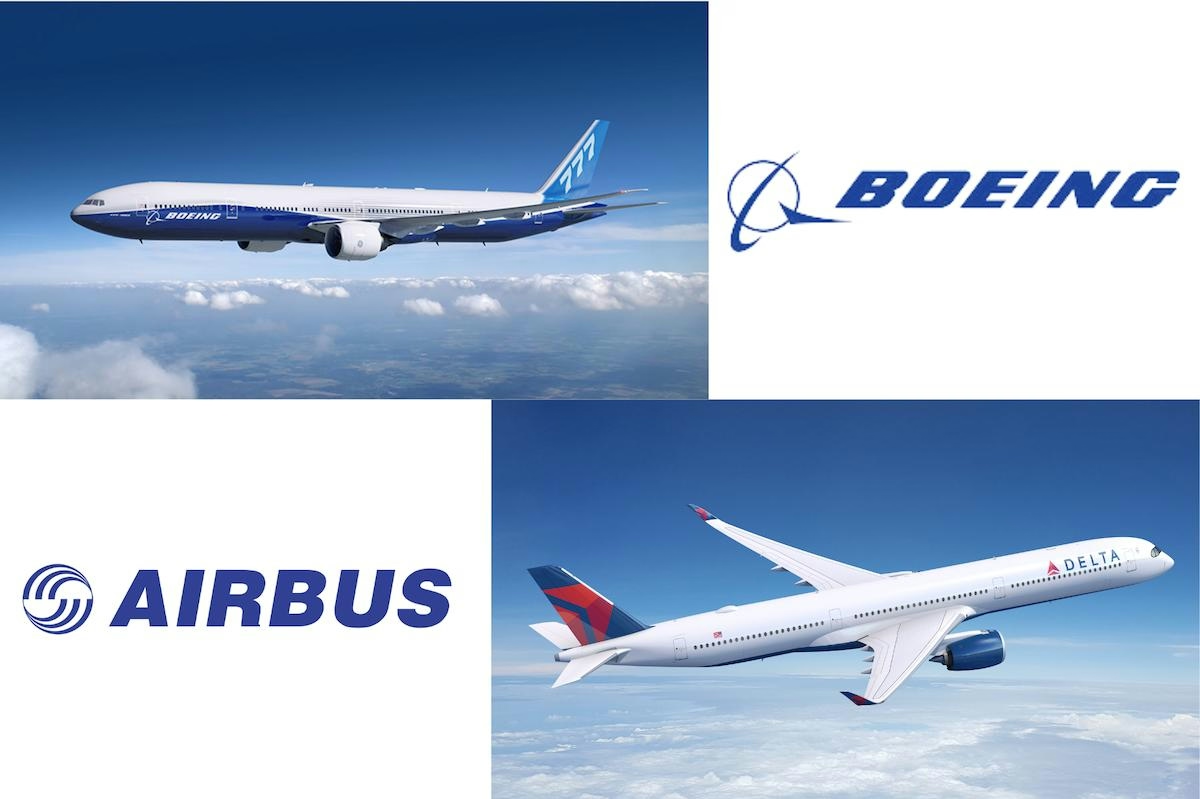
Airbus Delivered 63 Aircraft While Boeing Delivered 60 in June 2025
July 9, 2025By ePlane AI
Airbus Delivered 63 Aircraft While Boeing Delivered 60 in June 2025
0
0
Airbus Deliveries
Boeing Deliveries
Supply Chain Disruptions

Airbus Surpasses Boeing in June 2025 Deliveries Amid Industry Challenges

In June 2025, Airbus delivered 63 commercial aircraft, narrowly outpacing Boeing’s 60 deliveries for the month. This close margin underscores the competitive yet challenging landscape both manufacturers face, as supply chain disruptions and ongoing trade tensions continue to impede production rates across the aviation sector.

Boeing’s Performance and Challenges

Boeing’s 60 deliveries in June represent its highest monthly total since late 2023, prior to the widely publicized door plug incident involving an Alaska Airlines 737 in January 2024. The company has been under intense scrutiny, particularly following the tragic crash of Air India flight AI171, a Boeing 787-9 Dreamliner, which claimed 241 lives. These events contributed to Boeing’s subdued presence at the 2025 Paris Air Show, where Airbus capitalized on the opportunity to secure new orders.

The June deliveries from Boeing included 42 737 Max aircraft, six 787-9s, and three 787-10s. Despite ongoing tariff tensions between the United States and China, Boeing managed to deliver five aircraft to Chinese airlines. Southwest Airlines was a significant recipient, receiving ten of Boeing’s June deliveries. Overall, Boeing delivered 150 aircraft in the second quarter, bringing its year-to-date total to 280. The company also reported 116 new commercial aircraft orders in June and is scheduled to release detailed second-quarter financial results on June 29.

Airbus’s Strong Showing and Market Position

Airbus delivered 63 aircraft to 35 customers in June and reported gross orders totaling 203 for the month. The European manufacturer’s robust performance at the Paris Air Show, where it secured 142 firm orders compared to Boeing’s absence of new orders, highlighted its aggressive strategy to meet delivery targets despite persistent industry headwinds. By the end of June, Airbus had delivered 306 aircraft to 65 customers in 2025.

Industry analysts observe that although Airbus edged ahead of Boeing in June deliveries, both companies continue to fall short of market demand due to ongoing production challenges. The mixed market response reflects uncertainty about whether either manufacturer can fully restore production rates in the near term.

Broader Industry Context

Competition within the commercial aviation sector remains intense, with other manufacturers such as Embraer making notable advances. At the Paris Air Show, Embraer announced 60 firm orders, signaling increased activity among smaller players as Airbus and Boeing work to overcome their respective difficulties.

Despite the encouraging delivery figures for June, both Airbus and Boeing face sustained pressure to stabilize production and fulfill the requirements of a recovering global aviation market.

More news
Archer Aviation Partners with NVIDIA to Advance Aviation AI Technology

Archer Aviation Partners with NVIDIA to Advance Aviation AI Technology

Archer Aviation Partners with NVIDIA to Advance Aviation AI Technology Archer Aviation has announced a strategic partnership with NVIDIA aimed at accelerating the development of artificial intelligence technologies within the aviation sector. This collaboration combines Archer’s expertise in electric vertical takeoff and landing (eVTOL) aircraft with NVIDIA’s leadership in AI hardware and software, marking a significant advancement toward autonomous flight and next-generation air mobility. The Significance of AI in Aviation The partnership emerges amid growing recognition of AI as a transformative force across multiple industries. Prominent figures such as Amazon CEO Andy Jassy have described generative AI as a “once-in-a-lifetime” technology that is already reshaping customer experiences. Industry leaders including Bill Gates and Elon Musk have expressed similar views, with Musk forecasting that AI-driven robotics could generate a $250 trillion market by 2040. Consulting firms like PwC and McKinsey also project that AI will unlock multi-trillion-dollar value in the coming decades, underscoring its vast economic potential. Market response to Archer’s announcement has been largely positive, reflecting confidence in the reputations of both companies. Investors view the partnership as a strategic move that could position Archer at the forefront of aviation innovation, potentially enhancing its stock performance. Nevertheless, the aviation sector’s inherent volatility and the complexities involved in integrating advanced AI into flight systems introduce elements of uncertainty. Regulatory scrutiny is anticipated, particularly concerning safety standards and data privacy, as authorities evaluate the implications of AI-powered aviation technologies. Industry Implications and Competitive Dynamics Competitors are expected to respond proactively to this development. Industry analysts predict that rival firms will intensify their own AI and autonomous flight initiatives to maintain competitiveness. This dynamic may trigger a wave of consolidation within the sector, as companies seek to acquire or partner with technology leaders to bolster their capabilities. While much attention has been focused on major technology companies such as NVIDIA, Tesla, and Microsoft, the Archer-NVIDIA partnership highlights the increasing importance of collaboration between established tech firms and emerging players in specialized fields. As AI continues to redefine business operations and consumer experiences, such alliances are poised to play a critical role in shaping the future of transportation. The aviation industry stands on the cusp of a new era, with AI-driven innovation promising enhancements in safety, efficiency, and sustainability. Archer Aviation’s collaboration with NVIDIA underscores the sector’s commitment to adopting cutting-edge technology, even as it confronts challenges related to integration, competition, and regulation. As the race to develop autonomous flight intensifies, the progress and impact of these advancements will be closely monitored by investors, regulators, and industry stakeholders worldwide.
Chennai Startup to Develop India’s First Electric Air Taxi

Chennai Startup to Develop India’s First Electric Air Taxi

Chennai Startup to Develop India’s First Electric Air Taxi Pioneering Digital Validation for Safety The ePlane Company, a Chennai-based startup, is making significant strides toward developing India’s first electric air taxi. Bakthakolahalan Shyamsundar, the company’s principal engineer for Avionics Systems and Autonomy, highlights the firm’s use of an advanced simulation system that enables their electric air taxi to “live a thousand lives” digitally before it ever takes flight. This rigorous virtual validation process accelerates innovation while ensuring that every operational decision undergoes thorough safety testing. The company aims to establish a new benchmark for uncompromising safety in physical operations through this meticulous approach. Navigating Regulatory and Competitive Challenges Despite its technological advancements, The ePlane Company faces a complex array of challenges. Regulatory frameworks for electric vertical take-off and landing (eVTOL) vehicles remain underdeveloped in India, with aviation authorities yet to finalize comprehensive guidelines. Securing approval for commercial operations will require the startup to navigate evolving safety standards and compliance requirements carefully. In addition to regulatory hurdles, the company confronts intense competition from global players such as Archer Aviation and Joby Aviation, who are aggressively advancing their own eVTOL technologies. The sector has already witnessed legal disputes over trade secrets and intellectual property, underscoring the high stakes involved. These competitors are expected to continue pushing rapid technological innovation and marketing efforts to capture early market share and influence public perception. Market Acceptance and Future Prospects Market acceptance remains a critical challenge for The ePlane Company. While the concept of electric air taxis has generated considerable excitement, skepticism persists regarding their feasibility and safety. Convincing potential customers and investors of the reliability and practicality of this new mode of transport will be essential for achieving widespread adoption. Nonetheless, The ePlane Company is positioning itself at the forefront of India’s emerging eVTOL sector. By leveraging cutting-edge digital validation tools and closely monitoring global industry developments, the startup aims to keep pace with international competitors while addressing safety and reliability concerns. The coming years will be pivotal as the company endeavors to transform its vision of electric air mobility into a tangible reality for Indian cities.
Factors Positioning Airbus for Leadership in 2026

Factors Positioning Airbus for Leadership in 2026

Factors Positioning Airbus for Leadership in 2026 Airbus approaches the latter half of the 2020s with considerable industrial and commercial momentum. Having successfully navigated supply chain disruptions, surges in post-pandemic demand, and ongoing geopolitical uncertainties, the European aerospace manufacturer has solidified its leadership position in the global sector. Airlines around the world are actively modernizing their fleets, and Airbus remains central to this transformation, supported by a diverse product portfolio and an extensive global production footprint. A Manufacturing Network Built for Scale At the core of Airbus’s growth strategy lies its expansive and geographically diversified production infrastructure. By 2026, Airbus will operate one of the most extensive final assembly networks in the aerospace industry, spanning Europe, North America, and Asia. A significant milestone is the planned launch of a second A320 family final assembly line (FAL) in Tianjin, China, expected to reach full operational capacity in early 2026. This new facility will complement existing assembly lines in Hamburg, Toulouse, Mobile (Alabama), and the original Tianjin site, bringing the total number of final assembly lines worldwide to ten. China, as one of the fastest-growing aviation markets, plays a pivotal role in Airbus’s strategy. Expanding local assembly capabilities not only increases production capacity near key customers but also enhances Airbus’s resilience amid shifting global trade dynamics. This approach reduces logistical complexities and enables Airbus to respond swiftly to regional demand, particularly for the A320neo family, which continues to dominate global aircraft orders. Airbus has reaffirmed its target to produce 75 A320-family aircraft per month by 2027, with the expanded assembly capacity serving as a critical enabler of this ambition. Delivery Momentum and Market Confidence Aircraft deliveries remain the most tangible measure of aerospace execution. In 2025, Airbus delivered 793 commercial aircraft to 91 customers, marking a 4% increase year-on-year and slightly exceeding its revised guidance. This sustained delivery pace, up from 766 aircraft in 2024, underscores Airbus’s ability to maintain operational performance despite ongoing supply chain and quality-control challenges. Consistent deliveries reinforce airline confidence, as carriers typically plan fleet acquisitions several years in advance. Navigating Competitive and Market Challenges Looking ahead to 2026, Airbus faces a range of challenges. Increasing production rates and making strategic decisions regarding future aircraft models will be central to management’s agenda. Meanwhile, competitors remain active. Boeing is intensifying efforts to regain narrowbody market share, while Embraer is concentrating on E2 sales rather than launching new airliner programs. The competitive environment is further complicated by political developments, including calls in the United States to revoke certificates for Bombardier Globals until Canada approves Gulfstream’s large-cabin models. The business jet segment is also undergoing significant shifts. Gulfstream, Dassault, and Bombardier are all targeting the Asia Pacific market for long-haul business jets, reflecting broader changes in global demand patterns. Outlook Despite these challenges, Airbus’s robust manufacturing network, strong order backlog, and proven delivery performance position the company well for continued leadership in 2026. Its capacity to adapt to evolving market conditions, expand in high-growth regions, and maintain airline confidence will be critical as the competitive landscape continues to evolve.
Emirates Unveils Cabin Design for New Boeing 777X

Emirates Unveils Cabin Design for New Boeing 777X

Emirates Unveils Cabin Design for New Boeing 777X Emirates has long regarded cabin design as a defining feature of its brand, emphasizing the aircraft interior as central to the passenger experience, particularly on its signature ultra-long-haul routes. As the airline prepares to introduce the next generation of its widebody fleet, attention is increasingly focused on how future cabins will balance comfort, familiarity, and evolving passenger expectations. This emphasis is especially pertinent as Emirates prepares to integrate the Boeing 777X into its operations. The 777X, the latest iteration of Boeing’s successful 777 platform, promises enhanced efficiency, a wider and quieter cabin, and improved environmental comfort. It is poised to become a cornerstone of Emirates’ long-haul strategy for decades ahead. A Subtle Introduction to the New Cabin Emirates’ vision for the 777X cabin was first revealed not through a formal launch event but via a brief appearance in a tribute video honoring Tim Clark, the airline’s President and a pivotal figure in shaping its product philosophy. The short CGI sequence offered a stylized glimpse of the aircraft interior, which, while unmistakably Emirates, suggested a refined evolution rather than a radical redesign. The cabin layout, lighting, and seat architecture emphasized privacy, spaciousness, and tranquility—qualities increasingly sought after by premium travelers. Industry experts have observed that the new design builds upon Emirates’ legacy of innovation, from pioneering seatback entertainment systems to introducing onboard lounges and private suites. The 777X cabin represents a natural progression, incorporating new materials and spatial concepts while preserving the brand’s distinctive ambiance. Upgraded Business Class and Industry Reception The unveiling of the 777X cabin design has been met with positive industry response, particularly regarding the substantial enhancements in business class. Passengers can anticipate direct aisle access and fully flat beds, features now regarded as essential for long-haul comfort and competitive positioning. This aligns with broader trends in the aviation sector, where demand for premium-class seating continues to grow, making cabin design a critical driver of revenue. Program Challenges Amid Regional Momentum Despite the enthusiasm surrounding the new cabin, the 777X program faces significant challenges. A potential durability issue with the GE9X engine has caused delays and financial charges for Boeing, slowing the aircraft’s entry into service. Nonetheless, Boeing plans to conduct the first flight of the production 777X in April, signaling ongoing progress in the long-delayed program. Interest in the 777X remains robust, particularly within the Asia-Pacific region. The recent introduction of the region’s first 777X simulator in Singapore by CAE highlights the aircraft’s anticipated impact and the growing demand for pilot training in preparation for its deployment. Boeing’s Broader Recovery and Market Position The development of the 777X coincides with Boeing’s broader financial recovery, driven by a renewed focus on safety and increased production rates of the 737 MAX. This resurgence positions Boeing as a competitive force in the aerospace market, even as it navigates the complexities associated with bringing the 777X to service. Looking Ahead for Emirates For Emirates, the 777X embodies both continuity and innovation. The airline’s approach to cabin design—favoring evolutionary refinement over radical change—aims to deliver a passenger experience that is simultaneously familiar and modern. This strategy ensures that comfort and brand identity remain central to Emirates’ long-haul operations in the years to come.
Eighteen Years On, the Airbus A380 Remains Central to a $34 Billion Airline

Eighteen Years On, the Airbus A380 Remains Central to a $34 Billion Airline

Eighteen Years On, the Airbus A380 Remains Central to a $34 Billion Airline Emirates and the Enduring Legacy of the A380 Emirates has established itself as the foremost operator of the Airbus A380, with the iconic double-decker aircraft serving as the flagship of its fleet. Although Singapore Airlines was the launch customer for the A380, Emirates has become synonymous with the superjumbo, currently operating 118 of the aircraft—accounting for nearly half of its 280-strong fleet. The average age of Emirates’ A380s is just 11.2 years, with 97 still in active service, highlighting the airline’s sustained commitment to the model even as it incorporates newer aircraft such as the Boeing 777 and Airbus A350. The A380’s considerable size and operational efficiency have made it a cornerstone of Emirates’ business strategy. Despite the high operating costs, estimated at $30,000 per flight hour and fuel consumption of approximately 12,000 liters (3,170 gallons) per hour, Emirates continues to profitably deploy the aircraft on both ultra-long-haul and shorter regional routes. Notably, the airline operates the A380 on the Dubai–Bangkok–Hong Kong route, where the first leg lasts just over two hours, demonstrating the aircraft’s versatility beyond traditional long-haul flights. Strategic Importance of Dubai and the A380’s Role in Global Connectivity A critical factor underpinning the A380’s ongoing relevance is Emirates’ hub at Dubai International Airport (DXB). The airport’s infrastructure is specifically designed to accommodate the A380, and Dubai’s strategic geographic position at the nexus of Europe, Asia, and Africa enhances its role as a global transit hub. This advantageous location enables Emirates to fully leverage the A380’s large passenger capacity on high-demand routes to major cities such as London, New York, Sydney, and Tokyo. Moreover, Dubai serves as a vital connecting point for international travelers, reinforcing the aircraft’s importance in the airline’s network. Industry Context and Airbus’ Broader Challenges The significance of the A380 extends beyond Emirates. Lufthansa, for example, has integrated the superjumbo into its $34 billion fleet renewal program, recently investing in retrofitting its A380 business class cabins to maintain competitiveness. However, the aircraft faces challenges amid delays in next-generation jet deliveries and intensifying competition from Boeing. Boeing’s recent production ramp-up of the 737 MAX and renewed emphasis on safety have bolstered its market position, even as Airbus continues to lead in total aircraft deliveries. Airbus itself is confronting difficulties beyond the commercial aviation sector. The company has experienced delays and financial setbacks in its space division, prompting a strategic realignment that includes consolidating operations with other aerospace firms. In the helicopter market, Airbus is actively promoting its H160 model to challenge Leonardo’s dominance with the AW139, reflecting the broader competitive dynamics within the aerospace industry. Despite these evolving industry conditions, the A380 remains a potent symbol of ambition and scale in commercial aviation. For Emirates and other major carriers, the superjumbo continues to play a pivotal role in connecting continents and managing the complex logistics of global air travel, even as new aircraft models emerge and the sector undergoes transformation.
How a boom in luxury airline seats is slowing down jet deliveries

How a boom in luxury airline seats is slowing down jet deliveries

How a Boom in Luxury Airline Seats Is Slowing Down Jet Deliveries A rising demand for luxury airline seats has emerged as an unexpected contributor to persistent delays in new jet deliveries, adding to the existing supply chain challenges faced by major aircraft manufacturers. In January 2026, Airbus and Boeing collectively delivered 55 commercial narrowbody aircraft, eight fewer than during the same period in 2025. This decline reflects a multifaceted set of production difficulties, including ongoing supply disruptions, engine shortages, and increasingly, delays related to the certification and installation of bespoke business class seats. The Complexity of Luxury Seating and Certification Challenges The growing emphasis on more luxurious and innovative seating options—such as lie-flat beds, privacy doors, and diverse cabin configurations—has significantly increased the complexity of aircraft interiors. These premium seats are produced not by Airbus or Boeing themselves but by specialized suppliers like Safran and RECARO. After manufacturing, the seats must undergo a stringent two-step certification process: first as individual products and then for integration into specific aircraft models. Regulatory bodies, including the US Federal Aviation Administration (FAA), have tightened certification requirements in recent years, further prolonging approval timelines. Lufthansa’s new Allegris business class seating exemplifies these challenges, having encountered delays due to the extended FAA approval process. A Safran spokesperson noted that “the seat certification process, particularly for business class, has become significantly more complex and demanding in recent years due to innovation and the tightening of regulatory requirements.” In 2025, Safran delivered 2,600 business class seats—150 more than the previous year—while acknowledging the increasing difficulties involved. Industry Impact and Strategic Responses The ripple effects of these delays are being felt throughout the aviation sector. Although Australian airlines have largely avoided major disruptions to date, Qantas is closely monitoring the situation as it prepares to receive 49 new Airbus aircraft, including the highly customized A350-1000ULRs for its Project Sunrise initiative, scheduled for fiscal years 2026-2027. A Qantas Group spokesperson highlighted that “global supply chain challenges and evolving testing requirements are impacting aircraft deliveries for airlines,” adding that the company is collaborating closely with manufacturers, suppliers, and regulators to maintain its delivery schedule. The trend toward increasingly sophisticated business class products, such as American Airlines’ flagship suites featuring privacy doors—which required regulatory exemptions—has further strained the certification process. As airlines compete to enhance passenger comfort and privacy, the time needed to test and approve new seat designs continues to lengthen. In response, some competitors are adjusting their strategies. Embraer is focusing on sales of its E2 jets while expanding into defense and electric vertical takeoff and landing (eVTOL) markets. Meanwhile, ATR is targeting growth among regional airlines in the Asia-Pacific region. Despite the delivery setbacks, industry leaders remain cautiously optimistic, citing sustained strong demand and promising growth prospects in the region. As the race to offer luxury at the front of the plane intensifies, airlines and manufacturers face the challenge of balancing elevated passenger expectations with the realities of production complexities and regulatory oversight, rendering the path to new aircraft deliveries more intricate than ever before.
Navitaire Outage Attributed to Planned Maintenance

Navitaire Outage Attributed to Planned Maintenance

Navitaire Outage Attributed to Planned Maintenance Disrupts Air Travel Across Multiple Regions A major disruption to Navitaire’s airline technology systems on the morning of February 19, 2026, caused significant delays and operational challenges at airports across India, Europe, and the Asia-Pacific region. The outage, which commenced at 6:45 a.m. IST, incapacitated Navitaire’s booking, reservation, and departure-control systems simultaneously at numerous airports. As a result, airlines were compelled to revert to manual check-in and boarding processes, leading to long queues and passenger frustration. The disruption persisted for 43 minutes, with services restored by 7:28 a.m. Cause and Immediate Response According to a statement issued by Navitaire, a subsidiary of Amadeus, the outage stemmed from complications following a planned maintenance operation. The company acknowledged that the maintenance unexpectedly triggered network instability affecting airlines hosted on its platform. Technical teams responded promptly, resolving the issue within 50 minutes. Navitaire expressed regret for the inconvenience caused and confirmed that all systems had returned to normal operation. Impact on Airlines and Airports The outage had a pronounced effect on airlines heavily dependent on Navitaire’s technology, including IndiGo, Akasa Air, Air India Express, and SpiceJet. These carriers were unable to access automated tools essential for check-in, boarding, and reservations during the incident. The disruption was particularly acute at Delhi’s Indira Gandhi International Airport, where the ongoing AI Summit 2026 and heightened security protocols for VIP movements exacerbated operational difficulties. Beyond India, Navitaire-dependent airlines in Europe and the Asia-Pacific region also experienced delays in check-in and boarding procedures. The incident has drawn attention to the vulnerabilities inherent in airline IT systems, especially during planned maintenance activities. Industry data from Asian Business Review highlights the critical need for realistic maintenance scheduling and prompt availability of spare parts to mitigate the risk of widespread operational failures. Industry Repercussions and Future Considerations In the aftermath of the outage, several airlines are reportedly reassessing their reliance on Navitaire’s services. Some carriers are exploring alternative technology providers to reduce the risk of similar disruptions in the future. Industry analysts suggest that this event may influence market dynamics, as competitors evaluate Navitaire’s reliability and seek to capitalize on any erosion of client confidence. As normal operations resume, the incident underscores the essential role of resilient IT infrastructure in modern air travel and the extensive consequences that even brief system failures can impose on the aviation sector.
Airbus Plans Record Delivery of 870 Aircraft in 2026

Airbus Plans Record Delivery of 870 Aircraft in 2026

Airbus Sets Ambitious Delivery Target of 870 Aircraft for 2026 Airbus has announced plans to deliver approximately 870 commercial aircraft in 2026, aiming to surpass its previous records and capitalize on the aviation sector’s ongoing recovery. This target follows a strong performance in 2025, when the European aerospace manufacturer delivered 793 aircraft and secured around 1,000 new orders—889 net after cancellations. The company also reported a 23% increase in profits, reaching €5.2 billion ($6.1 billion), underscoring renewed confidence in the industry as it rebounds from the disruptions caused by the COVID-19 pandemic. The surge in global travel demand and the drive for fleet modernization are key factors behind Airbus’s ambitious delivery goals. Airlines worldwide are seeking to expand and upgrade their fleets with more fuel-efficient and environmentally sustainable aircraft to meet the evolving needs of post-pandemic travelers. Airbus’s planned deliveries are expected to play a crucial role in shaping the future of air travel and supporting the revival of global tourism. Challenges Amid Optimism Despite its optimistic outlook, Airbus faces significant challenges in meeting its 2026 delivery target. Supply chain constraints remain a critical concern, particularly regarding engine availability. Issues related to a lack of firm commitments from engine supplier Pratt & Whitney could disrupt production schedules and delay deliveries. Market analysts have expressed cautious expectations for Airbus’s delivery numbers, reflecting broader uncertainties within the aviation industry. Competition is intensifying as well. Boeing, Airbus’s primary competitor, is showing signs of recovery and is leveraging its strength in the widebody aircraft segment to regain market share. Meanwhile, Embraer is focusing on increasing sales of its E2 regional jets, adding further competitive pressure in the regional aircraft market. Implications for Global Travel and Tourism The successful delivery of 870 aircraft in 2026 would have far-reaching implications for global tourism and air travel. The introduction of more fuel-efficient planes is expected to enhance route networks, improve connectivity, and promote a more sustainable flying experience. Increased aircraft availability will translate into more seats, reduced emissions, and greater accessibility to destinations worldwide. These factors are vital for revitalizing local economies and supporting the ongoing recovery of the tourism sector. Airbus CEO Guillaume Faury described 2025 as a “landmark year” for demand and expressed confidence in the stability of global trade, airline operations, and supply chains moving forward. Nevertheless, the company’s ability to achieve its ambitious 2026 delivery target will depend on effectively managing supply chain bottlenecks and responding to mounting competitive pressures. Outlook for the Industry As airlines prepare for expansion and governments seek to attract more tourists, Airbus’s delivery plans will be central to the aviation industry’s recovery and growth. The coming years will test the company’s resilience and adaptability as it strives to meet record-setting ambitions amid supply challenges and a dynamic competitive landscape.
DigiYatra Debuts Outside Aviation at India AI Impact Summit

DigiYatra Debuts Outside Aviation at India AI Impact Summit

DigiYatra Expands Beyond Aviation at India AI Impact Summit Landmark Deployment of Facial Recognition Technology New Delhi witnessed a significant development in the application of facial recognition technology as DigiYatra, originally developed by the Ministry of Civil Aviation for airport passenger processing, was deployed outside the aviation sector for the first time during the India Artificial Intelligence Impact Summit 2026. Known primarily for expediting passenger entry and boarding at major Indian airports, DigiYatra’s use at the summit represents a pivotal step in broadening the technology’s scope. According to an informed source, DigiYatra was implemented at multiple entry points throughout the summit venue, effectively reducing congestion and facilitating a smoother flow of visitors. The source noted that this large-scale beta deployment outside an airport setting received an overwhelmingly positive response, significantly enhancing the speed and ease of entry for numerous attendees. Precise data on the number of delegates and visitors utilizing the system is expected to be compiled following the event’s conclusion. Industry Implications and Challenges The successful trial of DigiYatra at the summit has attracted considerable attention from industry stakeholders and market analysts alike. Its expansion into non-aviation environments underscores a growing appetite for AI-driven solutions tailored to managing large-scale events and public spaces. Early market reactions indicate a potential surge in investor interest toward facial recognition and AI-based access management technologies, as organizations seek to replicate the operational efficiencies demonstrated by DigiYatra in other sectors. Nonetheless, the rollout has highlighted several challenges inherent in adapting the technology beyond its original context. Integrating DigiYatra with existing event management and security infrastructures demands extensive technical coordination. Moreover, regulatory concerns, particularly those related to data privacy and surveillance, remain prominent as the technology transitions from the highly regulated aviation domain to broader public applications. The deployment also necessitates substantial investment in workforce training and upskilling to ensure effective management and operation of these advanced AI systems. Market Response and Future Prospects Competitors within the AI and event management industries are anticipated to accelerate their own development efforts in response to DigiYatra’s high-profile debut outside aviation. The government’s continued focus on upskilling and reskilling the IT workforce reflects a strategic approach to addressing the challenges posed by rapid AI adoption. This emphasis is expected to shape market dynamics and competitive strategies as the sector adapts to evolving technological demands. As the pilot deployment of DigiYatra beyond airports undergoes evaluation, stakeholders remain attentive to its potential for scaling and integration into other high-traffic environments. The outcome could establish a precedent for the broader adoption of AI-driven access management solutions across India’s diverse public and private sectors.
Vietnam Orders Strengthen Boeing’s Commercial Outlook

Vietnam Orders Strengthen Boeing’s Commercial Outlook

Vietnam Orders Strengthen Boeing’s Commercial Outlook Strategic Expansion in Vietnam’s Aviation Market Boeing secured a significant commercial victory this week with two major aircraft orders from Vietnamese airlines, collectively valued at over $30 billion at list prices. These agreements underscore Boeing’s strategic positioning in the rapidly expanding Asian aviation market, even as its European competitor, Airbus, encounters mounting challenges. Sun PhuQuoc Airways placed an order for 40 Boeing 787-9 Dreamliner wide-body jets, marking the largest wide-body aircraft purchase in Vietnam’s history. Valued at approximately $22.5 billion, this deal represents a landmark investment in the country’s aviation infrastructure. Concurrently, Vietnam Airlines, the national carrier, finalized an agreement to acquire 50 Boeing 737-8 MAX narrow-body aircraft, worth $8.1 billion. This order forms part of Vietnam Airlines’ broader plan to expand its fleet to 151 aircraft by 2030, with deliveries scheduled between 2030 and 2032. Despite the scale of these orders, the Vietnam Airlines deal may encounter obstacles. Industry experts caution that ongoing supply chain disruptions and production bottlenecks at Boeing could result in delivery delays. Such risks may temper the immediate positive impact on Boeing’s stock, as investors remain cautious about the company’s capacity to fulfill its commitments amid persistent manufacturing and logistical challenges. Competitive Dynamics and Program Developments Boeing’s recent momentum contrasts with difficulties faced by Airbus. On February 19, Airbus revised its 2026 delivery forecast downward to 870 aircraft, attributing the reduction to significant engine supply constraints from Pratt & Whitney. This announcement precipitated a nearly seven percent decline in Airbus shares, reflecting the sector’s volatility. Analysts suggest that Airbus may intensify efforts to reclaim market share, particularly in the narrow-body segment where Boeing has recently encountered challenges. This competitive environment could prompt regional airlines to reevaluate their fleet strategies and future aircraft acquisitions. In early February, Jefferies analyst Sheila Kahyaoglu reaffirmed a buy rating on Boeing stock, maintaining a price target of $295. This reflects cautious optimism regarding Boeing’s recovery trajectory and growth potential. Beyond sales, Boeing reported progress on critical programs. On February 20, both the U.S. Federal Aviation Administration (FAA) and the European Union Aviation Safety Agency (EASA) granted initial approval for Boeing 777-9 flight simulators developed in partnership with CAE. These simulators are essential for pilot certification ahead of the 777X program’s anticipated service entry. In a separate development, Boeing announced the relocation of its Defense, Space & Security division’s headquarters from Arlington back to St. Louis. This move aims to position leadership closer to the division’s more than 18,000 employees in the region, signaling a broader organizational realignment. Outlook While the Vietnamese orders highlight renewed commercial momentum for Boeing, the company continues to face challenges related to production and supply chain reliability. The evolving competition with Airbus, coupled with potential delivery delays, will remain focal points for investors and industry observers as both manufacturers compete for leadership in the global aviation market.
line










