
Orquesta conocimientos de IA para convertirlos en acción

Tendencias
Categories
Airbus Falls Behind Boeing in Widebody Aircraft Sales
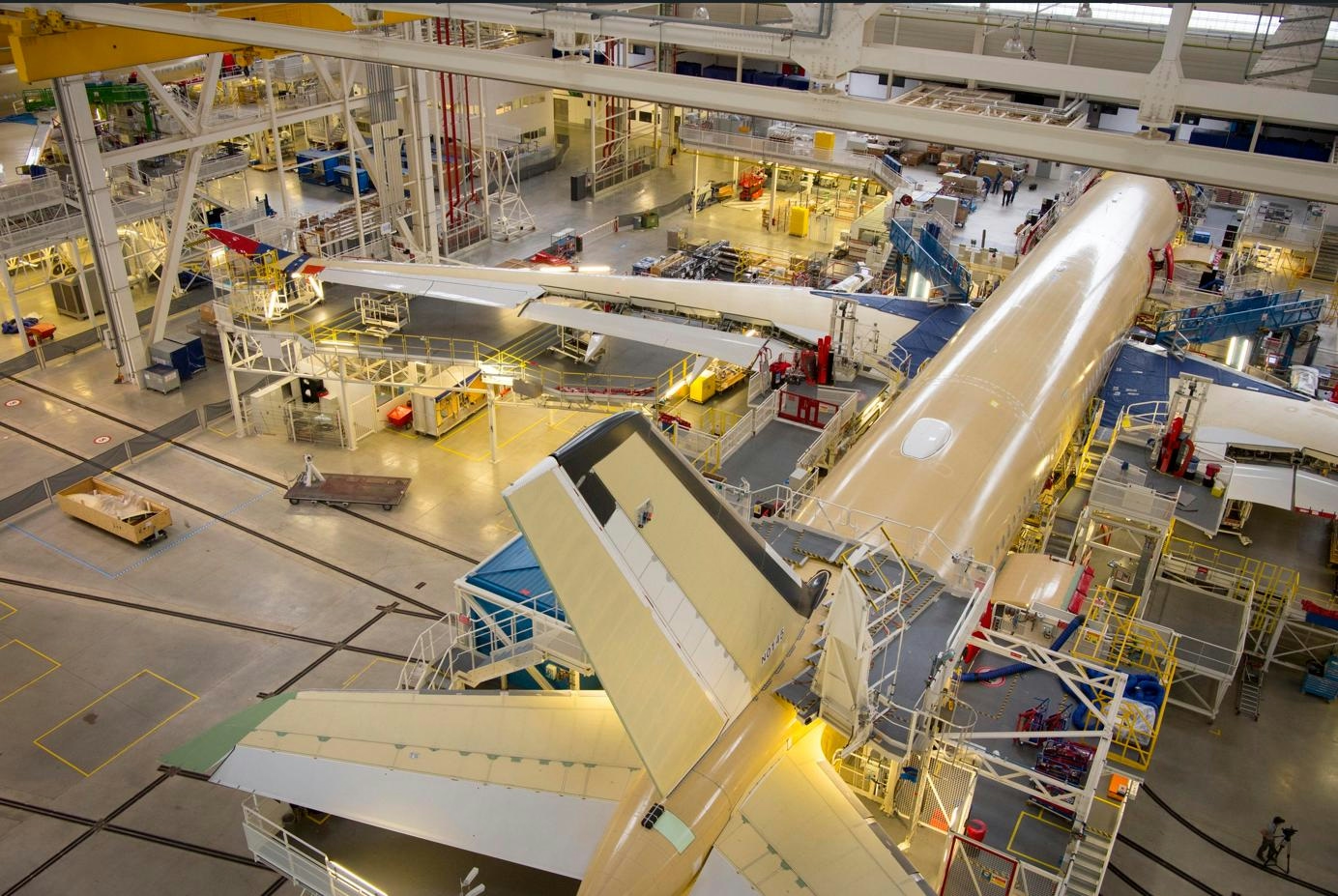
Airbus Falls Behind Boeing in Widebody Aircraft Sales
Airbus, long regarded as a leader in the widebody aircraft market, has now ceded ground to Boeing in this critical segment. As of July 31, Boeing commands a substantial 62% share of the 3,168 widebody aircraft currently on backlog, leaving Airbus with 38%, according to the most recent data. This development marks a notable reversal from previous years when Airbus executives frequently emphasized their advantage in widebody orders, particularly during Boeing’s well-documented difficulties with the 787 Dreamliner program between 2007 and 2015.
Shifts in Market Share and Product Portfolios
Boeing’s resurgence in widebody sales is partly due to its more extensive portfolio, which encompasses various family members and sub-types, including the 787 IGW and the 767-based KC-46A refueling tanker. Airbus, while maintaining a competitive lineup, offers models such as the A350 ULR and the A330-800 MRTT, the latter still in the announced program phase. Both manufacturers continue to grapple with persistent supply chain disruptions, which have contributed to significant order backlogs.
Despite Boeing’s lead in backlog market share, Airbus has recently reclaimed the lead in actual aircraft deliveries. This contrast highlights the complex and evolving dynamics within the widebody sector, compelling both companies to reevaluate their production strategies and supply chain management to sustain or regain competitive advantage.
Implications for Industry and Airlines
Industry analysts are closely monitoring how these shifts will affect operational efficiency and financial outcomes for both Airbus and Boeing. Boeing is expected to intensify its focus on the 787 Dreamliner program to consolidate its market position, while Airbus is likely to capitalize on the strengths of its A350 XWB to defend its share. For airlines, these developments carry significant implications for fleet planning and future procurement decisions, as carriers assess the reliability of supply chains and the long-term prospects of each manufacturer’s product offerings.
As the widebody market continues to evolve amid a recovering global aviation industry, both Airbus and Boeing face mounting pressure to resolve production bottlenecks and meet growing demand. The competitive landscape remains fluid, with strategic adjustments anticipated from both aerospace giants in the months ahead.

Etihad and Swissport Extend Global Partnership

Sepehran Airlines B737 Returns to Mashhad After Tyre and Engine Issues

Etihad Deploys Widebody Fleet to Meet Strong Demand

Korean Air Finalizes $36.2 Billion Deal with Boeing

Australia’s RFDS Queensland Section Orders Six King Air 260Cs

Korean Air Finalizes Order for 103 Boeing Jets and Engines

Embraer E195-E2 Features Distinctive Engine Placement Among Regional Jets

What Passengers Can Expect on Boeing’s New 777X Jet

How Ethiopian Airlines Became Africa’s Leading Carrier Amid Gulf Competition

Joby Aviation Extends Autonomous Flight Capabilities with Cross-Country Tour
