
Orquesta conocimientos de IA para convertirlos en acción

Tendencias
Categories
Airbus Produces A350s Faster Than Airlines Can Accept Them
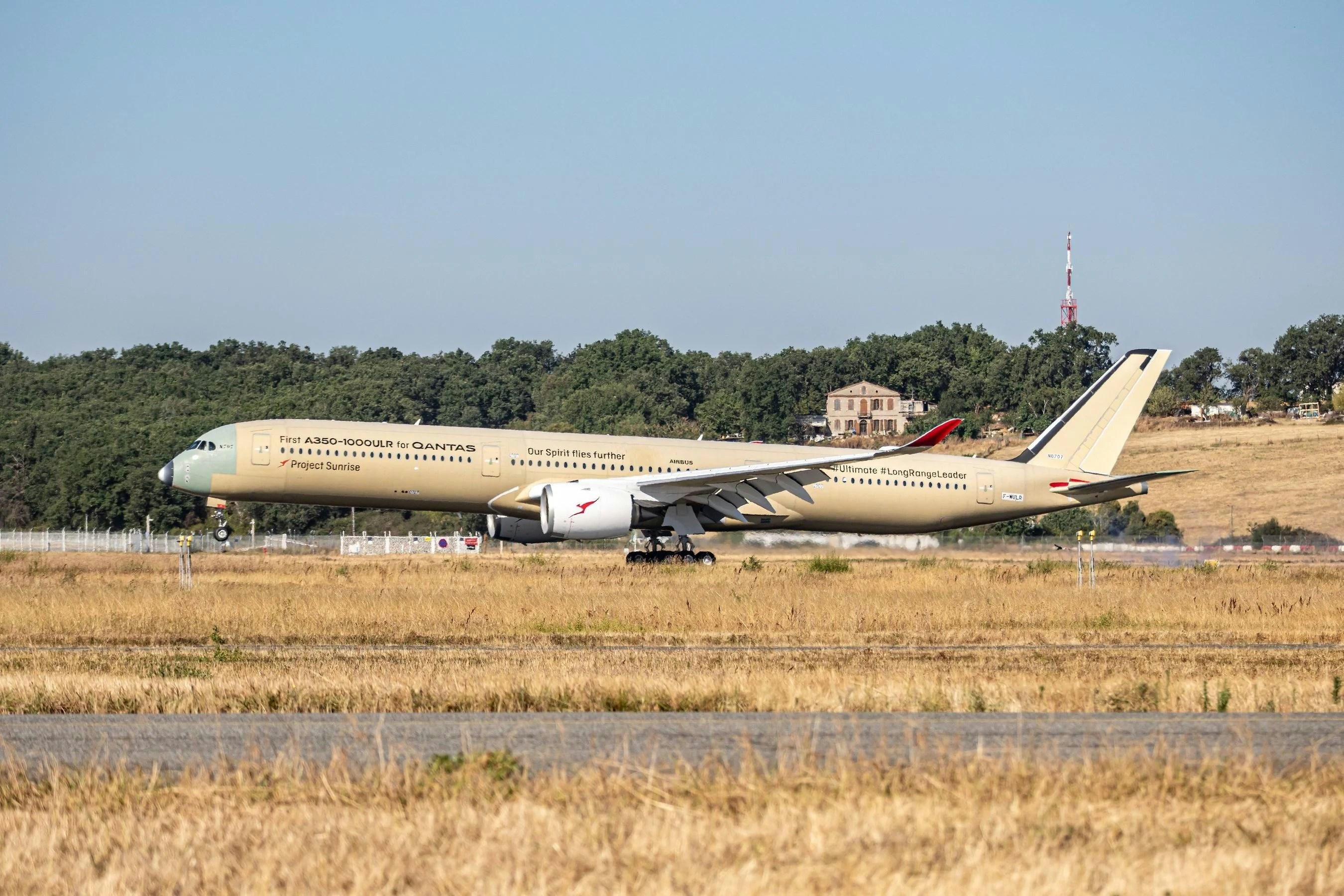
Airbus A350 Production Surpasses Airline Delivery Capacity Amid Supply Chain Challenges
Production Growth Outpaces Airline Readiness
The global widebody aircraft market is currently witnessing an unprecedented surge in demand, with order backlogs extending well into the next decade. However, within Airbus’s European assembly facilities, a notable operational challenge has emerged: A350 airframes are being produced at a faster rate than airlines are prepared to accept and deploy them. This unusual imbalance in the aviation sector signals a shift where manufacturing is no longer the primary obstacle; instead, the alignment of delivery schedules and completion of cabin installations have become critical bottlenecks.
Central to this issue are intricate supply chain dependencies and integration difficulties stemming from recent acquisitions, alongside the need to balance Airbus’s ambitious production targets with the more cautious financial planning of its airline customers. Airbus aims to increase A350 assembly to 12 aircraft per month by 2028, intending to address a significant backlog of long-haul orders. Yet, this accelerated production pace has revealed a disconnect: while assembly output rises, actual deliveries to customers lag behind.
Delivery Delays and Operational Constraints
Data from the first half of 2026 highlights this disparity. Airbus delivered only 26 A350s during this period—averaging four to five per month—substantially below the production capacity at its Toulouse facility. This gap underscores a fundamental scheduling mismatch between the completion of structural assembly and the readiness of airlines to take delivery, often hindered by delays in cabin fit-outs and the coordination of operational slots.
Airbus Chief Executive Officer Guillaume Faury has emphasized that increasing production rates does not automatically translate into higher delivery volumes. Airlines, constrained by strict capital expenditure plans and elevated fuel costs, are proceeding cautiously with fleet expansions. Some carriers are reevaluating their growth strategies in light of the surplus of available A350s, wary of overextending amid volatile operating conditions.
Supply Chain Integration and Market Implications
Compounding these challenges are supply chain bottlenecks. The integration of key aerostructure facilities—such as the central fuselage plant in Kinston, North Carolina, and wing spar production lines in Prestwick, Scotland, both formerly operated by Spirit AeroSystems—has introduced short-term operational friction as Airbus seeks to unify its manufacturing network. Managing these disparate workflows is critical to sustaining higher output, yet the assimilation of external assets into a cohesive system remains complex. Furthermore, engine availability continues to be a significant constraint, with delays in powerplant deliveries threatening to disrupt the overall production rhythm.
The wider aerospace market is closely monitoring these developments. Boeing, having made progress in overcoming its own production and quality challenges, is positioning itself to capitalize on any prolonged delivery delays at Airbus. The American manufacturer’s improved performance in early 2026 could enable it to reclaim market share if Airbus’s supply chain and delivery issues persist.
As Airbus pushes to accelerate A350 production, the company faces increasing pressure to synchronize its industrial capabilities with the operational realities of its airline customers. The coming months will be pivotal in determining whether Airbus can resolve these bottlenecks or if the current surge in widebody demand will be tempered by the limitations of supply chain integration and market absorption.

Etihad Airways Suspends Airbus A380 Flights on Key Route

Aditya Birla Group Seeks Approval for Aircraft Leasing in GIFT City

Qatar Airways Highlights Innovation and Connectivity at Arabian Travel Market 2026

Hong Kong's Five-Year Plan Includes Andrew Fan's Aircraft Parts Processing Hub Proposal

ACIA Aero Leasing Delivers ATR72-600 to Air Nostrum

RTX Appoints Jill Albertelli as Head of Pratt & Whitney

TAT Technologies Joins Beyond Aero Hydrogen Aircraft Program

AURAK Study Highlights Barriers to Air Taxi Adoption in Emerging Economies

Xiamen Air Selects Altitude for 787 Maintenance at Heathrow

Etihad and Swissport Extend Global Partnership
