
Orquesta conocimientos de IA para convertirlos en acción

Tendencias
Categories
Airbus Tests Passenger Plane Capable of 22-Hour Nonstop Flight
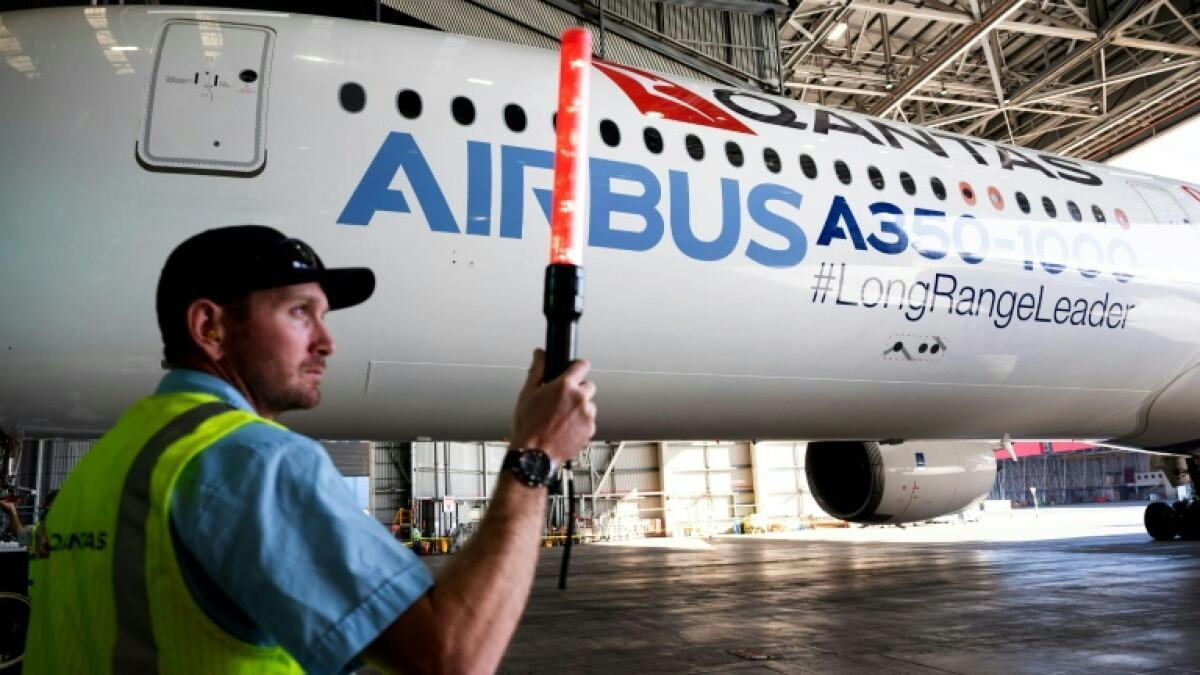
Airbus Advances Ultra-Long-Range Aviation with A350-1000ULR Test Flight
Airbus has successfully completed the maiden test flight of its new A350-1000ULR, a widebody aircraft engineered for nonstop journeys lasting up to 22 hours. The test flight, conducted from Airbus’s Toulouse facility, lasted three hours and 43 minutes, reaching an altitude slightly above 41,000 feet (12,500 meters). This milestone marks the commencement of a two-month certification process designed to validate the aircraft’s modifications, including the integration of an additional fuel tank that extends its range to approximately 18,500 kilometers (11,500 miles).
Project Sunrise and Market Implications
The A350-1000ULR is a cornerstone of Qantas’s Project Sunrise, an ambitious initiative to establish nonstop flights between Sydney and London. Qantas has placed an order for 12 of these specially adapted jets to enable this unprecedented route. However, the project has encountered delays due to persistent supply-chain disruptions within the aviation sector. Originally slated for delivery in late 2026, the first A350-1000ULR is now expected to be handed over in April 2027, consequently postponing the launch of Qantas’s ultra-long-haul services to later that year.
This aircraft is set to challenge the current record for the world’s longest commercial flight, presently held by Singapore Airlines’ Singapore-to-New York route, which covers 15,350 kilometers and exceeds 18 hours in duration. The extended range of the A350-1000ULR has the potential to transform ultra-long-haul travel by enabling airlines to connect distant city pairs without intermediate stops, thereby reshaping global air travel networks.
Industry Context and Future Prospects
Airbus’s progress is being closely observed by competitors as the race to dominate the ultra-long-haul market intensifies. Concurrently, advancements in alternative aviation technologies are emerging, exemplified by China’s recent testing of a hydrogen-fueled turboprop engine. Such developments suggest a future where traditional jet fuel may face competition from more sustainable propulsion methods, adding complexity to the evolving aviation landscape.
Despite the setbacks, both Airbus and Qantas remain steadfast in their commitment to Project Sunrise. The forthcoming months of rigorous testing will be pivotal in determining when passengers can expect to experience nonstop flights bridging Australia and Europe, potentially redefining the parameters of long-distance air travel.

Etihad Airways Suspends Airbus A380 Flights on Key Route

Aditya Birla Group Seeks Approval for Aircraft Leasing in GIFT City

Qatar Airways Highlights Innovation and Connectivity at Arabian Travel Market 2026

Hong Kong's Five-Year Plan Includes Andrew Fan's Aircraft Parts Processing Hub Proposal

ACIA Aero Leasing Delivers ATR72-600 to Air Nostrum

RTX Appoints Jill Albertelli as Head of Pratt & Whitney

TAT Technologies Joins Beyond Aero Hydrogen Aircraft Program

AURAK Study Highlights Barriers to Air Taxi Adoption in Emerging Economies

Xiamen Air Selects Altitude for 787 Maintenance at Heathrow

Etihad and Swissport Extend Global Partnership
