
Orquesta conocimientos de IA para convertirlos en acción

Tendencias
Categories
An Overview of FSC 29 Engine Accessories in Aerospace
An Overview of FSC 29 Engine Accessories in Aerospace
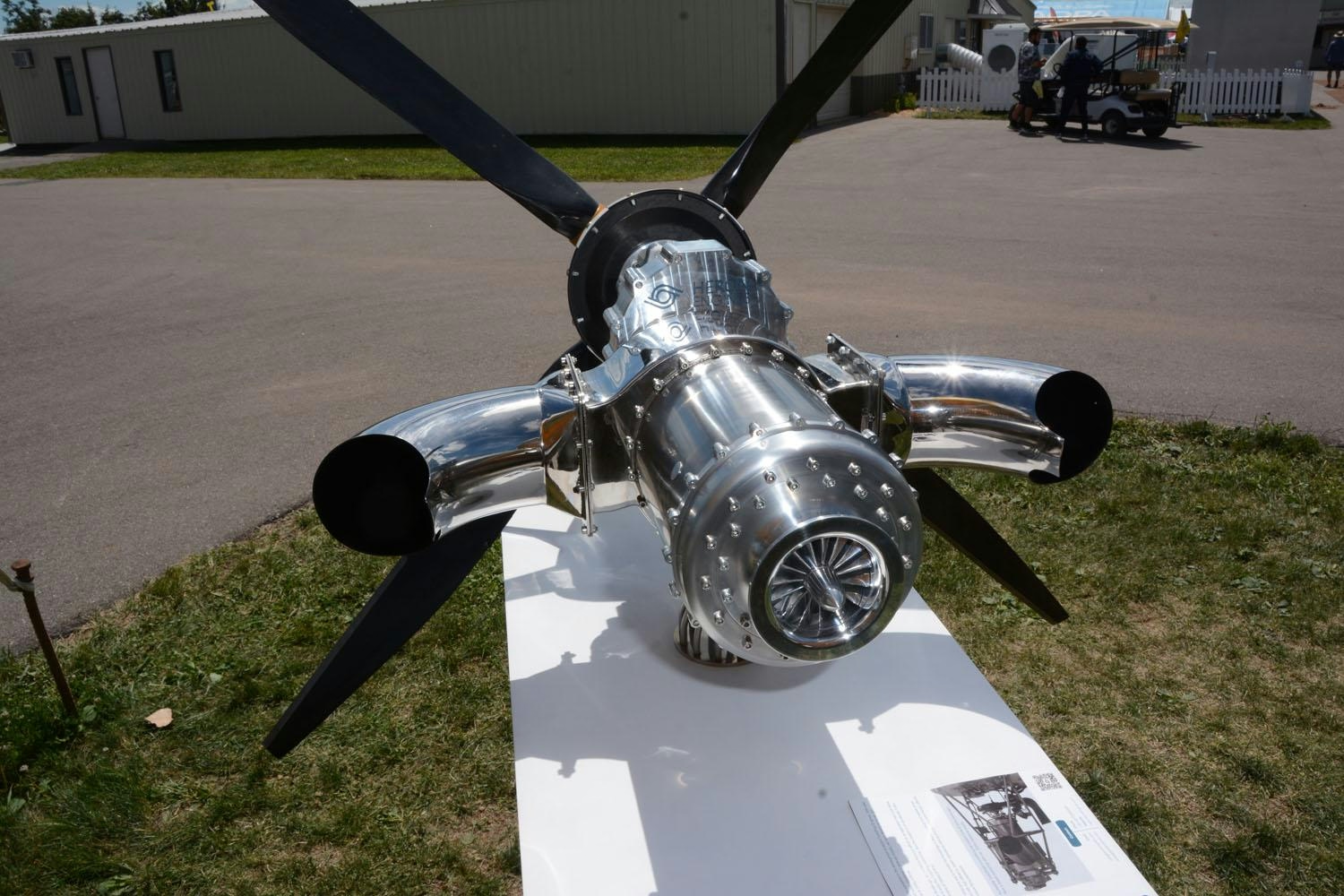
Aircraft engines represent some of the most complex feats of engineering, yet their reliability hinges on a network of essential accessory components. These engine accessories, which include fuel pumps, electrical generators, and cooling system parts, are vital to ensuring safe and efficient engine operation. Within the aerospace industry, these components are systematically categorized under Federal Supply Group (FSG) 29, a classification that facilitates streamlined identification, procurement, and maintenance across global supply chains.
Defining Aircraft Engine Accessories
Engine accessories are auxiliary components attached to an aircraft engine that enable its optimal performance. They encompass a range of critical parts such as fuel pumps and control systems, oil pumps and lubrication equipment, electrical generators and starters, cooling system components, as well as air and oil filtration systems. The absence or malfunction of these accessories would compromise fuel delivery, temperature regulation, and electrical power supply, thereby jeopardizing both safety and engine performance.
Historical Development of Engine Accessories
The evolution of aircraft engine accessories mirrors the broader advancements in aviation technology. Early engines from the early 20th century featured relatively simple fuel pumps and mechanical controls, with basic cooling mechanisms and rudimentary fasteners like steel rivets. The demands of World War II accelerated the development of more sophisticated fuel injection systems, electrical components, and turbocharging accessories. The subsequent Jet Age introduced digital controls, advanced cooling technologies, and precision fasteners, reflecting a continuous refinement of accessory technology alongside engine innovation.
FSC 29 Classification and Its Components
Federal Supply Group 29 is subdivided into several Federal Supply Classes (FSCs), each dedicated to specific types of engine accessories. Fuel system components, classified under FSC 2910 and 2915, include fuel pumps, injectors, carburetors, tanks, and filters. Electrical system components fall under FSC 2920 and 2925, covering alternators, starters, and ignition systems. Cooling system parts are categorized within FSC 2930 and 2935, designed to prevent overheating and maintain operational stability. Filters and cleaners, essential for maintaining air and oil purity, are grouped under FSC 2940 and 2945. Finally, turbocharger components, which enhance engine efficiency and power output, are classified as FSC 2950. This standardized classification framework enables engineers, procurement specialists, and maintenance personnel to efficiently identify and source the appropriate parts, thereby supporting operational effectiveness and safety.
Contemporary Challenges and Industry Implications
The aerospace sector currently faces notable challenges concerning FSC 29 engine accessories, particularly in relation to new engine models from leading manufacturers such as Pratt & Whitney and Safran. Fundamental issues with these engines have resulted in production delays, exacerbating existing supply chain constraints. These difficulties are compounded by the Federal Aviation Administration’s ongoing review of Boeing’s quality control practices, which has intensified regulatory scrutiny across the industry.
Consequently, market dynamics are undergoing significant shifts. Suppliers and manufacturers are under mounting pressure to resolve quality and reliability issues. At the same time, competitors may capitalize on these challenges by leveraging their strengths, innovating, or expanding market share through the provision of more dependable accessory solutions. This evolving landscape highlights the critical importance of engine accessories not only in terms of technical performance but also in their influence on the broader aerospace market.

Etihad Airways Suspends Airbus A380 Flights on Key Route

Aditya Birla Group Seeks Approval for Aircraft Leasing in GIFT City

Qatar Airways Highlights Innovation and Connectivity at Arabian Travel Market 2026

Hong Kong's Five-Year Plan Includes Andrew Fan's Aircraft Parts Processing Hub Proposal

ACIA Aero Leasing Delivers ATR72-600 to Air Nostrum

RTX Appoints Jill Albertelli as Head of Pratt & Whitney

TAT Technologies Joins Beyond Aero Hydrogen Aircraft Program

AURAK Study Highlights Barriers to Air Taxi Adoption in Emerging Economies

Xiamen Air Selects Altitude for 787 Maintenance at Heathrow

Etihad and Swissport Extend Global Partnership
