
Orquesta conocimientos de IA para convertirlos en acción

Tendencias
Categories
Antonov An-22: The Largest Turboprop Ever Built
Antonov An-22: The Largest Turboprop Ever Built
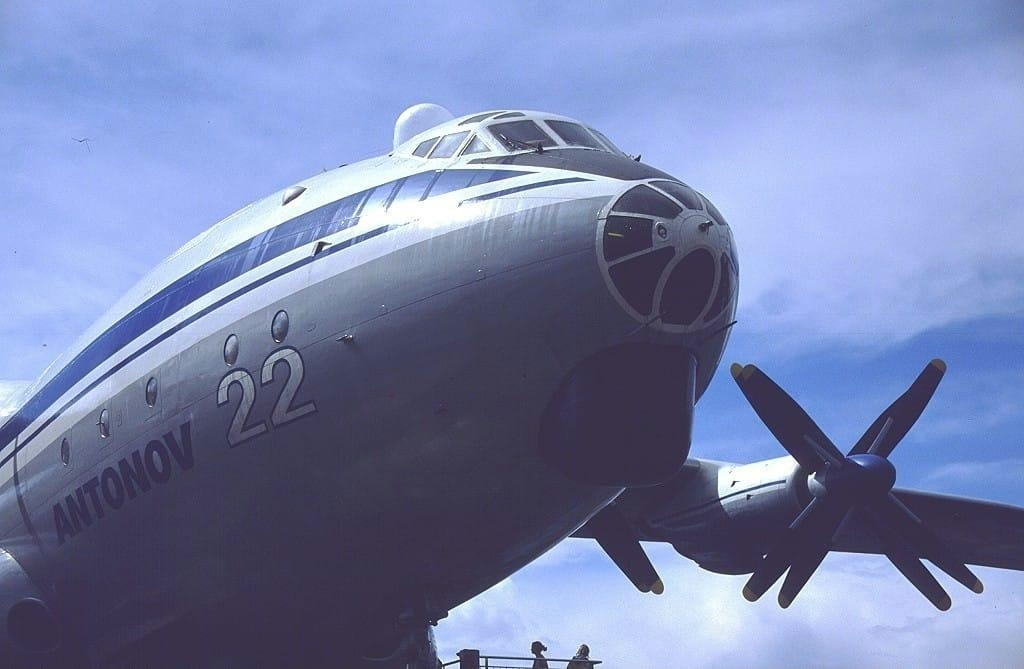
Standing beside the Antonov An-22 as its engines ignite is an experience that transcends mere sound; it is a visceral sensation. Powered by four colossal Kuznetsov NK-12 turboprop engines, each driving a pair of contra-rotating propellers with blades measuring over six meters in diameter—larger than many houses—the aircraft emits a deep, resonant roar often described as a buzz-saw scream. Nearly six decades after its inaugural flight, the An-22 Antei remains the largest turboprop-powered aircraft ever constructed, a monumental Soviet creation engineered to transport tanks, missiles, and other outsized cargo across vast distances.
A Giant Unveiled
The Antonov Design Bureau was commissioned in 1962 to develop a strategic airlifter of unprecedented size and capability. Within three years, the prototype was completed, and its public debut at the 1965 Paris Air Show left Western observers astonished. At the time, no Western aircraft could match the An-22’s scale or payload capacity. The Soviets aptly named the aircraft Antei, after the mythological giant Antaeus, symbolizing its formidable strength and earth-shaking presence.
The defining feature of the An-22 is its quartet of powerful engines, each paired with two massive, counter-rotating propellers. This configuration not only delivers extraordinary thrust but also produces a distinctive and thunderous sound that has become legendary among aviation enthusiasts worldwide.
Record-Breaking Performance and Enduring Service
Beyond its sheer size, the An-22 distinguished itself as a record-breaking aircraft. Throughout its operational history, it set 41 world records, including a remarkable feat in 1967 when it lifted 100 tonnes to an altitude of nearly 7,900 meters. Its innovative double-deck fuselage and rear loading ramp enabled it to carry outsized cargo that no other propeller-driven aircraft could accommodate. Approximately 66 units were produced between 1965 and 1976 in Tashkent. While most have since been retired, a select number remain active within the Russian military transport fleet, underscoring the aircraft’s durability and unique operational capabilities.
Challenges in a Modern Era
Despite its historic achievements, the An-22 faces significant challenges in the contemporary aviation landscape. Its 1960s-era technology is increasingly obsolete, and modernization efforts are complex and costly. Although developments such as Klimov’s new turboprop demonstrator for the An-2 suggest potential avenues for propulsion advancements, the An-22 would require extensive upgrades to remain competitive against today’s more efficient and technologically advanced cargo aircraft.
The market response to the An-22’s continued relevance is mixed. While its unparalleled payload capacity among turboprops remains a distinct advantage, newer aircraft like Embraer’s KC-390 Millennium and industry trends toward fleet consolidation—exemplified by the unification of the Tu-204 type certificate—reflect a shift toward more versatile and modern platforms. Additionally, the uncertain future of alternative propulsion technologies, including hydrogen power, adds further complexity to the An-22’s prospects.
Legacy of a Giant
Despite these uncertainties, the Antonov An-22 endures as one of the most imposing achievements in aviation history. Its limited but ongoing service serves as a testament to the enduring value of this propeller-driven giant, demonstrating that even in an age dominated by jet engines, the An-22’s unique capabilities continue to move mountains.

Etihad Airways Suspends Airbus A380 Flights on Key Route

Aditya Birla Group Seeks Approval for Aircraft Leasing in GIFT City

Qatar Airways Highlights Innovation and Connectivity at Arabian Travel Market 2026

Hong Kong's Five-Year Plan Includes Andrew Fan's Aircraft Parts Processing Hub Proposal

ACIA Aero Leasing Delivers ATR72-600 to Air Nostrum

RTX Appoints Jill Albertelli as Head of Pratt & Whitney

TAT Technologies Joins Beyond Aero Hydrogen Aircraft Program

AURAK Study Highlights Barriers to Air Taxi Adoption in Emerging Economies

Xiamen Air Selects Altitude for 787 Maintenance at Heathrow

Etihad and Swissport Extend Global Partnership
