
Orquesta conocimientos de IA para convertirlos en acción

Tendencias
Categories
Aviation Industry Adopts AI and Green Fuels Amid Changing Passenger Habits
Aviation Industry Adopts AI and Green Fuels Amid Changing Passenger Habits
The commercial aviation sector continues to demonstrate remarkable resilience and adaptability despite ongoing economic and geopolitical challenges. Airlines are expanding their networks through new routes and codeshare agreements, while technological innovation and sustainability initiatives are driving growth and transformation across the industry.
Digital Transformation and Operational Innovation
Artificial intelligence (AI) is rapidly reshaping the aviation landscape by enhancing operational efficiency in areas such as predictive maintenance, route optimization, and personalized passenger services. The adoption of biometric scanning and contactless processing at airports has become increasingly widespread, significantly reducing wait times and improving the overall travel experience. However, as digitalization deepens, the industry is placing greater emphasis on cybersecurity to mitigate the growing risks posed by cybercrime and digital warfare targeting airlines and airport infrastructure.
AI’s impact extends beyond operational improvements to the travel planning process itself. Automated booking systems and AI-driven itinerary management are beginning to disrupt traditional intermediaries, including online travel agencies (OTAs) and global distribution systems (GDSs). This technological shift has exerted pressure on these companies’ profit margins and led to workforce reductions, as evidenced by recent layoffs at firms such as Supernal. These developments highlight the sector’s ongoing struggle to adapt swiftly to rapid technological change.
Sustainability Efforts and the Challenge of Green Fuels
The aviation industry has committed to achieving net-zero carbon emissions by 2050, with a significant focus on transitioning to Sustainable Aviation Fuel (SAF). However, the path to decarbonization remains complex and fraught with challenges. The European Union’s mandate for advanced synthetic green fuels (eSAF) presents considerable obstacles, as commercial-scale production is still limited and the costs of these fuels remain substantially higher than those of conventional jet fuel. This situation complicates airlines’ efforts to comply with regulatory requirements and meet environmental targets.
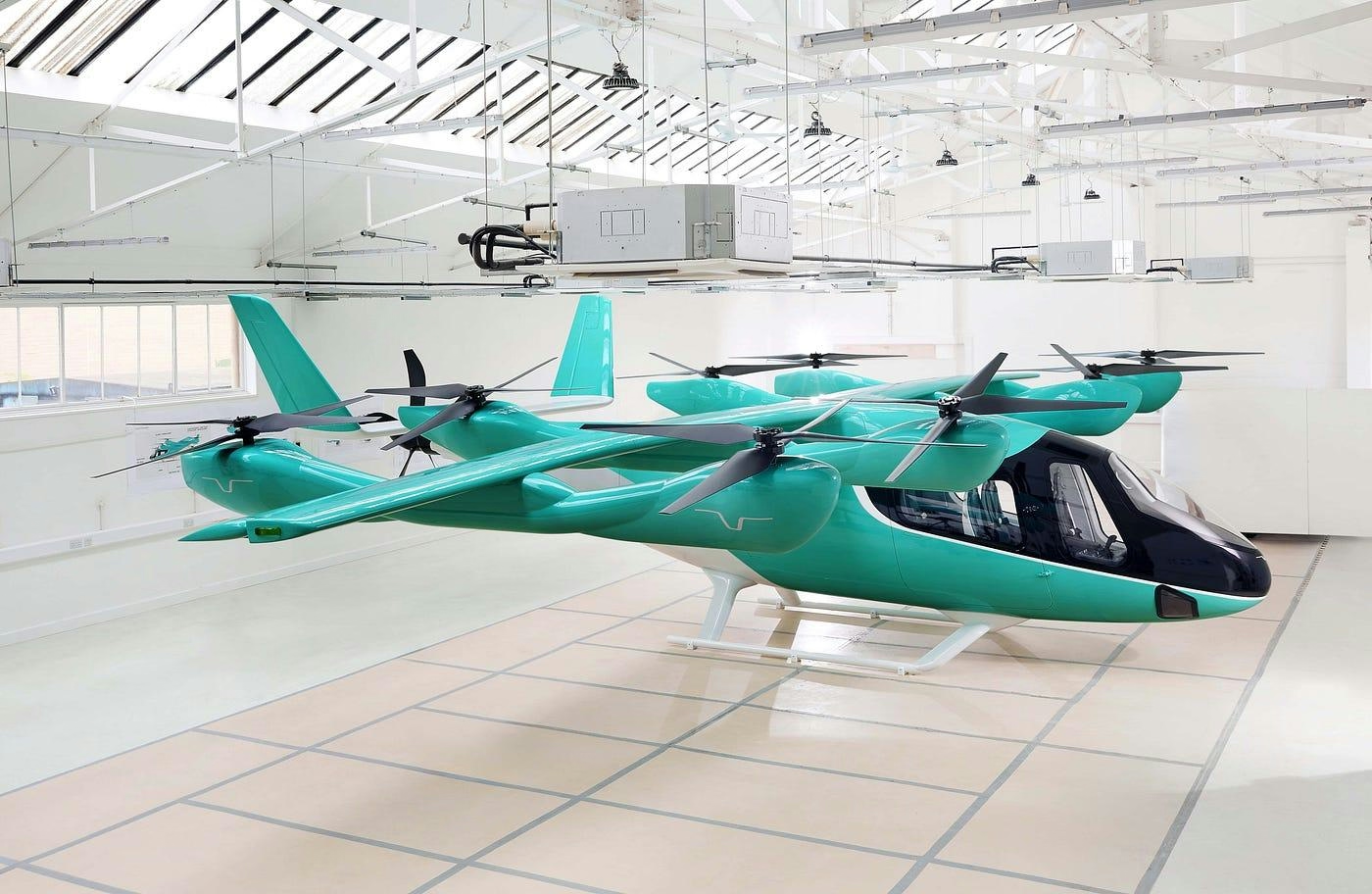
In addition to SAF, aircraft manufacturers are investing in the development of electric and hydrogen-powered planes, aiming to introduce these technologies into commercial service. Engineers are also pursuing aerodynamic enhancements and fuel-efficient design improvements to reduce emissions. Furthermore, the emergence of electric vertical take-off and landing (eVTOL) aircraft promises to revolutionize urban mobility, potentially creating new revenue streams for both aviation companies and city transport providers.
Shifting Passenger Preferences and Airline Strategies
Evolving travel habits are prompting airlines to reconsider their strategic approaches. The growing trend of “bleisure” travel, which combines business and leisure trips, continues to influence network planning decisions. Rising demand for family and group travel has led carriers to introduce group deals and tailored offers to better serve these segments. Personalization remains a key focus, with airlines encouraging direct bookings by offering customizable packages that allow passengers to select preferred amenities both before and during flights.
Airlines are also enhancing their premium offerings to meet changing passenger expectations. For instance, Thai Airways’ introduction of the Business Plus cabin exemplifies the industry’s commitment to delivering a more refined inflight experience that aligns closely with customer preferences.
As the aviation sector navigates the complexities of technological disruption, regulatory pressures, and shifting consumer demands, its capacity for innovation and adaptation will be critical in shaping the future of air travel.

Etihad Airways Suspends Airbus A380 Flights on Key Route

Aditya Birla Group Seeks Approval for Aircraft Leasing in GIFT City

Qatar Airways Highlights Innovation and Connectivity at Arabian Travel Market 2026

Hong Kong's Five-Year Plan Includes Andrew Fan's Aircraft Parts Processing Hub Proposal

ACIA Aero Leasing Delivers ATR72-600 to Air Nostrum

RTX Appoints Jill Albertelli as Head of Pratt & Whitney

TAT Technologies Joins Beyond Aero Hydrogen Aircraft Program

AURAK Study Highlights Barriers to Air Taxi Adoption in Emerging Economies

Xiamen Air Selects Altitude for 787 Maintenance at Heathrow

Etihad and Swissport Extend Global Partnership
