
Orquesta conocimientos de IA para convertirlos en acción

Tendencias
Categories
Binani Air to Establish $218 Million Aircraft Maintenance Hub in Abuja

Binani Air to Establish $218 Million Aircraft Maintenance Hub in Abuja
Nigeria’s Binani Air has announced a significant investment to develop a state-of-the-art aircraft maintenance, repair, and overhaul (MRO) facility at Nnamdi Azikiwe International Airport in Abuja. The project, unveiled on August 30, 2026, forms a central part of the airline’s broader strategy to reduce Nigeria’s dependence on foreign maintenance services and to retain a larger share of aviation-related expenditure within the country.
Strategic Importance and Economic Impact
Although Binani Air has not revealed the identity of its international contractor or the full scope of the investment, the airline projects that the new MRO facility could help Nigeria retain and attract approximately $218 million in foreign exchange annually. Currently, Nigerian carriers outsource much of their heavy maintenance work—including comprehensive C- and D-checks—to facilities located in Europe, the Middle East, and other African nations such as Egypt and Ethiopia. This reliance on overseas providers not only necessitates payments in foreign currency but also adds logistical costs related to ferrying aircraft, crew travel, and parts replacement.
The Abuja-based MRO hub is slated for completion within 12 months, with a potential opening in the third quarter of 2027, assuming construction proceeds as planned. The facility is designed to serve Nigerian airlines as well as other carriers across West Africa, positioning Abuja as a regional center for aircraft maintenance. Binani Air’s chairperson, Aishatu Dahiru Ahmed—widely known as Aishatu Binani—highlighted the project’s potential to generate specialized aviation jobs and to cultivate local engineering and technical expertise.
Challenges and Future Prospects
Despite its promise, the initiative faces several challenges. Securing a skilled workforce, meeting stringent regulatory standards, and competing with well-established international MRO providers will be critical to the project’s success. Additionally, some Nigerian airlines may remain hesitant to shift maintenance operations domestically, while competitors might respond by forging strategic partnerships or enhancing their own local capabilities.
If the Abuja facility obtains the necessary certifications and is fully equipped, it could eventually compete for third-party maintenance contracts from other West African operators. However, specific details regarding the hangar’s capacity, the range of aircraft it will service, and the timeline for regulatory approvals have yet to be disclosed.
Binani Air’s Expansion and Regional Ambitions
This MRO investment marks a major expansion for Binani Air, which only recently entered Nigeria’s scheduled passenger market. The Nigerian Civil Aviation Authority (NCAA) granted the airline an Air Operator Certificate for scheduled services on March 18, 2026, following earlier approval for non-scheduled operations. NCAA Director-General Chris Najomo described the certification as a milestone for the female-led airline, while emphasizing the importance of maintaining rigorous regulatory and safety standards.
Binani Air commenced scheduled flights on May 11, 2026, initially operating routes between Abuja and Lagos with Embraer E170 regional jets. Its domestic network also includes Kano and Yola. According to ch-aviation fleet data, the airline currently operates two Embraer E170LR aircraft, previously flown by EgyptAir Express, alongside a Hawker 800XP business jet used for charter services.
The Abuja MRO project represents a strategic effort by Binani Air to diversify its operations beyond passenger and charter flights. It holds the potential to transform Nigeria’s aviation maintenance sector and to reinforce the country’s position as a key regional aviation hub.

Etihad and Swissport Extend Global Partnership
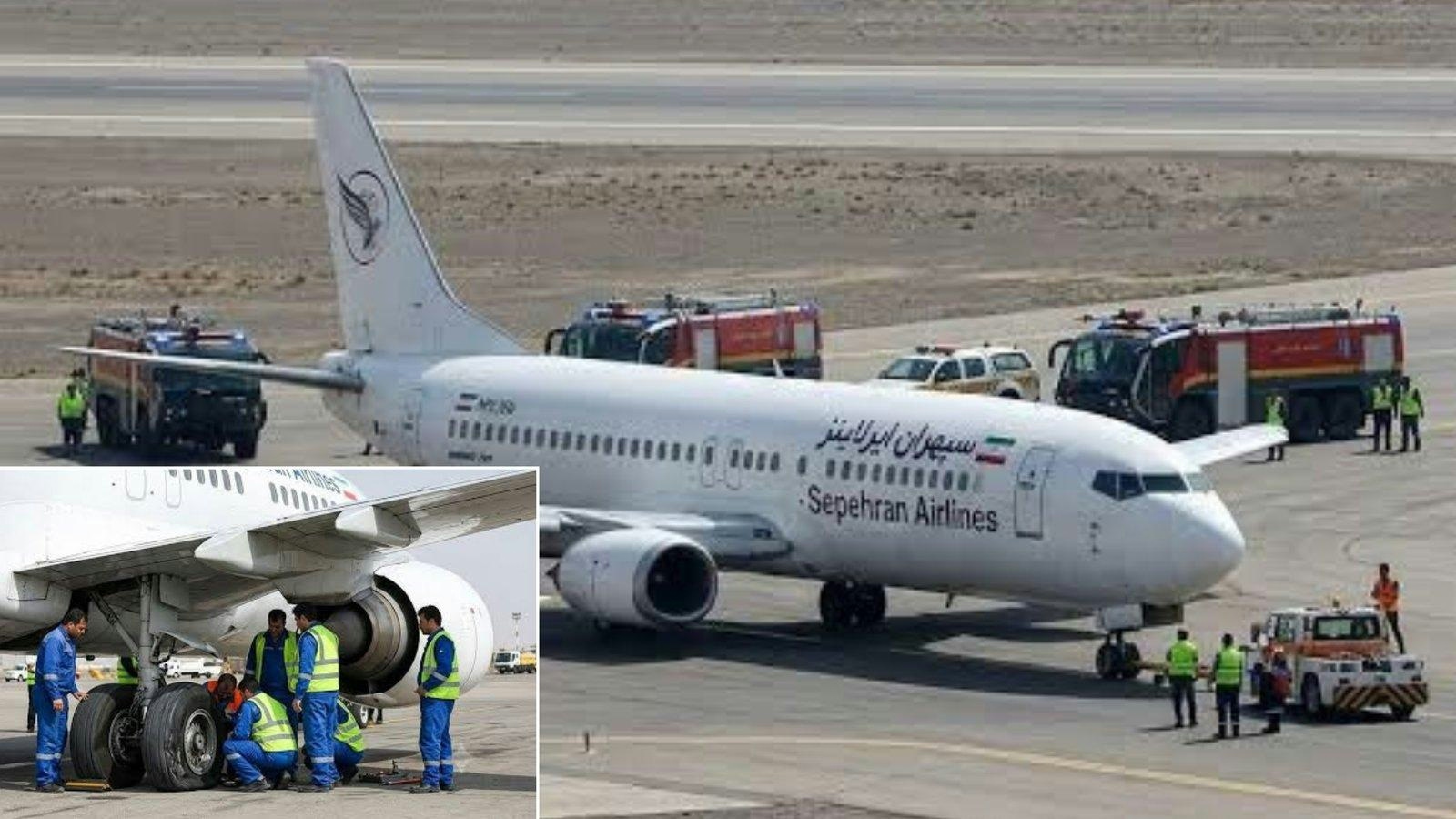
Sepehran Airlines B737 Returns to Mashhad After Tyre and Engine Issues

Etihad Deploys Widebody Fleet to Meet Strong Demand

Korean Air Finalizes $36.2 Billion Deal with Boeing

Australia’s RFDS Queensland Section Orders Six King Air 260Cs

Korean Air Finalizes Order for 103 Boeing Jets and Engines

Embraer E195-E2 Features Distinctive Engine Placement Among Regional Jets

What Passengers Can Expect on Boeing’s New 777X Jet

How Ethiopian Airlines Became Africa’s Leading Carrier Amid Gulf Competition

Joby Aviation Extends Autonomous Flight Capabilities with Cross-Country Tour
