
Orquesta conocimientos de IA para convertirlos en acción

Tendencias
Categories
Boeing Chief Says Company Needs More Time to Stabilize Finances Before Launching New Jet
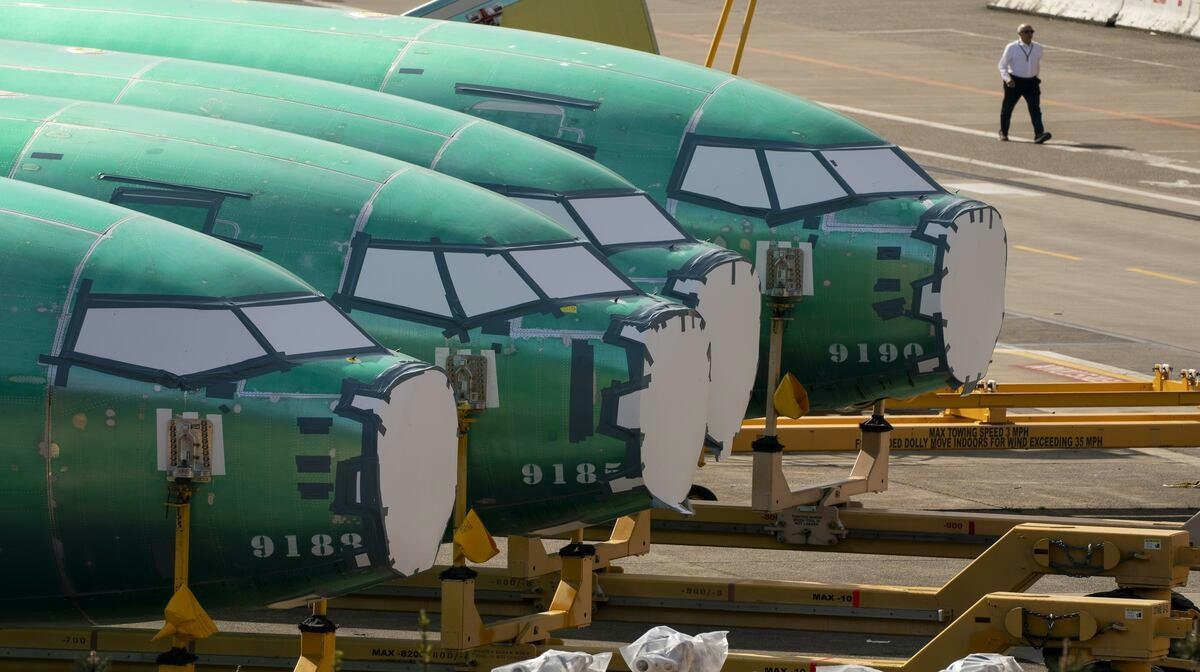
Boeing Prioritizes Financial Stability Over New Jet Development
Boeing has announced a delay in launching an all-new commercial aircraft as the company concentrates on restoring its financial health and stabilizing production of its existing models. Chief Executive Kelly Ortberg indicated that Boeing requires “a couple more years” before it is prepared to initiate development of a new jet, which could eventually succeed the 737 MAX. This measured approach reflects a cautious financial strategy with significant implications for both Boeing and the broader aviation sector.
Financial and Operational Challenges
Ortberg outlined three critical prerequisites for committing to a new airplane program: robust financial footing, mature technology, and adequate market demand. Speaking to CNBC, he stressed that achieving these conditions will take additional time. Boeing’s current financial position underscores this prudence, with the company closing the first quarter of 2026 carrying $47.2 billion in debt alongside $20.9 billion in cash and marketable securities. The launch of a new aircraft would necessitate substantial investments in engineering, certification processes, factory modernization, and supplier agreements. These demands come at a time when Boeing is still addressing quality control issues, increasing production rates, and resolving delays in existing programs.
Airline customers have reinforced Boeing’s cautious stance. According to Ortberg, carriers are urging the manufacturer to “focus on your existing product line” and improve reliability before introducing new models. This customer feedback has led Boeing to prioritize financial recovery and the dependability of its current fleet rather than accelerating new aircraft development. Industry analysts now anticipate that Boeing will not unveil a new narrow-body jet until later in the decade, as the company aims to position itself more competitively against Airbus’ A320 family in the future.
Environmental Considerations and Industry Outlook
Despite postponing a new aircraft launch, Boeing highlights the environmental advancements achieved with its current fleet. The 737 MAX series, for instance, consumes 20% less fuel and emits 20% less carbon dioxide compared to the aircraft it replaces. Each new-generation 737 can reduce carbon dioxide emissions by up to 8 million pounds annually, offering airlines immediate benefits in fuel savings and emissions reductions. These gains can be realized more quickly by replacing older jets with more efficient models rather than waiting for a clean-sheet design.
However, the distinction between fleet growth and fleet replacement remains critical. Introducing more efficient aircraft while older models remain operational can still lead to an overall increase in emissions. Delaying the introduction of a new aircraft also postpones the next significant advancement in fuel efficiency. The International Air Transport Association (IATA) notes that each new generation of aircraft has historically cut emissions by 15 to 20%, contributing to an 80% improvement in fleet fuel efficiency over the past five decades. IATA projects that technological progress could prevent between 138 million and 154 million U.S. tons of carbon dioxide emissions by 2050, potentially reducing aviation’s in-flight energy consumption by up to 10%.
While technological innovation is vital, it alone will not resolve aviation’s climate challenges. Sustainable aviation fuels are expected to play a crucial role in achieving future emissions targets. For now, Boeing remains focused on stabilizing its financial and operational foundations, laying the groundwork for a potential new aircraft program when both the company and the market are ready.

Etihad Airways Suspends Airbus A380 Flights on Key Route

Aditya Birla Group Seeks Approval for Aircraft Leasing in GIFT City

Qatar Airways Highlights Innovation and Connectivity at Arabian Travel Market 2026

Hong Kong's Five-Year Plan Includes Andrew Fan's Aircraft Parts Processing Hub Proposal

ACIA Aero Leasing Delivers ATR72-600 to Air Nostrum

RTX Appoints Jill Albertelli as Head of Pratt & Whitney

TAT Technologies Joins Beyond Aero Hydrogen Aircraft Program

AURAK Study Highlights Barriers to Air Taxi Adoption in Emerging Economies

Xiamen Air Selects Altitude for 787 Maintenance at Heathrow

Etihad and Swissport Extend Global Partnership
