
Orquesta conocimientos de IA para convertirlos en acción

Tendencias
Categories
Boeing Completes Flight Tests for 737 MAX 7 and MAX 10, Aiming for 2027 Deliveries
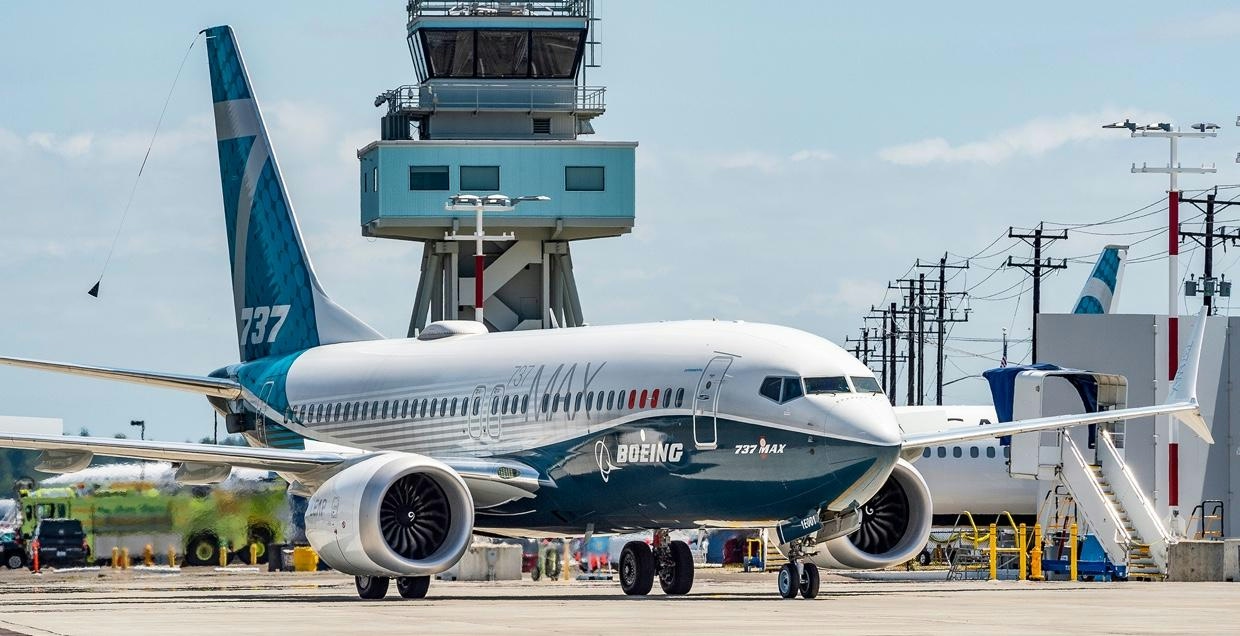
Boeing Completes Flight Tests for 737 MAX 7 and MAX 10, Targets 2027 Deliveries Amid Ongoing Challenges
Boeing has announced the completion of certification flight testing for its long-delayed 737 MAX 7 and 737 MAX 10 aircraft, marking a crucial step toward Federal Aviation Administration (FAA) approval and anticipated deliveries in 2027. This update was disclosed in the company’s second quarter 2026 earnings report, confirming that both models have concluded the required flight test campaigns. Despite this progress, regulatory certification remains pending, with the timeline contingent on the FAA’s ongoing review.
Final Variants Await Certification Amid Market Pressures
The MAX 7 and MAX 10 represent the final two variants of Boeing’s 737 MAX family still awaiting certification after years of delays that have tested customer patience and strained Boeing’s order book. The smaller MAX 7 is designed to replace the 737-700, targeting airlines operating shorter routes with lower passenger demand. In contrast, the larger MAX 10 aims to serve high-capacity, single-aisle markets, directly competing with Airbus’s A321neo. Both models are vital for Boeing to maintain its competitiveness in the narrow-body segment, where Airbus has made significant gains amid Boeing’s setbacks.
Certification flight testing for both aircraft concluded in July, completing one of the most technically demanding phases of the process. This milestone enables the FAA to commence a detailed evaluation of the data collected, including aircraft performance, systems functionality, and compliance with safety standards. Boeing continues to anticipate FAA certification in 2026, with initial deliveries planned for 2027, assuming the remaining regulatory steps proceed as scheduled.
Ongoing Challenges and Market Dynamics
Despite the completion of flight tests, Boeing faces several ongoing challenges. The company must safeguard its order book from further delays, which could result in compensation payments and the potential loss of customers to competitors. The market prospects for the MAX 7 and MAX 10 are closely linked to Boeing’s ability to deliver on time and address regulatory concerns, particularly the FAA-mandated fix for the engine anti-ice system. Rebuilding trust with regulators remains a priority following the multi-year crisis triggered by two fatal MAX accidents and the subsequent global grounding of the fleet. The FAA has since adopted a more rigorous approach to aircraft certification, increasing scrutiny of testing data and compliance documentation.
Market reactions to Boeing’s announcement have been mixed, with some skepticism regarding the company’s capacity to meet revised delivery targets and manage associated costs. Financial pressures stemming from ongoing delays and heightened regulatory oversight continue to affect Boeing’s free cash flow, while Airbus and other manufacturers intensify efforts to capture market share in the high-capacity, fuel-efficient narrow-body segment.
Beyond the 737 MAX program, Boeing reported continued progress on its widebody portfolio. The 777X program recently received FAA authorization to begin a new phase of certification flight testing, signaling incremental advances across Boeing’s commercial aircraft business. Additionally, Boeing has begun transitioning 737 production toward a rate of 47 aircraft per month and activated low-rate initial production on the new 737 North Line in July, positioning the company to support future deliveries as certification milestones are achieved.
As Boeing approaches FAA certification for the MAX 7 and MAX 10, its ability to navigate regulatory, financial, and competitive pressures will be critical to restoring confidence among customers and stakeholders.

Etihad and Swissport Extend Global Partnership

Sepehran Airlines B737 Returns to Mashhad After Tyre and Engine Issues

Etihad Deploys Widebody Fleet to Meet Strong Demand

Korean Air Finalizes $36.2 Billion Deal with Boeing

Australia’s RFDS Queensland Section Orders Six King Air 260Cs

Korean Air Finalizes Order for 103 Boeing Jets and Engines

Embraer E195-E2 Features Distinctive Engine Placement Among Regional Jets

What Passengers Can Expect on Boeing’s New 777X Jet

How Ethiopian Airlines Became Africa’s Leading Carrier Amid Gulf Competition

Joby Aviation Extends Autonomous Flight Capabilities with Cross-Country Tour
