
Orquesta conocimientos de IA para convertirlos en acción

Tendencias
Categories
Boeing Ended 747SP Production Just Before Reaching Break-Even
Boeing Ended 747SP Production Just Before Reaching Break-Even
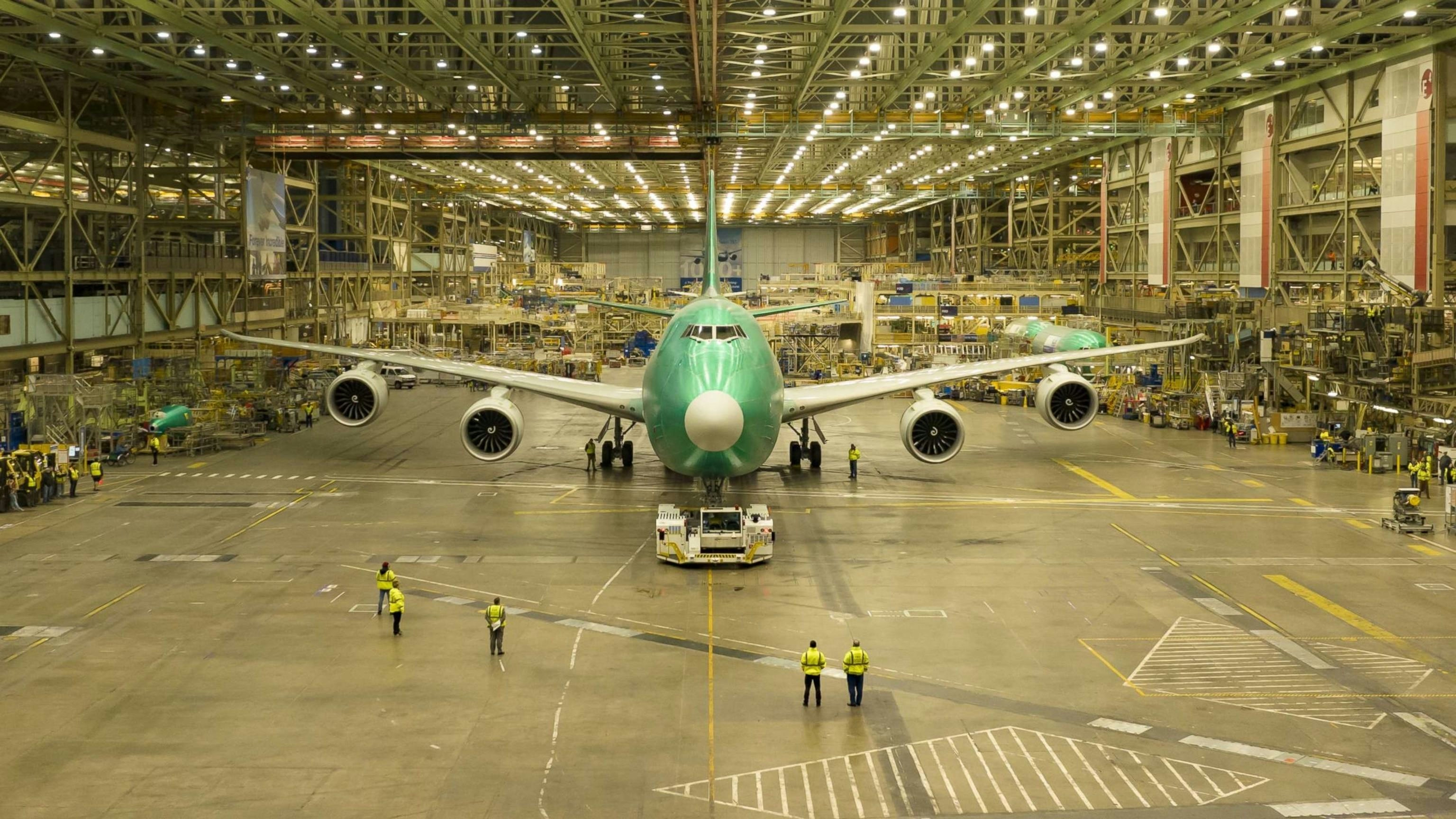
Boeing came within a single aircraft of making the Boeing 747SP program profitable, only to halt production just shy of its break-even point. The 747SP—a shortened, lighter variant of the iconic jumbo jet—was developed in response to airlines seeking nonstop service on exceptionally long, relatively thin routes. However, by the time the final 747SP was delivered, the economics of operating four-engine jets on such routes had shifted significantly.
The Ambitious Origins of the 747SP
Originally designated the 747SB for “short body,” the 747SP was Boeing’s solution to airline demands for a long-range, four-engine widebody capable of flying nonstop routes that were too lengthy for existing twin-aisle jets and too thin to fill a standard 747. Pan Am aimed to connect the Pacific and Middle East without stops, while Qantas sought nonstop “kangaroo routes” to Europe.
Rather than designing an entirely new aircraft to compete with the McDonnell Douglas DC-10 and Lockheed L-1011 TriStar, Boeing chose to modify the existing 747. The company shortened the fuselage by over 48 feet, lightened the structure, and added a taller vertical stabilizer, reducing the empty weight by approximately 45,000 pounds compared to the 747-200. These changes enabled the 747SP to fly higher, faster, and farther, circumventing the twin-engine range restrictions that would later be formalized as ETOPS.
Boeing projected a market for 214 aircraft and set a break-even point at 45 units, based on internal estimates. This target reflected expectations of steady demand for ultra-long-haul routes—a niche the 747SP was specifically designed to serve.
Falling Short by One
Between 1976 and 1982, Boeing built and delivered 44 747SPs. The final aircraft, registered YI-ALM, was delivered to Iraqi Airways on August 30, 1982. Despite coming within a single sale of breaking even, the order book had dried up, and no 45th customer materialized. The 747SP production line was subsequently closed, marking a rare instance in which a Boeing program ended just before reaching its financial target.
This decision coincided with a transformation in the economics of long-haul flying. Rising fuel prices and the emergence of more efficient twin-engine widebodies began to redefine airline preferences for long-range aircraft. The 747SP’s operating costs, once justified by its unique capabilities, became increasingly difficult to defend as technological advancements progressed.
New Pressures and a Changing Market
Boeing’s experience with the 747SP underscores the challenges of adapting to shifting market dynamics—a reality that remains pertinent today. The company now faces growing competition from new entrants such as China’s COMAC, whose C919 recently completed its first international commercial flight. Although the C919 still relies on foreign components and lacks certification from major Western regulators, its progress signals a potential challenge to the longstanding Boeing-Airbus duopoly.
Simultaneously, Boeing contends with internal pressures, including the risk of strikes by its engineers’ union and broader shifts in U.S. manufacturing, such as the momentum toward reshoring. These factors could affect Boeing’s supply chain and production strategies, highlighting the complexity of maintaining competitiveness in a rapidly evolving global aviation market.
The story of the 747SP serves as a reminder that even the most innovative aircraft can be overtaken by changing technology, economics, and global competition—forces that continue to shape Boeing’s future.

Etihad Airways Suspends Airbus A380 Flights on Key Route

Aditya Birla Group Seeks Approval for Aircraft Leasing in GIFT City

Qatar Airways Highlights Innovation and Connectivity at Arabian Travel Market 2026

Hong Kong's Five-Year Plan Includes Andrew Fan's Aircraft Parts Processing Hub Proposal

ACIA Aero Leasing Delivers ATR72-600 to Air Nostrum

RTX Appoints Jill Albertelli as Head of Pratt & Whitney

TAT Technologies Joins Beyond Aero Hydrogen Aircraft Program

AURAK Study Highlights Barriers to Air Taxi Adoption in Emerging Economies

Xiamen Air Selects Altitude for 787 Maintenance at Heathrow

Etihad and Swissport Extend Global Partnership
