
Orquesta conocimientos de IA para convertirlos en acción

Tendencias
Categories
Boeing Has Built Over 20 777-9 Jets Ahead of 2027 Service Start
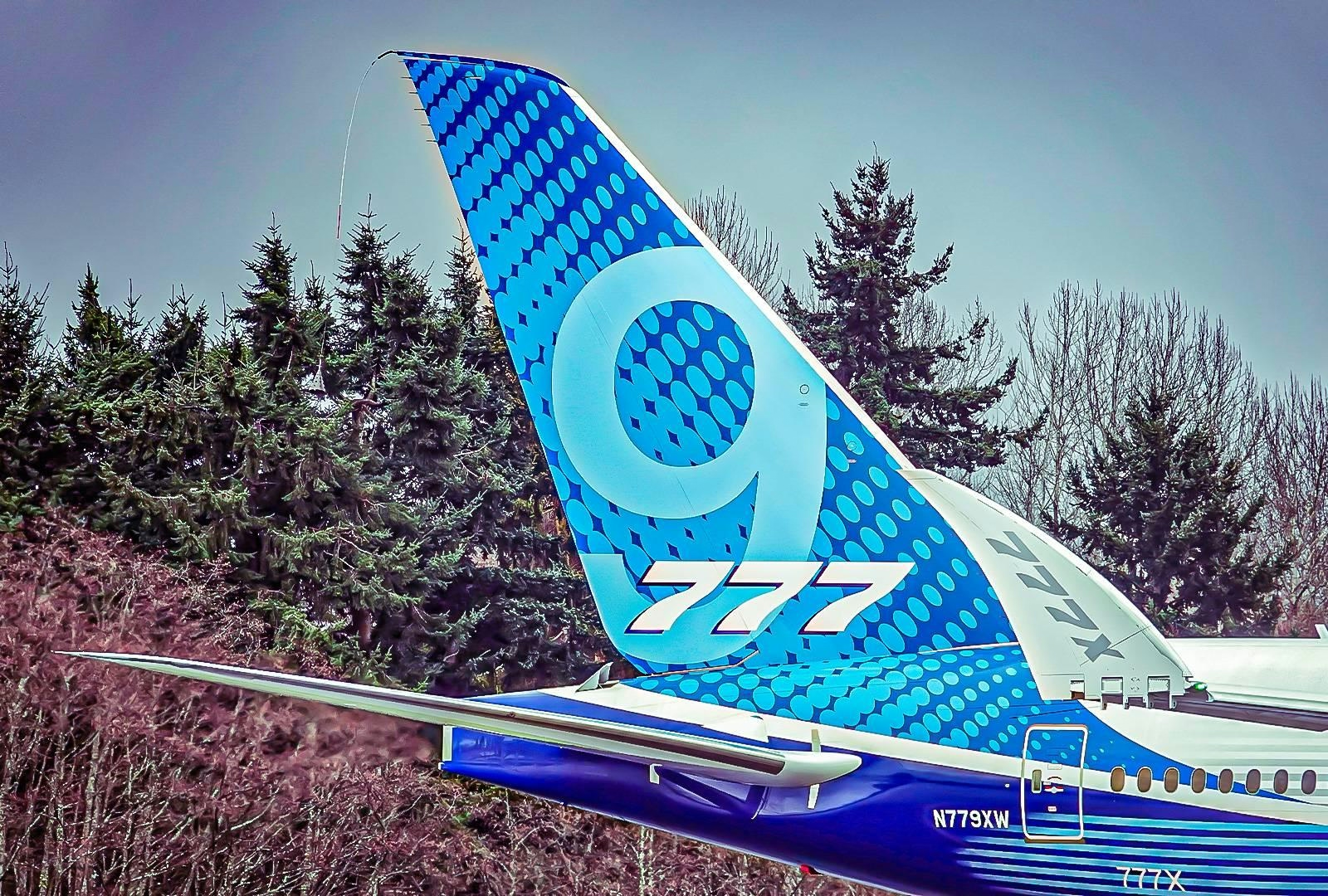
Boeing Advances 777-9 Production Ahead of 2027 Service Entry
Boeing has completed assembly of more than 20 units of its next-generation 777-9 aircraft, despite a seven-year delay that has postponed its commercial debut until 2027. This substantial pre-production effort highlights Boeing’s confidence in the aircraft’s market potential and its commitment to fulfilling airline demand promptly once certification is achieved.
Strategic Pre-Production to Address Market Demand
The decision to manufacture dozens of 777-9 jets prior to final regulatory approval reflects a deliberate and strategic approach by Boeing. By building aircraft in advance, the company aims to expedite deliveries and manage the significant backlog of orders accumulated over years of airline commitments. This strategy also positions Boeing to respond swiftly to evolving market needs and to reclaim market share lost to Airbus’s A350, which has dominated the widebody segment in recent years.
Maintaining a pre-built inventory is intended to reduce delivery delays that have historically frustrated carriers, particularly following previous program setbacks. It also serves as a tangible demonstration of Boeing’s manufacturing capabilities to customers concerned about execution risks. The accelerated production schedule is further driven by competitive pressures, as numerous airlines worldwide—including major U.S. carriers—have placed substantial orders for the 777-9.
Technological Innovation and Market Impact
The 777-9 represents a significant advancement in long-haul aviation technology. Building upon the established 777 platform, the aircraft incorporates new engines, advanced avionics, and a distinctive folding wingtip mechanism. This innovation enables the jet to operate at existing airports despite its expansive 135-foot wingspan, thereby avoiding costly infrastructure modifications.
Passengers will experience enhanced comfort through larger windows, improved cabin pressurization, and quieter interiors. Airlines are attracted to the 777-9’s fuel efficiency, which is expected to reduce operating costs by 10 to 12 percent compared to current widebody aircraft. The jet can accommodate up to 416 passengers in high-density configurations and offers extended range capabilities suitable for nonstop intercontinental flights. Additionally, cargo operators are investing in the 777-9 freighter variant, drawn by its payload capacity and sustainability features, including lower carbon emissions per ton-mile.
Market Dynamics and Challenges
Boeing’s pre-production initiative unfolds amid a dynamic and competitive market environment. The company reported delivering more commercial aircraft in the first quarter of 2026 than in any comparable period since 2019, signaling robust demand and positive market reception. Nevertheless, Boeing continues to face challenges, including geopolitical tensions with China that could impact delivery schedules and order volumes in the Asia-Pacific region.
Competition remains intense, with carriers such as Air Premia, SAS, and Air China launching new international routes that heighten rivalry in the long-haul sector—the very market Boeing targets with the 777-9.
Path to Commercial Service
The 777-9 is scheduled to enter commercial service in 2027, pending final certification from the Federal Aviation Administration and other international regulatory bodies. Initial deliveries will prioritize airlines with the largest pre-orders, particularly major U.S. and international carriers. Route planning is already underway, focusing on long-haul international corridors where the 777-9’s capabilities will have the greatest impact.
As Boeing continues rigorous quality assurance and certification testing, its proactive production strategy aims to facilitate a smooth and timely introduction of its flagship widebody aircraft, heralding a new chapter in global air travel.

Etihad Airways Suspends Airbus A380 Flights on Key Route

Aditya Birla Group Seeks Approval for Aircraft Leasing in GIFT City

Qatar Airways Highlights Innovation and Connectivity at Arabian Travel Market 2026

Hong Kong's Five-Year Plan Includes Andrew Fan's Aircraft Parts Processing Hub Proposal

ACIA Aero Leasing Delivers ATR72-600 to Air Nostrum

RTX Appoints Jill Albertelli as Head of Pratt & Whitney

TAT Technologies Joins Beyond Aero Hydrogen Aircraft Program

AURAK Study Highlights Barriers to Air Taxi Adoption in Emerging Economies

Xiamen Air Selects Altitude for 787 Maintenance at Heathrow

Etihad and Swissport Extend Global Partnership
