Imagen

AeroGenie — Tu copiloto inteligente.

Pregunta cualquier cosa. Analiza todo. Actúa al instante.

Tendencias

Categories

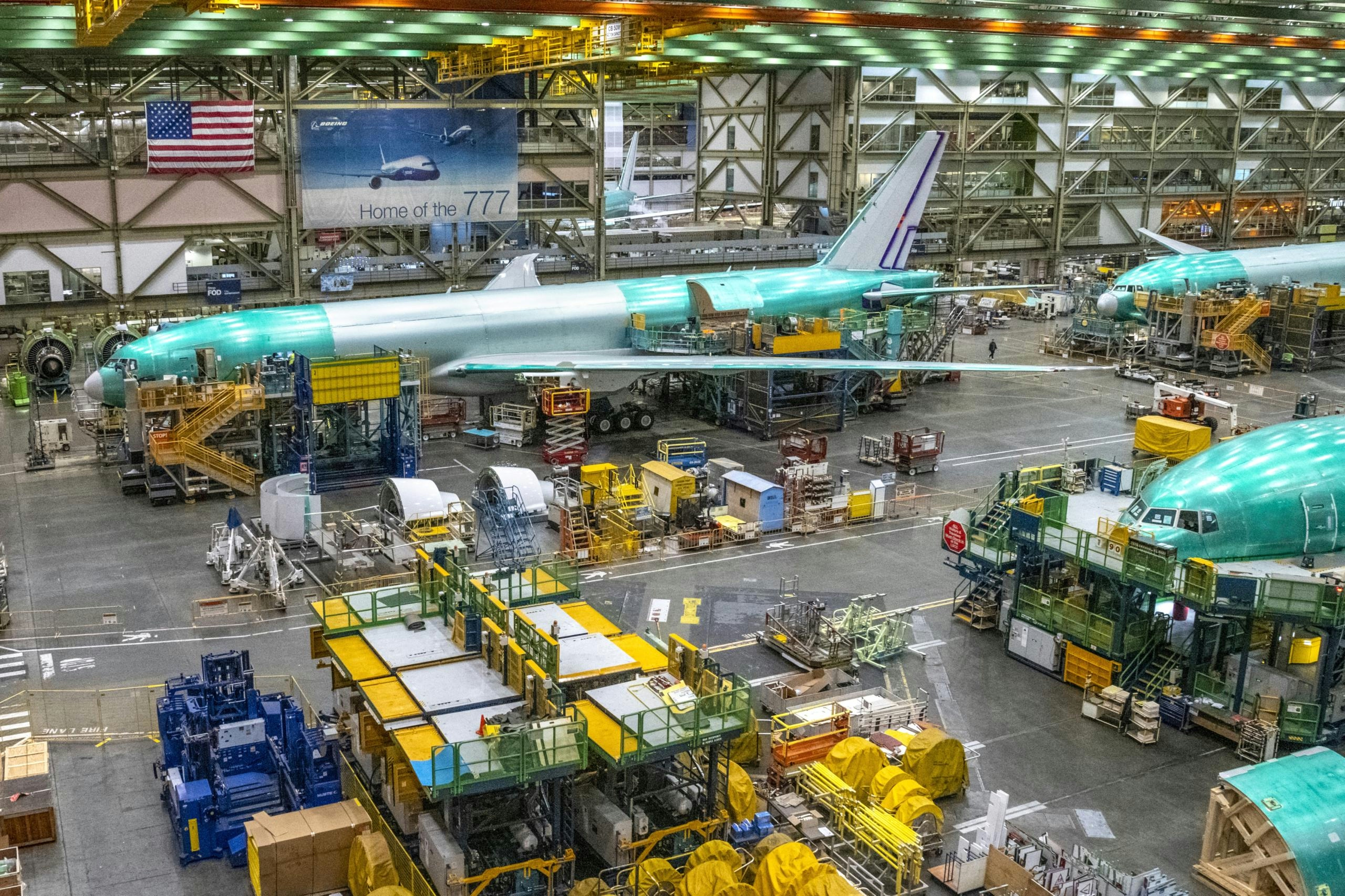
Boeing Plans 777-9 and New Max Deliveries for Next Year
April 22, 2026By ePlane AI
Boeing Plans 777-9 and New Max Deliveries for Next Year
0
0
Boeing 777-9
737 Max Variants
Aircraft Deliveries

Boeing Advances 777-9 and 737 Max Deliveries Amid Strong Market Performance

Boeing is progressing steadily toward the delivery of its 777-9 wide-body aircraft, with initial units expected to be handed over next year. Concurrently, the company is in the final stages of certification flight-testing for the 737 Max 10, aiming to secure certification for both the Max 10 and Max 7 variants within the year. Deliveries of these new 737 Max models are anticipated to commence in 2027, reflecting Boeing’s strategic timeline for expanding its narrow-body portfolio.

Certification Progress and Production Rates

During the first quarter, Boeing achieved significant certification milestones. The U.S. Federal Aviation Administration (FAA) granted approval for the Type Inspection Authorisation phase 4a on the 777-9, marking a critical step toward its entry into service. Additionally, the final Type Inspection Authorisation stage for the 737 Max 10 has begun, further advancing the program. The FAA also approved an increased maximum take-off weight for the 787-9 and 787-10 variants, enhancing the operational capabilities of these aircraft.

Production rates remain consistent, with the 737 program maintaining a monthly output of 42 aircraft and the 787 program producing eight aircraft per month. This steady production supports Boeing’s robust order book and delivery commitments.

Market Performance and Order Book

Boeing’s commercial aircraft deliveries reached 143 units in the first quarter, the highest quarterly total since 2019 and a notable increase from 130 deliveries in the same period last year. This growth contributed to a 13 percent rise in revenues, which totaled $9.2 billion. Deliveries spanned all four commercial programs, including 114 737s, 15 787s, eight 777s, and six 767s.

Despite a commercial aircraft operating loss margin of 6.1 percent, representing a deficit of $563 million for the quarter, Boeing’s market position remains strong. The company secured net orders for 140 commercial aircraft during the quarter, highlighted by significant deals such as 30 787-10s for Delta Air Lines, 25 737 Max 10s and 25 Max 8s for Aviation Capital Group, and 20 Max 8s for Air India.

Chief Executive Kelly Ortberg reaffirmed Boeing’s dedication to safety, quality, and customer commitments, emphasizing the company’s focus on delivering high-quality products while increasing production to meet market demand. Boeing’s commercial backlog now exceeds 6,100 jets, valued at $576 billion, underscoring its resilience amid regulatory scrutiny and competitive pressures from rivals like Airbus.

More news
Aircraft Connected to Humboldt Crashes Near Seattle

Aircraft Connected to Humboldt Crashes Near Seattle

Aircraft Connected to Humboldt County Makes Emergency Landing Near Seattle A small twin-engine aircraft linked to Humboldt County crash-landed near Seattle on Saturday, April 18, following a mid-flight engine failure. The 1964 Piper PA-30 Twin Comanche, registered as N741TJ, had been operating regularly out of Murray Field in Eureka since at least January, according to flight tracking data. Incident Details and Pilot Response The aircraft departed Eureka that morning on a journey northward, expected to last approximately two and a half hours. Midway through the flight, as the plane approached the Seattle area, the pilot reported engine trouble. Initially, the pilot aimed to land at Renton Airport, but as the situation deteriorated, the aircraft was diverted toward Auburn. Nearing Auburn, the plane lost its second engine, forcing an emergency landing at a construction site. The female pilot sustained non-life-threatening injuries and was hospitalized for evaluation, while a male passenger aboard the aircraft escaped unharmed. Aviation analyst Juan Browne, an airline pilot and former Air Force instructor who operates the blancolirio YouTube channel, reviewed the incident. Air traffic control communications reveal the pilot declared an emergency after losing one engine and later informed controllers of her intention to attempt a landing in an open area due to the loss of both engines—a rare and perilous situation for a twin-engine aircraft. Despite these challenges, the pilot successfully landed the plane without serious injury. Aircraft History and Ownership Flight records show the aircraft had been active in the Pacific Northwest region, frequently flying between Eureka and destinations including Redding, Crescent City, Portland, and Gold Beach. Many flights originated and concluded at Murray Field, indicating the plane was either based locally or regularly operated out of Humboldt County. Federal Aviation Administration records list the aircraft’s registration under Jackson Thomas R. Jr. of Spearfish, South Dakota. A source familiar with the plane informed Redheaded Blackbelt that it belongs to former Cal Poly Humboldt president Tom Jackson Jr., who is known to be a pilot and previously worked in Spearfish. Attempts to contact Jackson for confirmation have not been successful. Authorities have not disclosed the pilot’s identity. Investigation and Broader Context The cause of the dual engine failure remains under investigation. Browne noted that incidents of this nature often lead to scrutiny of fuel levels, fuel system management, and mechanical faults, though no official findings have been released. Witnesses reported hearing an engine sputter before falling silent shortly before the emergency landing, which occurred two to three miles short of Auburn Municipal Airport. This incident arrives amid heightened attention to aviation safety, coinciding with recent legislative efforts aimed at preventing midair collisions. It also unfolds against a backdrop of geopolitical tensions, particularly ongoing U.S.-China friction that threatens Boeing’s delivery schedules and order book in the Asia-Pacific region. Such developments may prompt increased scrutiny of aviation safety protocols and influence market dynamics. Boeing and its competitors have responded to these challenges by adjusting production rates and strategies, as evidenced by Boeing’s recent industrial reset and return to profitability. The investigation into the emergency landing near Seattle is ongoing, with officials working to determine the factors behind the rare dual engine failure.
GE Continues Work on GE9X Mid-Seal Issue, Says 777-9 Delivery Remains on Track

GE Continues Work on GE9X Mid-Seal Issue, Says 777-9 Delivery Remains on Track

GE Advances GE9X Mid-Seal Repair, Confirms 777-9 Delivery Schedule GE Aerospace is progressing with a targeted modification to resolve a durability issue affecting the mid seal of its GE9X engine, assuring that this challenge will not disrupt Boeing’s delivery timeline for the long-delayed 777-9 aircraft. The problem, which became public in February following the discovery of a crack in a GE9X engine used in Boeing’s 777-9 test program, has prompted a concentrated engineering effort from GE. During GE’s first-quarter earnings call, CEO Larry Culp stated that the company believes it has identified the root cause of the mid-seal crack and is in the process of finalizing a corrective modification. “The crack that we uncovered during a shop visit, which is part of a flight-test engine, is something we’ve seen before. We think we are at root cause, and we’re finalising the modification as we speak,” Culp explained. He further noted that GE is updating its tooling and increasing supplier readiness for the revised component. Despite this setback, GE delivered some GE9X engines in the first quarter, although fewer than initially planned. The company anticipates ramping up deliveries in the second half of the year and does not expect the issue to affect its full-year delivery targets. Culp emphasized GE’s transparency with Boeing and the Federal Aviation Administration (FAA), affirming that the company remains aligned with the certification plan communicated to customers. Boeing continues to express confidence in its schedule for the 777-9, targeting certification and the commencement of deliveries in 2027. The manufacturer is also advancing certification efforts for its new 737 Max variants, including the Max 10 and Max 7, with deliveries expected to begin next year. Technical Challenges and Broader Aerospace Efforts The GE9X engine, certified by the FAA in 2020 with a thrust rating of 134,300 pounds (597 kN), has encountered several technical challenges throughout its development. Prior to certification, GE paused testing to address a durability issue involving stator vanes in the high-pressure compressor, which caused excessive exhaust gas temperatures and premature component wear. In 2022, Boeing temporarily suspended 777-9 flight testing after GE identified another temperature-related concern during a borescope inspection. Beyond commercial aviation, GE Aerospace is accelerating development of its T901 engine for the U.S. Army amid uncertain defense budgets. The Army is also advancing its Black Hawk engine upgrade program, highlighting GE’s broader commitment to enhancing durability and performance across its engine portfolio, particularly for operations in demanding environments. GE’s ongoing efforts to modify the GE9X mid seal underscore its dedication to resolving technical issues without jeopardizing critical aircraft programs. Both GE and Boeing maintain that the 777-9 remains on track for its planned entry into service, supported by continued transparency and collaboration with regulatory authorities.
Man Repairs Plane Engine Mid-Flight Without Parachute

Man Repairs Plane Engine Mid-Flight Without Parachute

Man Repairs Plane Engine Mid-Flight Without Parachute A Harrowing Incident in Vienna In a dramatic episode in Vienna, a mechanic found himself precariously perched atop the tail of an aircraft as it unexpectedly took off. Unaware of the mechanic’s presence, the pilot accelerated forward, leaving the man clinging desperately to the plane’s framework. Despite his frantic attempts to signal the pilot, the aircraft continued its flight, eliciting horror from onlookers below who feared a fatal outcome. The ordeal only concluded when the airdrome manager intervened, signaling the pilot to land. The mechanic, though visibly shaken, emerged unharmed and promptly resumed his duties. The Evolution of In-Flight Repairs While such incidents are rare, they highlight a growing trend in aviation where mechanics accompany test flights or long-haul journeys to perform emergency repairs mid-air. This practice has introduced complex challenges, including increased regulatory scrutiny and heightened public safety concerns. Recent cases have led to emergency landings and thorough investigations by aviation authorities, prompting airlines to reevaluate safety protocols and insurance policies. The role of airborne mechanics has a storied history. In 1929, during a record-setting non-stop flight from Los Angeles to New York, Captain Frank Hawks was accompanied by mechanic Oscar Grubb. Packed with 375 gallons of fuel, the cramped cabin forced Grubb to endure eighteen hours of continuous labor, managing fuel pumps and battling noxious fumes without respite. His resourcefulness was evident as he repurposed empty cans to create additional space during brief moments of rest. Innovations and Challenges in Mid-Air Maintenance The challenges of in-flight repairs were further exemplified during American refueling endurance flights. The aircraft known as the “Question Mark” featured a narrow catwalk beside the engine, where Staff Sergeant Roy W. Hooe attempted to clean and replace sparkplugs mid-flight. However, the instability of the aircraft compelled him to abandon the task. Learning from these difficulties, subsequent flights incorporated safer procedures. On the “Fort Worth,” mechanic James Kelly, a former cowboy, performed engine maintenance 2,000 feet above ground while balanced on a narrow plank, equipped with a parachute for safety. He successfully changed sparkplugs and installed a new tachometer shaft under these precarious conditions. In response to such daring feats, competitors in the aviation industry have strengthened safety measures and launched public relations efforts to reassure passengers. For instance, on the St. Louis “Robin,” mechanic “Red” Dale Jackson introduced a safety feature that allowed him to climb onto a six-inch-wide catwalk to inspect the engine, ensuring he could safely return to the cabin. Balancing Innovation and Safety As aviation technology advances, the risks and responsibilities borne by airborne mechanics remain under intense scrutiny. Regulatory bodies are increasing oversight, and airlines face mounting pressure to uphold rigorous safety standards. These developments underscore the ongoing tension between the pioneering spirit of early aviation and the imperative to safeguard public safety in contemporary flight operations.
Air Taxi Exterior Component Systems Market Projected to Reach $5.8 Billion by 2036

Air Taxi Exterior Component Systems Market Projected to Reach $5.8 Billion by 2036

Air Taxi Exterior Component Systems Market Projected to Reach $5.8 Billion by 2036 The global market for air taxi exterior component systems is set for significant growth, with recent analysis from Future Market Insights forecasting an expansion to USD 5.8 billion by 2036. This represents a substantial increase from an estimated USD 650 million in 2026, driven by a robust compound annual growth rate (CAGR) of 24.5%. The industry is transitioning from prototype development to full-scale commercial production of electric vertical takeoff and landing (eVTOL) aircraft, marking a pivotal phase in urban air mobility. Market Dynamics and Key Drivers The rapid growth of the air taxi exterior component systems market is underpinned by several critical factors. The commercialization of eVTOL aircraft is accelerating demand for certified exterior components, particularly as manufacturers scale production to support large urban air mobility fleets. The adoption of lightweight composite materials, especially carbon fiber composites, is a major trend, accounting for approximately 65% of the market. These materials are favored for their superior strength-to-weight ratio, durability, and contribution to extending aircraft range, addressing the limitations posed by current battery technologies. Regulatory requirements also play a significant role in shaping the market. Exterior systems must comply with stringent certification standards, including bird strike resistance, environmental durability, and lightning protection, making safety and compliance paramount. Additionally, the need for aerodynamic and acoustic optimization is driving innovation in exterior design, as quieter and more efficient aircraft are essential for urban environments. Market Structure and Industry Trends The air taxi exterior component systems sector encompasses the engineering, manufacturing, and certification of advanced aerodynamic structures for eVTOL aircraft. Within this market, fuselage and canopies represent the leading component segment, accounting for 42% of the market share due to their critical role in structural integrity, passenger safety, and regulatory compliance. The rise of urban air mobility is stimulating investment in air taxi infrastructure, further boosting demand for exterior components. Most of this demand is currently driven by original equipment manufacturers (OEMs) integrating these systems during aircraft production, with a focus on line-fit installations. However, the market faces challenges including complex regulatory certification processes, high development costs associated with advanced materials and rigorous testing, and intense competition from established aerospace manufacturers leveraging their experience and resources. In response, industry participants are expected to pursue strategic partnerships, invest in technological innovation, and expand their market presence to capitalize on the projected growth. Investor interest is anticipated to increase as the sector’s growth trajectory becomes more apparent. Outlook As the air taxi market matures, exterior component systems will remain central to innovation and regulatory scrutiny. The sector’s evolution will be driven by ongoing advancements in composite materials, certification processes, and the development of urban air mobility infrastructure, positioning it as a critical enabler of next-generation aerospace transportation.
Rosen Aviation Introduces Avia AI Personal Assistant at AIX 2026

Rosen Aviation Introduces Avia AI Personal Assistant at AIX 2026

Rosen Aviation Introduces Avia AI Personal Assistant at AIX 2026 At the Aircraft Interiors Expo (AIX) 2026 in Hamburg, Germany, Rosen Aviation, in collaboration with 3D visualization experts KiPcreating, unveiled Avia, an AI-powered personal assistant avatar. This concept demonstrator features a fully rendered 3D assistant designed to integrate seamlessly with Rosen’s Celestia cabin management system, marking a significant advancement in in-flight technology. Advancing Cabin Management Through AI Avia is engineered to transcend traditional voice control systems by employing sophisticated artificial intelligence capabilities. The assistant is capable of interpreting passenger behavior patterns, analyzing cabin data, and understanding contextual cues and spoken tones. It supports multilingual and multi-dialect conversations, enabling a more natural and intuitive interaction. Its potential applications include managing cabin environment settings such as lighting and climate control, coordinating ground services like hotel reservations and car rentals, and integrating with other AI platforms for tasks ranging from stock trading to content creation. Additionally, Avia is designed to assist with professional activities, including facilitating joint meetings during flights. Lee Clark, senior vice president of strategy at Rosen Aviation, described Avia as the culmination of years of innovation. He emphasized that once passengers experience even a fraction of Avia’s capabilities, it will become difficult to envision flying without such an assistant. Industry Context and Challenges The launch of Avia aligns with the aviation sector’s growing emphasis on connectivity, sustainability, and personalized passenger experiences—central themes at AIX 2026. Industry feedback has underscored Avia’s potential to improve both passenger satisfaction and operational efficiency. Nonetheless, Rosen Aviation faces notable challenges, including the integration of Avia with existing cabin systems, adherence to rigorous aviation safety and regulatory standards, and the safeguarding of passenger data privacy. The competitive landscape is also evolving rapidly, with companies like Thales, through its FlytEDGE Aura platform, and Safran Seats, with its immersive cabin concepts, developing comparable AI-driven solutions. These advancements reflect the broader industry trend toward intelligent, responsive, and highly personalized in-flight environments. As airlines and manufacturers strive to differentiate their offerings, the introduction of AI personal assistants such as Avia represents a pivotal step toward redefining the passenger experience in the years ahead.
Voxelis Introduces Real-Time Wildfire Mapping for Helicopters

Voxelis Introduces Real-Time Wildfire Mapping for Helicopters

Voxelis Launches Real-Time Wildfire Mapping System for Helicopters In a sector where technological advancements often occur incrementally, Canadian company Voxelis is pioneering a significant innovation with its AI-enabled sensor and computing system tailored specifically for helicopters. The company’s flagship product, VoxVision, is an onboard vision and data collection platform that integrates edge computing and deep learning. This allows aircraft to gather and analyze critical information in real time, enabling crews to maintain focus on their primary operational tasks. Enhancing Wildfire Suppression Through Advanced Technology Voxelis has concentrated its initial efforts on improving wildfire suppression and aerial firefighting intelligence. Colin O’Neill, CEO and co-founder of Voxelis, emphasized the company’s market-driven approach, noting a clear gap for sensors designed for mass deployment, ease of use, operational flexibility, and affordability. This strategy has already garnered attention, particularly through a partnership with Contour Helicopters, the first operator to deploy VoxVision in active wildfire operations. O’Neill’s extensive background in aviation informs the company’s direction. As a second-generation commercial helicopter pilot, he has been deeply involved in the industry throughout his life. His entrepreneurial path began with Taeron Systems, a Canadian aviation supplier focused on practical utility improvements and manufacturing, including longlines, cargo nets, and remote hooks. O’Neill explained that Taeron Systems was founded with the goal of introducing innovative products and technologies to the helicopter sector. The success and manufacturing expertise developed at Taeron laid the foundation for Voxelis, which emerged as a software-first company dedicated to advancing helicopter mission technology. Design and Market Positioning of VoxVision At first glance, VoxVision resembles other compact sensor turrets commonly used in the helicopter industry. However, its design diverges significantly from traditional high-end electro-optical/infrared (EO/IR) systems typically employed in law enforcement and military operations. The seven-inch (18-centimeter), 15-pound (6.8-kilogram) gimbal is not intended to rival premium surveillance payloads. O’Neill clarified that the system is offered at a much lower cost and is not designed for high-resolution tasks such as reading license plates from great distances. Instead, its primary market focus is on wildfire suppression. The launch of this real-time wildfire mapping technology coincides with a growing reliance on advanced tools in aerial firefighting. Recent trends indicate an increasing adoption of helicopters equipped with artificial intelligence to combat wildfires, highlighting a competitive and rapidly evolving market. Voxelis faces challenges including competition from established aerial firefighting technologies, regulatory considerations, and the necessity for robust data integration and analysis capabilities. The market response is expected to include strong interest from firefighting agencies and utility companies, while competitors may seek to enhance their own offerings or invest in similar AI-driven solutions. Despite these obstacles, Voxelis’s emphasis on affordability, operational flexibility, and real-time intelligence positions it as a significant player in the aerial firefighting arena. As wildfire seasons extend and intensify, innovations such as VoxVision have the potential to provide critical support to crews and improve outcomes on the front lines.
Ryanair Considers Morocco for Engine Maintenance Facility

Ryanair Considers Morocco for Engine Maintenance Facility

Ryanair Evaluates Morocco for New Engine Maintenance Facility Rabat – Ryanair is actively considering Morocco as a potential site for a new aircraft engine maintenance, repair, and overhaul (MRO) facility, reflecting its strategic aim to enhance control over its engine supply chain. CEO Michael O’Leary confirmed Morocco’s inclusion among six shortlisted locations during remarks at Aviation Week in Vienna. The other contenders are Spain, Italy, the Baltic states, and Northern Ireland. O’Leary indicated that a decision on the first MRO site will be made within a few months, with Ryanair planning to invest approximately $800 million across two such facilities. This move is part of a broader effort to consolidate and expand the airline’s maintenance capabilities. Morocco’s Growing Role in Ryanair’s Network Morocco’s candidacy coincides with its emergence as one of Ryanair’s fastest-growing markets. The low-cost carrier has steadily increased its presence in the country, now operating flights from multiple European cities. Last year, Ryanair announced a $200 million investment to establish its fifth Moroccan base in Rabat, scheduled to open in April 2026. The airline’s total investment in Morocco has surpassed $1.6 billion, supporting more than 8,500 direct and indirect jobs across 13 cities, including Rabat, Marrakech, Fez, Agadir, Tetouan, Essaouira, Dakhla, and Nador. This expansion aligns with Morocco’s preparations to host major international sporting events, notably the 2030 FIFA World Cup. Ryanair highlighted that the Rabat base will enhance low-cost connectivity throughout the Kingdom ahead of the tournament and is expected to generate over 800 local jobs, including 60 well-paid positions for pilots and cabin crew. Challenges and Competitive Dynamics Despite the promising prospects, Ryanair’s plan to establish a major engine MRO facility in Morocco faces several challenges. Regulatory approvals, infrastructure development, and competition from established European and international MRO hubs present potential obstacles. Industry analysts caution that such a strategic shift could attract heightened scrutiny from investors and stakeholders, particularly concerning operational costs and service reliability. Competitors are closely monitoring Ryanair’s moves. EasyJet, for instance, currently has no plans for in-house engine overhaul but is reportedly considering bringing up to half of its heavy maintenance operations in-house, a development that could alter the competitive landscape. Meanwhile, Ryanair’s ongoing expansion at Prestwick Airport and its engine partnership with CFM International underscore the airline’s commitment to securing greater control over its engine maintenance processes. The decision on the location of Ryanair’s new MRO facilities is anticipated within the coming months and could have significant implications for Morocco’s aviation sector as well as the broader regional MRO market.
Delta TechOps Expands Engine Support to India for IndiGo’s CFM56-5B Fleet

Delta TechOps Expands Engine Support to India for IndiGo’s CFM56-5B Fleet

Delta TechOps Expands Engine Support to India for IndiGo’s CFM56-5B Fleet Delta TechOps has announced an eight-year exclusive contract with IndiGo, India’s largest airline, to provide maintenance support for the carrier’s CFM56-5B engines that power its A320ceo fleet. This agreement marks Delta TechOps’ first significant partnership with IndiGo and establishes a notable presence for the U.S.-based Maintenance, Repair, and Overhaul (MRO) provider in India, the world’s third-largest aviation market. Strategic Partnership and Market Significance Under the terms of the contract, Delta TechOps will maintain 20 CFM56-5B engines, joining a growing roster of international airlines that rely on its technical expertise, operational scale, and reliability to support high-utilization fleets. Marc Meredith, Senior Vice President and Chief Commercial Officer for Delta TechOps, emphasized the importance of the Indian market, describing it as one of the fastest-growing aviation sectors globally. He highlighted that the partnership reflects Delta TechOps’ ability to deliver not only technical proficiency but also the scale and consistent execution required by demanding airline operations. This collaboration is a strategic expansion of Delta TechOps’ global MRO footprint. IndiGo operates one of the largest A320 fleets worldwide and continues to invest heavily in narrowbody aircraft, with additional A320neo and A321neo models on order extending into the next decade. Despite rapid growth, the Indian aviation sector faces challenges, including a limited number of widebody aircraft, a factor noted by incoming IndiGo chief Willie Walsh. This constraint may influence the future scale and nature of MRO demand within the region. Expertise and Competitive Landscape Delta TechOps brings over four decades of experience in CFM56 engine maintenance, supporting both its own fleet and hundreds of operators globally. This extensive legacy positions the company to meet evolving airline needs as fleets transition to next-generation engines. Delta TechOps is actively expanding its capabilities for the CFM LEAP-1A engine, which powers IndiGo’s A320neo and A321neo aircraft. The company recently became the first North American airline MRO authorized to support both the LEAP-1A and LEAP-1B engines. Its recent contract with Korean Air for LEAP-1B support and its status as a select CFM Premier MRO provider further underscore its technical expertise and reliability. However, Delta TechOps’ entry into the Indian market occurs amid intensified competition in the MRO sector, driven by strong aftermarket demand for CFM56 engines. Major industry players, including CFM International, are actively enhancing their support capabilities, increasing competitive pressures. Additionally, the sector continues to grapple with supply chain challenges, particularly concerns over the availability and authenticity of spare parts. Recent warnings from the European Union Aviation Safety Agency (EASA) regarding engine parts fraud highlight risks that could affect the quality and timeliness of maintenance services. The partnership between Delta TechOps and IndiGo is founded on shared commitments to reliability, operational excellence, and delivering a consistent customer experience. This collaboration aims to ensure that IndiGo’s fleet receives the necessary engine support to sustain its ambitious growth trajectory. About Delta TechOps Delta TechOps is the largest MRO provider in North America and one of the most experienced worldwide, supporting more than 150 operators. With over 25 years of expertise in engine, component, and airframe maintenance, the company employs thousands of aviation professionals dedicated to delivering industry-leading performance and innovation. About IndiGo IndiGo is India’s largest airline by market share and operates one of the world’s largest A320 fleets. The airline maintains a strong focus on expanding its narrowbody operations to meet growing demand.
Head of Aircraft Operations at Joby Aviation Resigns

Head of Aircraft Operations at Joby Aviation Resigns

Head of Aircraft Operations at Joby Aviation Resigns Amid Critical Phase Joby Aviation Inc., a prominent developer of electric air taxis, has announced the resignation of Didier Papadopoulos, its president of aircraft operations, effective July 3. The Santa Cruz, California-based company disclosed the departure in a securities filing dated April 22, attributing the decision to personal reasons and emphasizing that it was not the result of any disagreement or dispute with the company. Leadership Change at a Crucial Juncture Papadopoulos’ exit comes at a pivotal moment for Joby, which is gearing up for the anticipated launch of its commercial passenger service, potentially within the current year. This leadership transition raises concerns about continuity and operational expertise as the company advances through the complex certification process of its electric vertical takeoff and landing (eVTOL) aircraft with the Federal Aviation Administration and other global regulators. Backed by Toyota Motor Corp., its largest shareholder since last year, Joby is among several startups competing to introduce battery-powered air taxis for short commuter flights. The company had initially targeted a commercial launch in Dubai by early 2024, but this timeline has become uncertain following multiple delays. Challenges Amid a Competitive and Regulated Market The executive departure may amplify investor apprehensions regarding Joby’s capacity to meet development milestones and sustain momentum in a rapidly evolving sector. The eVTOL market is intensely competitive, with rivals such as Archer Aviation closely scrutinizing Joby’s progress. Archer has previously accused Joby of import violations and misrepresenting business relationships, intensifying industry scrutiny. Joby is also navigating a U.S. government investigation into alleged import rule violations and is embroiled in ongoing legal disputes with Archer over trade secrets. These issues add layers of complexity to Joby’s efforts to commercialize its technology. Expanding Horizons and Strategic Partnerships Beyond its passenger service ambitions, Joby is pursuing diversification by partnering with L3Harris Technologies to demonstrate uncrewed hybrid eVTOL aircraft for the U.S. Army. This initiative signals the company’s intent to expand into defense and other applications beyond urban air mobility. Toyota is reportedly considering a strategic manufacturing alliance with Joby as the company prepares to scale production. Such a partnership could prove vital in addressing operational challenges and leadership gaps following Papadopoulos’ departure. As Joby Aviation advances, it faces intensified scrutiny from investors, regulators, and competitors, with the recent leadership change adding further uncertainty to its ambitious vision for the future of electric air travel.
Boeing Surpasses Airbus in Aircraft Deliveries Amid Revenue Growth and Aviation Recovery

Boeing Surpasses Airbus in Aircraft Deliveries Amid Revenue Growth and Aviation Recovery

Boeing Surpasses Airbus in Aircraft Deliveries Amid Revenue Growth and Aviation Recovery Strong Quarterly Performance and Financial Improvement Boeing has overtaken Airbus in aircraft deliveries, marking a significant milestone in the ongoing recovery of the global aviation and tourism sectors. In the first quarter of 2026, the American aerospace manufacturer delivered 143 commercial aircraft, its strongest quarterly output since 2019. This achievement came despite a temporary suspension of 737 Max deliveries caused by a wiring issue. The surge in deliveries reflects Boeing’s increased production rates and the inauguration of a new assembly facility, positioning the company as a leader in the industry’s post-pandemic resurgence. The company reported quarterly revenue of $22.2 billion, representing a 14% increase compared to the same period last year. This growth is driven by airlines worldwide expanding their fleets to accommodate rising passenger demand. Boeing also narrowed its net loss to $7 million, a marked improvement that signals ongoing financial stabilization. This positive financial trajectory is bolstering confidence among airlines, travel operators, and tourism authorities that rely on a steady supply of aircraft to sustain growth. Impact on Global Aviation and Competitive Dynamics Boeing’s delivery surge is closely linked to the broader revival of international travel. As leisure and business tourism rebound across key markets, airlines are rapidly increasing capacity, launching new routes, and enhancing connectivity between emerging tourism hubs and established global cities. Boeing’s ability to meet delivery demands enables carriers to capitalize on these trends, facilitating new travel opportunities and supporting competitive pricing for passengers. In contrast, Airbus has encountered significant supply chain disruptions, particularly delays in engine deliveries. These challenges have temporarily shifted the competitive balance in Boeing’s favor, allowing the U.S. manufacturer to widen its lead in aircraft deliveries. For airlines facing delayed Airbus deliveries, the consequences are immediate, with postponed route launches and constrained capacity growth potentially impacting tourism flows in affected regions. Meanwhile, Boeing’s manufacturing resilience has allowed its customers to respond effectively to peak travel demand, especially on long-haul and high-density routes. Challenges and Broader Business Performance Despite its strong performance, Boeing faces ongoing risks, notably from geopolitical tensions between the United States and China. These tensions threaten to disrupt delivery schedules and affect Boeing’s long-term order book in the Asia-Pacific region. The company’s sales to Chinese airlines remain vulnerable to shifts in U.S. foreign policy and diplomatic relations, which are often intertwined with broader trade negotiations. Beyond commercial aviation, Boeing’s Defense, Space and Security division has also demonstrated robust growth, with rising revenue and improved profitability. Although this segment operates outside the traditional tourism sector, its success contributes to the company’s overall financial stability and supports continued investment in commercial aircraft programs. Technological advancements emerging from defense and space initiatives frequently benefit the wider aviation industry, reinforcing Boeing’s capacity to sustain long-term production. As the aviation industry continues to recover, Boeing’s resurgence in deliveries and revenue underscores its critical role in shaping global tourism and travel connectivity, even as it navigates complex geopolitical and supply chain challenges.
line










