
Orquesta conocimientos de IA para convertirlos en acción

Tendencias
Categories
Boeing Predicts Steady Aircraft Demand Over Next Two Decades
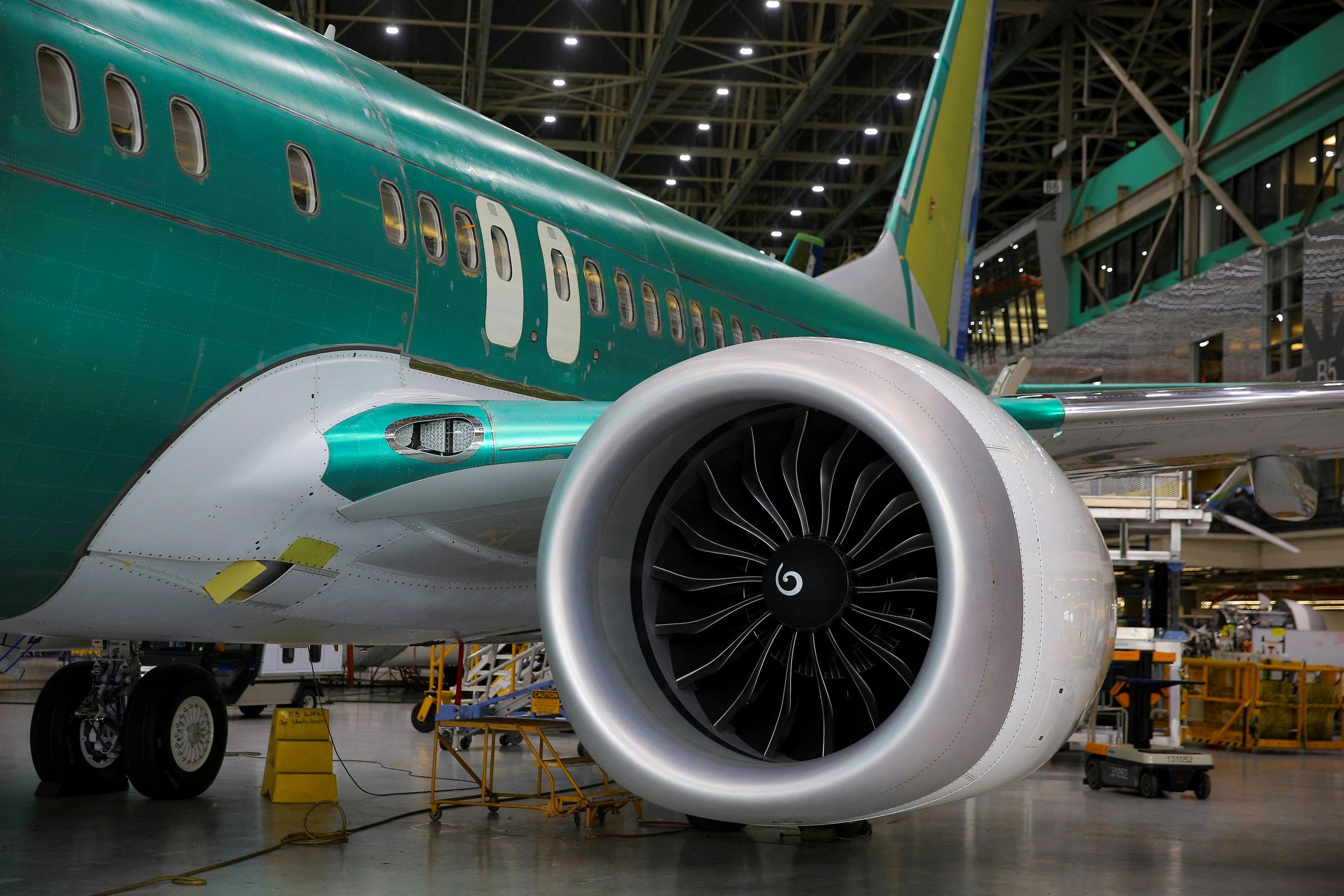
Boeing Predicts Steady Aircraft Demand Over Next Two Decades
Boeing has reaffirmed its optimistic long-term outlook for the commercial aviation market, projecting sustained demand for new aircraft over the next 20 years. In its latest Commercial Market Outlook 2026, released ahead of the Farnborough Air Show, the US manufacturer forecasts the delivery of 43,625 new passenger and cargo aircraft globally between 2026 and 2045. This projection encompasses 33,545 single-aisle jets, 7,715 wide-body aircraft, 930 dedicated freighters, and 1,435 regional jets.
Market Drivers and Industry Resilience
Despite persistent economic and geopolitical uncertainties, Boeing attributes the steady demand to structural factors such as the expansion of the global middle class, increasing international tourism, and the ongoing growth of trade and e-commerce. The company anticipates global passenger traffic to grow at an average annual rate of 4%, while cargo traffic is expected to rise by 3.7% per year.
Boeing’s forecast contrasts with that of its primary competitor, Airbus, which recently reduced its 20-year outlook by 1% to 42,060 new aircraft. Airbus cited the war with Iran and continuing trade tensions as reasons for its more cautious stance. Boeing, however, assesses the impact of the conflict in Iran as minimal for the aviation sector.
The commercial aviation industry continues to demonstrate resilience amid a challenging macroeconomic environment characterized by slowing global growth and rising fuel prices. Although airline profitability has faced pressure, both passenger and cargo traffic have exhibited a stronger-than-anticipated recovery. Boeing projects passenger traffic growth of approximately 2.3% for the current year, down from 5.3% in the previous year, but expects a rebound to 6–7% in 2027 and 5–6% in 2028. Darren Hulst, Boeing’s vice-president of marketing, emphasized during a recent conference call that the current slowdown is not comparable to the pandemic-induced shock, expressing confidence that global passenger traffic will return to growth by the end of 2028.
Freight traffic is also on an upward trajectory, with international cargo capacity already exceeding last year’s levels. Some international routes have adjusted operational flows to navigate geopolitical tensions, underscoring the sector’s adaptability.
Industry Adaptation and Future Outlook
As the market evolves, manufacturers are responding with varied strategies. Many are prioritizing the development of more fuel-efficient aircraft models to comply with regulatory requirements and meet airlines’ demand for lower operating costs. Airlines themselves are expected to recalibrate their strategies and invest in new technologies to maintain competitiveness in a rapidly shifting landscape.
Boeing’s steady forecast reflects confidence in the aviation sector’s long-term fundamentals, even as the industry contends with near-term challenges and adapts to a dynamic global environment.

Etihad and Swissport Extend Global Partnership

Sepehran Airlines B737 Returns to Mashhad After Tyre and Engine Issues

Etihad Deploys Widebody Fleet to Meet Strong Demand

Korean Air Finalizes $36.2 Billion Deal with Boeing

Australia’s RFDS Queensland Section Orders Six King Air 260Cs

Korean Air Finalizes Order for 103 Boeing Jets and Engines

Embraer E195-E2 Features Distinctive Engine Placement Among Regional Jets

What Passengers Can Expect on Boeing’s New 777X Jet

How Ethiopian Airlines Became Africa’s Leading Carrier Amid Gulf Competition

Joby Aviation Extends Autonomous Flight Capabilities with Cross-Country Tour
