
Orquesta conocimientos de IA para convertirlos en acción

Tendencias
Categories
British Airways Reports 86% On-Time Performance Using Artificial Intelligence
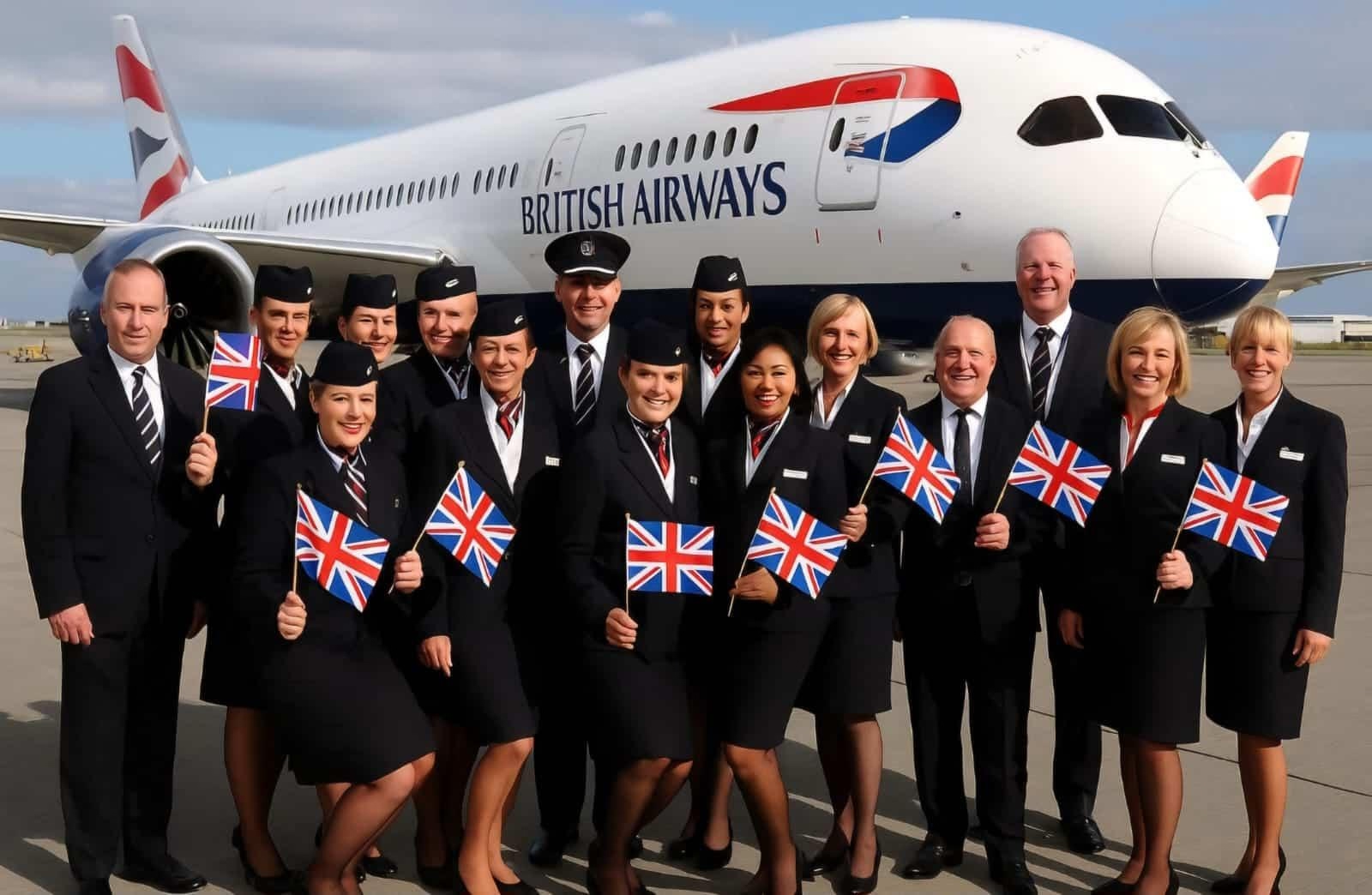
British Airways Reports 86% On-Time Performance Using Artificial Intelligence
Record Punctuality Driven by Technological Investment
British Airways has announced a record 86% on-time performance rate for the first quarter of 2025, attributing this milestone to a £100 million investment in operational resilience and artificial intelligence (AI) technologies. Central to this achievement is the airline’s deployment of advanced AI systems at its primary hub, Heathrow Airport, which have significantly enhanced the efficiency of flight operations.
The airline has implemented intelligent routing algorithms capable of analyzing real-time weather conditions and airspace congestion, allowing for dynamic adjustments to flight paths. Complementing these are optimized aircraft allocation systems and digital tools designed to streamline decision-making processes for crew and ground staff. According to CEO Sean Doyle, these innovations have substantially reduced delays and mitigated the impact of operational disruptions, demonstrating the transformative potential of data-driven solutions in the aviation sector.
Challenges Amid Technological Progress
Despite these advancements, British Airways faces a complex environment. Passenger skepticism persists regarding the reliability and transparency of AI-driven improvements. Recent incidents, including the arrest of a flight attendant for inappropriate behavior onboard, have attracted public scrutiny and may overshadow the airline’s operational gains. These events raise broader questions about management practices and passenger trust, underscoring the challenges that accompany technological progress.
The competitive landscape is also evolving rapidly. British Airways’ improved punctuality is expected to intensify pressure on rival carriers, prompting them to accelerate their own AI investments or highlight existing operational strengths. This development signals an industry-wide race to harness technology for enhanced efficiency, cost reduction, and improved passenger experience.
Global Trends in AI-Driven Aviation
The adoption of AI in aviation is not confined to the United Kingdom. At LABACE 2024 in São Paulo, Brazilian regional carrier Azul Conecta unveiled a comparable AI-based system aimed at optimizing aircraft allocation through predictive maintenance and integrated crew scheduling. Such initiatives exemplify a global shift toward AI-powered operational planning, yielding measurable improvements in punctuality and efficiency.
While British Airways’ investment significantly exceeds those in emerging markets like Brazil, the growing momentum behind AI adoption worldwide highlights the strategic importance of continued technological innovation. Airlines are increasingly recognizing that sustained investment in AI is essential to maintaining a competitive edge, even as they navigate challenges related to public perception and industry rivalry.
As British Airways advances its AI strategy, the airline—and the broader aviation sector—must balance the pursuit of operational excellence with the imperative to address concerns surrounding safety, reliability, and reputation in an environment of heightened scrutiny.

Etihad Airways Suspends Airbus A380 Flights on Key Route

Aditya Birla Group Seeks Approval for Aircraft Leasing in GIFT City

Qatar Airways Highlights Innovation and Connectivity at Arabian Travel Market 2026

Hong Kong's Five-Year Plan Includes Andrew Fan's Aircraft Parts Processing Hub Proposal

ACIA Aero Leasing Delivers ATR72-600 to Air Nostrum

RTX Appoints Jill Albertelli as Head of Pratt & Whitney

TAT Technologies Joins Beyond Aero Hydrogen Aircraft Program

AURAK Study Highlights Barriers to Air Taxi Adoption in Emerging Economies

Xiamen Air Selects Altitude for 787 Maintenance at Heathrow

Etihad and Swissport Extend Global Partnership
