
Orquesta conocimientos de IA para convertirlos en acción

Tendencias
Categories
Cessna 185 Crashes Due to Fuel Contamination
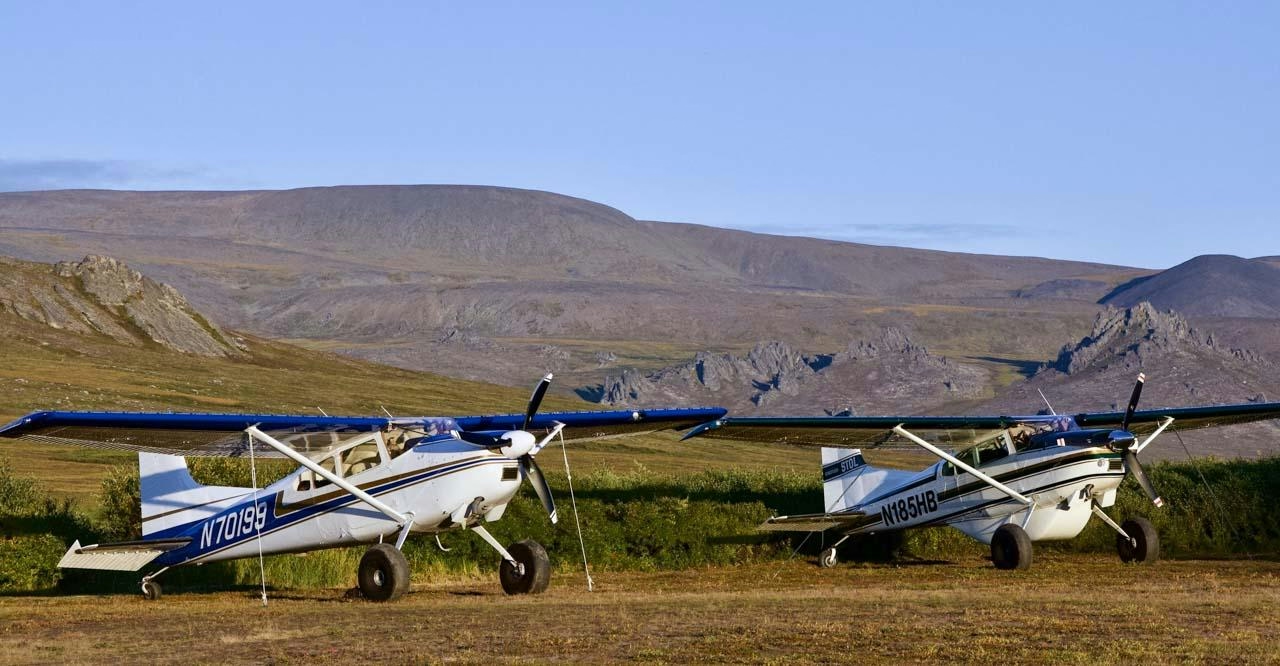
Cessna 185 Crash Attributed to Fuel Contamination
A Cessna 185 experienced a critical engine failure shortly after takeoff from a lake near Eveleth, Minnesota, leading to a forced landing that caused significant damage to the aircraft. The engine lost power at approximately 75 feet above ground level, prompting the pilot to execute an emergency touchdown on a grassy area at the seaplane base. The aircraft sustained a hard landing and skidded upright for roughly 150 feet before coming to rest. Fortunately, no serious injuries were reported.
Investigation Findings and Fuel System Analysis
Post-accident examination revealed that both wing fuel tanks remained intact. Recovery teams drained approximately 30 gallons of 100LL aviation fuel from the tanks, which utilized rubber bladders. Notably, the lower surfaces of these bladders exhibited wrinkling. While the fuel vents were found to be unobstructed, the seals on both the left and right wing fuel caps showed signs of deterioration and discoloration, with corroded sealing surfaces.
Crucially, laboratory testing of the recovered fuel confirmed the presence of water contamination. Approximately one gallon of water was discovered at the bottom of the collection tank. The pilot reported that the aircraft had been parked outdoors during a heavy rainstorm several weeks prior and had flown only once since. Although the pilot conducted a preflight fuel drain and inspection for water contamination before the accident flight, no water was detected. On the day of the crash, gusty and turbulent weather conditions prevailed, and the pilot observed a significant yaw movement immediately before the engine failure.
The investigation referenced Airworthiness Directive (AD) 84-10-01, which addresses the prevention of water contamination in bladder-type fuel cells. This directive requires either the installation of placards instructing pilots to check for contamination or the use of reduced diameter (raised filler neck) fuel caps. Although compliance with the AD was not clearly documented in the aircraft’s maintenance records, the Cessna 185 was equipped with the mandated reduced diameter fuel caps, which satisfy the directive’s requirements and eliminate the need for recurrent inspections.
Regulatory and Industry Implications
The National Transportation Safety Board (NTSB) concluded that the probable cause of the accident was water contamination in the fuel system, resulting in total engine power loss. The pilot’s inadequate preflight inspection was identified as a contributing factor.
This incident has reignited regulatory scrutiny concerning fuel contamination risks, particularly in aircraft equipped with bladder-type fuel tanks. Aviation authorities are expected to review adherence to existing directives and may consider implementing additional oversight measures. In response to the crash, the market experienced a temporary decline in Cessna sales, while competitors highlighted their own safety protocols and reliability in marketing efforts to reassure customers and distinguish their products.
As investigations proceed, the crash serves as a stark reminder of the critical importance of thorough preflight inspections and strict compliance with maintenance directives to uphold flight safety.

Etihad Airways Suspends Airbus A380 Flights on Key Route

Aditya Birla Group Seeks Approval for Aircraft Leasing in GIFT City

Qatar Airways Highlights Innovation and Connectivity at Arabian Travel Market 2026

Hong Kong's Five-Year Plan Includes Andrew Fan's Aircraft Parts Processing Hub Proposal

ACIA Aero Leasing Delivers ATR72-600 to Air Nostrum

RTX Appoints Jill Albertelli as Head of Pratt & Whitney

TAT Technologies Joins Beyond Aero Hydrogen Aircraft Program

AURAK Study Highlights Barriers to Air Taxi Adoption in Emerging Economies

Xiamen Air Selects Altitude for 787 Maintenance at Heathrow

Etihad and Swissport Extend Global Partnership
