
Orquesta conocimientos de IA para convertirlos en acción

Tendencias
Categories
COMAC Reviews Supply Chains Following C919 Delays
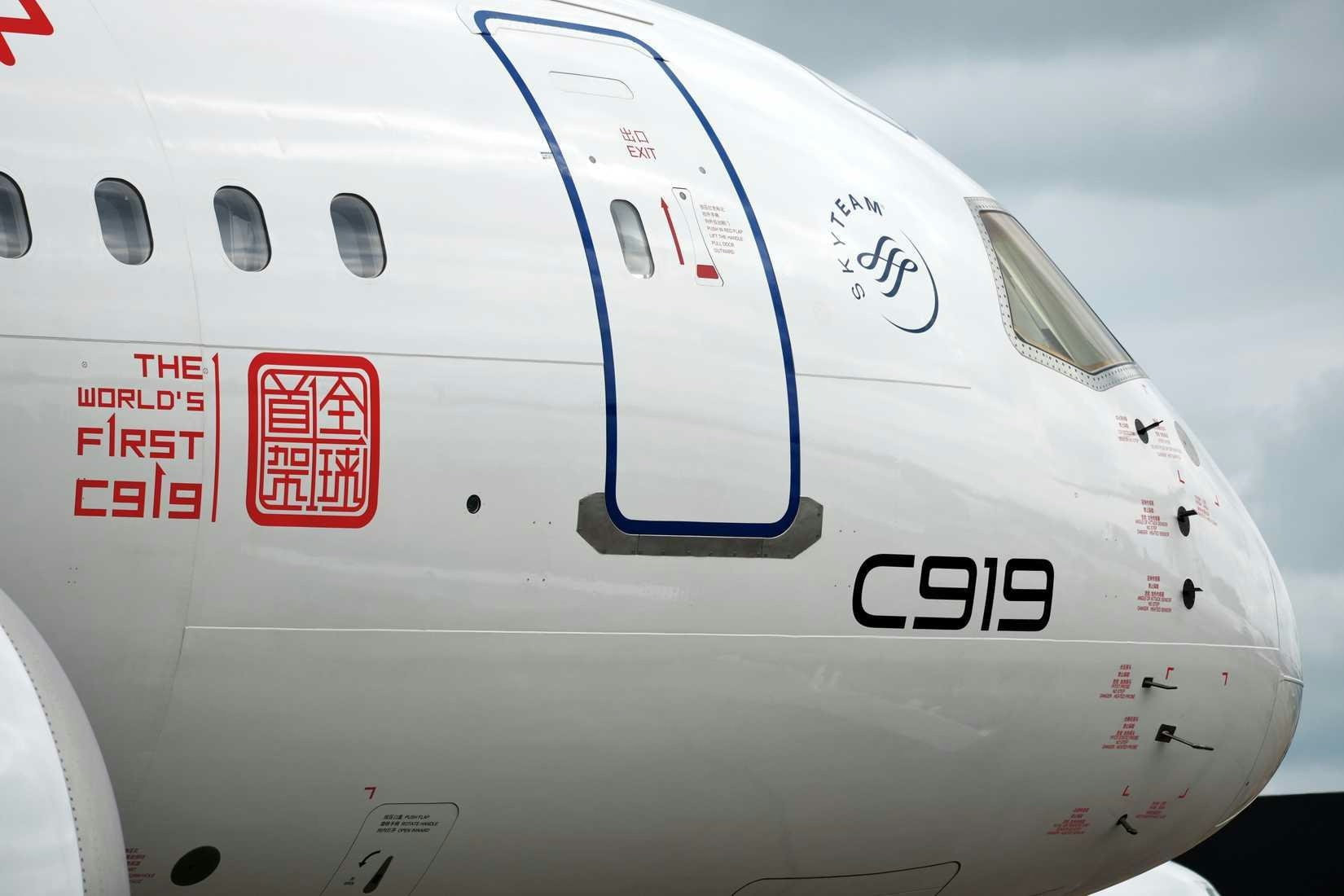
COMAC Reviews Supply Chains Following C919 Delays
Supply Chain Challenges and Production Setbacks
The Commercial Aircraft Corporation of China (COMAC) is undertaking a comprehensive restructuring of its supply chains in response to significant delays affecting its flagship C919 jet program. The temporary suspension of exports for the CFM International LEAP-1C engines, initially scheduled for mid-2025, has been a critical factor contributing to these setbacks. As a result, COMAC is expected to deliver only fifteen C919 aircraft in 2025, falling short of its revised target of 28 and markedly below the original goal of 75 units.
These production delays have been exacerbated by internal manpower shortages and persistent delays from foreign suppliers, particularly concerning the delivery of the CFM LEAP engines. The disruptions have generated concern among airlines, many of which had anticipated a significant ramp-up in C919 deliveries in 2026. While some industry observers maintain cautious optimism about COMAC’s future output, skepticism remains regarding the robustness of its supply chain and its capacity to meet escalating demand.
Strategic Shift Towards Indigenous Components
In response to these challenges, COMAC is intensifying efforts to reduce its dependence on Western core systems. The Aero Engine Corporation of China (AECC) is accelerating the development of the domestically produced CJ-1000A engine, which is nearing final certification. This initiative represents a strategic move to bolster supply chain resilience and achieve greater self-sufficiency in critical aircraft components, thereby mitigating the risks posed by geopolitical tensions and export restrictions.
Market Implications and Competitive Landscape
Meanwhile, established industry leaders Boeing and Airbus continue to dominate the commercial aviation market, leveraging COMAC’s production difficulties and supply chain vulnerabilities to maintain their competitive advantage. As COMAC strives to resolve these issues and enhance operational efficiency, it faces increasing pressure to fulfill its commitments and establish itself as a credible alternative in the global aerospace sector.

Etihad Airways Suspends Airbus A380 Flights on Key Route

Aditya Birla Group Seeks Approval for Aircraft Leasing in GIFT City

Qatar Airways Highlights Innovation and Connectivity at Arabian Travel Market 2026

Hong Kong's Five-Year Plan Includes Andrew Fan's Aircraft Parts Processing Hub Proposal

ACIA Aero Leasing Delivers ATR72-600 to Air Nostrum

RTX Appoints Jill Albertelli as Head of Pratt & Whitney

TAT Technologies Joins Beyond Aero Hydrogen Aircraft Program

AURAK Study Highlights Barriers to Air Taxi Adoption in Emerging Economies

Xiamen Air Selects Altitude for 787 Maintenance at Heathrow

Etihad and Swissport Extend Global Partnership
