
Orquesta conocimientos de IA para convertirlos en acción

Tendencias
Categories
Comparing Airbus A380 and Boeing 747 Cockpit Layouts
Comparing Airbus A380 and Boeing 747 Cockpit Layouts
The Airbus A380 and Boeing 747 are two of the most iconic widebody aircraft in aviation history, each embodying distinct engineering philosophies that are clearly reflected in their cockpit designs. Both aircraft are engineered for long-haul, high-capacity operations, yet their flight decks reveal fundamentally different approaches to pilot interaction, automation, and control. These differences extend beyond mere aesthetics, representing decades of divergent design thinking at Airbus and Boeing.
At the core of this divergence lies a philosophical split: Airbus emphasizes automation, system protection, and standardized cockpit layouts across its fleet, whereas Boeing prioritizes pilot authority, tactile feedback, and evolutionary design continuity. This contrast is particularly evident when comparing the A380—Airbus’s largest commercial aircraft—with later-generation Boeing 747 models such as the 747-400 and 747-8.
Key Differences in Cockpit Layout
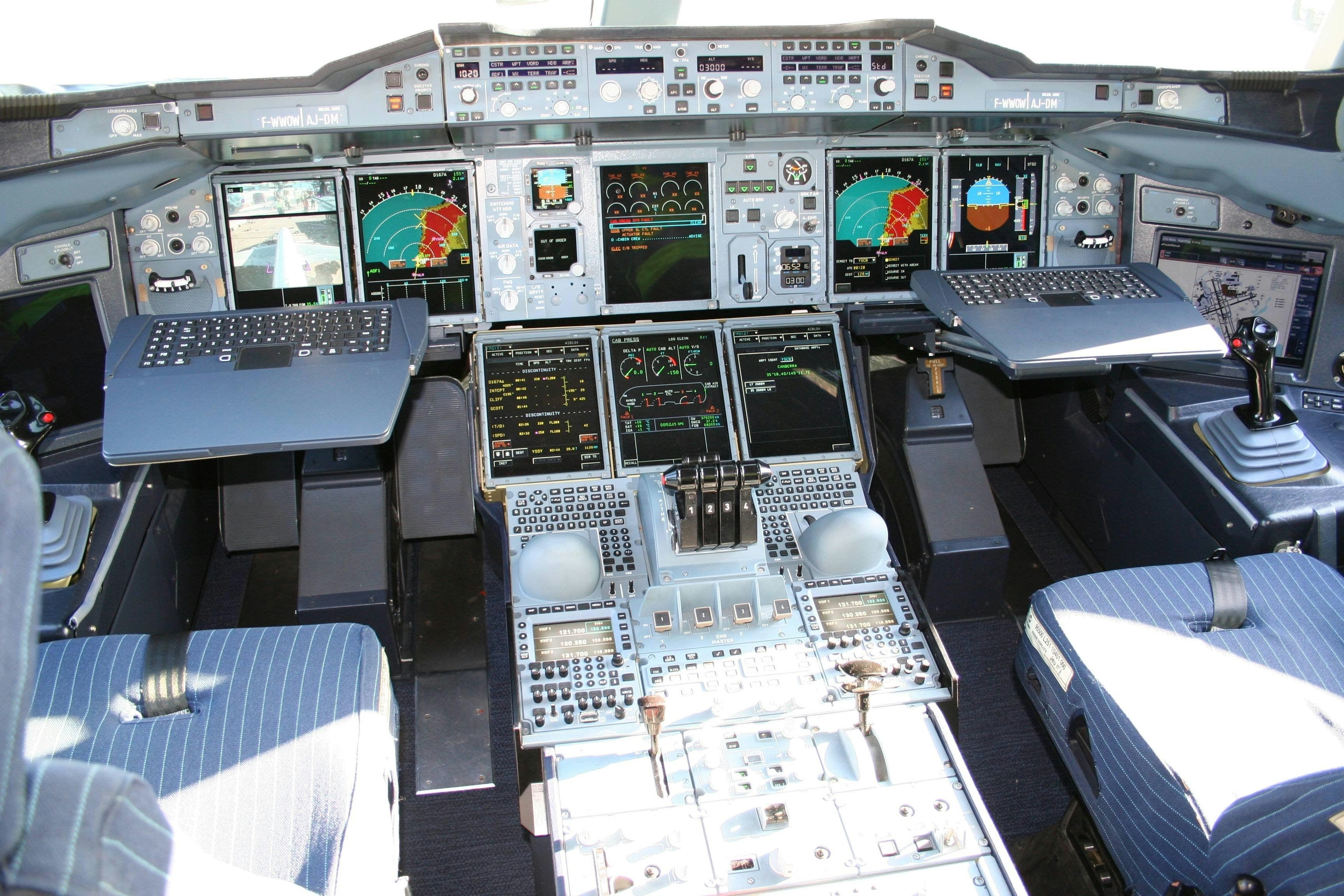
One of the most striking distinctions between the two aircraft is the method of primary flight control input. The Airbus A380 utilizes a sidestick controller positioned beside each pilot’s seat, which frees up space in front of the pilot and allows for a cleaner instrument panel. Each sidestick operates independently, transmitting electronic signals to the flight control computers without mechanical linkage. Coordination between pilots therefore depends on visual and auditory cues rather than physical connection.
In contrast, the Boeing 747 retains the traditional centrally mounted control yoke, which is mechanically or hydraulically linked between pilots. This arrangement provides immediate tactile feedback and shared awareness, reinforcing Boeing’s emphasis on pilot-in-command authority, though it occupies more physical space within the cockpit.
The flight control architecture further highlights the philosophical divide. The A380 is fully fly-by-wire, with all control inputs transmitted electronically to flight control computers. This enables advanced automation and flight envelope protection. While later 747 models incorporate some electronic systems, they largely rely on conventional mechanical and hydraulic linkages, maintaining a more direct connection between pilot input and aircraft response.
Regarding cockpit display systems, the A380 features large, integrated LCD screens that present flight, navigation, and systems information in a standardized format consistent across Airbus’s fleet. Boeing’s 747-400 and 747-8 also employ advanced displays but retain more traditional layouts and switchgear, reflecting Boeing’s evolutionary approach to cockpit design.
Pilot interaction and ergonomics differ significantly between the two aircraft. The A380’s sidestick and streamlined panel design enhance visibility and reduce pilot workload, aligning with Airbus’s focus on automation and system efficiency. Conversely, the 747’s yoke and familiar layout cater to pilots accustomed to tactile feedback and direct control, supporting Boeing’s philosophy of active pilot engagement.
System monitoring philosophies also diverge. Airbus centralizes system monitoring with automated alerts and protections, whereas Boeing provides pilots with more manual control and feedback, allowing greater authority in managing abnormal situations.
Market Dynamics and Industry Impact
These cockpit design differences extend beyond technical considerations, influencing airline purchasing decisions and broader market dynamics. For instance, Atlas Air Worldwide Holdings Inc., historically the largest operator of Boeing 747 aircraft, recently placed its first Airbus order for up to 40 next-generation A350 freighters. This strategic shift signals evolving market preferences and may prompt other operators to reassess their fleet strategies, potentially reshaping the competitive landscape between Airbus and Boeing.
External geopolitical factors further complicate these dynamics. The ongoing U.S.-Israeli conflict with Iran has caused significant disruptions in air travel, with over 37,000 flights to and from the Middle East cancelled since February 28, 2026. Such events impact airline operations and market responses, underscoring the complex interplay between aircraft design, market demand, and global geopolitical developments.
In essence, the contrasting cockpit philosophies of the Airbus A380 and Boeing 747 reflect broader trends in aviation, where design innovation, market forces, and external pressures converge to influence the future trajectory of commercial flight.

Etihad Airways Suspends Airbus A380 Flights on Key Route

Aditya Birla Group Seeks Approval for Aircraft Leasing in GIFT City

Qatar Airways Highlights Innovation and Connectivity at Arabian Travel Market 2026

Hong Kong's Five-Year Plan Includes Andrew Fan's Aircraft Parts Processing Hub Proposal

ACIA Aero Leasing Delivers ATR72-600 to Air Nostrum

RTX Appoints Jill Albertelli as Head of Pratt & Whitney

TAT Technologies Joins Beyond Aero Hydrogen Aircraft Program

AURAK Study Highlights Barriers to Air Taxi Adoption in Emerging Economies

Xiamen Air Selects Altitude for 787 Maintenance at Heathrow

Etihad and Swissport Extend Global Partnership
