
Orquesta conocimientos de IA para convertirlos en acción

Tendencias
Categories
Crestone Funds LEAP-1B Engines for Arajet
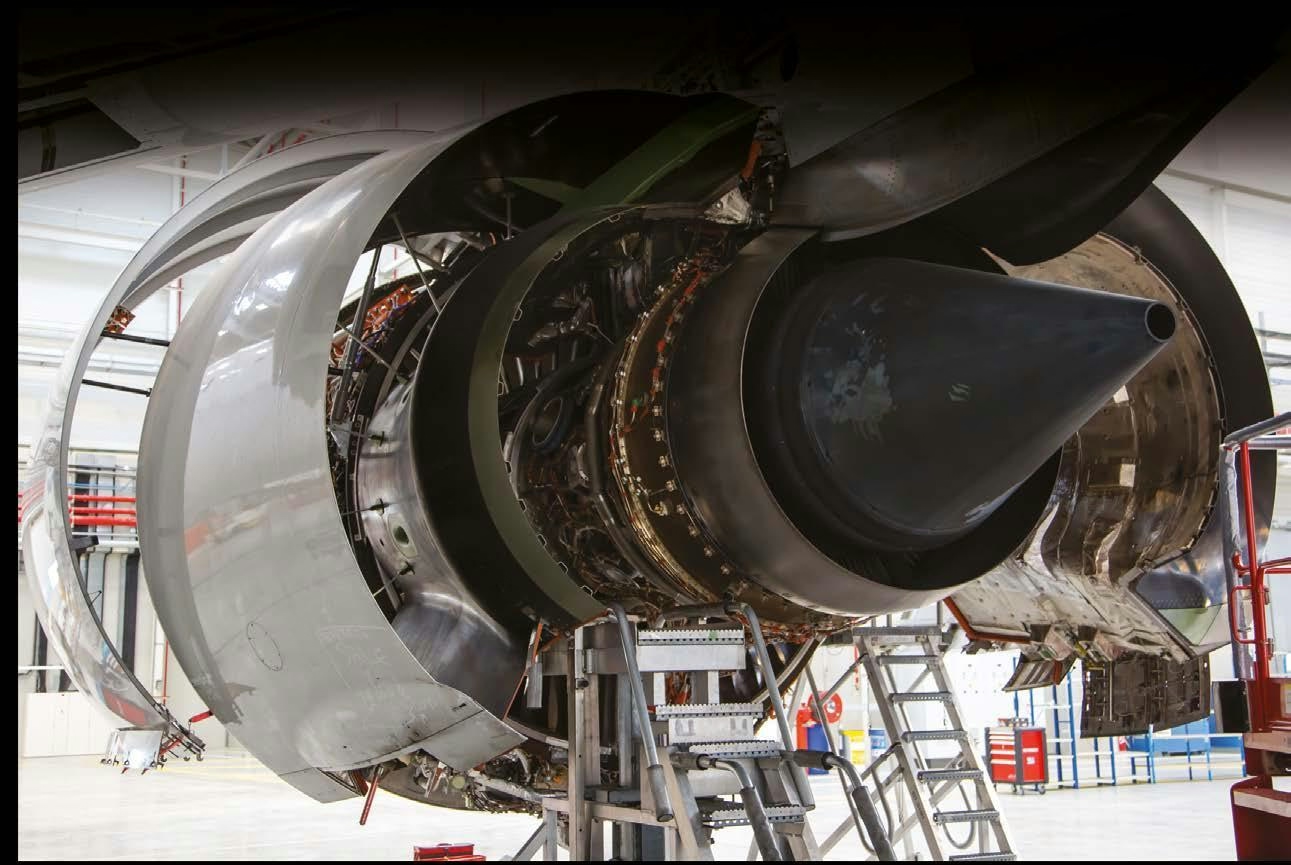
Crestone Funds LEAP-1B Engines for Arajet Amid Industry Shifts
Crestone Air Partners has completed pre-delivery payment (PDP) financing alongside a sale and leaseback arrangement for four CFM LEAP-1B engines with Dominican Republic-based carrier Arajet. This transaction represents Crestone’s first engagement in PDP financing and marks its entry into next-generation engine assets, thereby expanding the firm’s capabilities across the aircraft lifecycle.
Supporting Arajet’s Fleet Expansion
The financing deal is designed to underpin Arajet’s ongoing fleet growth and engine operations, while simultaneously providing Crestone with a stable, long-term contracted cash flow. Istvan Jambor, Vice President of Fleet at Arajet, highlighted the importance of reliable capital partners in scaling the airline’s operations. He noted that Crestone demonstrated a clear understanding of Arajet’s financing requirements and delivery timeline, structuring a solution tailored to the airline’s expansion strategy.
Kevin Milligan, CEO of Crestone Air Partners, underscored the significance of the agreement, emphasizing the company’s ability to offer flexible financing solutions across the asset lifecycle. He welcomed Arajet as a new airline partner and described the deal as a pivotal step in Crestone’s expansion into next-generation engine assets.
Industry Context and Challenges
The LEAP-1B engines, which power Boeing’s 737 MAX family, are recognized as the latest generation of fuel-efficient narrow-body technology. As airlines worldwide seek to modernize their fleets and enhance operational efficiency, demand for these engines is expected to increase, particularly in light of Boeing’s plans to ramp up 737 MAX production.
However, the industry is contending with significant challenges. Supply chain constraints and potential delays in engine availability have surfaced, partly due to CFM’s imposition of a capped life limit on a critical LEAP-1B component. Southwest Airlines has publicly expressed concerns regarding these limitations, warning of possible delivery delays. Such issues pose risks for both lessors and operators as they strategize fleet growth and maintenance schedules.
Market dynamics are also evolving amid heightened demand for GE Aerospace’s LEAP engines, placing pressure on suppliers and competitors alike. Engine manufacturers including Rolls-Royce and Safran are closely monitoring these developments and may adjust their strategic approaches in response to shifting market conditions.
Preparing for Maintenance Demands
The maintenance, repair, and overhaul (MRO) sector is proactively preparing for the anticipated increase in LEAP-1B-powered aircraft. New facilities, such as Lufthansa Technik’s engine MRO shop in Calgary, are being established to support the expanding Boeing 737 MAX fleet. These developments aim to ensure operators have access to essential maintenance services as the number of next-generation engines in service continues to grow.
Crestone’s investment strategy, which centers on engine leasing, remains a foundational element of its platform. By extending its focus to include the latest generation of engine technology, the company is positioning itself to navigate both the opportunities and challenges presented by a rapidly evolving aviation landscape.

Etihad Airways Suspends Airbus A380 Flights on Key Route

Aditya Birla Group Seeks Approval for Aircraft Leasing in GIFT City

Qatar Airways Highlights Innovation and Connectivity at Arabian Travel Market 2026

Hong Kong's Five-Year Plan Includes Andrew Fan's Aircraft Parts Processing Hub Proposal

ACIA Aero Leasing Delivers ATR72-600 to Air Nostrum

RTX Appoints Jill Albertelli as Head of Pratt & Whitney

TAT Technologies Joins Beyond Aero Hydrogen Aircraft Program

AURAK Study Highlights Barriers to Air Taxi Adoption in Emerging Economies

Xiamen Air Selects Altitude for 787 Maintenance at Heathrow

Etihad and Swissport Extend Global Partnership
