
Orquesta conocimientos de IA para convertirlos en acción

Tendencias
Categories
Delta Joins United and Southwest in Revising Policies After California Flight Delay Caused by AI Battery Issue
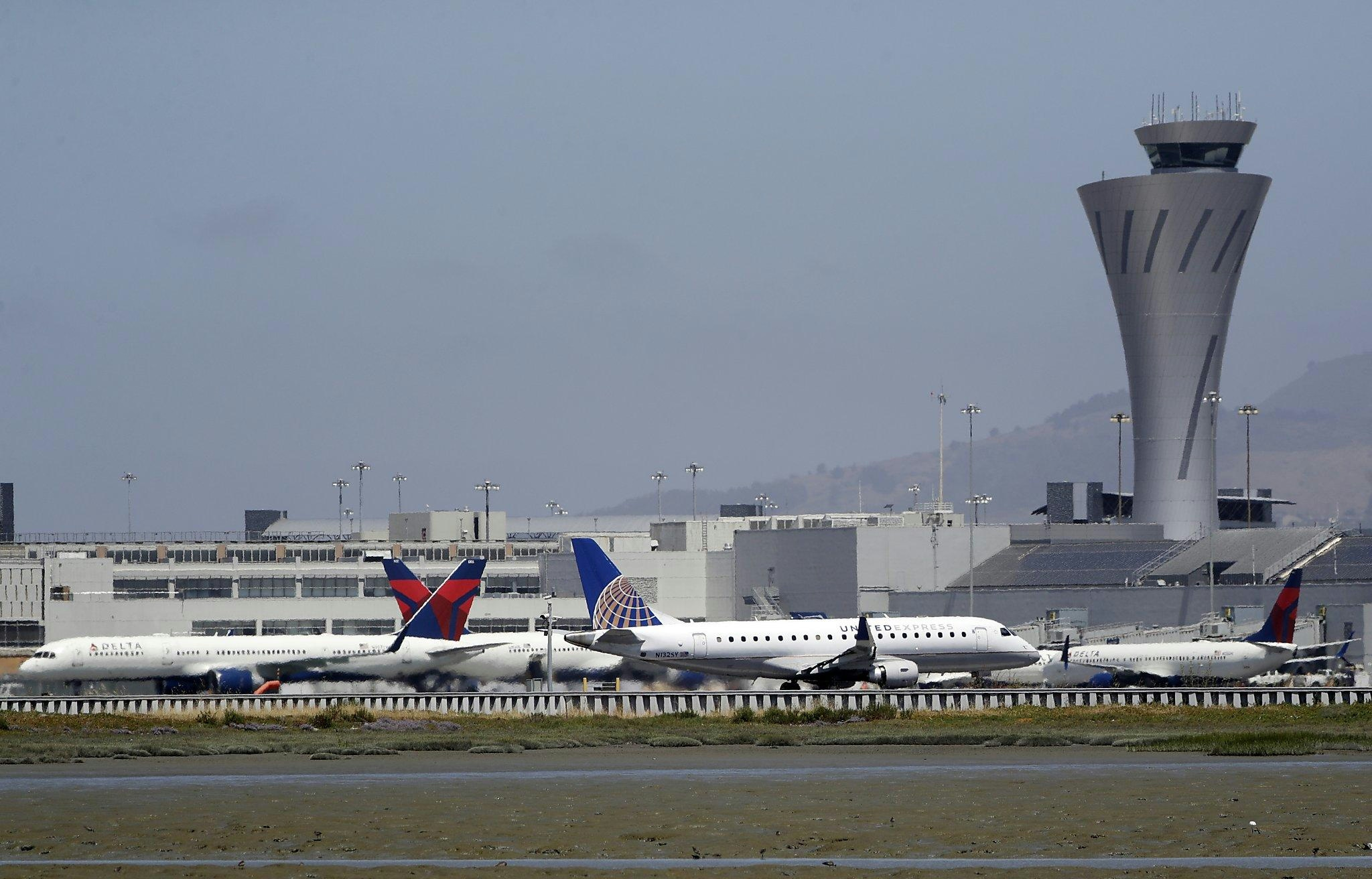
Delta Joins United and Southwest in Revising Policies After California Flight Delay Caused by AI Battery Issue
Flight Delay Highlights Emerging Challenges in Aviation Safety
On May 3, 2026, Southwest Airlines flight 1568 from Oakland to San Diego experienced a significant delay after airport security identified a lithium battery carried by Bebop, a 32-kilogram humanoid robot, as exceeding the size limits permitted for commercial air travel. The discovery prompted the activation of safety protocols that not only delayed the flight by an hour but also caused subsequent disruptions due to gate availability and extended security checks. This incident has brought to light the increasing complexities airlines face as artificial intelligence and robotics become more prevalent in travel, particularly concerning the transport of large lithium-ion batteries used in advanced robotic equipment.
Industry-Wide Policy Revisions in Response to Technological Advances
Following the Bebop incident, major U.S. carriers including Delta, United, and Southwest have announced revisions to their policies governing the transport of lithium batteries and robotic devices. These changes reflect a heightened focus on aviation safety, with airlines implementing stricter carry-on regulations to prevent similar operational disruptions. The incident has also sparked broader discussions within the aviation sector about the need to establish comprehensive technical standards for the safe transport of AI-powered devices and robots, which have yet to be fully integrated into international travel regulations. As demand for robotic assistance grows across various industries, airlines are compelled to adapt their safety protocols accordingly.
Implications for Passengers and the Aviation Market
For passengers, the revised policies may result in more rigorous security procedures and potential delays, particularly when traveling with advanced technological equipment. The Bebop case underscores the necessity for regulatory frameworks to evolve alongside technological innovation to maintain passenger safety. Market observers have noted that robust safety measures are critical to sustaining public confidence as the aviation industry navigates the challenges posed by emerging technologies. The swift response by airlines to this incident demonstrates a commitment to balancing innovation with operational security, ensuring the safe integration of both human and robotic travelers in the future.

Etihad Airways Suspends Airbus A380 Flights on Key Route

Aditya Birla Group Seeks Approval for Aircraft Leasing in GIFT City

Qatar Airways Highlights Innovation and Connectivity at Arabian Travel Market 2026

Hong Kong's Five-Year Plan Includes Andrew Fan's Aircraft Parts Processing Hub Proposal

ACIA Aero Leasing Delivers ATR72-600 to Air Nostrum

RTX Appoints Jill Albertelli as Head of Pratt & Whitney

TAT Technologies Joins Beyond Aero Hydrogen Aircraft Program

AURAK Study Highlights Barriers to Air Taxi Adoption in Emerging Economies

Xiamen Air Selects Altitude for 787 Maintenance at Heathrow

Etihad and Swissport Extend Global Partnership
