
Orquesta conocimientos de IA para convertirlos en acción

Tendencias
Categories
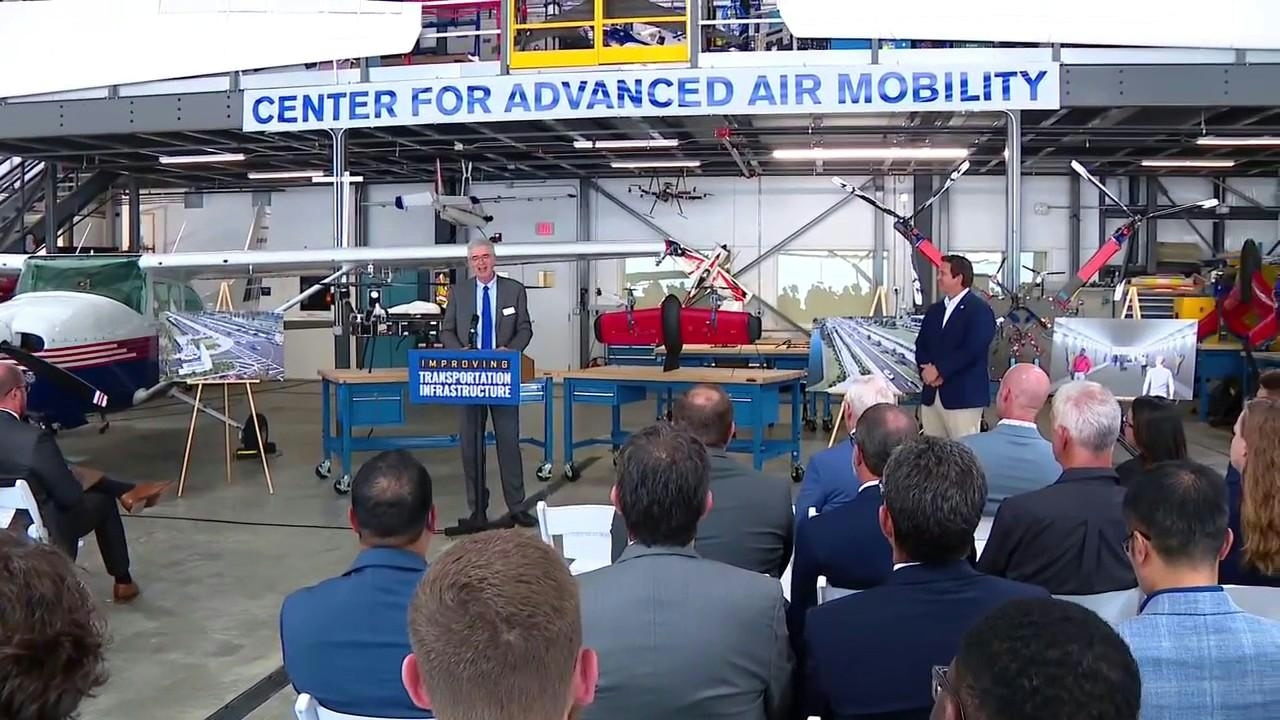
DeSantis Announces FDOT and Embry-Riddle Partnership to Advance Air Mobility in Florida
DeSantis Announces FDOT and Embry-Riddle Partnership to Advance Air Mobility in Florida
Florida is embarking on a transformative journey toward integrating advanced air mobility into its transportation infrastructure. On Thursday, Governor Ron DeSantis revealed a strategic partnership between the Florida Department of Transportation (FDOT) and Embry-Riddle Aeronautical University aimed at accelerating research and workforce development in the emerging field of electric vertical takeoff and landing aircraft (eVTOLs).
Advancing eVTOL Technology and Infrastructure
The collaboration centers on eVTOLs, which state officials view as a promising solution to alleviate traffic congestion on Florida’s busiest roadways. Governor DeSantis expressed optimism about the near-term deployment of these vehicles, suggesting that vertical lift taxi services could become operational within the next year. Embry-Riddle and FDOT are already working together to tackle critical challenges such as passenger screening protocols, the design and construction of terminal infrastructure, and the management of increasingly complex air traffic systems.
FDOT Secretary Jared Perdue outlined a long-term vision of establishing an “interstate-like network in the sky,” with a potential aerial corridor along the I-4 highway connecting Orlando and Tampa. This corridor could support the efficient movement of hundreds of eVTOLs, revolutionizing regional transportation.
Expanding the Aerial Network Across Florida
The initiative extends beyond Central Florida, with Tallahassee International Airport Director David Pollard confirming the capital’s inclusion in the state’s planned aerial highway network. Pollard emphasized the airport’s commitment to aligning closely with state efforts to develop this innovative transportation system throughout Florida.
Governor DeSantis also highlighted the broader applications of eVTOL technology, noting its potential utility in medical transport, disaster response, emergency services, and law enforcement. These diverse uses underscore the multifaceted benefits that advanced air mobility could bring to the state.
Challenges and Competitive Landscape
Despite the promising outlook, significant obstacles remain. Regulatory approval processes, securing adequate funding, and overcoming technological barriers are critical challenges that Florida must address to realize its vision. The rapidly evolving air mobility sector is attracting growing interest from investors and aviation companies, intensifying competition among states and regions seeking to establish themselves as leaders in this emerging market.
As Florida positions itself at the forefront of air transportation innovation, the partnership between FDOT and Embry-Riddle represents a pivotal step toward shaping the future of mobility in the state and beyond.

Etihad Airways Suspends Airbus A380 Flights on Key Route

Aditya Birla Group Seeks Approval for Aircraft Leasing in GIFT City

Qatar Airways Highlights Innovation and Connectivity at Arabian Travel Market 2026

Hong Kong's Five-Year Plan Includes Andrew Fan's Aircraft Parts Processing Hub Proposal

ACIA Aero Leasing Delivers ATR72-600 to Air Nostrum

RTX Appoints Jill Albertelli as Head of Pratt & Whitney

TAT Technologies Joins Beyond Aero Hydrogen Aircraft Program

AURAK Study Highlights Barriers to Air Taxi Adoption in Emerging Economies

Xiamen Air Selects Altitude for 787 Maintenance at Heathrow

Etihad and Swissport Extend Global Partnership
