
Orquesta conocimientos de IA para convertirlos en acción

Tendencias
Categories
Do Larger Engines Reduce an Aircraft’s Top Speed?
Do Larger Engines Reduce an Aircraft’s Top Speed?
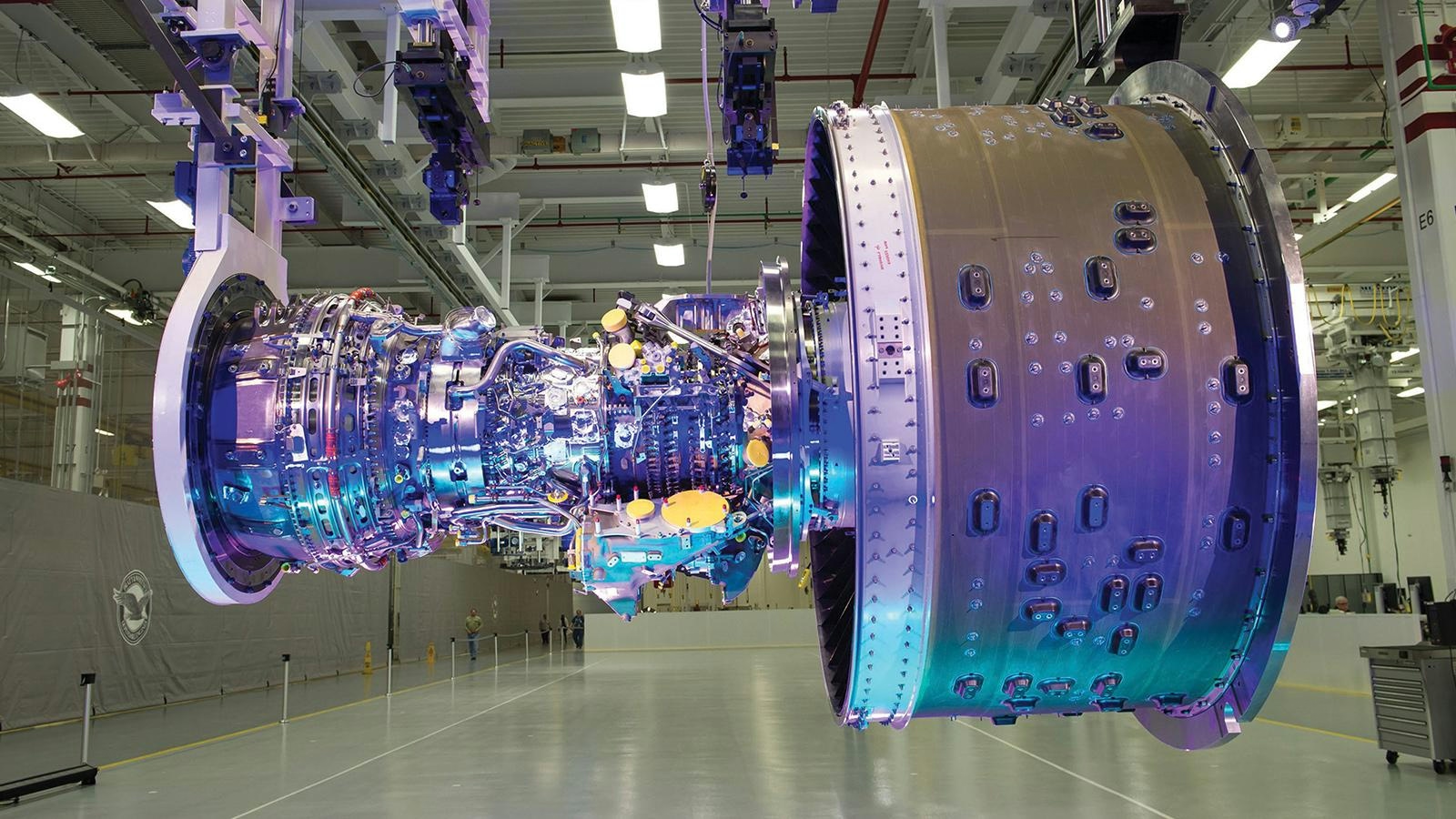
Widebody aircraft are increasingly equipped with larger engines as manufacturers such as Boeing and Airbus aim to develop jets capable of carrying more passengers, flying greater distances, and operating with improved efficiency. The Boeing 777X, currently approaching regulatory certification, exemplifies this trend. It is powered by the General Electric GE9X engines, the largest ever built for a commercial airliner, which promise significant efficiency gains compared to earlier models.
At first glance, it might seem intuitive that larger engines, producing more thrust, would result in higher top speeds. While the GE9X engines indeed deliver immense thrust necessary for lifting heavier aircraft and enabling long-range flights, the relationship between engine size and maximum speed is more complex.
The Thrust-Drag Trade-Off
Larger engines provide increased power but also introduce considerable aerodynamic drawbacks. The substantial size and weight of these engines, particularly their large fan diameters, generate additional drag—specifically nacelle drag. Although the aircraft fuselage is designed for aerodynamic efficiency, engine nacelles tend to be less streamlined, and their bulk can impede the aircraft’s movement through the air.
For instance, the Boeing 777-300ER is equipped with two GE90-115B engines, each featuring a fan diameter of 3.25 meters (10.7 feet). Together, they produce a combined thrust of 230,000 pounds—approximately 23 times that of a fighter jet like the F-5 Tiger. Despite this, the 777’s top speed is around Mach 0.91, significantly lower than the Tiger’s Mach 1.64. This disparity is largely due to the airliner’s much higher drag, much of which stems from its large engines.
Nacelle Drag in Practice
Nacelle drag fluctuates throughout different phases of flight. During cruise, when speed and fuel efficiency are paramount, nacelle drag can account for 5 to 10 percent of the total drag on a 777-300ER, representing a substantial aerodynamic penalty. While larger engine fans enhance propulsive efficiency, they also increase both the engine’s weight and frontal area, thereby diminishing the aircraft’s overall aerodynamic performance.
A Complex Interplay
It is important to recognize that larger engines do not inherently reduce an aircraft’s top speed. The final outcome depends on a complex balance between engine power, aerodynamic factors, and the overall aircraft design. Although increased thrust can help counteract additional drag, the added weight and size of larger engines may offset these benefits. Aircraft designers must carefully weigh these competing factors to optimize performance.
Industry Response and Future Trends
Industry focus on larger engines often centers on fuel efficiency, maintenance costs, and regulatory compliance. In response, manufacturers are developing more efficient engines and exploring alternative propulsion technologies, including hybrid-electric and hydrogen-electric systems, to maintain competitiveness. Recent advancements in lean-burn engines and hydrogen-electric powertrains indicate a shift toward more sustainable and potentially higher-efficiency propulsion solutions.
In conclusion, while larger engines provide the necessary thrust for bigger, longer-range aircraft, they also introduce aerodynamic challenges that can limit top speed. The ultimate impact depends on how effectively designers balance thrust, drag, and efficiency—a challenge that continues to drive innovation within the aviation industry.

Etihad Airways Suspends Airbus A380 Flights on Key Route

Aditya Birla Group Seeks Approval for Aircraft Leasing in GIFT City

Qatar Airways Highlights Innovation and Connectivity at Arabian Travel Market 2026

Hong Kong's Five-Year Plan Includes Andrew Fan's Aircraft Parts Processing Hub Proposal

ACIA Aero Leasing Delivers ATR72-600 to Air Nostrum

RTX Appoints Jill Albertelli as Head of Pratt & Whitney

TAT Technologies Joins Beyond Aero Hydrogen Aircraft Program

AURAK Study Highlights Barriers to Air Taxi Adoption in Emerging Economies

Xiamen Air Selects Altitude for 787 Maintenance at Heathrow

Etihad and Swissport Extend Global Partnership
