
Orquesta conocimientos de IA para convertirlos en acción

Tendencias
Categories
DOT Launches Electric and Autonomous Aircraft Trials Across 26 States
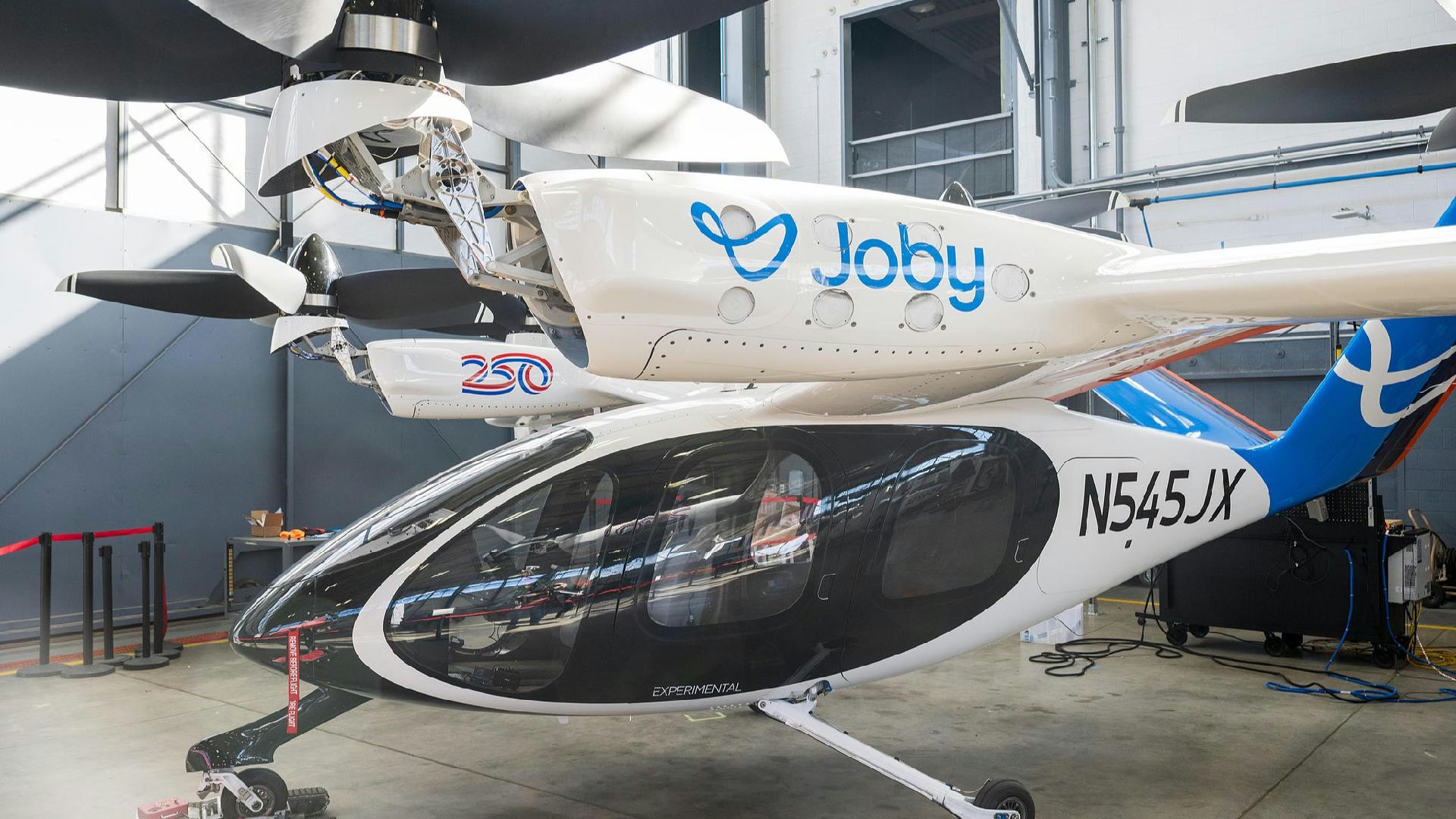
DOT Launches Electric and Autonomous Aircraft Trials Across 26 States
The U.S. Department of Transportation (DOT) and the Federal Aviation Administration (FAA) have initiated an extensive three-year trial program to advance electric and autonomous aircraft technologies across 26 states. Known as the eVTOL (electric vertical takeoff and landing) Integration Pilot Program (eIPP), this initiative represents a pivotal effort to integrate advanced air mobility (AAM) solutions—such as electric air taxis and autonomous cargo drones—into the national airspace system.
Early Operations and Industry Participation
The inaugural operational flights under the eIPP occurred in Maryland and Virginia, where Beta Technologies deployed its all-electric Alia CX300 aircraft to transport manufactured organs between four airports, including Virginia Tech/Montgomery Executive Airport and Baltimore County’s Martin State Airport. Beta’s Alia family, which also encompasses the eVTOL A250, has accumulated over 160,000 nautical miles in various markets across the United States, Europe, Japan, and New Zealand, primarily through market survey operations. The eIPP now authorizes Beta and other manufacturers to conduct previously restricted activities, potentially extending to revenue-generating cargo and passenger flights.
These trials are designed to produce essential data on the safe integration of electric and autonomous aircraft alongside conventional air traffic. Although the FAA is not directly funding these flights, it will utilize the operational insights to inform future certification processes and regulatory frameworks for emerging aviation technologies.
Regulatory and Market Challenges
Despite the program’s promising start, significant challenges remain. Regulatory hurdles continue to pose a major concern, as the certification process for AAM aircraft demands stringent safety standards, quality assurance, and comprehensive product lifecycle support, as outlined in recent Congressional Research Service reports. Safety issues have been further highlighted by legal actions such as the lawsuit against Boeing-owned Wisk Aero, underscoring the intense scrutiny faced by autonomous air taxi operations.
Market competition is intensifying as companies vie to establish leadership in the burgeoning electric and autonomous aviation sector. Beta Technologies, for instance, has partnered with Surf Air Mobility to demonstrate electric aviation capabilities in Hawaiʻi, reflecting a broader industry push toward commercial deployment. These partnerships and demonstration campaigns are expected to accelerate development and testing efforts across the sector.
Program Structure and Industry Perspectives
In March, the FAA designated eight lead participants in the eIPP, each coordinated by a state or local transportation agency. These participants have since negotiated detailed operational agreements with the FAA, specifying requirements for data reporting, flight hours, and demonstration activities. Beta Technologies confirmed that its recent Alia campaign was conducted under one such agreement, marking the official commencement of the eIPP.
Kristen Costello, Beta’s head of government and regulatory affairs, emphasized that the program will enable the company to deepen its experience within the U.S. operating environment and gather operational data on an unprecedented scale. Beta’s founder and CEO, Kyle Clark, highlighted the program’s focus on real-world reliability, stating, “It’s not, ‘Does the airplane work?’ It’s, ‘Does the airplane work every single day in IMC, with real operational payloads? Does the training work? Do the service and reliability meet the standards our customers expect?’”
As the DOT and FAA advance these trials, the data and operational experience generated will play a critical role in shaping the future landscape of electric and autonomous aviation in the United States, even as regulatory, safety, and competitive dynamics continue to influence the industry’s evolution.

Etihad and Swissport Extend Global Partnership

Sepehran Airlines B737 Returns to Mashhad After Tyre and Engine Issues

Etihad Deploys Widebody Fleet to Meet Strong Demand

Korean Air Finalizes $36.2 Billion Deal with Boeing

Australia’s RFDS Queensland Section Orders Six King Air 260Cs

Korean Air Finalizes Order for 103 Boeing Jets and Engines

Embraer E195-E2 Features Distinctive Engine Placement Among Regional Jets

What Passengers Can Expect on Boeing’s New 777X Jet

How Ethiopian Airlines Became Africa’s Leading Carrier Amid Gulf Competition

Joby Aviation Extends Autonomous Flight Capabilities with Cross-Country Tour
