
Orquesta conocimientos de IA para convertirlos en acción

Tendencias
Categories
Edelweiss Introduces First A320neo to Its Fleet
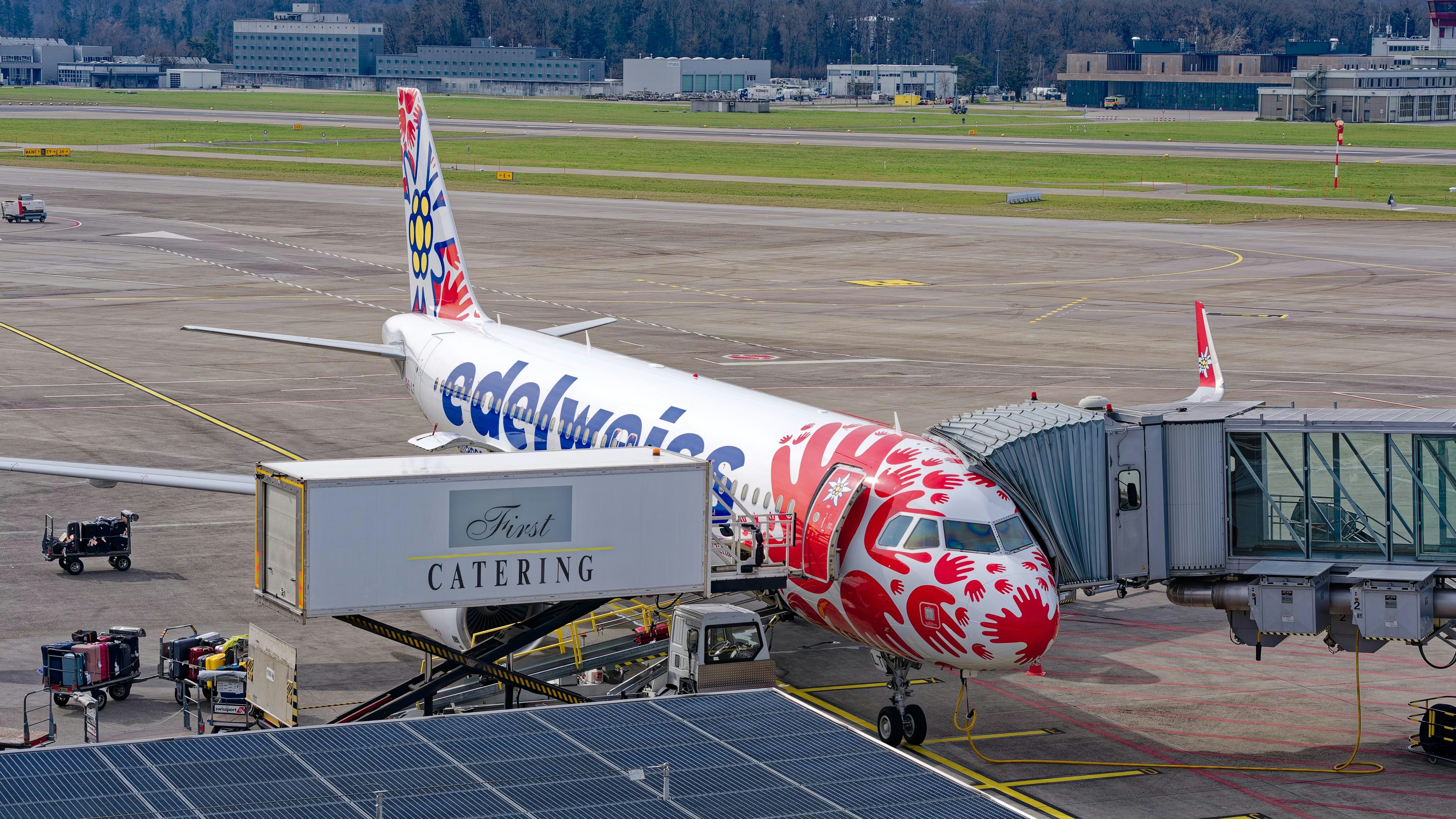
Edelweiss Introduces First A320neo to Its Fleet Amid Market Evolution
Edelweiss, Switzerland’s premier holiday airline, is poised to modernize and expand its short-haul operations through the addition of two aircraft transferred from its sister company, Swiss International Air Lines (SWISS). The first of these, an Airbus A320 (registration HB-JLQ), is scheduled to join the Edelweiss fleet in October 2025. This will be followed by the airline’s inaugural Airbus A320neo (registration HB-JDB) in April 2026, marking a significant milestone as Edelweiss incorporates the advanced A320neo model into its operations for the first time.
Fleet Expansion and Environmental Commitment
With these additions, Edelweiss’s short-haul fleet will grow to 16 aircraft, reinforcing its strategic presence at Zurich Airport. The move aligns with the airline’s broader objective to enhance operational efficiency and environmental performance. The Airbus A320neo, the successor to the A320, offers at least 15% lower fuel consumption, reduced emissions, and substantially quieter operations compared to its predecessor. This technological advancement underscores Edelweiss’s commitment to sustainability and passenger comfort.
Bernd Bauer, CEO of Edelweiss, highlighted the strategic significance of this development, stating, “I am delighted that Edelweiss is continuing to develop on short- and medium-haul routes and that we are taking an important step towards modernising our short-haul fleet with the first Airbus A320neo. The aircraft combines state-of-the-art, environmentally friendly technology with greater comfort for our guests.”
The introduction of the A320neo is expected to provide the airline with enhanced flexibility in route planning, owing to its improved fuel efficiency and extended range. This capability will enable Edelweiss to explore longer short- and medium-haul routes while offering passengers a quieter and more comfortable travel experience.
Industry Challenges and Competitive Landscape
Edelweiss’s fleet modernization occurs amid intensified competition and broader challenges within the aviation sector. The deployment of the A320neo may prompt rival carriers to pursue their own fleet upgrades or adjust fares, potentially heightening competition in the short-haul market and exerting downward pressure on prices. Concurrently, the industry is contending with a slowdown in U.S. domestic leisure travel, which could affect overall demand and profitability for airlines operating in interconnected markets.
Additionally, recent safety concerns in aviation—such as incidents involving other aircraft types, including the E195 collision—may influence public perception regarding the introduction of new aircraft models. This context underscores the critical importance of maintaining rigorous safety standards as Edelweiss integrates the A320neo into its fleet.
Despite these challenges, Edelweiss’s investment in modern, environmentally friendly aircraft reflects a strategic commitment to sustainability and passenger experience. The arrival of the A320neo is poised to play a pivotal role in the airline’s ongoing efforts to modernize its fleet and strengthen its competitive position within the European short-haul market.

Etihad Airways Suspends Airbus A380 Flights on Key Route

Aditya Birla Group Seeks Approval for Aircraft Leasing in GIFT City

Qatar Airways Highlights Innovation and Connectivity at Arabian Travel Market 2026

Hong Kong's Five-Year Plan Includes Andrew Fan's Aircraft Parts Processing Hub Proposal

ACIA Aero Leasing Delivers ATR72-600 to Air Nostrum

RTX Appoints Jill Albertelli as Head of Pratt & Whitney

TAT Technologies Joins Beyond Aero Hydrogen Aircraft Program

AURAK Study Highlights Barriers to Air Taxi Adoption in Emerging Economies

Xiamen Air Selects Altitude for 787 Maintenance at Heathrow

Etihad and Swissport Extend Global Partnership
