Imagen

Orquesta conocimientos de IA para convertirlos en acción

¡Únete hoy a la lista de espera de AeroGenie!

Tendencias

Categories

Editorial: How AI Companies Are Profiting from Deceased Users' Data
August 27, 2026By ePlane AI
Editorial: How AI Companies Are Profiting from Deceased Users' Data
0
0
Spirit Airlines
Google
Artificial Intelligence

Editorial: How AI Companies Are Profiting from Deceased Users' Data

The Acquisition of Spirit Airlines’ Digital Archive

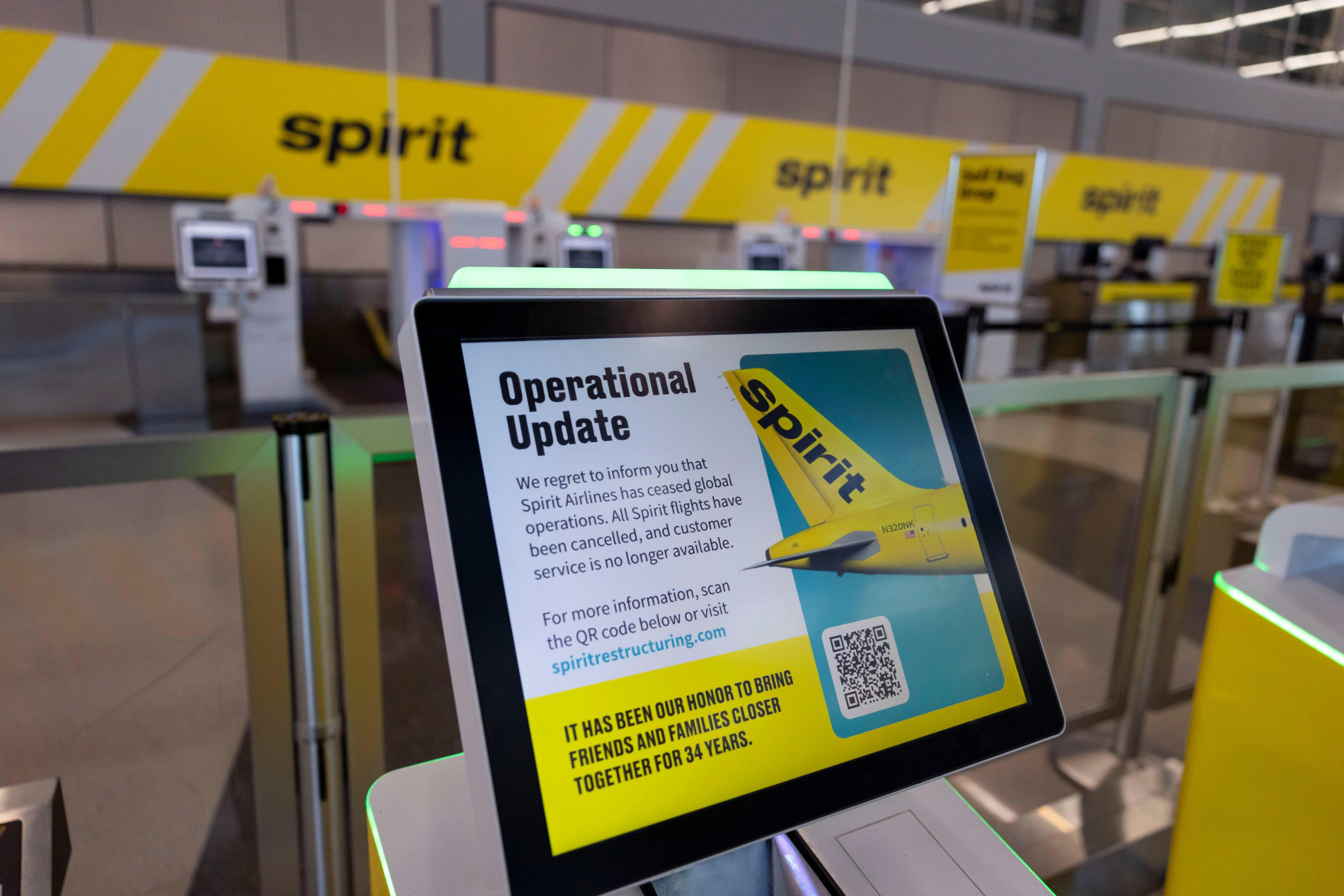
In an era where leaving a job often means losing access to one’s digital workspace, few anticipate that their former employer might profit from their digital legacy after the company ceases to exist. This scenario unfolded recently with Spirit Airlines, the now-defunct ultra-low-cost carrier. Earlier this month, Google emerged as the highest bidder in a $10 million deal—not for Spirit’s physical assets, but for its extensive digital archive. The acquisition included approximately 100 million emails, 500 million Teams messages, and vast quantities of code.

This transaction raises questions about the value of such data. For Google, Spirit’s digital records represent a valuable resource for training artificial intelligence systems. Rather than relying solely on traditional sources like books or news articles, AI can now learn from authentic business communications—ranging from out-of-office replies and customer complaints to routine operational exchanges. The objective is to enable AI to better understand human collaboration within organizations, even when those organizations have ultimately failed.

Privacy Concerns and Ethical Implications

Google has assured that the data will be randomized to safeguard individual privacy. However, given the sheer volume of information involved, skepticism remains widespread. The notion of AI systems analyzing the digital remnants of a defunct company conjures a dystopian image: algorithms dissecting human errors to improve future performance. Despite these concerns, the practice of acquiring and utilizing such data is rapidly becoming normalized amid the competitive drive for AI advancement.

This development presents significant challenges for AI companies. Cybersecurity risks loom large, as massive datasets are attractive targets for breaches. Compliance with international privacy regulations adds further complexity, especially as authorities intensify scrutiny over how personal and corporate data are repurposed. Additionally, the substantial capital investment required to acquire data and build sophisticated data centers places considerable pressure on companies to sustain profitability.

Market Dynamics and Industry Implications

Investor and public apprehension about the monetization of data—particularly from defunct organizations or deceased users—is growing. Meanwhile, competitors are aggressively investing in their own data infrastructure and AI research to avoid falling behind, intensifying the race to develop more advanced AI systems.

From the perspective of AI proponents, Google’s purchase is a strategic move. The wealth of customer complaints and internal communications from Spirit could enhance the ability of future AI agents to manage similar issues more effectively. Yet, as the industry accelerates, critical questions arise about the wisdom of relinquishing control over our collective digital histories. The broader implications for privacy, security, and the evolving nature of work remain uncertain and warrant close attention.

More news
Ornge Adopts Ramco Platform for Paperless Maintenance

Ornge Adopts Ramco Platform for Paperless Maintenance

Ornge Advances Toward Paperless Maintenance with Ramco Digital Platform Ornge, Ontario’s air ambulance and related services provider, has implemented Ramco Systems Canada Inc.’s Digital Task Card with eSign-off and the Mechanic Anywhere mobile application across all its maintenance bases. This initiative marks a pivotal move toward fully paperless maintenance operations, replacing traditional paper-based task cards for its AW139 helicopters and PC-12 aircraft with a streamlined, mobile-enabled digital system. Enhancing Compliance and Operational Efficiency Ramco’s eSign-off solution is tailored to meet Transport Canada’s sign-off requirements, allowing technicians to perform and digitally approve maintenance tasks in real time. As part of the transition, Ornge converted its existing task cards into an eSign-off-compatible format and introduced Work Summary Reports to strengthen audit and regulatory compliance. The Mechanic Anywhere app empowers technicians to access documentation, conduct maintenance, and complete digital sign-offs from any location. Simultaneously, maintenance and quality assurance teams benefit from near-real-time visibility into task progress and completion. This digital transformation is expected to improve operational efficiency by minimizing delays inherent in paper-based workflows and promoting standardized, consistent execution of maintenance procedures. Robert Zwanenburg, Technical Services Manager at Ornge, highlighted the advantages for both compliance and turnaround times, stating, “Ramco’s Digital Task Card and Mechanic Anywhere app is well positioned to help us in our efforts to ensure timely maintenance turnaround times. We are working as a team to ensure our front-line maintenance crews (AMEs) have the tools they need wherever they’re working.” Challenges and Industry Implications Despite the clear benefits, the transition to a paperless environment presents challenges. Ornge must ensure the seamless integration of the Ramco platform with its existing systems, provide comprehensive training to staff for effective technology adoption, and manage the organizational changes necessary to move away from paper-based processes successfully. Industry analysts observe that Ornge’s adoption of advanced maintenance software may enhance investor confidence in the organization’s modernization efforts. This move could also prompt competitors to accelerate their own digital transformations by adopting similar technologies or upgrading existing maintenance platforms to maintain competitiveness. The broader industry trend toward advanced, efficient software solutions is further exemplified by recent recognitions such as RentRedi being named the best property management software for 2026, underscoring the growing importance of digital innovation across sectors. As Ornge continues its digital transformation, it aims to establish new benchmarks for efficiency, compliance, and responsiveness in aviation maintenance, reflecting a wider shift toward technology-driven operations within the industry.
Clark Develops Solutions for Future Tech Supply Chains

Clark Develops Solutions for Future Tech Supply Chains

Clark Develops Solutions for Future Tech Supply Chains Advancing Clark Aviation Capital as a Strategic Hub Clark International Airport Corporation (CIAC) is spearheading the development of Clark Aviation Capital, an integrated aviation, logistics, and commercial hub centered on Clark International Airport (CRK). This ambitious project aims to establish the area as a pivotal support center for the Philippines’ burgeoning high-tech industries and the evolving demands of global supply chains. By creating a comprehensive infrastructure ecosystem, Clark Aviation Capital seeks to facilitate the seamless movement of goods, people, and investments, thereby enhancing the region’s competitiveness in the technology sector. The development plan encompasses expanded airport facilities, increased runway capacity, and the establishment of multimodal transport links. Industrial lots within the hub will be equipped with essential utilities, including reliable power and fiber connectivity, to meet the operational needs of advanced industries. CRK’s existing cargo terminal already handles both international and domestic freight, with direct access to major expressways in Luzon. Future enhancements include further runway expansions and the creation of a multimodal hub that will connect the airport to rail networks, improving logistical efficiency and regional integration. Aligning Infrastructure with Industry Needs and National Initiatives As the aviation and land development arm of the Bases Conversion and Development Authority (BCDA), CIAC emphasizes that the infrastructure is specifically designed to support industries reliant on efficient logistics, such as semiconductor manufacturing, artificial intelligence, and critical mineral processing. The Clark Aviation Capital project aligns with broader national strategies, including the Luzon Economic Corridor and Pax Silica initiatives, which aim to bolster the Philippines’ position as a regional logistics and technology hub. These efforts reflect the country’s strategic intent to attract investment and foster innovation in sectors critical to the future global economy. Challenges Amid a Shifting Global Landscape Despite its strategic vision, Clark Aviation Capital faces significant challenges. Navigating complex regulatory frameworks remains a key obstacle, particularly as global technology supply chains undergo rapid transformation. Factors such as memory tariffs are reshaping market dynamics, influencing investor confidence and prompting some to reduce holdings in related sectors. For instance, recent declines in investments in companies like Smartstop Self Storage REIT Inc. illustrate the volatility affecting supply chain-linked industries. The competitive environment is also intensifying, with major logistics companies expanding their footprint in the region. UPS, for example, has announced a $2 billion investment to enhance its global logistics and cold-chain capabilities, including new hubs in the Philippines, Ontario, and Hong Kong. This increased competition underscores the need for Clark Aviation Capital to continuously innovate and improve its service offerings to maintain a competitive edge. Sustaining Growth and Connectivity Despite these challenges, CIAC remains committed to prioritizing passenger growth, route connectivity, and cargo throughput as foundational elements of its strategy. The ongoing expansion of Clark Aviation Capital is expected to provide vital support for technology-driven industries that depend on a reliable logistics network in Central Luzon. By reinforcing the Philippines’ infrastructure and connectivity, the project aims to solidify the country’s aspirations to become a leading logistics and technology hub within the region.
Texas Firm Post Oak Group to Lead FlyOnE Funding Round

Texas Firm Post Oak Group to Lead FlyOnE Funding Round

Texas Firm Post Oak Group to Lead FlyOnE Funding Round Strategic Investment to Accelerate Electric Aviation Growth FlyOnE Limited, an Australian electric aviation company, has announced that Texas-based investment firm Post Oak Group will lead its latest funding round. This development marks a pivotal moment in FlyOnE’s efforts to expand its operations across Australia and into international markets. The capital raised will be directed toward accelerating the company’s growth as an integrated platform within the emerging low-altitude aviation sector. The investment will focus on three key areas: expanding FlyOnE’s Air Taxi network, deploying electric aviation infrastructure, and increasing the production and delivery of next-generation electric aircraft. These initiatives are designed to support the company’s transition from demonstration projects to fully commercial operations. Progress and Commercial Viability FlyOnE has made significant strides in establishing certified passenger air services, flight training, and aerial work using electric aircraft. The company has also been developing the necessary infrastructure and supply chains to support a new generation of electric aircraft. To date, FlyOnE has logged over 1,300 hours of commercial passenger electric flight across three Australian capital cities, facilitating more than 45,000 passenger movements on its Lilypad Elevate Air Taxi network. The Air Taxi model has demonstrated strong commercial viability, achieving gross returns approximately 120% above direct operating costs. This robust financial performance provides a solid foundation for scaling operations into new markets. Korum Ellis, Founder and CEO of FlyOnE, emphasized the company’s readiness to expand, stating, “We have spent years proving that next-generation aviation can operate commercially today—not decades from now. We now have an Air Taxi model demonstrating strong operating economics, real passenger demand, and a platform that can be replicated into new markets. This raise is about scaling what we have already built.” Partnership and Future Challenges The involvement of Post Oak Group brings an experienced U.S.-based investment partner to FlyOnE as it accelerates deployment both domestically and internationally. The company’s strategy involves integrating aircraft operations with a supporting ecosystem that connects electric aircraft, infrastructure, pilot capability, and commercial operations into a unified platform. Despite the promising outlook, FlyOnE faces several challenges as it scales. Managing the increased pace of deployment will require careful attention to regulatory compliance within the highly regulated aviation sector. Additionally, the company must contend with intensifying competition from other emerging electric aircraft firms, many of which may respond to this funding round by accelerating their own development and fundraising efforts. Market reactions to the investment have been largely positive, reflecting growing investor confidence in FlyOnE’s growth potential. The company is actively exploring further Air Taxi expansion opportunities across multiple Australian markets while advancing its electric aviation infrastructure and next-generation aircraft supply. With Post Oak Group’s backing, FlyOnE is well-positioned to solidify its leadership role in the rapidly evolving electric aviation industry. However, its ability to scale effectively and maintain a competitive edge will remain under close scrutiny from investors and industry competitors alike.
TASKING and dSPACE India Collaborate to Enhance Software Development for Aerospace and Defence

TASKING and dSPACE India Collaborate to Enhance Software Development for Aerospace and Defence

TASKING and dSPACE India Collaborate to Enhance Aerospace and Defence Software Development Strategic Partnership to Address Growing Software Complexity TASKING India and dSPACE India Solutions have formalized a strategic partnership through a Memorandum of Understanding (MoU) signed at ESSS 2026 in Bengaluru. This collaboration aims to advance software development capabilities within India’s aerospace and defence sectors by integrating TASKING’s comprehensive software development, verification, and testing toolchain with dSPACE’s expertise in model-based development, simulation, and validation. The alliance is designed to meet the increasing demand for safety- and mission-critical software solutions in these highly regulated industries. The partnership focuses on supporting the design, virtualization, verification, and simulation of complex software systems, addressing the rising challenges posed by software complexity alongside stringent safety, certification, and compliance requirements. TASKING’s offerings—including compilers, debuggers, and unit testing tools—will be combined with dSPACE’s automated testing, code generation, middleware, and continuous validation capabilities. This integration targets sensor fusion line-replaceable units (LRUs) within both Software-in-the-Loop (SIL) and Hardware-in-the-Loop (HIL) environments, providing a robust framework for software development and validation. Responding to India’s Indigenous Aerospace and Defence Initiatives This collaboration emerges amid India’s intensified focus on self-reliance in aerospace and defence, propelled by initiatives such as Atmanirbhar Bharat. As the sector expands, there is a critical need for integrated engineering environments that reduce development risks, enhance software quality, and streamline verification and certification processes. The partnership between TASKING and dSPACE is positioned to address these needs by delivering advanced tools and methodologies that support the evolving requirements of aerospace and defence organizations. Andreas Gau, CEO and Managing Director of dSPACE India Solutions, emphasized the significance of the alliance, stating that it brings together globally proven technologies to enable organizations to develop and certify safety-critical software with greater confidence. Suresh Kamate, General Manager of Aerospace & Defence Business at dSPACE India Solutions, highlighted that the integration of best-in-class development, testing, simulation, and verification capabilities will substantially improve engineering efficiency while reducing certification efforts and accelerating time-to-approval for critical systems. Strengthening Capabilities Amid Industry Challenges For TASKING, the partnership reinforces its position in mission-critical software development, building on its 2025 acquisition of LDRA, which expanded its expertise in software verification, testing, traceability, and standards compliance. Christoph Herzog, Co-CEO and CTO of TASKING, noted that the collaboration combines TASKING’s trusted software development and verification toolchains with dSPACE’s simulation and validation strengths, establishing a powerful foundation for next-generation mission-critical applications in India. Despite the promising outlook, the collaboration faces challenges related to navigating the complex regulatory landscape of aerospace and defence. Both companies must ensure compliance with stringent security and traceability requirements while integrating advanced software tools with existing legacy systems. The market has shown strong interest from defence contractors and aerospace firms seeking to enhance their software capabilities, though competition is expected to intensify as other players may pursue similar alliances to strengthen their market positions. The MoU sets the stage for ongoing cooperation, positioning TASKING and dSPACE India as key contributors to software innovation within India’s rapidly evolving aerospace and defence ecosystem.
Citadel Aviation Dallas Names New Vice President of Operations

Citadel Aviation Dallas Names New Vice President of Operations

Citadel Aviation Dallas Appoints Geurt Boshuizen as Vice President of Operations Citadel Aviation has announced the appointment of Geurt Boshuizen as Vice President of Operations at its Dallas facility, a strategic move that strengthens the company’s leadership amid a highly competitive aviation maintenance, repair, and operations (MRO) sector. This appointment reflects Citadel’s commitment to operational excellence and growth in a challenging industry environment. Extensive Experience and Leadership In his new capacity, Boshuizen will be responsible for overseeing site operations, safety protocols, quality assurance, scheduling, financial performance, and team leadership. He brings more than 36 years of experience in aviation maintenance and production management. Prior to joining Citadel Aviation, Boshuizen spent 11 years at Gulfstream Aerospace, where he most recently served as Senior Operations Manager for the Savannah Customer Support Service Center. His previous roles at Gulfstream included General Manager positions at the Van Nuys and Long Beach service centers, where he managed operations across the West Coast. Boshuizen’s career also encompasses significant roles at TIMCO/HAECO, EmpowerMX, and US Airways, where he developed expertise in heavy maintenance planning, MRO technology implementation, and base maintenance operations. His aviation journey began in the United States Marine Corps, serving as a CH-46E crew chief, quality assurance inspector, and flight evaluator, and contributing to the early development of the V-22 Osprey program. He holds a degree in Applied Science in Aviation Maintenance Technology from Eastern New Mexico University, along with an A&P certificate with Inspection Authorization and a pilot certificate. Strategic Implications for Citadel Aviation Boshuizen’s appointment comes at a critical juncture as Citadel Aviation seeks to expand its VIP aviation business amid evolving regulatory demands and intensified market competition. The company faces the dual challenge of integrating new financial strategies while maintaining high standards of operational performance. Industry analysts are closely monitoring how Citadel will leverage Boshuizen’s extensive experience to drive growth and sustain its competitive advantage. Under his leadership, Citadel is expected to enhance operational efficiency, promote team development, and reinforce its commitment to safety and quality. This leadership change underscores Citadel Aviation’s strategic focus on experienced management to navigate the complexities of the aviation industry and position the company for continued success in the dynamic MRO landscape.
EVA Air, AIT, and Microsoft Expand Sustainable Aviation Fuel Agreement

EVA Air, AIT, and Microsoft Expand Sustainable Aviation Fuel Agreement

EVA Air, AIT, and Microsoft Expand Sustainable Aviation Fuel Agreement Strengthening Commitment to Sustainable Aviation EVA Air, in collaboration with the American Institute in Taiwan (AIT) and Microsoft, has announced an expansion of its sustainable aviation fuel (SAF) initiative, reinforcing efforts to reduce the carbon footprint of air transportation. This partnership will see flights departing from Taiwan utilizing SAF supplied by Formosa Petrochemical Corporation (FPCC). The fuel is derived from used cooking oil (UCO) and certified under the International Sustainability and Carbon Certification (ISCC) system, which ensures that both the feedstock and production processes adhere to stringent sustainability criteria. Clay Sun, President of EVA Air, emphasized the importance of cross-sector collaboration in achieving net-zero aviation. He noted that aligning customer demand with industry capabilities can accelerate the development of the SAF market, and expressed optimism about expanding partnerships to establish lower-carbon air transportation as a global supply chain standard. Environmental Impact and Corporate Responsibility Sustainable aviation fuel offers a significant environmental advantage, reducing lifecycle greenhouse gas emissions by approximately 80% compared to conventional jet fuel. The environmental benefits of the SAF used in this initiative will be tracked and retired through the ISCC Credit Transfer System (CTS), an internationally recognized registry that monitors sustainability attributes. This mechanism allows Microsoft to account for Scope 3 emissions reductions associated with its air freight operations, reflecting a broader corporate trend toward addressing indirect emissions within supply chains. Microsoft’s participation is expected to stimulate increased corporate demand for SAF, potentially encouraging wider adoption across the aviation industry and further emissions reductions. As companies intensify efforts to lower their carbon footprints, investor interest in sustainable aviation initiatives is likely to grow. This dynamic may prompt competitors to enhance their own SAF strategies or pursue similar partnerships to maintain market relevance. Challenges and Future Outlook Despite the positive momentum, the expansion of sustainable aviation fuel faces notable challenges. High initial production costs, logistical complexities in scaling supply, and the need to navigate regulatory frameworks across different jurisdictions remain significant obstacles. Overcoming these issues will require sustained cooperation among airlines, fuel producers, policymakers, and corporate customers. The partnership between EVA Air, AIT, and Microsoft underscores both the potential and the difficulties inherent in transitioning to sustainable aviation. By aligning customer demand with industry resources, the initiative seeks to establish a new benchmark for lower-carbon air transportation within global supply chains.
Incheon Airport Corporation to Host World Aviation Conference on AI Innovation in September

Incheon Airport Corporation to Host World Aviation Conference on AI Innovation in September

Incheon Airport Corporation to Host World Aviation Conference on AI Innovation in September Incheon International Airport Corporation is set to host the 9th World Aviation Conference from September 8 to 10, 2026, at Paradise City Incheon. The event will convene over 1,200 leaders from industry, academia, and research institutions worldwide. Since its inception in 2016, the conference has established itself as a pivotal forum for exploring the future of global airports amid the rapid evolution of artificial intelligence (AI) technologies. Focus on AI and Industry Transformation The theme for this year’s conference, “Airports Beyond Airports: Shifting Paradigms in the Aviation Industry,” underscores the sector’s ongoing transformation driven by cutting-edge technologies. The opening session will unveil the future vision for Incheon Airport’s “Aviation AI Innovation Hub,” setting the tone for discussions on AI integration across various facets of airport operations. Presentations and panel discussions will address AI applications in enhancing customer experience, strengthening aviation security, optimizing logistics, and advancing airport development. Prominent figures from the global aviation community are scheduled to speak, including Justin Erbacci, Director General of Airports Council International (ACI) World; Naoki Fuji, President of Narita International Airport; Julian Jäger, President of Vienna International Airport; Sascha Koenig, Vice President of Frankfurt Airport; Phantawi Yokpan, Vice President of Airports of Thailand; and Kiel Klussterziel, Head of Strategy at Schiphol Group. These leaders will share insights and strategies reflecting the latest trends and challenges in the industry. Expanded Exhibition and Industry Implications The conference will also feature an expanded exhibition area, 50% larger than the previous year, showcasing advanced technologies and equipment from both domestic and international aviation companies. This growth aims to enhance global networking opportunities and support the overseas expansion of Korean firms, highlighting the increasing market interest in AI-driven airport management solutions. Attendance is free for aviation professionals and other interested parties, with advance registration required through the official conference website. As AI adoption accelerates within the aviation sector, the conference is anticipated to foster greater collaboration and investment opportunities. However, the event also presents challenges, particularly in maintaining robust cybersecurity measures to safeguard sensitive data exchanged during sessions and exhibitions. Additionally, industry competitors may leverage the platform to highlight their own AI innovations or to gain insights that could lead to disruptive technological advancements. Beomho Kim, Acting President and CEO of Incheon International Airport Corporation, emphasized the importance of this year’s conference, stating, “With this year marking the 9th edition, I expect the conference to provide a meaningful forum for discussions on the future paradigms of the airport industry, including Artificial Intelligence Transformation (AX). I encourage strong interest and participation from aviation professionals and key industry leaders worldwide at this event, which will bring together aviation experts and leading companies from around the globe.” The World Aviation Conference remains a critical venue for shaping the future of airports, with AI innovation continuing to drive the industry’s evolution.
Aeroporti di Roma Launches New Aviation Innovation Hub

Aeroporti di Roma Launches New Aviation Innovation Hub

Aeroporti di Roma Unveils Aviation Innovation Hub Ahead of International Airport Summit 2026 As Rome prepares to host the International Airport Summit 2026, Aeroporti di Roma (ADR) has introduced a cutting-edge Aviation Innovation Hub at Fiumicino Airport’s Terminal 1. Conceived and developed entirely by ADR, this facility aims to foster and accelerate groundbreaking solutions that could reshape the future of aviation. Driving Innovation in Aviation Technology Since its inception in October 2022, the Aviation Innovation Hub has quickly become a prominent player in the aviation technology landscape. The Hub has attracted over 1,600 startup applications from around the world, facilitating 43 proof-of-concept trials within operational airport settings. Impressively, half of these trials have progressed to commercial deployment, demonstrating the Hub’s capacity to convert innovative ideas into practical, operational advancements. Letizia Petrarca, head of Innovation Hub & Intrapreneurship at ADR, highlights the collaborative framework underpinning the initiative. She notes that the Hub’s success lies in its ability to unite startups, operational teams, and business units, ensuring that emerging technologies are closely aligned with real-world business requirements. This integrated approach has been instrumental in delivering measurable improvements across airport operations. Challenges and Competitive Landscape Despite its achievements, the Innovation Hub faces significant challenges. Integrating novel technologies with existing airport infrastructure demands meticulous coordination, while adherence to stringent regulatory standards remains paramount. Furthermore, ADR contends with increasing competition from other airport innovation programs, such as RUNWAY 2-6, which embed startups directly within live airport environments. This competitive dynamic is expected to drive further innovation and elevate standards across the global airport sector. Market response to ADR’s initiative has been robust, with growing interest from startups eager to utilize the Hub’s resources and direct access to airport infrastructure. The long-term success of the program will depend on its ability to generate tangible benefits not only for participating startups but also in enhancing the efficiency and sustainability of airport operations. Showcasing Innovation at the International Airport Summit For attendees of the International Airport Summit 2026, the Aviation Innovation Hub offers an exclusive opportunity to witness firsthand how ADR is spearheading transformation through technology and collaboration. VIP roundtable participants will gain privileged access to observe the process by which nascent ideas are developed into scalable, high-impact solutions that optimize operations, promote environmental sustainability, and improve the passenger experience. As Rome welcomes the global aviation community, the ADR Innovation Hub stands as a symbol of what can be achieved through visionary leadership, collaborative effort, and operational excellence. Industry professionals are encouraged to attend the summit to experience the forefront of airport innovation and witness Rome’s evolving aviation landscape.
Boeing and Scott Air Force Base Leaders Discuss Innovation and Readiness at 2026 Global Aerospace Summit

Boeing and Scott Air Force Base Leaders Discuss Innovation and Readiness at 2026 Global Aerospace Summit

Boeing and Scott Air Force Base Leaders Discuss Innovation and Readiness at 2026 Global Aerospace Summit The second Global Aerospace Summit convened on August 19-20 at the Regency Conference Center in O’Fallon, Illinois, drawing over 200 participants from industry, government, education, military, and workforce development sectors. The event underscored the St. Louis region’s growing prominence as a national hub for aviation, defense, and advanced manufacturing. Key speakers from Boeing and Scott Air Force Base highlighted the region’s unique aerospace ecosystem and its critical role in shaping the future of American aerospace capabilities. Emphasizing People, Partnerships, and Technological Advancement Col. Derrick McClain, deputy director of strategy, plans, requirements, and programs for Air Mobility Command at Scott Air Force Base, opened the summit by emphasizing that America’s aerospace advantage is fundamentally rooted in its people and collaborative partnerships. He remarked, “America’s aerospace advantage isn’t just a platform. The real advantage is the community of people, many of you in this room, that make those possible.” McClain stressed the necessity of close cooperation among government entities, industry leaders, educators, and skilled workers to keep pace with rapidly evolving technologies and global threats. Highlighting the transformative impact of artificial intelligence, autonomy, advanced manufacturing, digital engineering, and new materials, McClain noted that success will depend not only on innovation but also on the ability to swiftly adapt and deploy new capabilities. He pointed to the St. Louis region’s concentration of aerospace assets—including Scott Air Force Base, U.S. Transportation Command, MidAmerica St. Louis Airport, Boeing’s MQ-25 production facility, manufacturers, suppliers, universities, and workforce development programs—as a distinctive “aerospace ecosystem” that is difficult to replicate. “The opportunity for Southwestern Illinois isn’t simply to participate in America’s aerospace industry. It’s to become one of the places where America’s next aerospace advantage is created,” he said. Addressing Challenges in Competition, Readiness, and Modernization Despite the region’s strengths, leaders from Boeing and Scott Air Force Base acknowledged significant challenges ahead, particularly in attracting and retaining talent in defense and space sectors amid intense industry competition. The summit coincided with Boeing’s unveiling of a new missile design for the U.S. Army’s competition, an announcement that has intensified market attention and prompted competitors to accelerate their own technological developments and strategic initiatives. Readiness and modernization emerged as central themes throughout the summit. Discussions focused on the Air Force’s efforts to overcome readiness challenges through multi-year procurement contracts and the adoption of open mission systems architecture. These measures are viewed as essential to maintaining operational effectiveness in the face of evolving threats. Boeing’s regional impact was further highlighted by Troy Rutherford, MQ-25 program manager, who represented the company’s 18,000 aerospace workers in the area, including 2,500 in Illinois. Rutherford described the MQ-25 Stingray, an autonomous aerial refueling aircraft produced in Mascoutah, Illinois, as a significant advancement for naval aviation and national security. Boeing’s $200 million investment in the facility underscores the program’s importance to Southwestern Illinois. The MQ-25 is expected to more than double the tactical range of carrier-based aircraft while enhancing the safety of military personnel. As the summit concluded, participants concurred that the St. Louis region’s collaborative ecosystem, dedication to innovation, and focus on readiness position it at the forefront of the nation’s aerospace future, even as it navigates the competitive and technological challenges ahead.
Borescope Inspection Systems Market Projected to Reach $170 Million by 2035 Driven by Aerospace MRO Demand

Borescope Inspection Systems Market Projected to Reach $170 Million by 2035 Driven by Aerospace MRO Demand

Borescope Inspection Systems Market Projected to Reach $170 Million by 2035 The global borescope inspection systems market is anticipated to experience significant growth, with forecasts estimating its value will approach $170 million by 2035. This expansion is expected to occur at a compound annual growth rate (CAGR) of 5 to 7 percent between 2026 and 2035, driven primarily by increasing quality assurance requirements across key industries such as aerospace, power generation, automotive, and electronics manufacturing. Market Drivers and Technological Advancements Aerospace maintenance, repair, and overhaul (MRO) represents the largest segment of demand, accounting for approximately 30 to 35 percent of global consumption. The growing use of composite airframes combined with stringent inspection standards has heightened the need for sophisticated borescope systems. Additionally, the semiconductor and precision manufacturing sectors are accelerating their adoption of these technologies, as automated visual inspection becomes critical to maintaining yield and quality in high-volume electronics production. The market is witnessing a decisive transition toward video borescopes featuring digital articulation, high-definition imaging, and integrated measurement software. These advanced systems are increasingly replacing traditional rigid and fibre-optic instruments. The integration of artificial intelligence (AI) for defect recognition and trend analysis is becoming standard in premium models, reducing operator dependency and enhancing inspection throughput. This technological evolution is particularly impactful in highly regulated industries such as aerospace and nuclear energy. Regional Trends and Industry Competition The Asia-Pacific region, led by China and India, is emerging as the fastest-growing market, with annual demand growth estimated between 7 and 10 percent. This surge is driven by rapid manufacturing expansion and the widespread adoption of automated visual inspection technologies within electronics and automotive supply chains. In response to these evolving market dynamics, leading companies are introducing advanced modular borescopes, exemplified by Baker Hughes’ Everest Mentor Flex+, and engaging in strategic acquisitions to bolster their technological capabilities. A notable example is RTX’s Pratt & Whitney acquisition of Aiir, aimed at enhancing AI-supported inspection solutions. These moves underscore the industry’s commitment to innovation and digital transformation. Challenges Facing the Market Despite promising growth prospects, the borescope inspection systems market confronts several challenges. The high cost of advanced videoscope systems, often exceeding $20,000 per unit, restricts adoption among small and medium-sized inspection service providers, especially in price-sensitive regions. Regulatory complexities also pose obstacles; compliance with diverse and evolving product safety standards, including explosion-proof certifications (ATEX/IECEx) for hazardous environments, can increase system costs by 10 to 20 percent for suppliers operating across multiple geographies. Technical limitations remain a concern, particularly when operating in harsh or hazardous conditions, while rapid technological obsolescence pressures end-users to upgrade frequently. Furthermore, supply chain constraints—such as shortages of critical components like CMOS image sensors, micro-articulation motors, and specialty optical fibres—have led to extended lead times of six to twelve weeks and increased input costs. Market Outlook The borescope inspection systems market is poised for sustained growth through 2035, underpinned by structural demand in aerospace, electronics, and power generation sectors. The ongoing shift toward AI-enabled, high-definition video borescopes combined with bundled service offerings is expected to drive value growth. While the industry navigates cost pressures and regulatory complexities, the competitive landscape will continue to evolve, shaped by innovation, strategic partnerships, and regional expansion.
line









