
Orquesta conocimientos de IA para convertirlos en acción

Tendencias
Categories
Electric Motors and Robotic Tugs Reduce Aircraft Ground Emissions
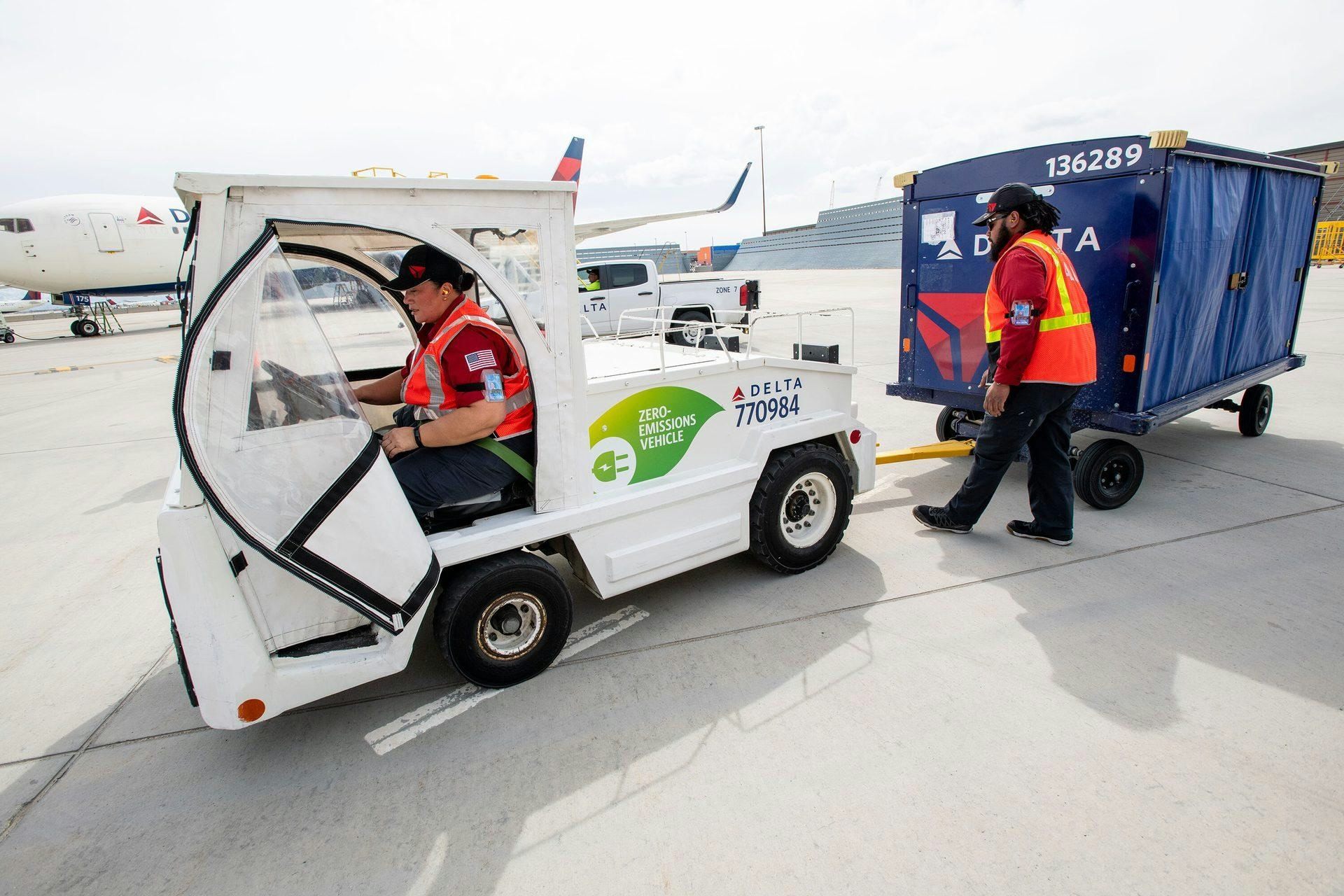
Electric Motors and Robotic Tugs Reduce Aircraft Ground Emissions
Addressing Emissions Beyond Flight Phases
While aviation emissions are typically associated with take-off, cruising, and landing, the fuel consumption and pollutant output during aircraft taxiing on the ground have garnered increasing attention. Taxiing accounts for approximately 2 to 6 percent of total fuel use per flight and contributes to the release of carbon dioxide, nitrogen oxides, and particulate matter. The extent of these emissions depends on factors such as taxiing duration, runway configuration, airport congestion, and engine type. Reducing emissions during ground operations is essential not only for environmental reasons but also to meet ambitious sustainable aviation targets set for 2050, while simultaneously improving operational efficiency for both airports and airlines.
This imperative has driven innovation in sustainable alternatives to conventional taxiing methods. Two primary technological pathways have emerged: onboard electric taxiing systems integrated into aircraft, and external solutions such as robotic tugs.
Onboard Electric Taxiing Systems
Onboard electric taxiing systems involve the integration of electric motors within the aircraft’s landing gear, enabling the aircraft to taxi autonomously using battery power instead of jet engines. A prominent example is the SONATA (System Optimization of Non-propulsive energy in Aircraft Taxi technologies and Architectures) project, a £20 million (US$27 million) initiative led by Airbus in collaboration with Evolito, Drive System Design (DSD), the University of Southampton, and other partners. Launched in March 2025, SONATA aims to replace traditional taxiing propulsion with electric motors, targeting a reduction in ground emissions of up to 47 percent.
Funded by the UK Government through the Aerospace Technology Institute (ATI) and Innovate UK, the project leverages expertise across the aerospace and automotive sectors. Evolito is developing a lightweight electric motor capable of delivering up to 56 Nm/kg and approximately 350 kW of peak power, while DSD contributes its automotive electrification experience. Airbus is responsible for system integration and certification to ensure compatibility with its aircraft fleet. The project emphasizes minimizing motor weight through design optimization and the use of advanced materials, alongside achieving a high degree of system integration.
External Robotic Tugs and Market Challenges
External robotic tugs represent an alternative approach to decarbonizing taxiing by towing aircraft without engaging their engines. These systems offer the potential for substantial emission reductions; however, they face several challenges. The high upfront investment required, the necessity for significant airport infrastructure modifications, and potential resistance from established ground service providers accustomed to traditional methods may impede widespread adoption.
Nonetheless, interest in robotic tugs is growing, particularly among airlines and airports with strong environmental commitments. The competitive landscape is evolving as major aerospace companies, including Airbus and Boeing, intensify research and development efforts in sustainable ground service technologies to meet shifting industry demands.
Future Prospects in Sustainable Taxiing
As the aviation industry advances toward electrification and hybridization—paralleling developments in the automotive sector—key technical considerations such as efficiency, power density, and system optimization remain critical. Whether through onboard electric taxiing systems or external robotic tugs, the transition to electric taxiing marks a significant step in reducing aviation’s environmental impact and progressing toward long-term sustainability objectives.

Etihad Airways Suspends Airbus A380 Flights on Key Route

Aditya Birla Group Seeks Approval for Aircraft Leasing in GIFT City

Qatar Airways Highlights Innovation and Connectivity at Arabian Travel Market 2026

Hong Kong's Five-Year Plan Includes Andrew Fan's Aircraft Parts Processing Hub Proposal

ACIA Aero Leasing Delivers ATR72-600 to Air Nostrum

RTX Appoints Jill Albertelli as Head of Pratt & Whitney

TAT Technologies Joins Beyond Aero Hydrogen Aircraft Program

AURAK Study Highlights Barriers to Air Taxi Adoption in Emerging Economies

Xiamen Air Selects Altitude for 787 Maintenance at Heathrow

Etihad and Swissport Extend Global Partnership
