
Orquesta conocimientos de IA para convertirlos en acción

Tendencias
Categories
Engine Fire on Turkish Airlines A330 En Route to Istanbul
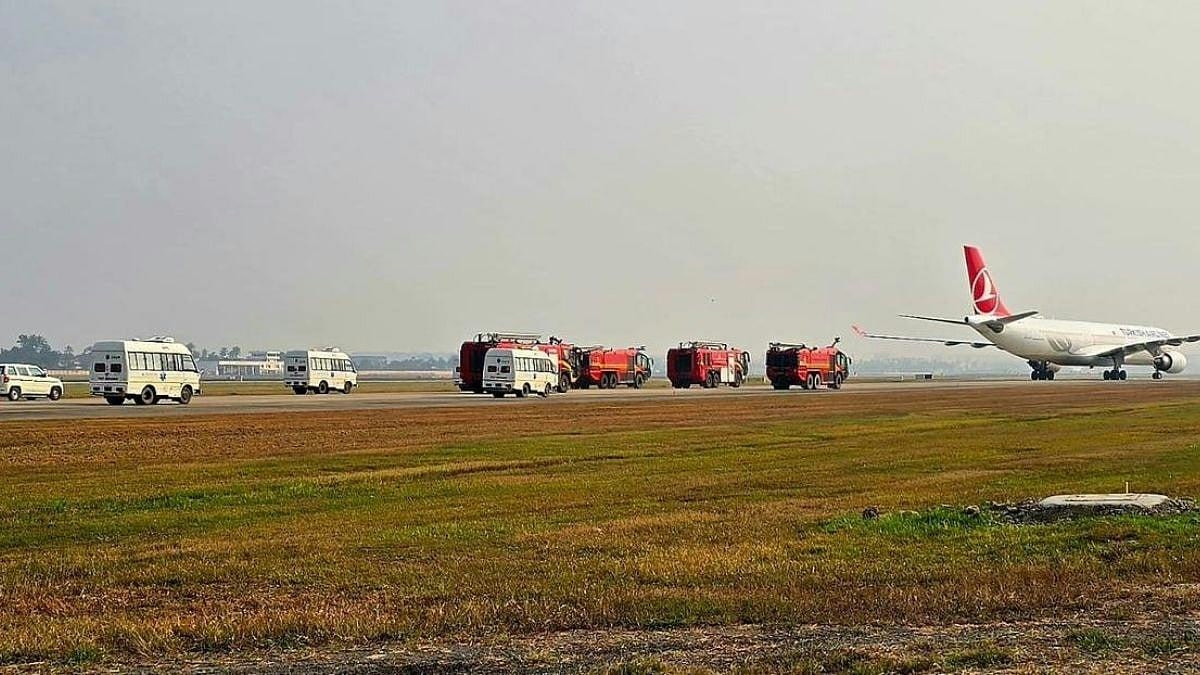
Engine Fire Forces Turkish Airlines A330 to Divert to Kolkata
On February 4, 2026, a Turkish Airlines Airbus A330-303 (registration TC-LNG) en route from Kathmandu to Istanbul experienced an engine fire shortly after takeoff, necessitating an emergency diversion to Kolkata. The flight, TK727, had departed Kathmandu at 13:28 local time with 225 passengers and 11 crew members on board. The aircraft was scheduled to cover approximately 5,317 kilometers to Istanbul in just under eight hours.
Flight tracking data from Flightradar24 revealed that soon after departure, the crew detected a fire in the right engine, a Rolls-Royce Trent model. Responding promptly, the pilots shut down the affected engine and informed the Kathmandu control tower. With one engine inoperative, the decision was made to divert to Netaji Subhas Chandra Bose International Airport in Kolkata. Airport authorities declared a full emergency, and the aircraft landed safely at 15:03 local time. There were no injuries reported among passengers or crew.
Industry Implications and Ongoing Investigations
Gyanendra Bhul, Deputy Spokesperson for Nepal’s Civil Aviation Authority, emphasized that the pilot’s swift actions and the aircraft’s adequate fuel reserves were critical in ensuring a controlled and safe diversion. While the incident concluded without casualties, it has intensified scrutiny on the reliability of the Rolls-Royce Trent engine series, which powers numerous wide-body aircraft globally.
Aviation industry analysts suggest that Turkish Airlines may face heightened regulatory oversight and potential delays in maintenance operations, particularly at Turkish Technic’s recently inaugurated engine maintenance facility. The incident could also exert short-term pressure on Turkish Airlines’ stock price as investors respond to emerging safety concerns.
Competitors in the aviation sector may leverage this event to underscore the reliability of their own engine technologies, seeking to attract passengers and airline partners concerned about similar risks. The episode is likely to prompt airlines worldwide to reevaluate their engine maintenance strategies and partnerships, potentially reshaping market dynamics within the engine maintenance and repair industry.
As investigations proceed, Turkish Airlines and relevant regulatory bodies are expected to conduct thorough reviews of maintenance protocols and operational procedures to mitigate the risk of future occurrences.

Etihad Airways Suspends Airbus A380 Flights on Key Route

Aditya Birla Group Seeks Approval for Aircraft Leasing in GIFT City

Qatar Airways Highlights Innovation and Connectivity at Arabian Travel Market 2026

Hong Kong's Five-Year Plan Includes Andrew Fan's Aircraft Parts Processing Hub Proposal

ACIA Aero Leasing Delivers ATR72-600 to Air Nostrum

RTX Appoints Jill Albertelli as Head of Pratt & Whitney

TAT Technologies Joins Beyond Aero Hydrogen Aircraft Program

AURAK Study Highlights Barriers to Air Taxi Adoption in Emerging Economies

Xiamen Air Selects Altitude for 787 Maintenance at Heathrow

Etihad and Swissport Extend Global Partnership
