
Orquesta conocimientos de IA para convertirlos en acción

Tendencias
Categories
Europe Air Taxi Market Outlook, 2025–2033
Europe Air Taxi Market Outlook, 2025–2033
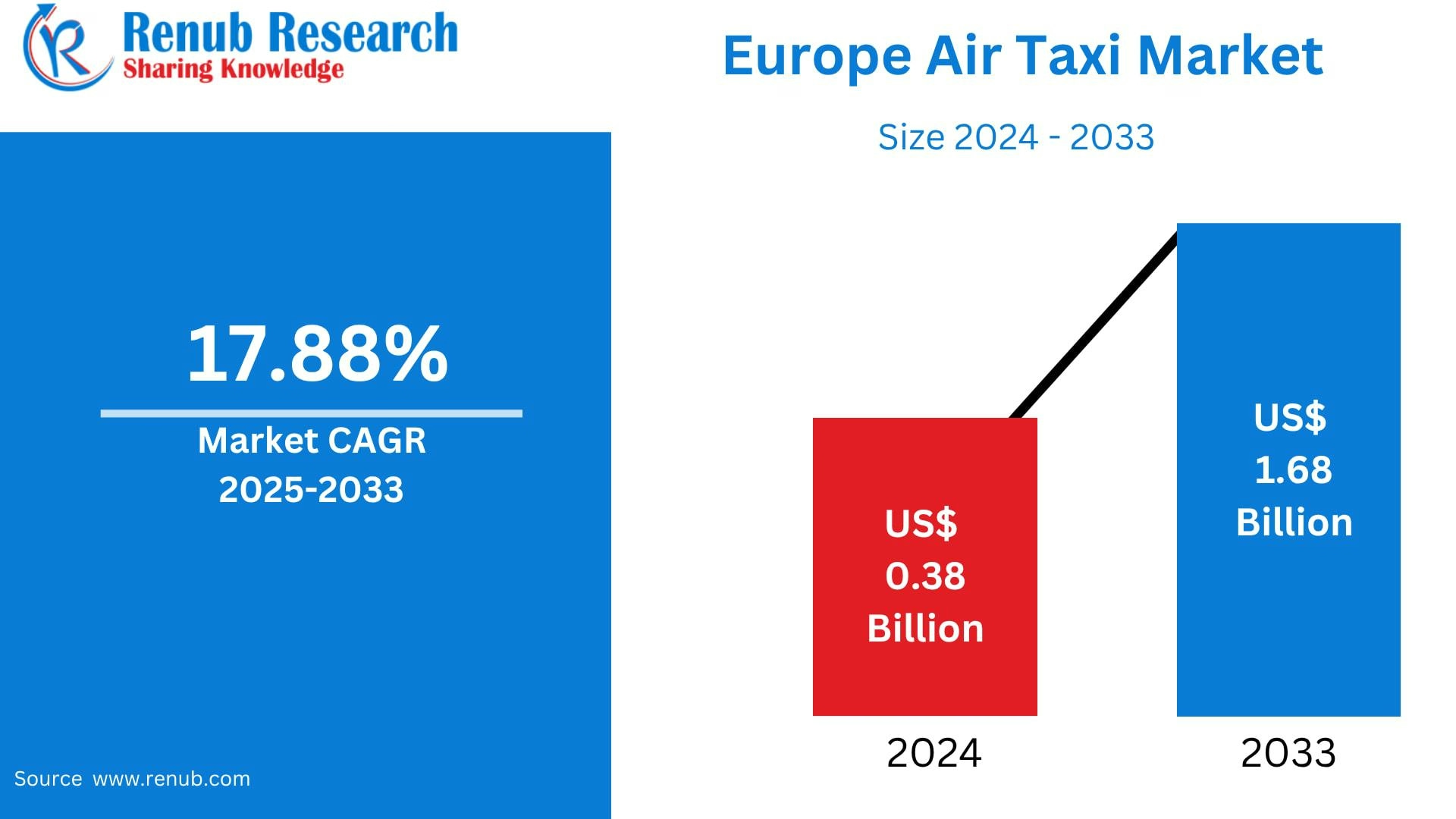
The Europe air taxi market is on the cusp of a profound transformation, propelled by rapid technological progress, escalating urban congestion, and a growing emphasis on sustainable mobility solutions. According to Renub Research, the market is expected to expand from US$0.38 billion in 2024 to US$1.68 billion by 2033, representing a compound annual growth rate (CAGR) of 17.88% between 2025 and 2033. This trajectory highlights a significant shift in urban and regional transportation across Europe, as air taxis—primarily electric vertical takeoff and landing (eVTOL) vehicles—emerge as a swift, environmentally friendly, and adaptable mode of travel.
Industry Overview
Air taxis utilize eVTOL technology to provide short-distance, on-demand passenger transport within and between urban centers. Unlike conventional aviation, these vehicles emphasize point-to-point travel, operating from vertiports, heliports, or compact landing zones that circumvent ground traffic congestion. Powered by electric or hybrid propulsion systems and equipped with advanced navigation and safety features, air taxis promise to alleviate urban congestion, reduce commute times, and lower emissions.
Europe’s strong commitment to clean energy and sustainable transport creates an ideal environment for the integration of air taxis. The region’s transport sector is undergoing a transformation driven by automation, digitization, and environmental stewardship, aligning closely with the capabilities and benefits offered by eVTOL technology.
Key Growth Drivers
The adoption of air taxis in Europe is being accelerated by several critical factors. Technological innovations in battery capacity, electric propulsion, and lightweight materials are enhancing the feasibility and performance of eVTOL aircraft. Urban congestion in major cities such as London, Paris, Berlin, Madrid, and Rome has reached critical levels, with daily commutes often exceeding acceptable durations. Air taxis present a rapid, on-demand alternative that appeals to business commuters, corporate travelers, affluent professionals, tourists, and emergency services.
Regulatory frameworks established by the European Union, including Urban Air Mobility (UAM) initiatives and government-supported pilot programs, are fostering a conducive environment for market development. Public acceptance is also increasing as consumers become more open to alternative, time-saving transportation options. Concurrently, investments in vertiport infrastructure and air traffic management systems are laying the groundwork for the commercial deployment of air taxi services.
As European cities implement smart mobility strategies, air taxis are being incorporated into comprehensive transport planning, creating a multi-layered mobility network that integrates ground, underground, and aerial transit modes.
Sustainability and Market Dynamics
Europe’s leadership in sustainability is a driving force behind the advancement of electric-powered air taxis. The region’s expanding fuel cell market, particularly in Sweden where renewable hydrogen production is progressing, holds potential to further influence the sector by enabling cleaner propulsion technologies. This focus on sustainable energy sources aligns with broader environmental goals and enhances the appeal of air taxis as a green transport alternative.
Challenges and Competitive Landscape
Despite promising growth prospects, the market faces significant challenges. Regulatory complexities related to airspace management and safety standards remain formidable obstacles. The high initial capital investment required for eVTOL development, infrastructure establishment, and certification processes presents another barrier. Additionally, ongoing technological challenges persist, including the need to improve battery range, reliability, and scalability.
Market participants exhibit cautious optimism. Companies such as Archer Aviation have secured substantial deals and funding, while competitors are responding with strategic partnerships and investments, exemplified by Joby Aviation’s recent $250 million agreement in Kazakhstan. These developments underscore the sector’s momentum and the intensifying competition to commercialize air taxi services.
Outlook
With urban mobility demands intensifying and travel delays costing billions annually, air taxis are poised to become a fundamental component of Europe’s future transportation ecosystem. Although regulatory and technological challenges remain, the convergence of innovation, investment, and sustainability initiatives positions the Europe air taxi market for dynamic growth through 2033.

Etihad Airways Suspends Airbus A380 Flights on Key Route

Aditya Birla Group Seeks Approval for Aircraft Leasing in GIFT City

Qatar Airways Highlights Innovation and Connectivity at Arabian Travel Market 2026

Hong Kong's Five-Year Plan Includes Andrew Fan's Aircraft Parts Processing Hub Proposal

ACIA Aero Leasing Delivers ATR72-600 to Air Nostrum

RTX Appoints Jill Albertelli as Head of Pratt & Whitney

TAT Technologies Joins Beyond Aero Hydrogen Aircraft Program

AURAK Study Highlights Barriers to Air Taxi Adoption in Emerging Economies

Xiamen Air Selects Altitude for 787 Maintenance at Heathrow

Etihad and Swissport Extend Global Partnership
