
Orquesta conocimientos de IA para convertirlos en acción

Tendencias
Categories
FAA Selects Utah to Lead Five-State Electric Flight Pilot Program
FAA Selects Utah to Lead Five-State Electric Flight Pilot Program
Utah at the Forefront of Electric Aviation Innovation
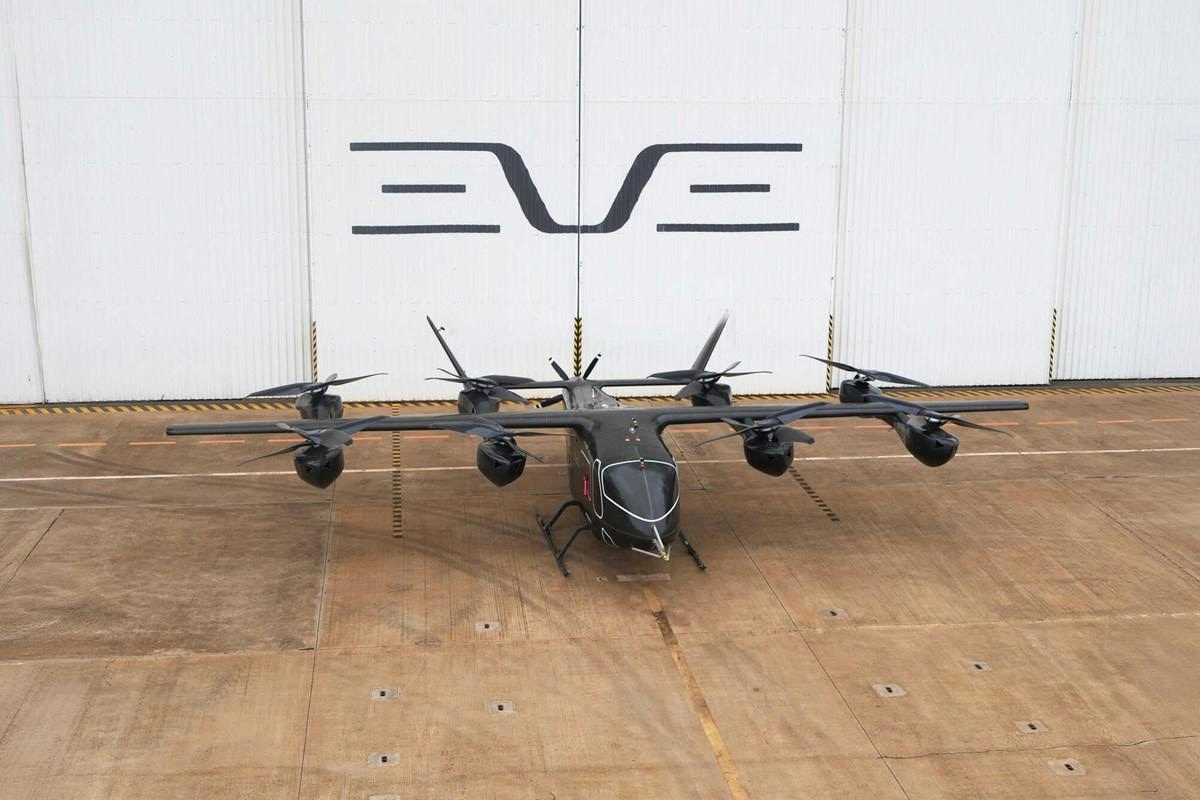
The Federal Aviation Administration (FAA) has designated Utah to spearhead a significant pilot program aimed at advancing electric flight technology. The three-year Electric Vertical Takeoff and Landing (eVTOL) Integration Pilot Program will focus on the safe integration of Advanced Air Mobility (AAM) aircraft into the national airspace. These electric aircraft, capable of vertical takeoff and landing, are envisioned to enhance the transportation of people and goods, particularly in regions with limited accessibility.
Utah’s leadership role involves coordinating efforts across five states as part of a larger initiative encompassing eight projects in 26 states. The program brings together nearly three dozen public and private partners, including government agencies and industry leaders. Testing will occur in diverse environments ranging from urban centers and rural corridors to mountainous terrain and wildfire-prone areas, reflecting the broad potential applications of eVTOL technology.
Potential Impact and Challenges
AAM aircraft are expected to play a transformative role in connecting communities, supporting emergency response operations such as wildfire management, and eventually providing passenger transportation services. The Utah Department of Transportation highlights the program’s potential to stimulate economic growth, foster research, and develop a skilled workforce within the state.
Governor Spencer Cox emphasized Utah’s reputation as a hub of innovation, stating that the partnership positions the state at the cutting edge of aviation technology while creating new economic and educational opportunities. Despite this optimism, the program faces considerable challenges. FAA Administrator Bryan Bedford identified regulatory complexities, technological integration, and safety concerns as significant obstacles that must be addressed to enable the widespread adoption of electric aviation.
Industry Response and Future Prospects
The market reaction to the FAA’s initiative has been cautiously optimistic. Leading companies in the electric aviation sector, including Archer Aviation, Beta Technologies, Joby Aviation, and Wisk, regard the program as a vital platform for developing scalable electric air taxi models. While competition among these firms may intensify, there is also an expectation of collaboration to overcome shared challenges in this emerging industry.
The success of the pilot program will hinge on navigating regulatory and technical barriers while leveraging opportunities for innovation and economic development. Should Utah’s leadership prove effective, it could play a pivotal role in shaping the future landscape of electric aviation across the United States.

Etihad Airways Suspends Airbus A380 Flights on Key Route

Aditya Birla Group Seeks Approval for Aircraft Leasing in GIFT City

Qatar Airways Highlights Innovation and Connectivity at Arabian Travel Market 2026

Hong Kong's Five-Year Plan Includes Andrew Fan's Aircraft Parts Processing Hub Proposal

ACIA Aero Leasing Delivers ATR72-600 to Air Nostrum

RTX Appoints Jill Albertelli as Head of Pratt & Whitney

TAT Technologies Joins Beyond Aero Hydrogen Aircraft Program

AURAK Study Highlights Barriers to Air Taxi Adoption in Emerging Economies

Xiamen Air Selects Altitude for 787 Maintenance at Heathrow

Etihad and Swissport Extend Global Partnership
